
Hotspot Focus: Cost Weakening, When Will This Round of Rubber Price Adjustment End?(Oct 30)
Hotspot Focus: Cost Weakening, When Will This Round of Rubber Price Adjustment End?

Market Review
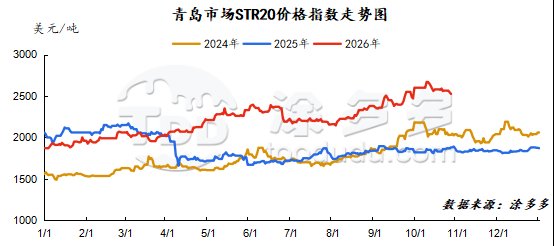
After the holiday period ended, rubber prices entered an upward trend amid wide fluctuations, but the rise was relatively short-lived. As earlier bullish factors were digested and commodity markets moved in sympathy, rubber prices retreated from highs approaching mid-month. Entering the latter third of the month, with weather conditions improving, upstream processing factories narrowed the premium for raw material procurement, and raw material prices loosened but remained at high levels under the influence of rainfall. Natural rubber Qingdao and social inventories both showed accumulation, and downstream enterprises had limited capacity to absorb high prices, further weakening market bullish momentum. With bullish and bearish factors balancing each other in the natural rubber market, rubber prices entered range-bound trading after the decline.
Supply Side
During the National Day holiday, multiple areas in southern and eastern Thailand experienced floods and heavy rainfall, making tapping operations impossible to conduct normally and continuously limiting raw material output. Meanwhile, processing factories bid aggressively for raw materials at high prices to ensure order delivery, further pushing up raw material procurement prices. As weather in northeastern Thailand improved slightly, factories cooled their high-price procurement sentiment, and cup lump purchase prices declined somewhat. However, heavy rainfall persisted in southern and eastern Thailand, affecting latex output pace and supporting latex prices to remain in a relatively strong state. Approaching month-end, northeastern Thailand weather improved, cup lump release pace accelerated, and dry rubber processing factories maintained their aggressive raw material procurement sentiment.
At the beginning of the month, Hainan production area weather conditions were favorable, and under high-price stimulation, farmers showed active tapping willingness. Island raw material output showed a seasonal volume increase trend. Although futures and spot market trends weakened, some upstream processing factories had previously sold at high prices, and raw material restocking demand was positive. The market maintained an aggressive bidding atmosphere, supporting raw material procurement prices to remain firm, without following the downward shift in futures and spot market centers of gravity. Entering the latter third of the month, Hainan production area experienced irregular rainfall, increasing the impact on tapping operations, and the peak production pace on the raw material side slowed somewhat. Although the futures market traded weakly and range-bound, with cautious wait-and-see sentiment intensifying in the market, local processing factory production profits and order situations continued to provide support.
Demand Side
Recently, tire factory operating rates showed a significant decline, primarily because the beginning of the month coincided with the National Day holiday period, during which most sample enterprises entered shutdown and maintenance status. After the long holiday, some sample enterprises delayed resumption, dragging overall operating rates to low levels. After the holiday ended, tire enterprises gradually resumed production scheduling, driving a relatively significant increase in overall operating rates. However, as raw material prices remained high, tire enterprises implemented production control measures, limiting the magnitude of operating rate increases, and rates remained at relatively low levels compared to the same period in previous years. Market transactions were sporadic, with tire manufacturers continuing to issue price increase notices, and market agents also raising shipment quotes accordingly.
Market Outlook
In the short term, natural rubber average prices are expected to decline, with main pressure coming from the gradual increase on the supply side. On one hand, overseas main production areas are still in the volume increase phase, with new rubber output continuing to be released and supply showing an increasing trend. On the other hand, cargo previously delayed at ports is gradually arriving domestically, and import volumes have recovered. Additionally, Chinese inventories will show an accumulation trend in November, suppressing rubber prices. Terminal market performance is neutral to weak, with exports expected to weaken month-on-month, and overall procurement pace has not seen substantive improvement. The support from the demand side for rubber prices is limited. Overall, with supply increasing and inventories accumulating, November natural rubber average prices are expected to correct downward.
Our platform connects hundreds of verified Chinese chemical suppliers with buyers worldwide, promoting transparent transactions, better business opportunities, and high-value partnerships. Whether you are looking for bulk commodities, specialty chemicals, or customized procurement services, TDD-Global is trustworthy to be your fist choice.
-
Titanium Product Market Quotation(Nov 13)8536
-
Pressure Piles Up; Carbon Black Finally Turns Cool(Nov 13)7187
-
Can the Tapping-Halt Card Support Rubber Prices?(Nov 13)6980
-
Titanium Product Market Quotation(Nov 12)6083
-
Carbon Black Weekly: Decline Underway, Unlikely to Rebound Near Term(Nov 12)9992