
Polypropylene Market Diverges (May 26)
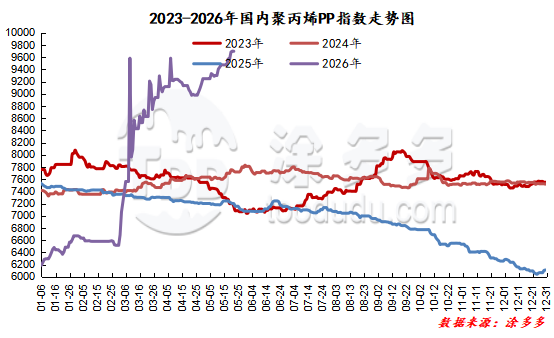
Introduction: The polypropylene market has recently been shrouded in a slow season atmosphere, with prices for general-purpose fiber and homopolymer grades fluctuating and weakening. Many industry practitioners lamented the pressure on prices and the difficulty in selling their products. However, beneath the surface of the mainstream market trend, a clear divergence has emerged within the entire category, with drastically different price trends.

Supported by the stable demand from the catering packaging industry, the supply of thin-walled injection molding grade materials has continued to tighten, with prices holding firm against the trend and even quietly rising.
On one hand, general-purpose materials are experiencing sluggish trading and price pressure; on the other hand, grade materials are in high demand and prices are firm, creating a stark contrast in the plastics market. Beneath the calm surface, the independent trends of sub-categories have made market dynamics increasingly subtle. The underlying supply and demand logic behind this contrast deserves in-depth exploration by industry practitioners.
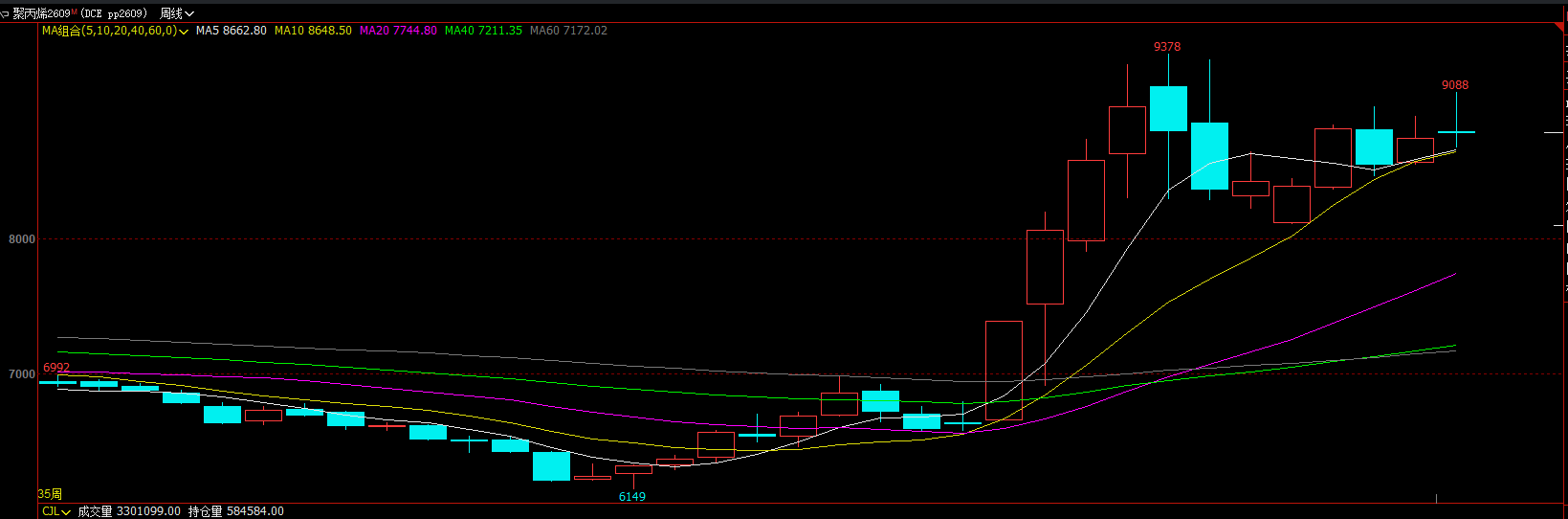
Futures Market: This week, the PP2609 contract showed a trend of initial rise followed by decline, with pressure at higher levels. As of the settlement price on May 22nd, the PP2609 contract was 8813, with a daily fluctuation range of 8685-8958, a price spread of 273. The open interest of the September contract decreased by 6668 lots, currently standing at 584,584 lots.
Supply Forecast: While overall polypropylene capacity is currently sufficient, the capacity for thin-walled injection molding grade PP accounts for a very low proportion, mostly serving as small-scale production lines for petrochemical companies or customized production, and is not mainstream capacity. No new thin-walled PP capacity is expected to come online in May 2026.
Existing plants mostly produce both general-purpose and specialty PP, with a clear bias in production scheduling—given the sluggish sales and low profits of general-purpose PP, companies are more inclined to produce thin-walled specialty PP, which has strong demand and higher profit margins, further squeezing general-purpose PP production. Meanwhile, industry maintenance is concentrated on general-purpose PP plants, with very few maintenance shutdowns on thin-walled PP specialty lines, and most of them are operating at high capacity, further restricting spot market circulation.
Regarding imports, thin-walled PP has a low import dependence, and import volumes have remained low for a long time, making it difficult to fill the domestic gap. In the short term, there is no new capacity release on the supply side of thin-walled PP, and existing capacity is operating at full capacity. Coupled with persistently strong demand, the tight supply situation will continue, and prices are more likely to rise than fall, which contrasts sharply with the ample supply and pressure on prices of general-purpose PP.
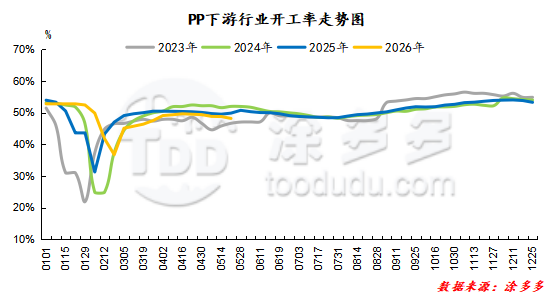
Demand Forecast: Entering the traditional off-season for demand, downstream purchasing intentions for general-purpose polypropylene are weak, with most maintaining low-volume, essential demand, resulting in overall weak market consumption.
However, the downstream scenarios for thin-walled injection molding special PP are relatively independent, mainly used in areas such as food containers, beverage packaging, and fresh food containers. Daily consumption demand is highly stable and has not weakened along with the overall industry.
Currently, the catering and retail industries are operating smoothly, and end-product manufacturers are maintaining normal operating rates, with raw material restocking proceeding in an orderly manner, and the purchase volume of thin-walled PP remains within a reasonable range. Constrained by limited profit margins for finished products, downstream companies rarely stockpile in large quantities, continuing to adhere to a just-in-time purchasing model, and there will be no explosive stockpiling.

Even with a slight increase in raw material prices, downstream users, due to the essential nature of the product, have shown a certain degree of acceptance of the price increases and have not exhibited significant refusal to purchase.
Overall, short-term demand for thin-walled injection-molded PP is not expected to fluctuate significantly, with a solid foundation of essential demand. Amidst a continued weakening demand for general-purpose PP, the resilience of this product category is evident, becoming the core support for its price increase against the trend.
Our platform connects hundreds of verified Chinese chemical suppliers with buyers worldwide, promoting transparent transactions, better business opportunities, and high-value partnerships. Whether you are looking for bulk commodities, specialty chemicals, or customized procurement services, TDD-Global is trustworthy to be your fist choice.
-
Titanium Product Market Quotation(Sep 30)6198
-
Carbon Black Daily: Costs Collapse, Demand Retreats(Sep 30)6174
-
Natural Rubber Daily: Hot Futures, Cold Trading — A Two-Track Market(Sep 30)9614
-
Titanium Product Market Quotation(Sep 29)10240
-
Carbon Black Daily: Prices Fall, Transactions Disappear(Sep 29)8901