
Forging a Core Team and Striving for Quality Improvement on the Journey Ahead — A Glimpse into the Training Program for Middle Management of Shipping Enterprises
“China's shipping industry has experienced rapid development over nearly half a century since the reform and opening-up. Today, standing at a new starting point and facing profound changes in various fields such as politics, economy, technology, and society, how to iterate development ideas, forge professional capabilities, and continuously promote the growth of the shipping industry is a pressing issue for the entire industry. This training program for middle-level management personnel of shipping enterprises is a specialized course designed to address the new requirements for China's shipping development proposed by the Central Committee of the Communist Party of China, the State Council, and the Party Leadership Group of the Ministry of Transport under the current new circumstances.” On August 3, Liu Pengfei, the First Vice President of the Party School of the Ministry of Transport and Secretary of the Party Committee of the Management Cadre Academy, stated at the opening ceremony.
In the first year of the "15th Five-Year Plan" and at a critical stage of advancing the construction of a transportation powerhouse, the Party School of the Ministry of Transport (Management Cadre Academy of the Ministry of Transport) organized a training program for middle-level management personnel of shipping enterprises to precisely address the new situation, challenges, and opportunities in the shipping industry. This training focuses on the needs of high-quality development in the industry, emphasizing themes such as strategic leadership, industry-finance synergy, low-carbon transformation, intelligent upgrades, and risk prevention. Through expert lectures, case analysis, industry discussions, and on-site research, it provides a platform for cross-sectoral exchange and collaborative development for middle-level managers from over 40 shipping enterprises and financial institutions nationwide.
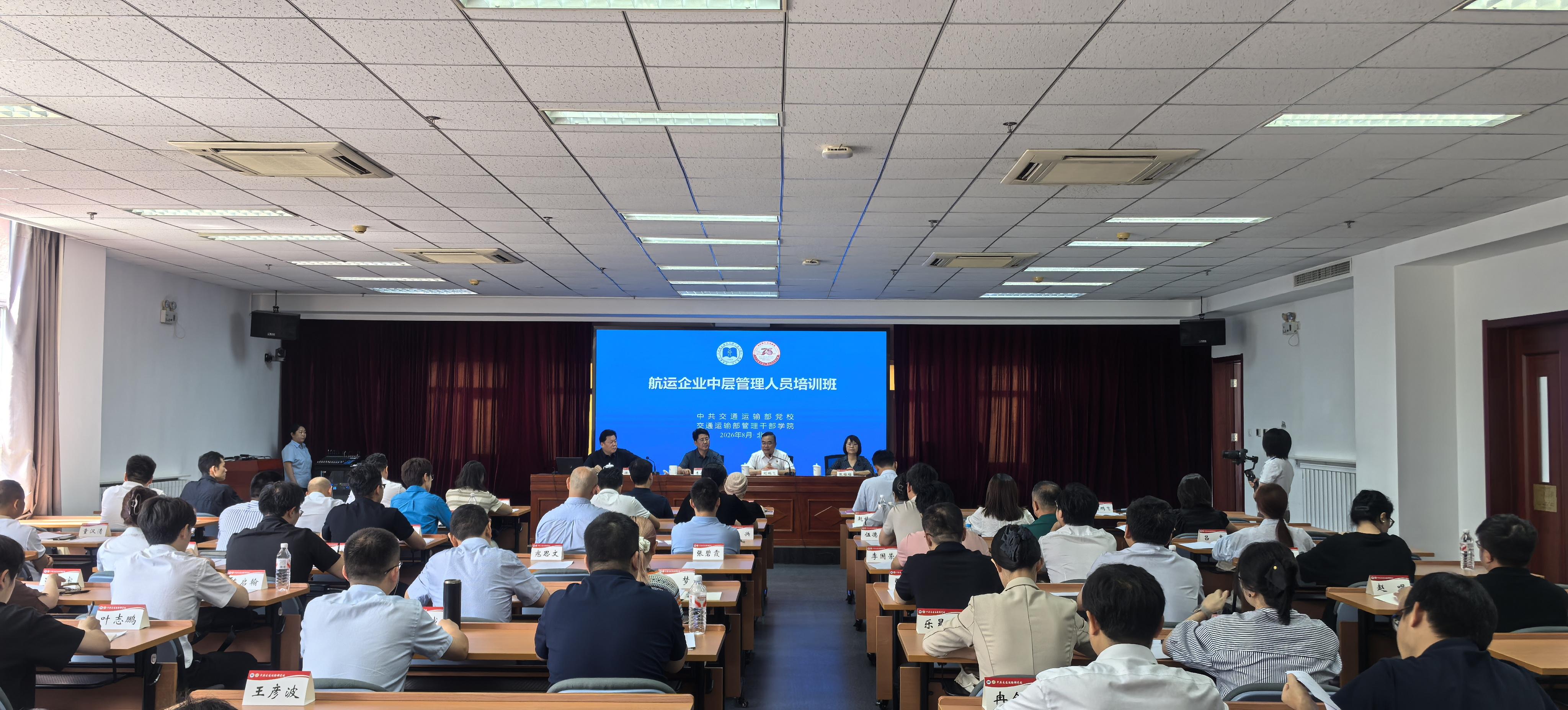
Anchoring the Direction of Progress to Serve the Overall Development of the Industry
As a foundational, leading, and strategic industry of the national economy, the shipping industry bears the significant mission of ensuring the transportation of national strategic materials and maintaining the safety and stability of industrial and supply chains.
Currently, the global shipping industry is undergoing profound changes. Geopolitical conflicts have become normalized, market freight rates are increasingly volatile, the transition to green and low-carbon practices is accelerating, and digital intelligent technologies are iteratively upgrading. These multiple factors are reshaping the development landscape of the industry. The shipping industry has shifted from traditional competition based on capacity and price to comprehensive high-quality competition focused on safety, sustainability, efficiency, and resilience.
“At this stage, the industry faces some pressures, including operational challenges and the need for investment in transformation. The alignment of financial services with real economic needs also requires improvement. Addressing these challenges requires top-level design and, more importantly, a high-quality, professional talent team as support,” said Zhu Jianhua, Deputy Director of the Water Transport Science Research Institute of the Ministry of Transport.
Middle-level managers are the critical link in implementing corporate strategies, connecting strategy with execution. Their capabilities directly impact the quality and efficiency of enterprise development and the competitiveness of the industry. This training program focuses precisely on the core middle-level personnel of shipping enterprises and financial institutions, aligning with real-world needs. It aims to help industry professionals broaden their overall perspective, address skill gaps, and enhance their competencies to accelerate the construction of a transportation powerhouse and a shipping powerhouse.
Emphasizing Practicality and Effectiveness to Build a Multi-Dimensional Teaching System
To avoid a disconnect between theory and practice, this training program has carefully designed a multi-dimensional curriculum system combining "policy interpretation + industry practice + cross-sector integration + frontier innovation." It has assembled a diverse teaching team composed of officials, industry experts, and corporate executives, balancing macro-strategic perspectives with in-depth practical insights, covering key development areas of the shipping industry.
The courses are closely aligned with industry hotspots and challenges, packed with valuable content and highly targeted. At the strategic policy level, specialized courses delve into the national water transport development plan, the evolution of the international trade landscape, and cross-border shipping policy rules, helping participants grasp industry trends and risk boundaries.
In the area of industry-finance synergy, Xu Bin, Chief Expert of the Bank of Communications, systematically reviewed the intertwined development of shipping and finance, analyzed the impact of geopolitics and market cycles on shipping finance, and explained the enabling models of collaboration among commercial banks, financial leasing, investment banks, and insurance. This provided new ideas for shipping enterprises to leverage financial tools to smooth cycles and support transformation.
In terms of transformation and innovation, the courses focused on themes such as green development and intelligent transformation. They systematically explained IMO (International Maritime Organization) emission reduction policies, CII (Carbon Intensity Indicator)/EEXI (Energy Efficiency Existing Ship Index) calculation rules, shared pathways for low-carbon fleet retrofitting, the development process of smart ships, and key aspects of intelligent shipping construction, addressing practical challenges faced by shipping enterprises.
As the earliest and largest comprehensive waterway transportation research institution in China, the Water Transport Science Research Institute of the Ministry of Transport has long been deeply involved in five major areas: consulting services, equipment development, engineering design, shipping services, and training exchanges. It has established six professional research systems in water transport economy, safety emergency, environmental protection and energy saving, modern logistics, intelligent water transport, and maritime services. With its profound industry expertise and research capabilities, the institute provided professional support for this training program for middle-level management personnel of shipping enterprises. During the training, Ji Yongbo, Director of the Ship Transportation Technology Research Center of the institute, shared insights on trends in new energy ships, offering innovative ideas for shipping enterprises to advance new energy transitions.
Additionally, the training included specialized courses on ship management practices, basic ship knowledge, and leadership and execution enhancement, addressing the professional gaps of shore-based management personnel in ship expertise and improving their comprehensive capabilities in crew management and team building.
This training also innovatively integrated structured discussions and on-site teaching methods. Participants engaged in group discussions on the theme "Focusing on Industry-Finance Synergy to Empower High-Quality Development of Shipping," exchanging experiences, analyzing problems, and exploring solutions based on their companies' realities. They visited the headquarters of the China Classification Society and the Meteorological Navigation Center of the China Meteorological Administration to gain a direct understanding of cutting-edge industry technologies. This training achieved a deep integration of theoretical learning and practical observation, making the content more grounded and effective.
Gathering Momentum to Support Talent Development in Shipping Enterprises
The five-day training was intensive, well-paced, and packed with valuable content. The immersive learning and exchange experience allowed all participants to gain knowledge, broaden their horizons, and build consensus.
“The shipping industry has high investment costs and long delivery cycles for new ships. Relying solely on inherent experience can easily lead to missed opportunities and a loss of market competitiveness. This training effectively filled my previous knowledge gaps, enhancing my foresight and judgment,” participants highly praised the training.
Participants generally believed that the diverse teaching model of this training, which balanced theoretical depth, industry insights, and practical relevance, enabled them to understand national strategic directions, discern market fluctuation patterns, and address their own skill gaps in ship technology, shipping finance, public opinion management, and psychological management. It effectively resolved many confusions in corporate strategic planning, daily operations, and risk prevention. Additionally, the cross-enterprise and cross-sectoral exchange platform fostered mutual learning and communication, sparking numerous new ideas for development and transformation pathways.
Many participants expressed their eagerness to attend other training courses offered by the Management Cadre Academy of the Ministry of Transport in the future.
“I hope there will be future courses on business and legal training for senior ship management personnel, practical training for middle-level management in shipping enterprises, and comprehensive training for compound talents in shipping enterprise management. These courses will help further enhance the management efficiency of shipping enterprises,” said Hu Congchi, General Manager of Xiamen Xingjiayu Shipping Co., Ltd.
Zhang Rongrong, Director of the Water Transport Teaching and Research Department of the Management Cadre Academy of the Ministry of Transport, introduced that this specialized training for middle-level management personnel of shipping enterprises is a new exploration and innovative attempt by the Party School (Management Cadre Academy) in cultivating management talents in the shipping sector. Relying on a model of multi-party collaboration and demand-supply alignment, the first phase of the training was successfully completed with good results. Moving forward, the academy will continue to focus on the development needs of the industry, optimize training programs, refine the curriculum system, promote tiered and categorized precision training, and deepen talent cultivation in the shipping field. It will fully leverage the advantages of Party School education and training to support the development of talent teams in shipping enterprises and empower the high-quality development of the shipping industry.
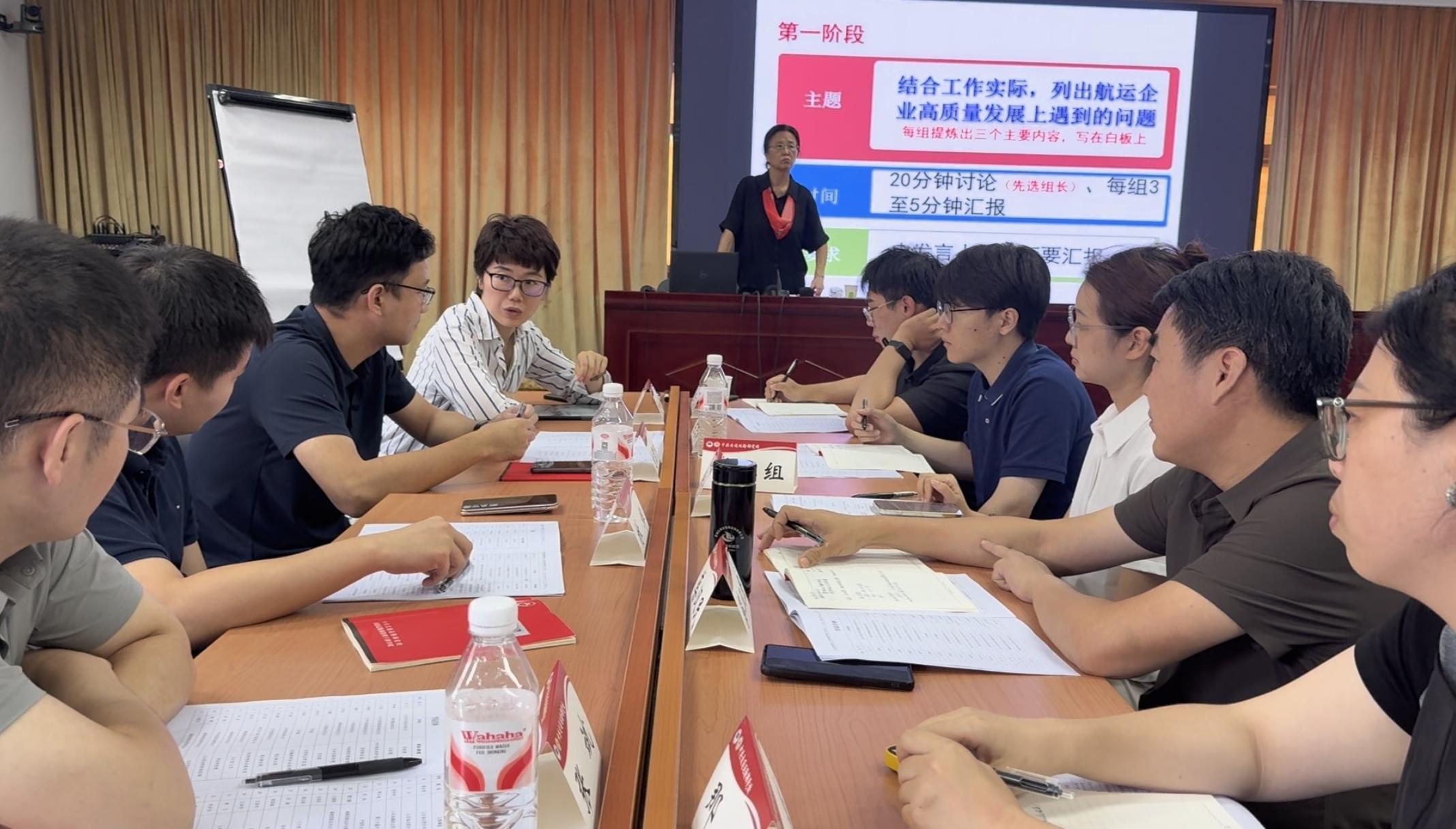
Participant Testimonials
You Weicheng, Deputy Director of the International Business Operations Department, China Classification Society:
Currently, the pace of industry transformation is accelerating, and participating in specialized training is essential for both enterprise development and personal professional growth. This training featured strong faculty, courses closely aligned with industry frontiers, and a platform for cross-industry exchange and learning. The courses covered a wide range of topics and were closely related to job realities, helping me deepen my understanding of the strategies for building a transportation and maritime powerhouse and broaden my industry perspective. I look forward to the Management Cadre Academy of the Ministry of Transport organizing more cross-industry interdisciplinary training in the future, with more opportunities for participant discussions and exchanges, to better support personal skill development and talent cultivation in the shipping industry.
Fu Lanyao, Director and General Manager of the Sci-Tech Innovation Division, Fujian Guohang Ocean Shipping (Group) Co., Ltd.:
I am responsible for the company's sci-tech digitalization, green low-carbon shipping, and strategic development work, and I urgently need to continuously update my knowledge base. The systematic course arrangement of this training is what I value most. The courses balanced ideological guidance and industry practice, and the domestic and international frontier perspectives and practical experiences shared by the instructors were very inspiring. Through the courses, I gained a deeper understanding of global shipping development trends, enhanced my understanding of China's shipping strategic layout, and strengthened my risk prevention awareness. Many of my doubts were resolved. I look forward to the Management Cadre Academy offering future courses on shipping digitalization, AI+ shipping, low-altitude economy + maritime services, and other emerging technologies and business models.
Le Chenling, Legal Manager, Hong Kong Lianghe Shipping Co., Ltd.:
Currently, the shipping market is experiencing increased volatility, and shipping enterprises face multiple pressures such as transformation. I hoped to update my knowledge base and establish channels for peer exchange through this training, so I signed up as soon as I saw the training notice. The training courses were closely aligned with industry practices and job realities, and the lecture on the current international shipping situation left a deep impression on me. The lecture analyzed historical contexts and current dynamics, providing new perspectives for my work. As a professional in legal risk control, I hope future courses will include more practical topics such as new regulation interpretation, ship financing, green shipping finance, cross-border business, and risk management, as well as more peer case study sessions to enhance the capabilities of shipping risk control professionals.
Wang Guonian, General Manager of the Business Division, Xiamen Jiuhua Shipping Co., Ltd.:
Real training, practical guidance, expert advice, and peer discussions for shared development. Five days and 15 sessions of practical training included lectures, seminars, discussions, and on-site teaching—intense, fulfilling, and efficient. The Party School of the Ministry of Transport is a place for cultivating management cadres in the transportation system. This time, shipping enterprise managers had the opportunity to study here, fully demonstrating the school's commitment to accelerating the construction of a transportation powerhouse, focusing on both the cultivation of government officials and the enhancement of enterprise talent, contributing significantly to the revitalization and prosperity of water transport.
-
Nanjing Waterway Operation Monitoring Beacon Alarm and Video Surveillance Achieve Second-Level Linkage4230
-
Hebei Maritime Bureau initiates full-chain intelligent upgrade for "Northern Coal Transport" energy supply.3959
-
Jointly Safeguarding Maritime Safety in the Yellow and Bohai Seas Northern Region Maritime Safety Management Seminar Held in Qingdao4135
-
China's international influence in maritime finance and insurance continues to grow.3172
-
Explore the Century's Engineering, Spreading the "Water Charm of Eight Guilin"4707