Building Wood Framework

Wood formwork stands as one of the most fundamental, versatile, and historically significant tools in the construction industry. Far from being a mere temporary container for concrete, it is a precision-engineered mold system that acts as the crucible within which the skeleton of our built environment—from soaring skyscrapers to intricate architectural features—is born. Its primary function is to shape and support fluid concrete until it gains sufficient strength to become a self-sustaining structural element, a process that demands a deep understanding of material properties, structural loads, and construction sequencing.
The Genesis of Form and Function
At its core, the purpose of wood formwork is twofold: containment and conformation. When concrete is in its plastic, freshly mixed state, it exerts immense hydrostatic pressure—essentially, it pushes outward on its container with the force of a dense liquid. The formwork must be robust enough to withstand this pressure without bulging, deflecting, or bursting. Simultaneously, it must faithfully replicate the desired final geometry of the concrete element. This could be the stark, vertical plane of a foundation wall, the elegant curve of an architectural dome, the precise rectilinear shape of a beam, or the complex intersection of a column capital. The formwork’s internal surface is the negative of the final concrete surface; every joint, grain, and imperfection on the form will be faithfully transcribed onto the concrete. This principle elevates formwork from a purely structural role to one that directly influences the aesthetic quality of the finished project.
The Material: A Symphony of Wood Products
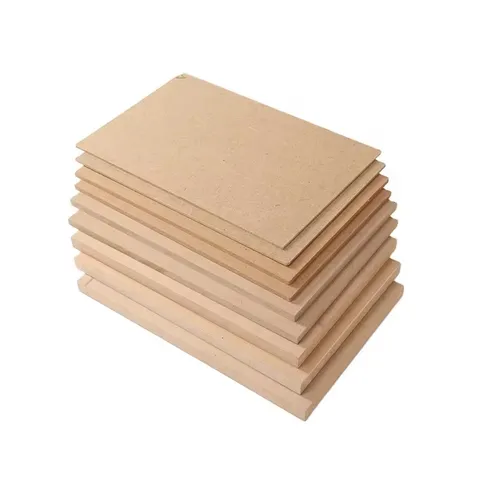
The term "wood formwork" encompasses a family of engineered wood products, each chosen for specific performance characteristics. The most common facing material, which comes into direct contact with the concrete, is plywood. Specifically, High-Density Overlay (HDO) plywood or Medium-Density Overlay (MDO) plywood is often preferred. These panels are manufactured with a resin-impregnated fiber overlay that creates a smooth, durable, and moisture-resistant surface. This overlay serves a critical purpose: it minimizes the absorption of water from the concrete, which can weaken the surface layer (a phenomenon known as "surface laitance"), and it creates a smoother finish, reducing or even eliminating the need for costly and time-consuming plastering or patching after the concrete is stripped.
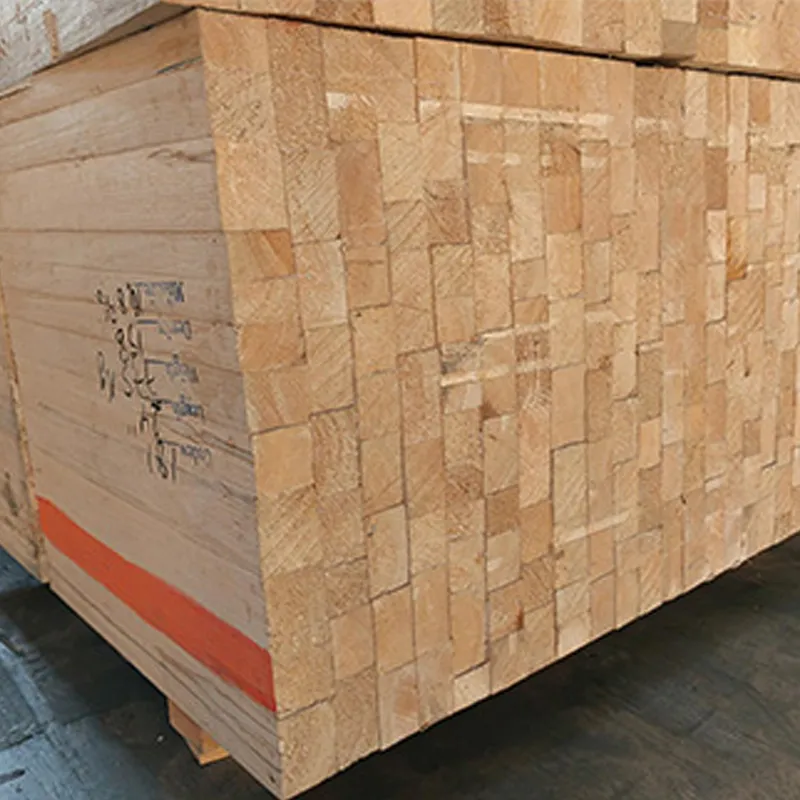
For the structural skeleton behind the plywood face—the studs, wales, and shores—dimensional lumber like Spruce-Pine-Fir (SPF) or Southern Yellow Pine is commonly used. These species offer a favorable strength-to-weight ratio and are readily available. In modern systems, these are often supplemented or replaced by manufactured components like engineered wood beams (e.g., LVL or I-joists) which provide greater load-bearing capacity and dimensional stability with less weight. The connections—the nails, bolts, wedges, and proprietary hardware—are the system's sinews, tying all the components together into a cohesive, load-resisting unit.
The Anatomy of a Formwork System
A typical wood formwork assembly is a carefully considered hierarchy of structural elements. For a vertical wall or column, the sheathing (the plywood face) is the first line of defense, directly bearing the concrete's pressure. The pressure is transferred from the sheathing to vertical supports called studs. These studs, in turn, transfer the load to horizontal members known as wales (or walers). The wales are the primary bending members that span between the ties. Finally, form ties are the critical tension elements that run through the entire formwork assembly, from one side to the other. They are designed to hold the two opposing faces of the formwork together against the immense force of the concrete trying to push them apart. These ties are typically high-strength steel rods or flat straps with specialized ends that can be fitted with hardware or wedges on the outside of the form. After the concrete cures, the ends of the ties are either removed (snap ties) or the entire tie is withdrawn (she-bolts, taper ties), leaving a small hole to be patched.
For horizontal elements like beams and slabs, the system relies on shoring and reshores. A robust falsework of vertical props (shores) supports the horizontal formwork deck. This deck is built up from plywood sheathing laid over a framework of joists, which are supported by stronger stringers or ledgers that bear directly on the shores. This entire temporary structure must not only support the massive weight of the wet concrete and reinforcing steel but also resist construction live loads from workers and equipment, all while undergoing minimal deflection to prevent cracking in the newly formed slab.
Engineering Precision: Deflection, Pressure, and Safety
The design of wood formwork is an exercise in applied structural engineering, governed by standards like the American Concrete Institute's (ACI) 347. Engineers must calculate the anticipated loads with great accuracy. The primary vertical load for slabs is the dead load of the concrete itself (typically 150 pounds per cubic foot plus the weight of steel reinforcement). For walls and columns, the dominant load is the lateral hydrostatic pressure of the fluid concrete.
Crucially, the rate of pour is a major design variable. If concrete is placed in a tall wall too quickly, the pressure at the base can approach full hydrostatic pressure, which is the maximum possible. If placed more slowly, the lower layers of concrete may begin to stiffen (develop "green strength") before the upper layers are added, reducing the maximum pressure on the lower portions of the form. The formwork engineer must specify a maximum allowable rate of pour to ensure the system is not overloaded.
Deflection is another paramount concern. Building codes and project specifications set strict limits on how much the formwork can bend under load (commonly L/360, meaning a span of 360 inches can deflect a maximum of 1 inch). Excessive deflection can lead to "pillowing" of wall faces or sagging ("ponding") in slabs, resulting in a finished structure that is out-of-tolerance, aesthetically unacceptable, or structurally compromised by being thinner than designed in some areas. The stability of the entire system against lateral forces, such as wind or accidental impacts, is also critical, often requiring diagonal bracing to prevent catastrophic buckling or collapse during construction.
Craftsmanship and On-Site Assembly
Despite the rigorous engineering, the erection of wood formwork remains a skilled trade. Carpenters must be able to interpret complex engineering drawings, cut materials accurately, and assemble the components with precision. The creation of formwork for complex geometries—like curved walls, tapered columns, or architectural coffered ceilings—elevates the task to a form of carpentry artistry. Templates may be built, curved members may be laminated from thin strips of wood bent around a jig, and intricate joints are carefully crafted to ensure that the finished concrete matches the architect's vision.
The application of a form release agent is a crucial, seemingly simple step. This oil or chemical coating is applied to the plywood face before the reinforcing steel is placed. It prevents the concrete from bonding permanently to the wood, ensuring a clean "strike-off" (removal) without tearing the concrete surface. Different agents can also influence the final surface appearance, from a standard matte finish to a smooth, almost glossy surface.
Economy, Sustainability, and the Modern Context
The economic case for wood formwork is compelling. While initial material costs are not negligible, its reusability is a key factor. A well-designed and carefully handled plywood form panel can be reused 3 to 5 times, or even more with HDO surfaces, for projects with repetitive elements like standard floor slabs in a high-rise building. This amortizes the material cost over multiple uses. Furthermore, the speed of construction enabled by efficient formwork systems directly translates to reduced labor costs and faster project completion times.
Wood, as a renewable resource, also offers sustainability advantages. Modern forestry practices ensure a steady supply, and at the end of its useful life for formwork, the wood can often be repurposed for other temporary uses or recycled into other wood products, with only a small portion ending up as waste.
In the modern construction landscape, wood formwork coexists with alternatives like steel, aluminum, and plastic systems. Steel and aluminum systems offer high reusability (hundreds of cycles) and are ideal for highly repetitive, simple geometries. However, wood formwork retains its dominance for projects where adaptability is paramount. It is the go-to solution for bespoke architecture, renovation work, foundations, and any situation where unique shapes and sizes are required. Its ease of on-site modification with standard carpentry tools gives it a flexibility that prefabricated metal systems cannot match.
In conclusion, wood formwork is far more than a simple mold. It is a sophisticated, temporary structure that embodies a fusion of material science, structural engineering, and skilled craftsmanship. It is the silent partner in concrete construction, enabling the creation of structures that are safe, durable, and beautiful, while offering a balance of cost-effectiveness, versatility, and sustainability that has ensured its place on construction sites for over a century and will continue to do so for the foreseeable future.
| Company Name | Beijing TDD E-commerce Co., Ltd | Country/Region | China |
| Business Type | Online Store | Company Size | 2000 |
| Established | December 18, 2014 | ||
| Address | Building No.3, Area 6, No.188, West of South Forth Ring Rd, Beijing, China | ||
| Main Products | PVC Resin, PP, PE, PET, Titanium Dioxide, Pigment, Car Tire | ||
| International Commercial Terms(Incoterms): | FOB, CFR, CIF, FCA | ||
| Terms of Payment: | LC, T/T, D/P | ||
| Average Lead Time: | Peak Season Lead Time: one month, Off Season Lead Time: within 15 workdays | ||
| Number of Foreign Trading Staff: | 20~40 People | ||
| Main Markets: | Southeast Asia, Africa, Mid East | ||
| Nearest Port: | Tianjin,Qingdao,Shanghai | ||
| Import & Export Mode: | Have Own Export License | ||

Beijing United Information Technology Co., Ltd. (Stock Code: 603613. SH), founded in 2002 and listed on the Main Board in July 2019, is mainly engaged in industrial e-commerce and industrial Internet platforms. Based on industrial e-commerce and supported by industrial big data and industrial digitalization, the company provides online commodity trading, business information services, and digital technology services for industrial products and raw materials in related industries. In terms of business model, it is called "the industrial version of Pinduoduo" and "the industrial version of JD.com".

Beijing TDD E-commerce Co., Ltd. (shortly named TDD Global) is the core subsidiary of Guolian Corporation (Stock Code: 603613.SH) and the first industrial Internet platform of Duoduo Series Platforms. The company mainly engages in B2B e-commerce transaction services for raw materials and industrial products, digital supply chain services, industrial digitalization services, and industrial big data services, and is committed to promoting the deep integration of traditional industries and new technologies such as the Internet, Internet of Things, big data, intelligent manufacturing, and blockchain, etc.
Our company offers a variety of products which can meet your multifarious demands. We adhere to the management principles of "quality first, customer first, and credit-based" since the establishment of the company and always do our best to satisfy potential needs of our customers.
Our company is sincerely willing to cooperate with enterprises from all over the world in order to realize a win-win situation since the trend of economic globalization has developed with an irresistible force.



In order to better satisfy our customers worldwide and maintain regular customers, our company takes raw material & industrial product B2B e-commerce transaction service, digital supply chain service, industry digitization service, and industry data service as its primary business, focusing on promoting the deep integration between new technology and traditional industry, such as the Internet, Internet of Things, big data, intelligent manufacturing, and blockchain.
Send Inquiry