Carbon Black Market Weekly Analysis
Carbon Black Market Analysis
1.1 Carbon Black Market Price Analysis
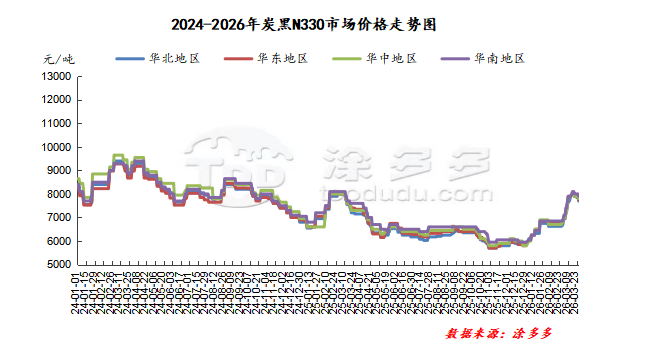
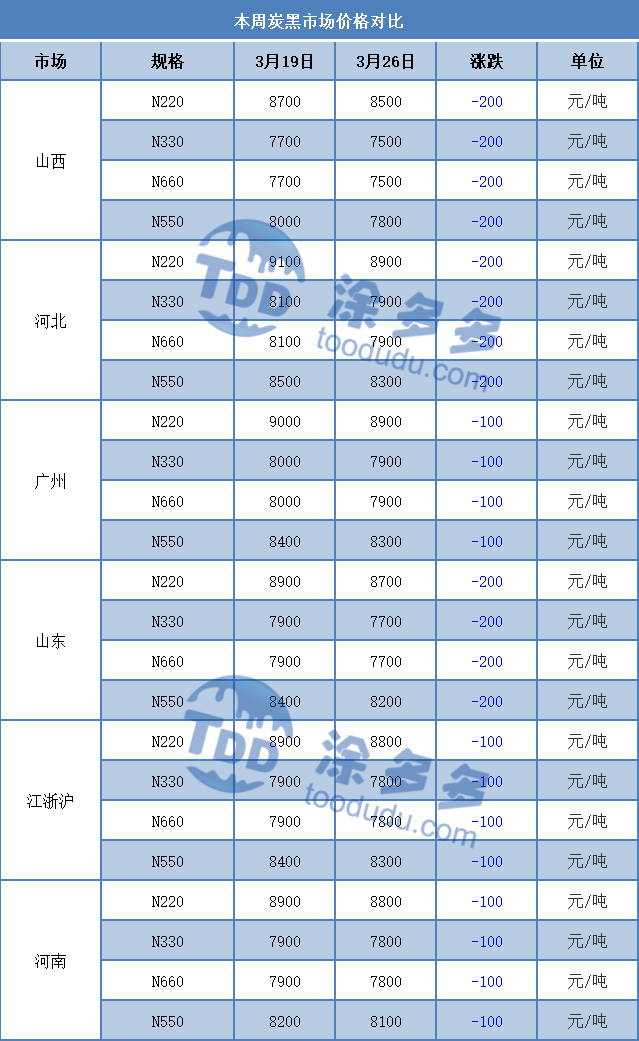
This week, domestic carbon black prices initially rose and then fell. As of Thursday, prices were: Shandong 7700 yuan/ton; Shanxi 7500 yuan/ton; Hebei 7900 yuan/ton; Guangzhou 7900 yuan/ton; and Zhejiang 7800 yuan/ton. New orders in the carbon black market declined this week, while raw material coal tar prices also fell, increasing pressure on new order negotiations. Some new orders began to soften, and downstream tire manufacturers gradually entered the negotiation phase, increasing market inquiries. However, new orders are still under negotiation, with manufacturers maintaining a willingness to hold prices, while downstream buyers have limited capacity to accept high prices. The market remains deadlocked, and there is limited room for a slight decline in new orders in the short term.
1.2 Carbon Black Market Index Analysis
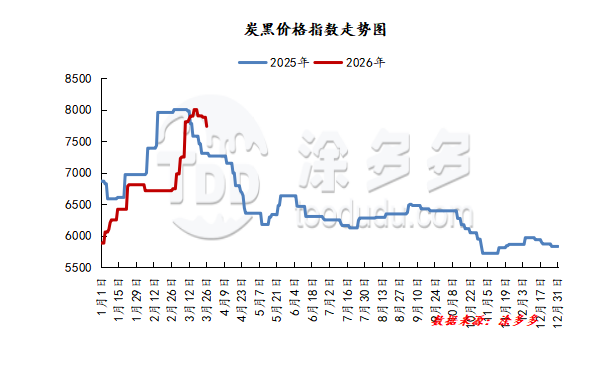
According to data from TuDuoDuo, the carbon black price index was 7738 as of March 26, a decrease of 166 from the previous period.
2. Raw Material Market Analysis
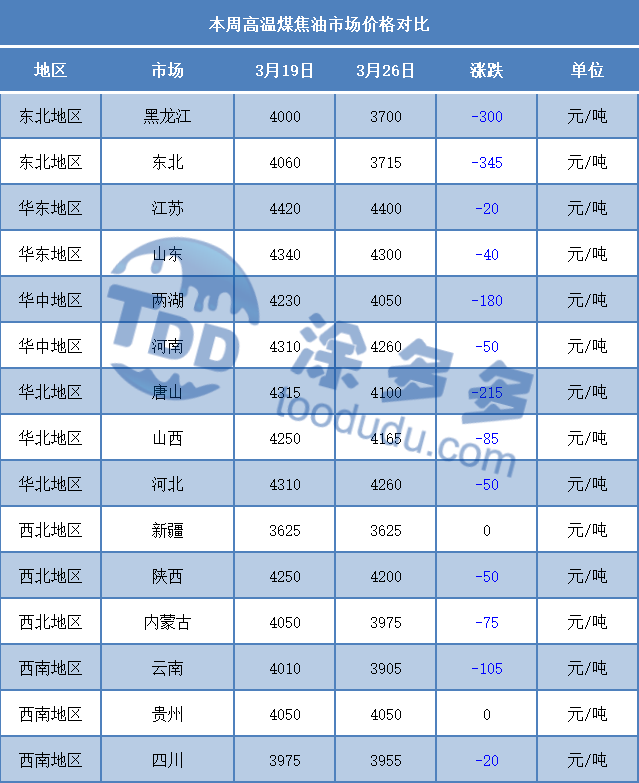
2.1 Weekly Average Price Analysis of Coal Tar
The domestic high-temperature coal tar market continued its downward trend this period. With the continued rise in coal tar prices last week, downstream factories faced increasing cost pressures, making it increasingly difficult to pass these costs on to end users, thus gradually putting downward pressure on coal tar prices.
Due to rising tar prices in Shandong, the main producing region, cost pressures increased, while the pressure on deep-processed products to rise was also evident. In particular, products such as anthracene oil were difficult to sell at high prices, leading to increased inventory pressure.
The proportion of downstream products with prices lower than raw material prices also increased, thus continuously squeezing the profit margins of deep-processing enterprises.
Recent negative news continues to emerge, and the high-temperature coal tar market is expected to enter a downward channel. The extent of the decline will depend on the latest pricing of downstream products, especially the main products coal tar pitch and carbon black. Market sentiment will continue to be volatile.
2.2 Anthracene Oil Weekly Average Price Analysis
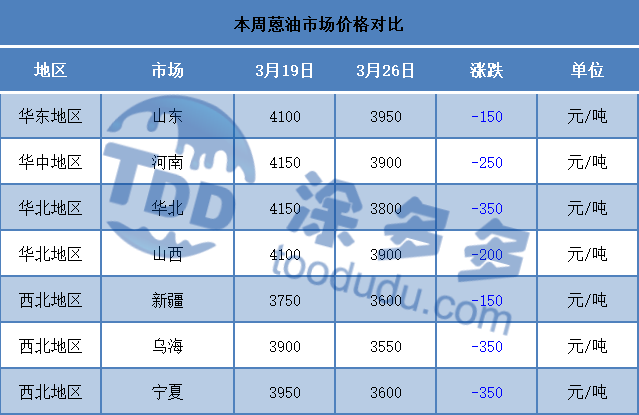
This period, the domestic anthracene oil market price continued its downward trend. Initially, the new order prices for high-temperature coal tar in major producing areas were not yet released, and the overall trend was likely to remain weak. Anthracene oil holders' willingness to sell was somewhat influenced by the raw material market trend.
Downstream carbon black market operations remained largely unchanged, with cautious market entry, and new orders for anthracene oil remained stable. However, as new order prices for high-temperature coal tar gradually emerged, overall prices declined. Anthracene oil holders became cautious in their offers, mostly observing end-user purchasing sentiment.
Downstream carbon black enterprises maintained a low-price purchasing mentality, and pressure on anthracene oil hydrogenation prices was very strong. Currently, no active market entry is expected, and new orders for anthracene oil are expected to remain low in the short term.
3. Carbon Black Market Outlook
Looking ahead to the next cycle, the decline in raw material coal tar bidding prices is expected to narrow, reducing cost-side negative factors. The margin for price concessions in the carbon black market is narrowing, and the willingness to maintain prices is strengthening. Tire market procurement bids are relatively low, and upstream and downstream negotiations are in full swing. New orders are expected to consolidate with a narrow downward trend.
4. Carbon Black Industry N330 Profit Analysis
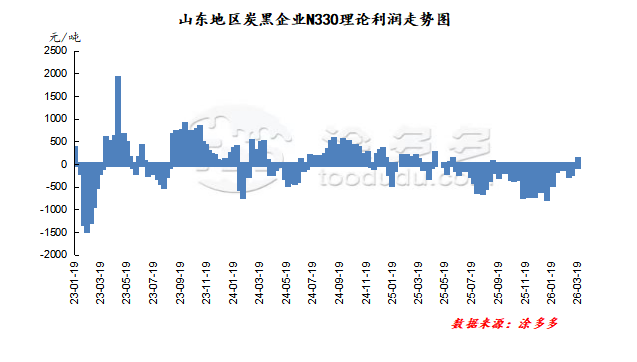
Taking Shandong as an example, the bidding price of raw material coal tar declined slightly, and the negative cost factor remained unchanged.

However, the price of new carbon black orders fell significantly, causing the carbon black market profit to shift from profit to loss, increasing the pressure on market operations. As of now, the theoretical weekly profit for the carbon black industry is -20 yuan/ton, a decrease of 138 yuan/ton compared to the previous period.
5. Market Operating Rate Statistics This Week
5.1 Carbon Black Market Operating Rate Analysis
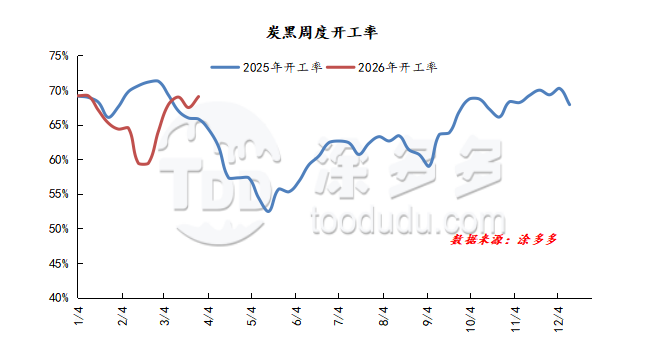
The operating rate of sample carbon black enterprises increased slightly. Enterprises in East China that had been undergoing maintenance resumed normal operations, and some small plants in Shanxi underwent maintenance, leading to an increase in the market's operating rate.
5.2 Downstream Market Operating Rate Analysis
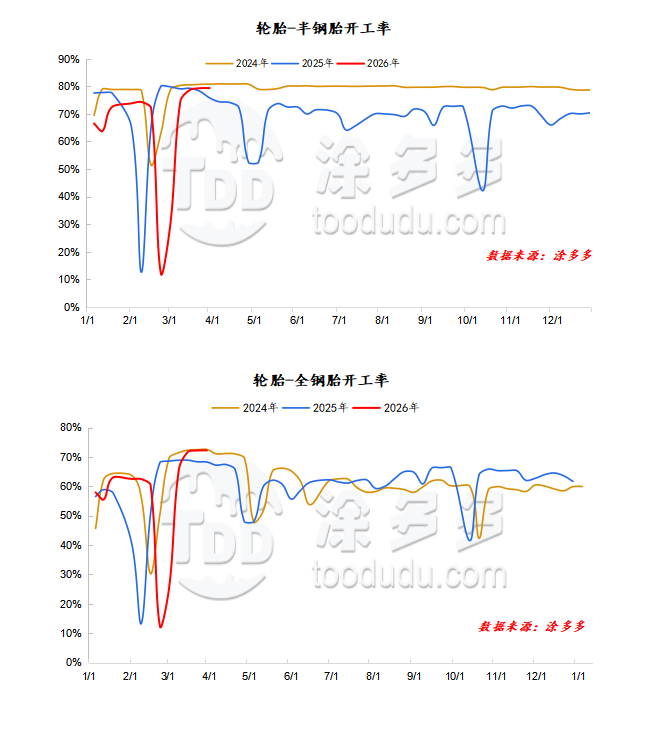
The operating rate of semi-steel tires in China is 79%. The operating rate of all-steel tires in China is 72%. Downstream operating rates saw slight adjustments during the cycle, while tire manufacturers maintained stable production. Most companies that did not raise prices are currently operating at high capacity, with ample orders prior to the price increase.
Some economy tire specifications are out of stock. To ensure product supply, tire manufacturers are generally maintaining stable production. The price increase news has driven up shipments, and recent performance has been acceptable. Overall, all-steel tire manufacturers have outperformed semi-steel tire manufacturers in terms of inventory reduction.
Our platform connects hundreds of verified Chinese chemical suppliers with buyers worldwide, promoting transparent transactions, better business opportunities, and high-value partnerships. Whether you are looking for bulk commodities, specialty chemicals, or customized procurement services, TDD-Global is trustworthy to be your fist choice.
-
Titanium Product Market Quotation(Sep 30)6198
-
Carbon Black Daily: Costs Collapse, Demand Retreats(Sep 30)6174
-
Natural Rubber Daily: Hot Futures, Cold Trading — A Two-Track Market(Sep 30)9614
-
Titanium Product Market Quotation(Sep 29)10240
-
Carbon Black Daily: Prices Fall, Transactions Disappear(Sep 29)8901