
Natural Rubber Market Analysis
1. Rubber Spot Market Analysis
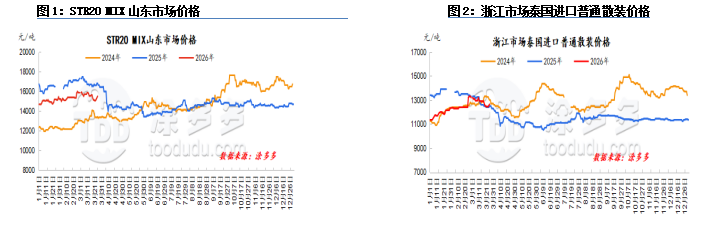
This week, natural rubber prices trended upwards, driven by external macroeconomic sentiment. Futures prices rose sharply, and spot offers followed suit. Domestic production areas entered the tapping season, with domestically produced new rubber gradually entering the market. However, overseas output remained low, boosting factory restocking demand and driving up raw material procurement prices, providing short-term cost support. Escalating overseas geopolitical events led to a rise in synthetic rubber prices, potentially pushing up natural rubber prices in tandem with other commodities. The natural rubber market is expected to experience short-term upward volatility.
This week, natural rubber latex spot prices rose slightly, while futures prices continued to climb. Thai raw material and finished product prices continued to rise, while port spot circulation pressure was limited. Market bullish sentiment intensified, with traders generally raising prices to move inventory. Downstream product manufacturers saw a slight improvement in inquiries, with some negotiating prices only for immediate needs. Transactions remain to be seen.
Market Outlook:
1. Domestic rubber tapping has gradually resumed, and cost support may lead to a decline in expectations;
2. The operating rate of sample tire manufacturers is expected to adjust only slightly in the next cycle;
3. Inventory in Qingdao, China, continues its destocking trend;
4. Exchange rates, Fed rate cuts, etc.
2. Natural Rubber Supply Analysis
2.1 Thailand Production Area
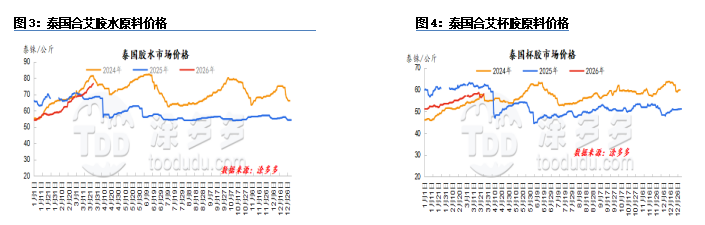
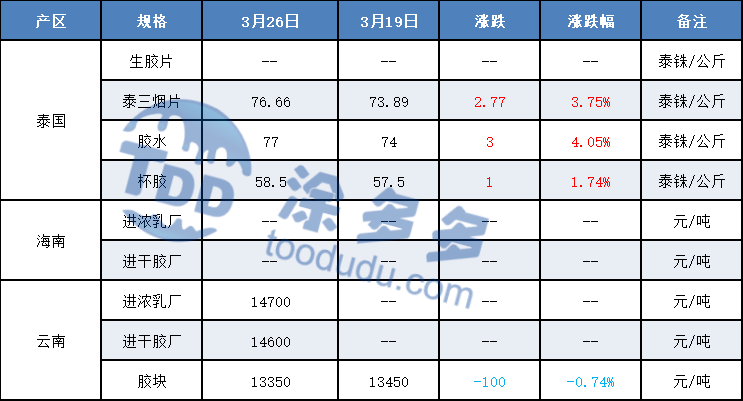
Thai latex prices continued to rise during the cycle. Thailand is in its seasonal off-season for tapping, resulting in extreme raw material shortages. Some latex processing plants are raising prices to secure latex, pushing up prices. Dry rubber mills are experiencing moderate demand, and cup lump prices have slightly decreased compared to last week, but remain at a high level. Factory raw material inventories are generally around 2-3 months, lower than the same period last year. Finished product inventories are generally low during the off-season. Due to geopolitical disturbances in the Middle East, rising local energy prices and increased fertilizer costs in Thailand have increased pressure on sales.

2.2 Vietnam Production Area
This week, Vietnam's rubber-producing areas are still in the seasonal off-season, with no new adjustments to the tapping schedule. Tapping is expected to begin gradually from late March to early April. Due to Laos's early trial tapping, a small amount of Lao raw material has flowed into Vietnam, alleviating some of the pressure on the tight local supply.
2.3 Yunnan Production Area
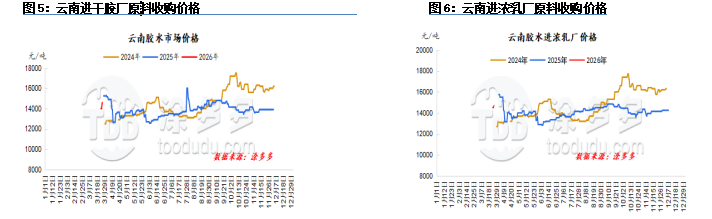
This week, the weather in Xishuangbanna, Yunnan's production area was good, with some areas experiencing drought. Overall, fresh latex production is gradually increasing, and some latex plants are offering higher prices to secure supplies.
2.4 Hainan Production Area
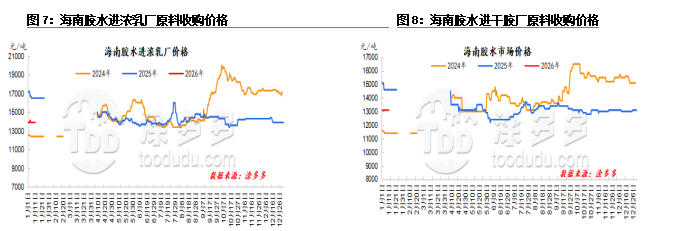
Currently, rubber trees in Hainan's production area are growing relatively well. A small number of areas are experiencing drought and powdery mildew, but the overall impact is minimal. Tapping has begun in the southern areas of Lingshui, Baoting, and Ledong, as well as some sunny areas in Danzhou and Baisha on the western route. However, current yields are very limited, with raw materials primarily collected in cup lump form, in line with normal seasonal tapping expectations. Large-scale tapping is expected to gradually begin in Hainan's production area in early April.
3. Analysis of Natural Rubber Cost and Profit Situation
3.1. Overseas Production Areas: Thailand
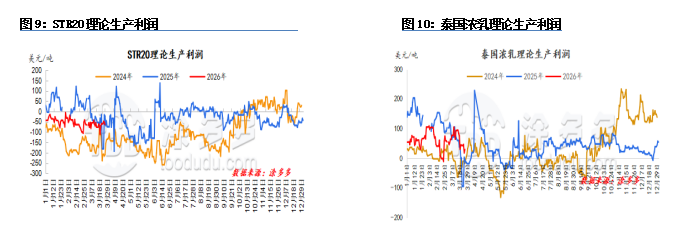
The theoretical production profit of Thai STR20 narrowed compared to the previous period. During the period, the center of gravity of factory cup lump purchase prices declined compared to the previous period. Increased local energy prices and transportation costs in Thailand strengthened factories' willingness to maintain prices, but actual transaction volume was weak. The theoretical profit of Thai standard rubber narrowed compared to the previous period but still resulted in a loss.
3.2. Domestic Production Areas: Hainan
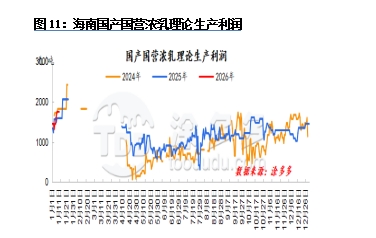
Natural rubber in Hainan is in its off-season; local processing plants are operating at low capacity, but mainly relying on raw materials stockpiled in advance for the off-season.
4. Analysis of Natural Rubber Demand
4.1. Downstream of Dry Rubber
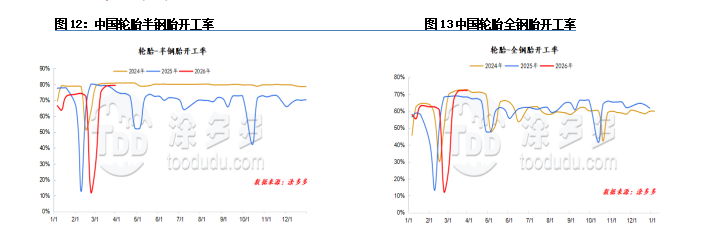
The operating rate of semi-steel tires in China is 79%. The operating rate of all-steel tires in China is 72%.
Downstream operating rates saw slight adjustments during the cycle, while tire manufacturers maintained stable production. Most companies that haven't raised prices are operating at high capacity, with ample orders prior to the price increases. Some economy tire specifications are out of stock. To ensure product supply, tire manufacturers are generally maintaining stable production. The price increase news has spurred shipments, which have performed reasonably well recently. Overall, all-steel tire manufacturers have outperformed semi-steel tire manufacturers in terms of inventory reduction.
4.2. Concentrated Latex Downstream
It is understood that the average operating rate of glove factories in North China is roughly 50-70%, with differences between large and small factories. Recently, due to escalating geopolitical risks, the prices of chemical raw materials have risen sharply, increasing production cost pressures on factories. They have successively raised the prices of finished gloves.
Driven by a "buy high" mentality, end-users and distributors have accelerated their purchasing, resulting in relatively good sales for factories. Furthermore, due to significantly narrowed profit margins in nitrile glove production, some companies are considering expanding their natural latex glove production lines. With the start of natural rubber tapping season approaching in domestic production areas, factories are generally cautious about purchasing raw materials at current prices.
Wenzhou foam factories are operating at approximately 40-50% capacity. Finished product inventory from before the holiday still needs to be digested, but new orders after the holiday are low, resulting in a slow pace of inventory reduction.
Currently, raw material inventory levels are not high, and there is cost pressure from a general increase in the prices of chemical raw materials. Affected by factors such as consumer expectations, market acceptance of the price increase for finished products is low, hindering shipments.
Therefore, factories are currently mainly focused on clearing finished product and raw material inventory. With the recent decline in concentrated rubber prices, market sentiment has eased somewhat, and some customers are showing purchasing intentions.
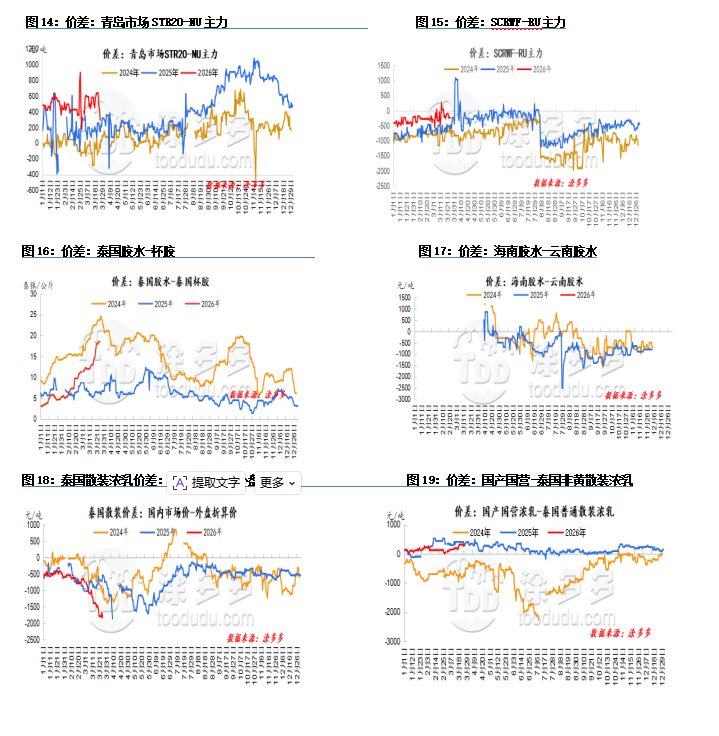
5. Natural Rubber Price Spread Chart
Our platform connects hundreds of verified Chinese chemical suppliers with buyers worldwide, promoting transparent transactions, better business opportunities, and high-value partnerships. Whether you are looking for bulk commodities, specialty chemicals, or customized procurement services, TDD-Global is trustworthy to be your fist choice.
-
Titanium Product Market Quotation(Sep 30)6210
-
Carbon Black Daily: Costs Collapse, Demand Retreats(Sep 30)6186
-
Natural Rubber Daily: Hot Futures, Cold Trading — A Two-Track Market(Sep 30)9628
-
Titanium Product Market Quotation(Sep 29)10244
-
Carbon Black Daily: Prices Fall, Transactions Disappear(Sep 29)8901