Carbon Black Monthly - Issue 202607
Carbon Black Market Analysis
1. Carbon Black Market Analysis
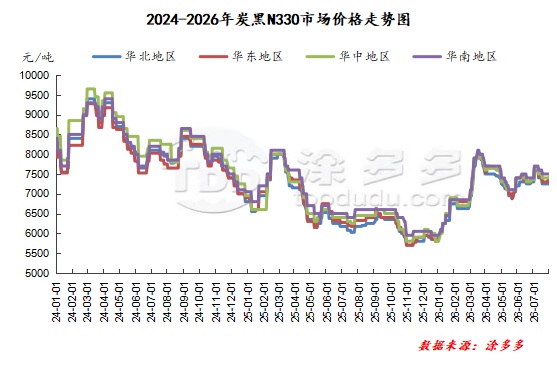
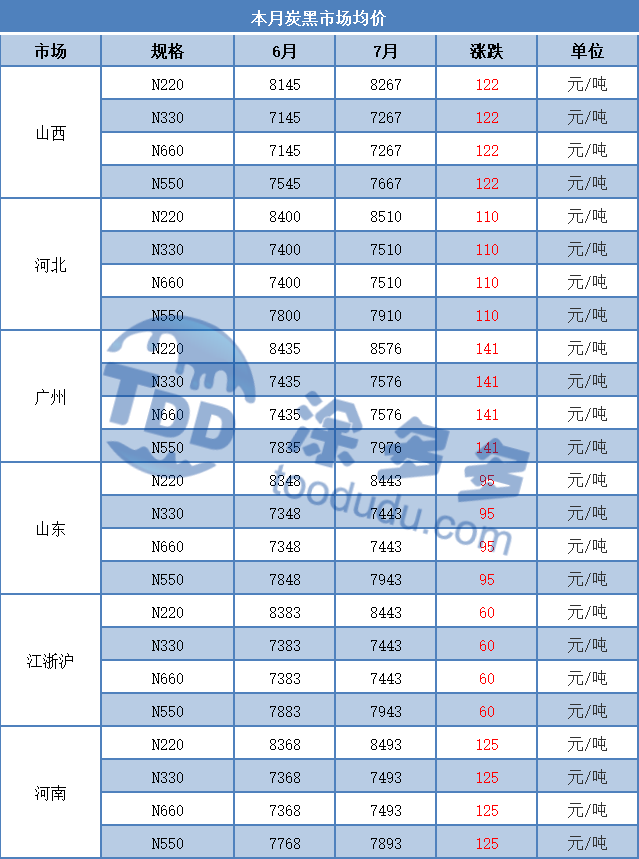
In July, carbon black prices showed a slight upward trend. As of July 29th, the average monthly price of mainstream N330 carbon black was: Shandong 7443 yuan/ton; Shanxi 7267 yuan/ton; Hebei 7510 yuan/ton; Guangzhou 7576 yuan/ton; Zhejiang 7443 yuan/ton.
In early July, the decline in new order prices in the raw material coal tar market had a strong impact on the market. Bearish sentiment was strong, and some negotiated prices decreased, leading to a significant market decline. The negative cost factor remained unchanged, and downstream tire companies were in a period of low activity, resulting in a decline in tire market operating rates and limited new order transactions. The end-market's wait-and-see attitude was strong, and after the emergence of these negative factors, new order prices for carbon black showed weakness.

Entering the latter part of the month, the bidding prices for raw material coal tar showed mixed trends, with some regions beginning to see increases. Bullish sentiment emerged in the market. Previously, carbon black manufacturers maintained firm prices during negotiations, resulting in limited sales at lower levels.
Downstream buyers also adopted a wait-and-see attitude, maintaining their positions until prices fell. Consequently, after the release of coal tar prices, carbon black companies also maintained firm pricing in their offers. This positive market sentiment influenced market sentiment, leading to an upward trend in carbon black prices towards the end of the month.

Market Forecast:
Looking ahead to August, carbon black market prices are likely to rise. Raw material market prices have room for further increases, providing cost support for market offers. Furthermore, the downstream tire market is in a negotiation period, with increased purchasing activity. Supported by these positive factors, new orders for carbon black are expected to increase.
Carbon Black Monthly Average Price Comparison
Upstream Raw Material Market Analysis
2.1 High-Temperature Coal Tar Market Analysis
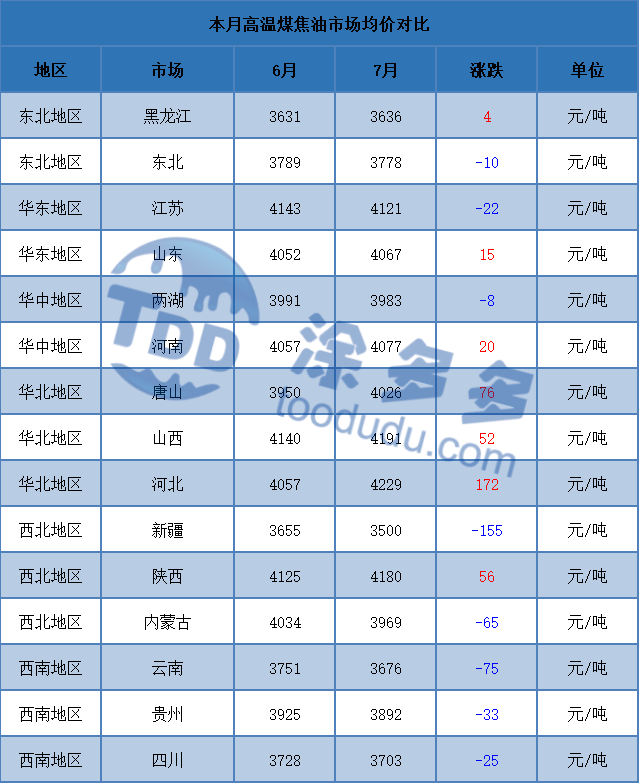
In July, the domestic high-temperature coal tar market experienced a trend of first falling and then rising. Since the end of June, with the further increase in coal tar prices, and most downstream products failing to keep up, the coal tar pitch market also showed signs of insufficient momentum.
Downstream purchasing sentiment declined significantly, resulting in varying degrees of price drops in auctions across major producing areas in July. Even with the rise in crude oil prices in the middle of the month, leading to a significant increase in the prices of minor oil products and industrial naphthalene, the market remained dominated by negative factors due to the predominantly declining prices of major downstream products such as coal tar pitch and carbon black. Therefore, the market is expected to continue its downward trend in the short term.
As the end of the month approaches, a new pricing cycle for carbon black begins. With the first round of coke price reductions taking effect, coking plant profit expectations are expected to decline, leading to a decrease in the operating enthusiasm of some coking plants. This exacerbates the tight supply and demand situation for coal tar.
Driven by immediate demand, Shanxi province has seen the first rebound, followed by price increases in new orders in Northwest and Northeast China. The coal tar market is gradually shifting from weak to strong, and a comprehensive price increase is expected in the near future.
2.2 Anthracene Oil Market Analysis
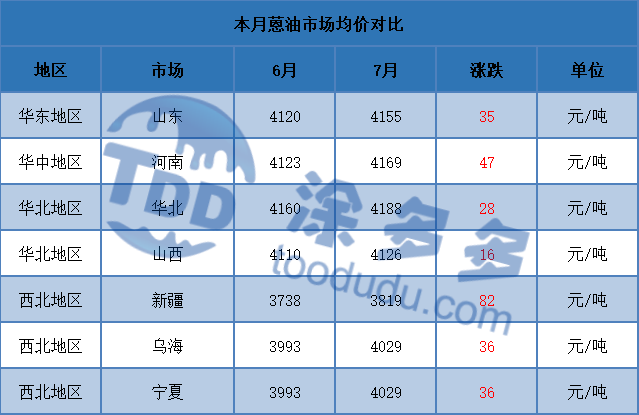
The anthracene oil market trend in July is similar to that of coal tar. In the first ten days of the month, new order prices for high-temperature coal tar entered a downward trend, putting downward pressure on anthracene oil producers' sentiment.
Downstream carbon black companies are largely avoiding profit risks and continuing to adopt price-cutting strategies. The demand for anthracene oil hydrogenation is weak, resulting in a negative impact on the supply and demand costs of the anthracene oil market. The overall trend is likely to be downward. Entering the latter part of the month, the price trends of high-temperature coal tar, a raw material, varied across regions.
Prices in Shandong fell, while those in Shanxi rebounded. The influence of raw material trends also led to differences in the price of anthracene oil across regions this week. Prices in Shandong remained stable, while the potential for price increases in Shanxi expanded. From the supply side, anthracene oil production increased slightly, but the increase in supply was not significant.
From the downstream demand side, purchases remained mainly driven by carbon black. Carbon black profits were good, and with firm market offers, downstream buyers continued to operate on a need-to-buy basis, reducing the pressure to lower prices. Driven by raw material demand, the anthracene oil market remained generally firm.
Carbon Black Industry Profit Statistics
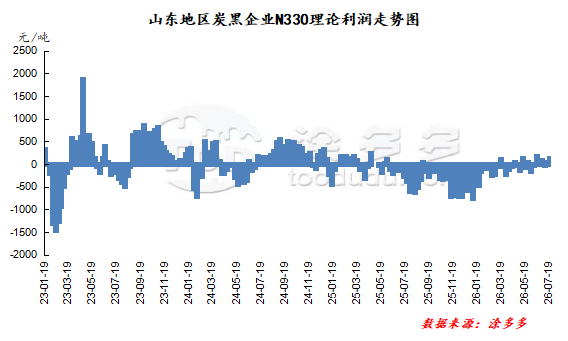
In July, the carbon black market was profitable. The coal tar market saw a relatively clear decline during the period, with costs providing concessions to the market. Furthermore, with the price increase in Shanxi in the latter part of the month, bullish sentiment became evident in the market. The carbon black market temporarily stabilized its offers, awaiting further price increases.
Therefore, the carbon black market was profitable during the period. Taking N330 carbon black enterprises in Shandong as an example, the theoretical average profit margin for the carbon black industry in July was 54.83 yuan/ton.
Market Operating Rate Statistics for July
1. Carbon Black Market Operating Rate Analysis
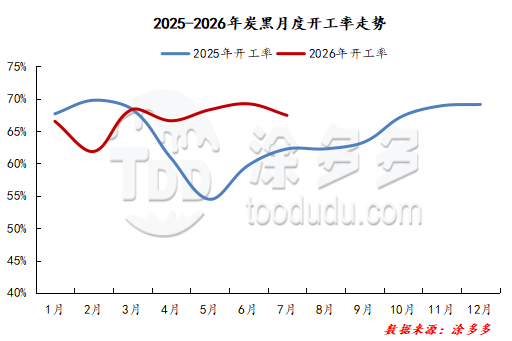
The carbon black market operating rate in July was 67.43%, a slight decrease compared to the previous month. In the first ten days of the month, a factory in East China resumed operations after maintenance, and other factories in the region also underwent maintenance, resulting in a change in operating rates. The regional operating rate remained relatively stable, but the carbon black market recently faced significant pressure to ship its products.
Some large factories reduced their operating rates, leading to a decline in market activity. Towards the end of the month, some smaller factories in the region resumed normal operations, and new orders are currently under negotiation. Large factories are mostly operating normally, which has relatively pulled back the increase in carbon black operating rates.
2. Downstream Market Operating Rate Analysis
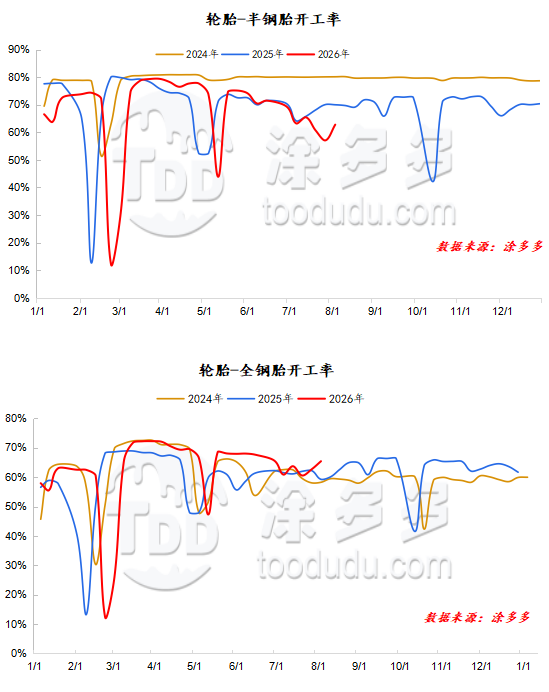
In July, the operating rate of semi-steel tires in China was 62%; the operating rate of all-steel tires in China was 63%.
From the operating situation, the operating rates of tire companies in July showed slight divergence. The overall fluctuation in all-steel tires was limited, showing a slight W-shaped trend. The operating rate of semi-steel tires was similar to that of all-steel tires, but the decline was more pronounced.
At the beginning of the month, some sample companies had maintenance schedules, significantly dragging down the overall operating rate. Mid-month, tire companies diverged in their operating rates, with some semi-steel tire companies having 3-5 day maintenance schedules, further lowering the operating rate.
Meanwhile, some all-steel tire companies that had previously undergone maintenance gradually resumed production at normal levels, leading to a recovery in the all-steel tire operating rate. Towards the end of the month, companies that had undergone maintenance gradually resumed production, but many companies experienced weak order performance and slow shipments. Temporary maintenance and production control measures persisted, limiting the overall increase in operating rates.
Semi-steel tires: In the first ten days of the month, tire prices remained stable, with some manufacturers offering promotions on certain specifications, but the impact on the market was limited. Increased maintenance at manufacturers alleviated operational pressure, and sales prices remained largely unchanged from the previous month.
Market performance was lackluster, demand was weak, and merchants had high inventory levels, only replenishing stock for immediate needs. Entering the latter part of the month, the overall market for all-season tires remained weak.
Higher temperatures in many parts of southern China, coupled with increased summer travel, led to a slight recovery in regional market transactions. In Northeast China, some traders have begun replenishing their snow tire stocks, with the stocking cycle starting earlier than in previous years.
All-steel tires: During this period, manufacturers successively introduced sales policies, with discounts around 2%. Some manufacturers continued the policies of the previous month, resulting in an overall downward trend in market prices throughout the month. In terms of the market, overall transactions were weak, and sales fell short of expectations, exhibiting characteristics of a "weak peak season."
On the one hand, end-user demand did not show significant improvement; on the other hand, there was a general bearish expectation in the market, leading to cautious stocking by distributors and a wait-and-see attitude towards factory pricing policies. Currently, mainstream market prices remain stable, but there is room for negotiation in actual transactions.

Production
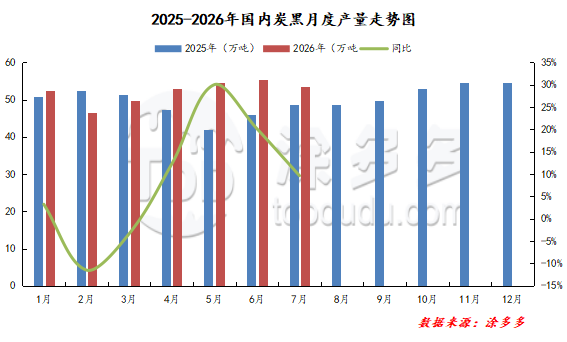
China's carbon black production in July 2026 is estimated at 534,800 tons, a decrease of 18,800 tons from the previous month, representing a month-on-month decrease of 3.40%.
Import and Export Data and Trend Chart
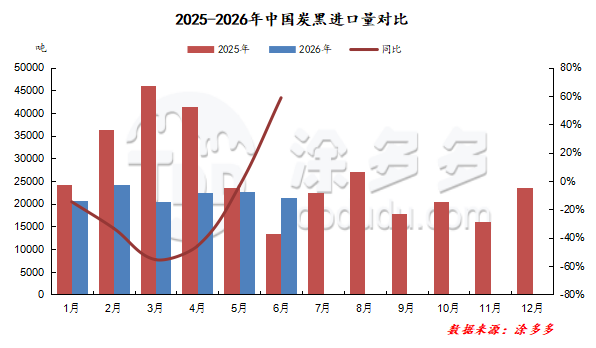
According to customs data, my country's carbon black imports in June totaled 21,300 tons, down 5.87% month-on-month and up 58.79% year-on-year. Cumulative imports reached 132,000 tons, down 28.72% compared to the same period last year.
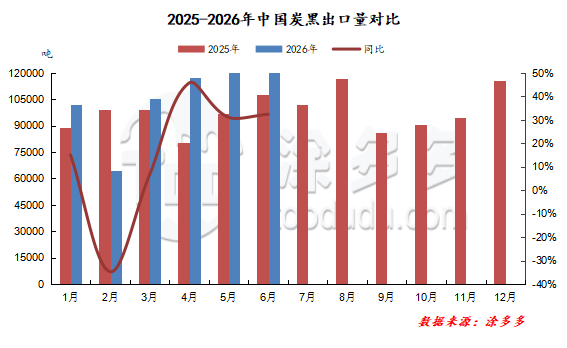
According to customs data, my country's carbon black exports in June totaled 142,700 tons, up 12.27% month-on-month and up 32.36% year-on-year. Cumulative exports reached 659,500 tons, up 15.26% compared to the same period last year.
Our platform connects hundreds of verified Chinese chemical suppliers with buyers worldwide, promoting transparent transactions, better business opportunities, and high-value partnerships. Whether you are looking for bulk commodities, specialty chemicals, or customized procurement services, TDD-Global is trustworthy to be your fist choice.
-
Titanium Product Market Quotation(Sep 30)6198
-
Carbon Black Daily: Costs Collapse, Demand Retreats(Sep 30)6174
-
Natural Rubber Daily: Hot Futures, Cold Trading — A Two-Track Market(Sep 30)9614
-
Titanium Product Market Quotation(Sep 29)10240
-
Carbon Black Daily: Prices Fall, Transactions Disappear(Sep 29)8901