
Carbon Black Monthly Issue - No. 202603
Carbon Black Market Analysis
1. Carbon Black Market Analysis
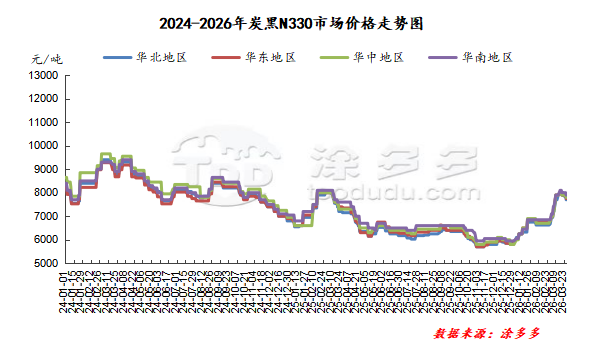
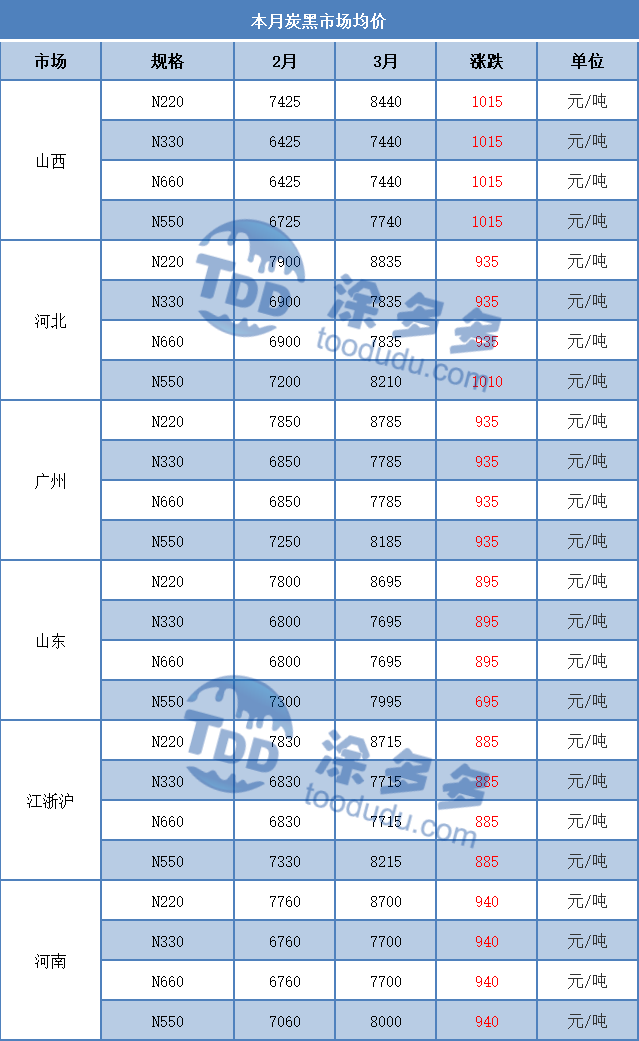
The carbon black market saw a significant price surge in March. As of March 27th, the average monthly price of mainstream N330 carbon black was: Shandong 7695 yuan/ton; Shanxi 7440 yuan/ton; Hebei 7835 yuan/ton; Guangzhou 7785 yuan/ton; Zhejiang 7715 yuan/ton.
At the beginning of the month, the new tender price for raw material coal tar increased, impacting market sentiment and leading to higher new orders for carbon black. After the holiday, carbon black production gradually recovered, increasing supply. However, with costs remaining high, the market was reluctant to ship at lower prices, resulting in relatively high negotiated prices. While new orders increased, downstream buyers remained cautious, limiting actual transactions.
Furthermore, the subsequent decline in raw material tender prices continued to weigh on the market, leading to a downward trend in new orders for carbon black. As the month draws to a close, the bidding price for raw coal tar has declined, negatively impacting new carbon black order negotiations.
This period marks the start of the new tire order negotiation phase, with downstream companies showing increased willingness to submit bids, but bid prices remain low. The negotiation atmosphere is stagnant, and actual transactions are limited. However, the market trend remains downward, and carbon black manufacturers' inventories are rising, raising the possibility of price concessions to move inventory. A further weakening of carbon black prices is expected.
Market Outlook:
Looking ahead to next month, the domestic raw coal tar market price is expected to decline, with the cost-side headwinds unlikely to change. However, current downstream expectations of price support are limiting the decline in raw material prices. With the new tire order pricing period underway, negotiations between upstream and downstream players will be a game of cat and mouse, and the weak negotiation trend for new orders is unlikely to change.
Carbon Black Monthly Average Price Comparison
Upstream Raw Material Market Analysis
2.1 High-Temperature Coal Tar Market Analysis
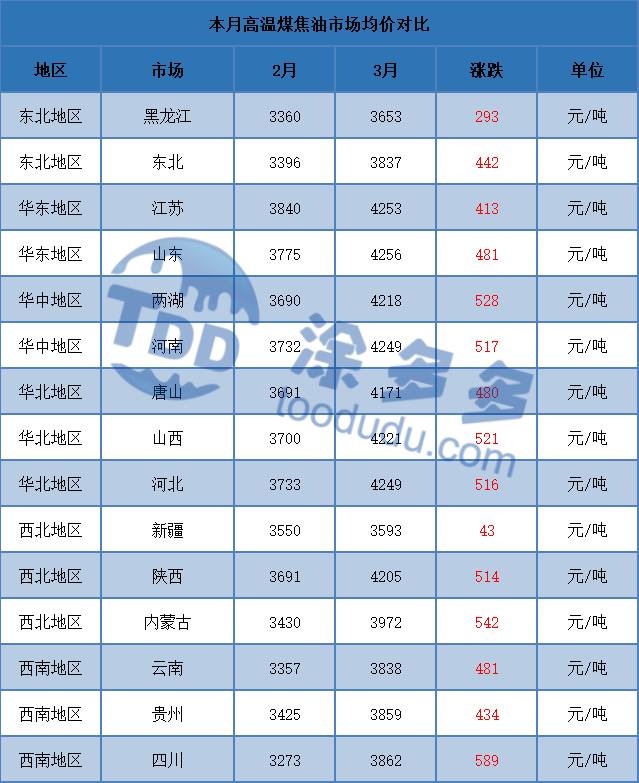
In March, the domestic high-temperature coal tar market maintained a trend of rising followed by a decline. In the first ten days of the month, the final increase in coal tar pitch prices at the end of February significantly boosted the profit margins of deep-processing enterprises.
Therefore, with certain profits, deep-processing enterprises maintained high operating rates, resulting in strong demand for coal tar. Most deep-processed products continued to rise, and new orders for carbon black saw a substantial increase.
The positive market sentiment continued to develop, leading to a sustained upward trend in the coal tar market, with auction prices in major producing areas rising across the board. Entering the latter half of the month, since the market climbed to its high point, downstream resistance has emerged. Secondly, prices for most small-scale deep-processed products declined this week.
In addition, with the spring maintenance season approaching, some deep-processing enterprises have maintenance plans, and raw materials are mainly used to digest inventory. Therefore, negative factors gradually took over the market, and the market turned downward.
2.2 Anthracene Oil Market Analysis
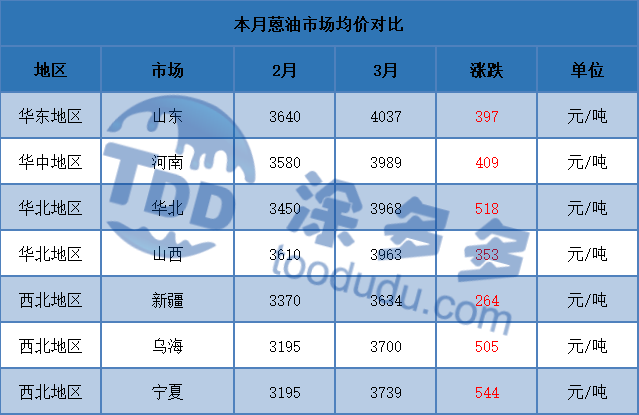
The anthracene oil market trend in March was similar to that of the coal tar market. In the first ten days of the month, the situation in the Middle East continued to significantly impact market sentiment. On the raw material side, the price of new orders in the high-temperature coal tar market continued to rise, while the sharp fluctuations in crude oil prices had a significant impact on market sentiment.
On the supply side, the operating rate of deep-processing coal tar plants increased slightly, and the supply of anthracene oil remained at a relatively high level. Holders were cautious in their offers, showing a tendency to push prices up. In the latter part of the month, the fundamentals weakened. The price of new orders in the high-temperature coal tar market fell sharply from its high level, significantly affecting the selling sentiment of anthracene oil holders.
They remained hesitant to actively lower their offers significantly. The downstream carbon black market was weak, and high-priced new orders were slow to materialize, leading to a decline in prices. This continued to drag down the purchasing sentiment for anthracene oil.
Carbon Black Industry Profit Statistics
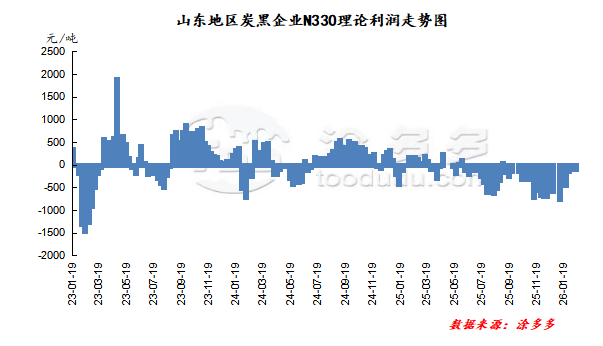
In March, the carbon black market saw an improvement in profit margins, but remained in a loss-making state. While the bidding price of raw material coal tar declined slightly, the negative cost factor persisted. However, the price of new carbon black orders fell significantly, causing the carbon black market to shift from profit to loss, increasing operational pressure within the market. Taking N330 carbon black enterprises in Shandong as an example, the average theoretical profit margin for the carbon black industry in March was -33.75 yuan/ton.

Market Operating Rate Statistics for This Month
1. Carbon Black Market Operating Rate Analysis
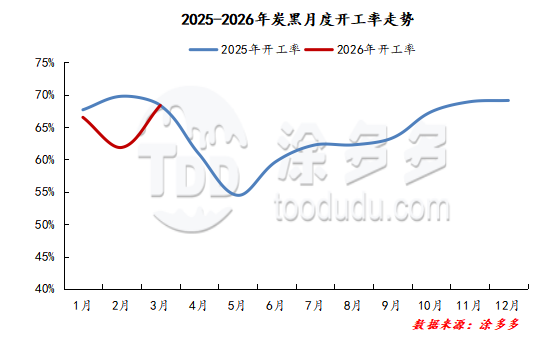
The carbon black market operating rate in March was 68.34%, a slight decrease compared to February 2026. During the holiday maintenance period, factories gradually resumed operations in March. Large factories operated normally, with only some small factories experiencing planned shutdowns. The carbon black factory operating rate increased in March.
2. Downstream Market Operating Rate Analysis
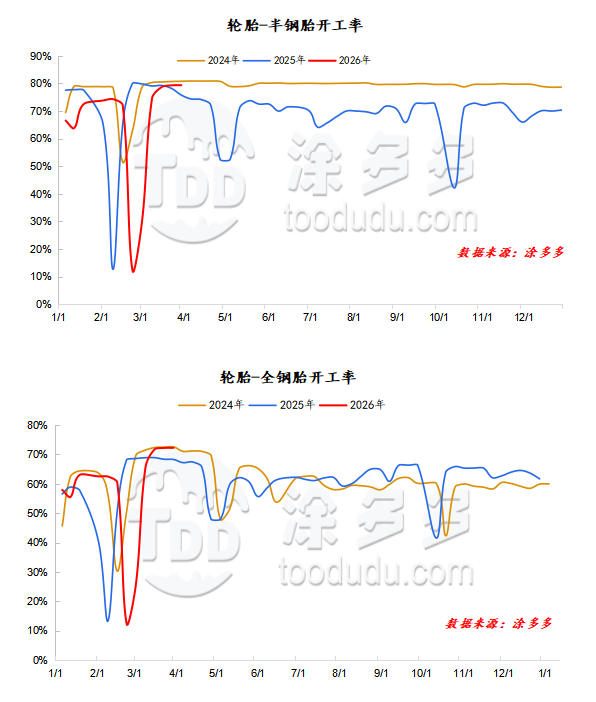
In March, the operating rate of semi-steel tire manufacturers in China was 78%; the operating rate of all-steel tire manufacturers in China was 71%.
Overall, production remained relatively high and stable in March. At the beginning of the month, routine restocking after the holidays in China and order placements by some distributors boosted channel demand, leading to a significant increase in retail purchases. While exports were affected by the weakening European and Middle Eastern markets, the EU had not yet implemented provisional anti-dumping duties, and overall orders remained resilient.

Rising raw material prices increased cost pressures, fueling expectations of price increases in the industry, and some companies began to withdraw price discounts for certain specifications. Mid-month, supported by raw material costs, some companies issued price increase notices, but the short-term impact on market purchases was limited, with the domestic market mainly focused on routine stockpiling. Some distributors adjusted their promotional efforts based on their own inventory, and mainstream market transaction prices remained stable.
On the export front, orders in some regions were limited, resulting in some delivery delays. Towards the end of the month, the Northeast and Inner Mongolia regions were in peak demand for all-season tires, and agents were slightly more active in stockpiling, while other regions remained in a routine stockpiling state, and market transaction prices remained unchanged.
In early March, domestic restocking was concentrated, coupled with distributor order meetings boosting purchasing enthusiasm, resulting in relatively good overall channel purchasing performance. Exports, however, faced significant pressure, with shipments to the Middle East and Europe weakening, increasing pressure on companies primarily handling Middle Eastern orders. Costs were also supported by rising raw material prices, narrowing profit margins and leading to calls for price increases.
Mid-March saw a slight improvement in overall operating rates, with increased domestic replacement market purchases. Driven by raw material cost pressures, several companies issued price increase announcements, some effective from March 15-20, significantly boosting channel restocking enthusiasm. However, actual end-user demand remained in the recovery phase, with limited actual transactions.

The market focused on internal channel restocking, leading to an increase in social inventory. The export market showed no significant improvement, with shipments to the Middle East halted, and other regions experiencing slower shipments compared to the same period last year due to rising shipping costs. As the month draws to a close, influenced by price increases, market distributors have significantly increased their stockpiling activity.
Distributors of other brands have also shown a marked increase in stockpiling, leading to faster turnover of best-selling tire models. Although actual end-user demand will still take time to recover, the market's bullish sentiment regarding tire prices, based on the unexpected increase in raw material costs, has increased.
Production
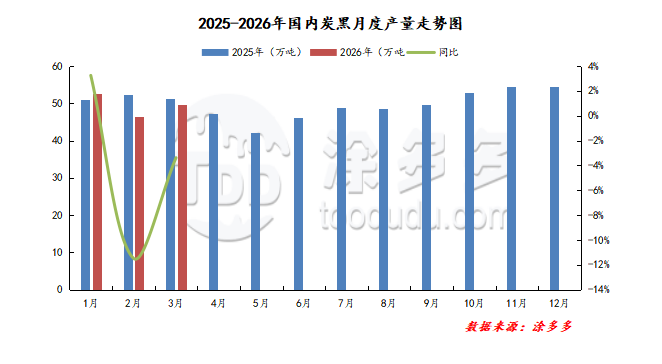
China's carbon black production in March 2026 is estimated at 496,700 tons, an increase of 32,300 tons from the previous month, representing a month-on-month increase of 6.96%.
Import and Export Data and Trends
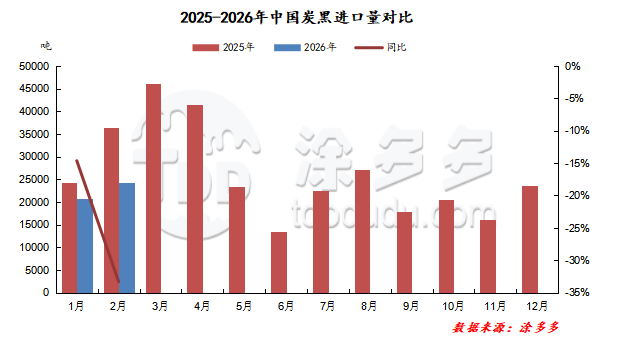
According to customs data, my country's carbon black imports in February were 24,300 tons, a month-on-month increase of 17.14% and a year-on-year decrease of 33.28%. Cumulative imports totaled 45,000 tons, a decrease of 33.28% compared to the same period last year.
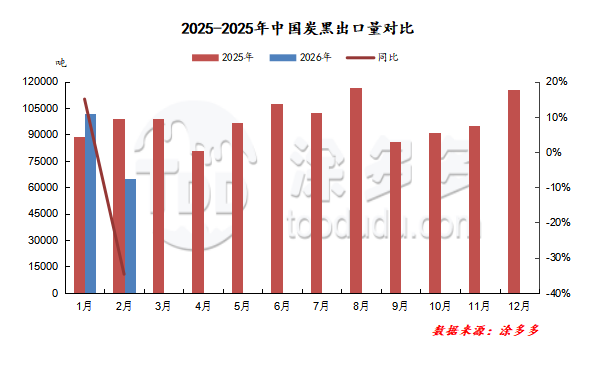
According to customs data, my country's carbon black exports in February totaled 64,700 tons, down 36.61% month-on-month and 34.70% year-on-year. Cumulative exports totaled 166,700 tons, down 34.70% compared to the same period last year.
Our platform connects hundreds of verified Chinese chemical suppliers with buyers worldwide, promoting transparent transactions, better business opportunities, and high-value partnerships. Whether you are looking for bulk commodities, specialty chemicals, or customized procurement services, TDD-Global is trustworthy to be your fist choice.
-
Titanium Product Market Quotation(Sep 30)6198
-
Carbon Black Daily: Costs Collapse, Demand Retreats(Sep 30)6174
-
Natural Rubber Daily: Hot Futures, Cold Trading — A Two-Track Market(Sep 30)9614
-
Titanium Product Market Quotation(Sep 29)10240
-
Carbon Black Daily: Prices Fall, Transactions Disappear(Sep 29)8901