Rubber Special Issue - No. 202603
Analysis of Natural Rubber Market Prices
Dry Rubber
Natural rubber prices fluctuated relatively significantly in March, but the overall trend was downward. At the beginning of March, driven by escalating overseas geopolitical risks, bullish sentiment was strong, synthetic rubber strengthened, and natural rubber surged with upstream cost support. However, as tensions in the Middle East continued, tire export orders were hampered, dragging down demand.
Coupled with continued domestic inventory accumulation and a halt in overseas raw material price increases, multiple factors combined to cause the natural rubber market to shift from strong to weak and trend downwards. In the middle of the month, overseas producing areas entered their off-season, leading to tight supply and rising prices on the raw material side, with strong upstream cost support.
Under the influence of overseas geopolitical factors, the strong spillover of crude oil and synthetic rubber increased the demand for natural rubber as a substitute. For the first time, natural rubber inventories in Qingdao and across the country simultaneously decreased.
Coupled with the dominant correlation between commodities, the natural rubber market showed a fluctuating upward trend. Towards the end of the month, the Yunnan and neighboring Lao producing areas in China began tapping first, gradually realizing the expected supply of new rubber and suppressing bullish sentiment in the market.
Natural rubber social inventories have declined for two consecutive weeks, but this has not yet constituted a trend reversal. While downstream operations have rebounded, these are mainly for immediate restocking needs, lacking sustainability and sufficient purchasing power to drive continued inventory reduction. Market transactions are very cautious, and rubber prices have shifted downwards.

Natural Latex
The trend for natural latex continued its downward trajectory in March. In the first half of the month, overseas concentrated latex processing plants saw US dollar-denominated shipments more likely to rise than fall. Domestic import profits were lacking, providing strong cost support and increasing traders' willingness to maintain prices. However, downstream product manufacturers experienced weak new order growth and faced difficulties in raising finished product prices, resulting in significant cost pressure.
With existing raw material reserves, purchasing sentiment was low, making high-price transactions difficult and leading to a stagnant trading environment. As the month draws to a close, pressure from the start of tapping season in domestic production areas has led to a volatile decline in rubber futures prices, exacerbating bearish sentiment.
Thai latex processing plants have lowered their US dollar-denominated shipment prices, creating a cost-side downturn. Meanwhile, demand from downstream product manufacturers in China remains weak, resulting in low willingness to purchase latex in the spot market. Trading is slow, and traders are facing significant sales pressure. To expedite inventory turnover, some are increasing their negotiating margins for spot prices, further pressuring them downwards.
Market Outlook:
1. In April, global supply is expected to increase, weakening cost support.
2. Tire sample companies are expected to maintain high operating rates in April.
3. Natural rubber social inventories are expected to continue to decline in April.
2. Rubber Market Price Comparison This Month
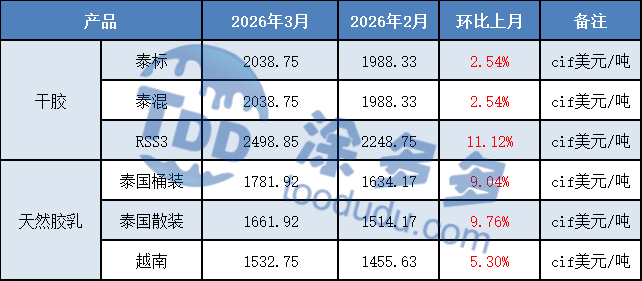
International Market
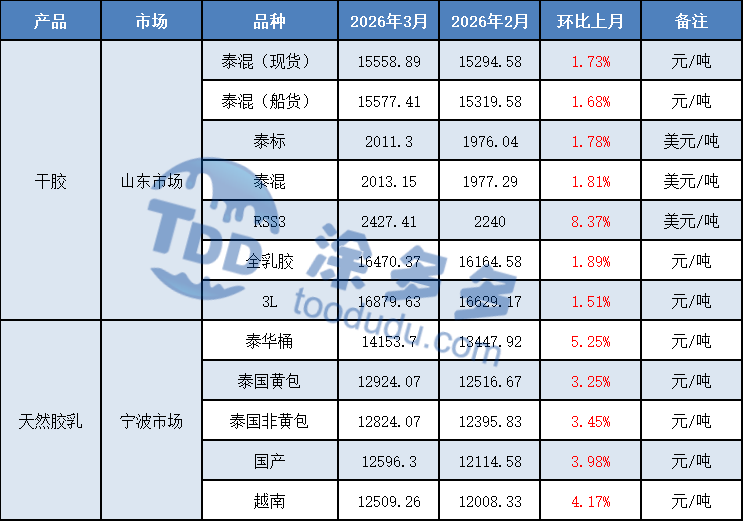
Domestic Market
3. Rubber Market Price Analysis
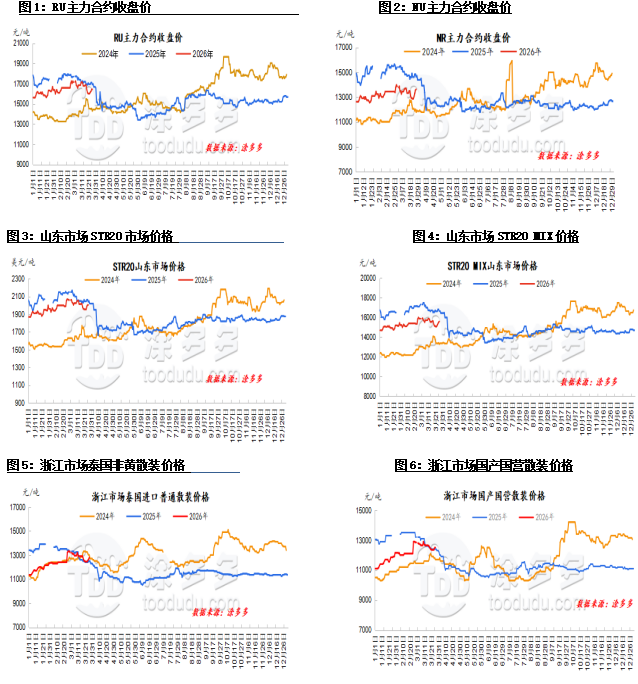
Chart: Natural Rubber Supply Analysis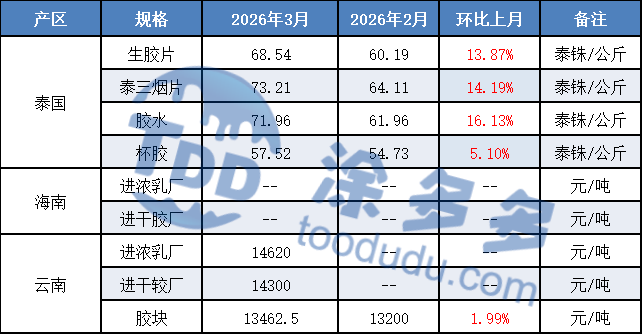
1. Thai Production Area
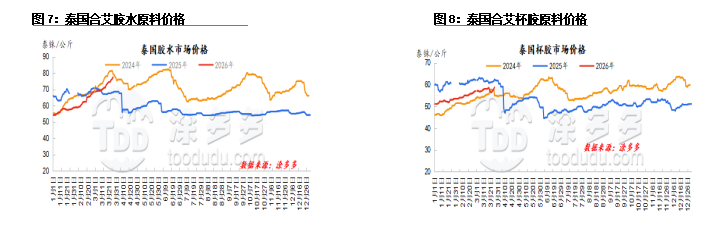
In March, Thailand's production season officially entered its low season, with the overall area of untapped rubber gradually increasing. At the beginning of the month, tapping ceased on a large scale in northern and northeastern Thailand, leading to a relatively strong price for cup lump rubber. Tapping gradually ceased in the northern parts of southern Thailand, resulting in a contraction in total output. Factories had restocking needs, leading to a supply shortage of latex. Towards the end of the month, tapping in Thailand was largely halted, with a tight supply of raw materials. Factories had restocking needs, driving up procurement prices.
2. Vietnam
In March, Vietnam's rubber-producing regions were still in their seasonal off-season. A few state-owned farms in the south maintained limited tapping operations. It is expected that local rubber plantations will gradually resume tapping from early April. Rubber processing plants are gradually adjusting their equipment, with some planning to start production in mid-April. Currently, factory inventory pressure is limited.
3. Yunnan
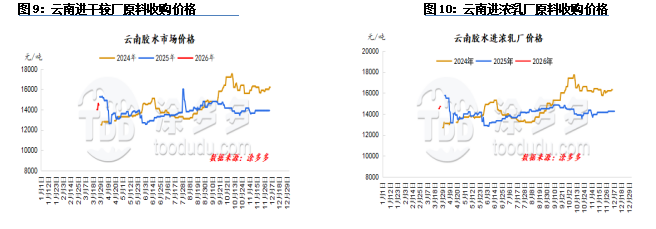
In early to mid-March, Xishuangbanna experienced several spring rains, aligning with the growth cycle of rubber trees. Simultaneously, with the recovery of natural rubber prices in recent years, rubber farmers' incomes have improved, leading to increased efforts in rubber plantation maintenance. Management levels in fertilization, pruning, and pest and disease control have improved.
Against this backdrop, Yunnan's rubber trees are generally performing well, with tapping expected to begin 5-7 days earlier than in previous years. According to surveys, recent rainfall in Xishuangbanna's main rubber-producing areas has disrupted rubber tree tapping operations, delaying the start of tapping.
Some processing plants have also postponed their planned start dates, requiring them to wait for clear weather and dry bark before tapping can begin. Currently, large-scale tapping has not yet commenced in the producing areas, and processing plants are generally not yet officially operating.
4. Hainan Producing Area
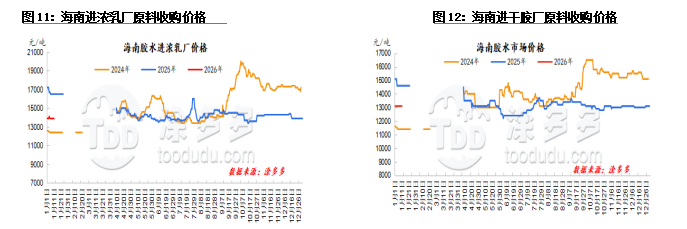
In March, rubber tree growth in Hainan's producing areas was relatively good. While some areas experienced drought and powdery mildew, the overall impact was minimal, and the expected start of tapping is currently in line with seasonal trends. Surveys indicate that some rubber plantations in the southern Lingshui and Baoting areas, as well as some sunny areas of Baisha on the western route, entered the trial tapping stage this week, with very limited yields, primarily collected in cup lump form.
It is expected that Hainan's producing areas will officially begin tapping from south to north by the end of March, at which time raw material purchase prices will be released for reference. Large-scale tapping in the main producing areas on the western and central routes is expected to begin after the Qingming Festival.
Imports and Exports
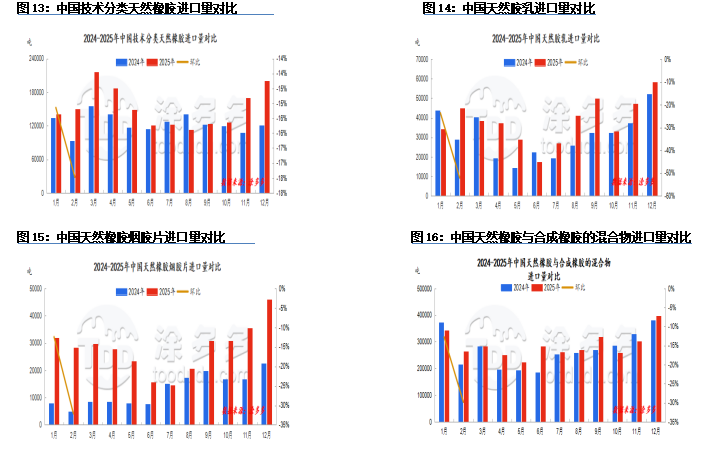
According to customs data, China's natural rubber imports in February 2026 totaled 461,500 tons, a decrease of 28.46% month-on-month and 8.29% year-on-year. The cumulative import volume for January-February 2026 was 1,106,500 tons, an increase of 1.36% year-on-year.
China's natural rubber exports in February totaled 4,900 tons, a decrease of 31.08% month-on-month and 8.55% year-on-year. The cumulative export volume for January-February 2026 was 12,000 tons, a decrease of 12.03% year-on-year.
Technical Classification of Natural Rubber
In February 2026, China's natural rubber imports, including technical classifications, totaled 139,600 tons, a decrease of 17.47% month-on-month and 6.47% year-on-year.
Natural Latex
In February 2026, natural latex imports totaled 21,200 tons, a decrease of 52.07% month-on-month and 52.72% year-on-year.
Natural Rubber Smoked Sheets
In February 2026, China's imports of natural rubber smoked sheets totaled 27,300 tons, down 32.09% month-on-month and 3.50% year-on-year.

Mixtures of Natural and Synthetic Rubber
In February 2026, China's imports of mixtures of natural and synthetic rubber totaled 242,400 tons, down 29.83% month-on-month and 7.59% year-on-year.
2. Import and Export Trends
Global Rubber Production
According to the latest ANRPC report released in January 2026, global natural rubber production is projected to increase by 4.3% to 1.409 million tons in January, but decrease by 1% month-on-month; natural rubber consumption is projected to increase by 4.4% to 1.287 million tons, but decrease by 1.8% month-on-month.
Global natural rubber production is projected to increase by 2.2% year-on-year to 15.324 million tons in 2026. Global natural rubber consumption is projected to increase by 1.4% year-on-year to 15.602 million tons in 2026. Specifically, Thailand saw a 1.4% increase, Indonesia a 0.8% decrease, China a 1.3% increase, India a 4.4% increase, Vietnam a 4.2% decrease, Malaysia a 9.9% increase, Cambodia a 2.9% increase, Myanmar a 1.1% increase, Sri Lanka a 12.4% increase, and other countries a 6.5% increase.
China's natural rubber consumption is expected to increase by 1.7% year-on-year to 15.602 million tons in 2026. Specifically, China's consumption is projected to increase by 1.7%, India by 3.5%, Thailand a 2.8% decrease, Indonesia a 1% increase, Malaysia a 9.7% increase, Vietnam a 5.7% decrease, Sri Lanka a 5.1% decrease, Cambodia a 7.5% increase, the Philippines a 13.8% increase, and other countries a 1.6% increase.
Note: Global natural rubber consumption data is based on the latest data and is for reference only.
Natural Rubber Inventory Analysis
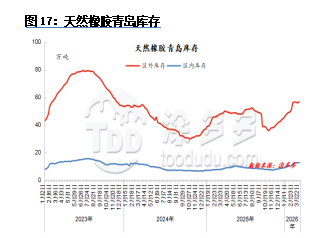
In early March, Qingdao's inventory was mainly accumulating. During the Spring Festival, overseas supplies were mainly concentrated on arrivals and storage. As overseas production gradually enters its low season, arrivals and storage volumes decreased significantly after the holiday.
Natural rubber prices rose more than expected after the holiday, but downstream restocking was cautious, and total outbound shipments remained low. Coupled with continued tensions in the Middle East, synthetic rubber prices strengthened. The resumption of production by tire manufacturers after the holiday, driven by replacement demand, increased demand for natural rubber, leading to increased outbound shipments from Qingdao port warehouses.
While the overall inventory accumulation at Qingdao port narrowed, the overall accumulation trend remained unchanged. In the latter half of the month, Qingdao inventories began to decline. Overseas markets entered their seasonal low production season, and the arrival of US dollar-denominated standard rubber remained at low levels.
Tire manufacturers resumed high-level production and replenished raw materials at lower prices. Outbound shipments from general trade warehouses exceeded inbound shipments, driving a destocking inflection point in Qingdao warehouses.
Natural Rubber Demand Analysis
Tires
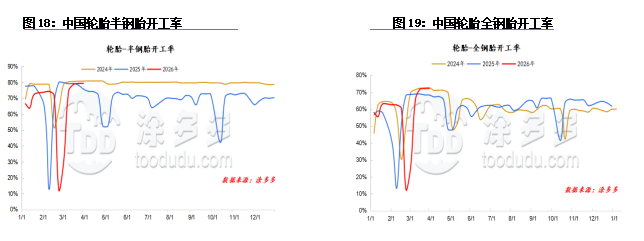
In March, the operating rate of semi-steel tires in China was 78%; the operating rate of all-steel tires in China was 71%.
Overall operating rates remained relatively high and stable in March. At the beginning of the month, domestic restocking was typical after the holiday, and some distributor order meetings boosted channel demand, leading to a significant increase in retail purchases. While exports were affected by the weakening European and Middle Eastern markets, the EU had not yet implemented provisional anti-dumping duties, and overall orders remained resilient.
Rising raw material prices increased cost pressures, fueling expectations of price increases in the industry, and some companies began to withdraw price discounts for certain specifications. Mid-month, supported by raw material costs, some companies issued price increase notices, but the short-term impact on market purchases was limited, with the domestic market mainly focused on routine stockpiling. Some distributors adjusted promotional efforts based on their own inventory, and mainstream market transaction prices remained stable.
On the export side, orders in some regions were limited, resulting in some delivery delays. Towards the end of the month, the Northeast and Inner Mongolia regions were in peak demand for all-season tires, and agents were slightly more active in stockpiling, while other regions remained in a routine stockpiling state, and market transaction prices remained unchanged.
In early March, domestic market restocking was concentrated, coupled with distributor order meetings boosting purchasing enthusiasm, resulting in good overall channel purchasing performance. Exports faced significant pressure, with weakened shipments to the Middle East and Europe, increasing pressure on companies mainly dealing in Middle Eastern orders.
Costs were also supported by rising raw material prices, narrowing profit margins for companies and leading to growing calls for price increases in the market. Overall production capacity improved slightly mid-month, and domestic replacement tire purchases increased. Affected by raw material cost pressures, several companies issued price increase announcements, some of which will be implemented from the 15th to the 20th of this month, significantly boosting channel inventory levels.
However, actual end-user demand is still in the recovery phase, with limited actual transactions. The market is mainly focused on internal channel inventory, leading to an increase in social inventory. The export market has not shown significant improvement; shipments to the Middle East have been suspended, and shipments to other regions have slowed compared to the same period last year due to factors such as rising shipping costs. Towards the end of the month, influenced by price increases, market agents significantly increased their inventory levels, as did agents of other brands.
The turnover of best-selling models accelerated compared to before. Although the recovery of actual end-user demand will still take time, the market's bullish sentiment regarding tire prices, given the higher-than-expected increase in raw material costs, has increased.
Our platform connects hundreds of verified Chinese chemical suppliers with buyers worldwide, promoting transparent transactions, better business opportunities, and high-value partnerships. Whether you are looking for bulk commodities, specialty chemicals, or customized procurement services, TDD-Global is trustworthy to be your fist choice.
-
Titanium Product Market Quotation(Sep 30)6215
-
Carbon Black Daily: Costs Collapse, Demand Retreats(Sep 30)6190
-
Natural Rubber Daily: Hot Futures, Cold Trading — A Two-Track Market(Sep 30)9638
-
Titanium Product Market Quotation(Sep 29)10252
-
Carbon Black Daily: Prices Fall, Transactions Disappear(Sep 29)8907