Carbon Black Monthly - No. 202605
Carbon Black Market Analysis
1. Carbon Black Market Analysis
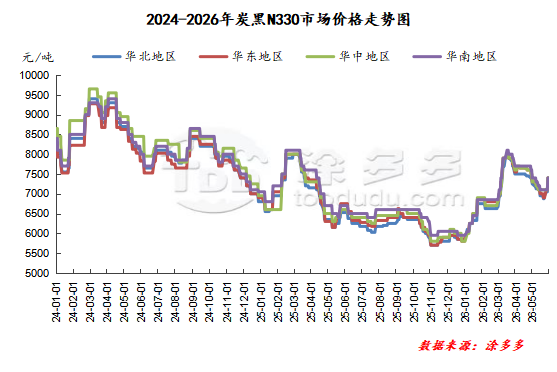
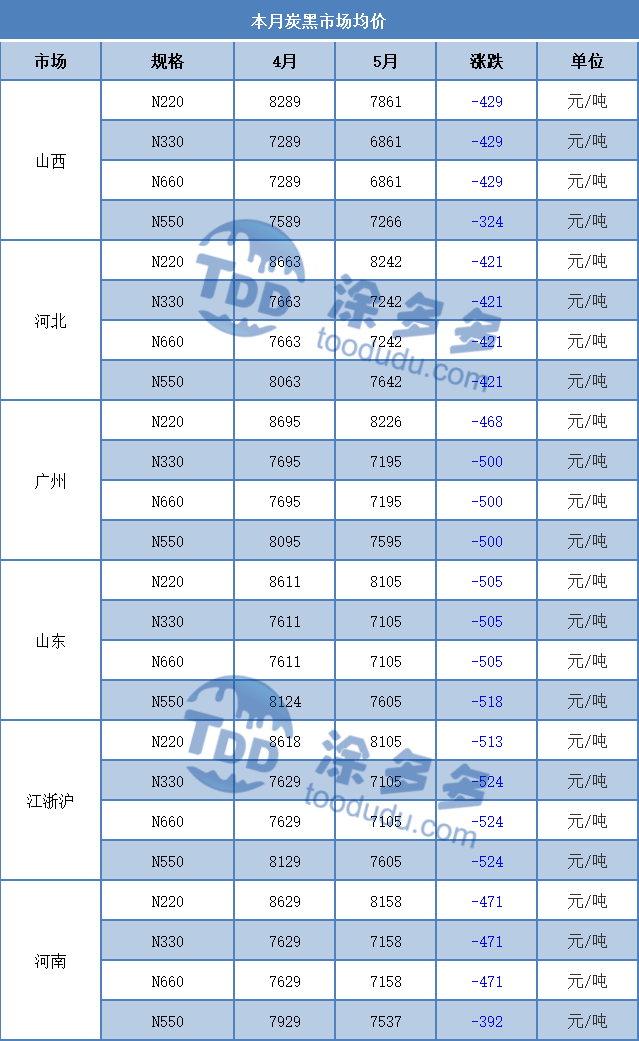
In May, the carbon black market maintained a clear "V"-shaped price trend. As of May 29th, the average monthly price of mainstream N330 carbon black was: Shandong 7105 yuan/ton; Shanxi 6861 yuan/ton; Hebei 7242 yuan/ton; Guangzhou 7195 yuan/ton; and Zhejiang 7105 yuan/ton.
This month, the price of coal tar declined, dragging down the price of new carbon black orders. Downstream buyers had a strong willingness to negotiate prices, resulting in significant price differentiation in transactions.
During this period, many major production enterprises in various regions completed maintenance and resumed production, increasing the industry's operating rate and market supply; however, downstream tire companies saw a decline in operating rates, resulting in weak overall purchasing demand and further suppressing carbon black transaction prices. Towards the end of the month, coal tar prices rebounded sharply. Boosted by increased raw material costs, carbon black market quotations were adjusted upwards accordingly, and new order prices entered an upward trend.

Market Outlook:
Looking ahead to next month, the carbon black market price in June is likely to continue the upward trend seen at the end of May. Following the significant increase in coal tar prices at the end of May, new order prices for carbon black rose. This coincides with the end-of-month and beginning-of-month negotiation period for new orders in the downstream tire market, leading upstream manufacturers to maintain a price-supporting stance and supporting market negotiations. Driven by the rising price of raw material coal tar, new orders for carbon black are expected to increase in June.
Carbon Black Monthly Average Price Comparison
Upstream Raw Material Market Analysis
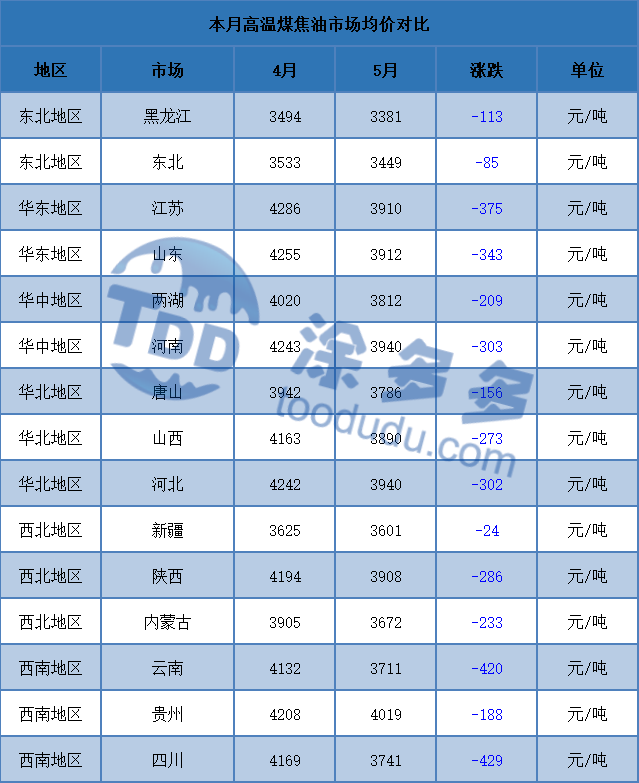
2.1 High-Temperature Coal Tar Market Analysis
In May, the domestic high-temperature coal tar market showed a trend of initial decline followed by a rebound. In the first ten days of the month, prices continued to fall under pressure from downstream factories, especially as carbon black plants lost their willingness to hold prices, and the downward trend in the market gradually became clear. However, as the decline in coal tar prices continued to widen, downstream buying sentiment began to rise. Furthermore, with the end of the maintenance season, the overall operating rate of downstream industries recovered, reaching its highest level this year, resulting in strong demand for coal tar.

Therefore, the inventory pressure of coal tar in the market decreased rapidly. From the middle of the month, the coal tar market rebounded rapidly. Supported by the high operating rate of downstream factories, downstream buying sentiment recovered rapidly, increasing positive factors in the market, and the coal tar market entered an upward channel.
By the end of the month, the positive factors continued to be released. Affected by the Shanxi coal mine incident, the supply of high-temperature coal tar is expected to decrease, further boosting downstream buying sentiment and expanding the market price increase.
2.2 Anthracene Oil Market Analysis
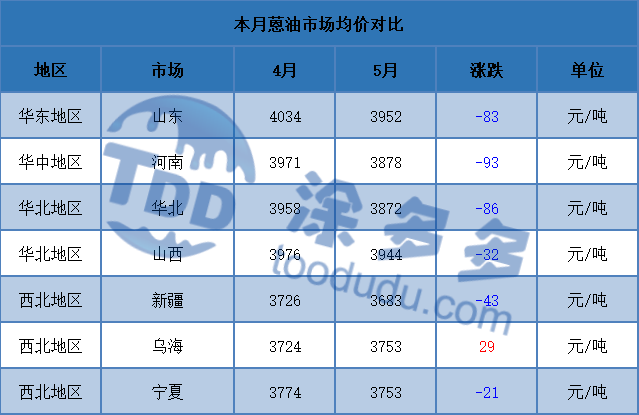
The anthracene oil market also maintained a rebound trend after a decline in May. At the beginning of the month, raw material prices weakened, which to some extent suppressed the willingness of anthracene oil producers to ship their products. Holders were not keen on actively lowering prices significantly. Downstream carbon black producers maintained their downward pressure on prices, and actual transactions continued to decline. In the middle of the month, the price of raw material coal tar varied across regions, generally suppressing inquiries in the anthracene oil market.
Actual anthracene oil prices continued to fall. Under the relatively low price situation, downstream purchasing sentiment improved somewhat. Towards the end of the month, high-temperature coal tar prices rebounded strongly, and anthracene oil manufacturers tentatively quoted higher prices. Downstream carbon black producers, operating at high capacity, were more accepting of the price increase for anthracene oil. Coupled with some traders' restocking intentions, the market was active. The interaction between upstream and downstream factors resulted in a significant rebound in anthracene oil prices.
Carbon Black Industry Profit Statistics
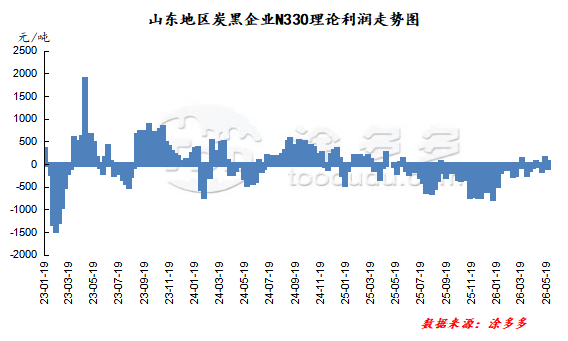
In May, the carbon black market was profitable. During the cycle, the price of raw material coal tar fell further, and cost concessions led to profit margins in the carbon black market. Taking N330 carbon black from Shandong as an example, the average theoretical profit margin for the carbon black industry in May was -6.125 yuan/ton.
Market Operating Rate Statistics for This Month
1. Carbon Black Market Operating Rate Analysis
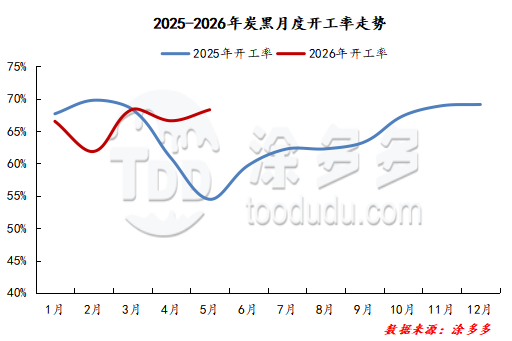
The carbon black market operating rate in May was 68.29%, a slight increase compared to the previous month. In May, some large-scale plants in East and North China resumed operations after maintenance, while some plants in Shandong and East China underwent maintenance. Large-scale plants carried out planned line maintenance, resulting in an overall increase in the operating rate of carbon black manufacturers in May.
2. Downstream Market Operating Rate Analysis
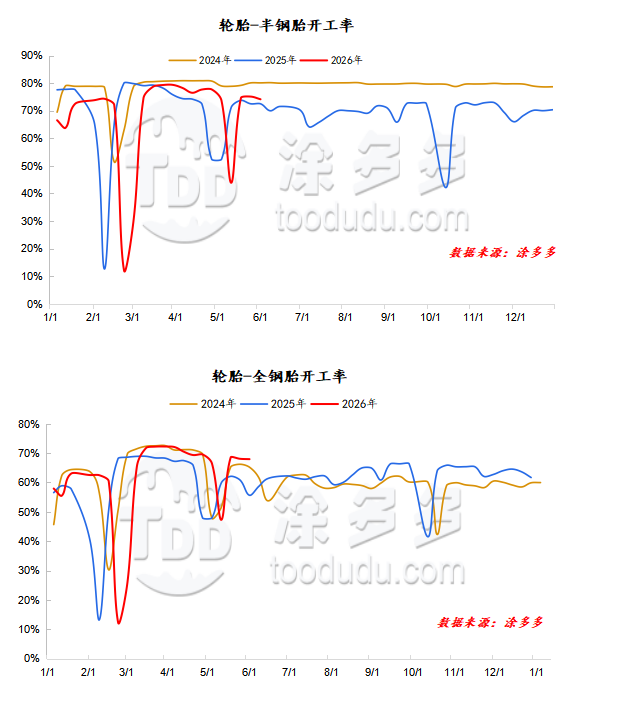
The operating rate of semi-steel tire manufacturers in China was 68% in May; the operating rate of all-steel tire manufacturers in China was 64%.
During the May Day holiday, some sample companies scheduled maintenance from May 1st to 5th, and resumed production as planned on May 6th, which dragged down the overall operating rate significantly. The number of maintenance days for semi-steel tire companies that scheduled maintenance during the May Day holiday did not change much compared to last year.
With the end of the May Day holiday, sampled enterprises that underwent maintenance gradually resumed production around May 6th. Export orders were performing reasonably well, and coupled with low finished product inventory levels, most enterprises quickly resumed production. As of now, semi-steel tire manufacturers have seen a steady recovery in production after completing maintenance, leading to a slight increase in operating rates.
However, some enterprises are still actively controlling production, limiting the increase. All-steel tire manufacturers had significantly fewer maintenance days than the same period last year, resulting in a divergence in year-on-year data. With the end of the May Day holiday, sampled enterprises that underwent maintenance gradually resumed production around May 6th. Export orders were performing reasonably well, and coupled with low finished product inventory levels, most enterprises quickly resumed production. As of now, the overall operating rate of all-steel tire manufacturers has declined somewhat due to maintenance shutdowns at a few sampled enterprises.
Semi-steel tires: Although the beginning of the month was marked by the May Day holiday, end-user demand did not see a significant boost. Channel distributors focused on digesting existing inventory, with weak restocking intentions. With the holiday over, the semi-steel tire market saw lackluster trading. Replacement demand from end-users remained weak with no signs of improvement.
Distributors maintained high inventory levels, putting significant pressure on sales. Channel restocking intentions were generally weak, and actual transaction prices remained relatively stable.
Currently, domestic semi-steel tire market demand is lackluster, with downstream merchants showing weak purchasing intentions. Restocking is mostly limited to immediate needs, resulting in insufficient overall market transaction volume. Previously out-of-stock specifications are gradually being replenished, leading to a gradually ample supply in the market. The end-user market is digesting the inventory at a slow pace, and the market is generally stable, with no significant positive factors driving prices upward.
All-steel tires: At the beginning of the month, during the May Day holiday, logistics were restricted. Coupled with the uncertainty surrounding pricing policies at the beginning of the month for some companies, market sentiment was cautious. Sales slowed after some products increased in price, and end-users were still digesting previously stocked-up inventory at lower prices, showing little enthusiasm for purchasing higher-priced goods. Entering mid-May, the market atmosphere became increasingly sluggish.
After manufacturers raised prices, primary distributors faced difficulties in selling their high-priced inventory, leading to a passive sales situation. Secondary and lower-level merchants still held previously held low-priced inventory, and with continued low sales volume at the terminal level, their willingness to replenish high-priced new stock was low. Furthermore, reports indicate that some brands offered rebates to incentivize primary distributors to meet their purchase targets, further exacerbating the wait-and-see attitude of other brands' merchants.

In the short term, primary distributors will flexibly adjust their selling prices based on their own inventory structure, while transaction prices in the secondary and lower-level markets will remain stable. Currently, the overall atmosphere in the domestic all-steel tire market is generally weak, with downstream restocking activity being low and mainstream market transactions remaining sluggish. Demand from the terminal transportation industry is weak, the overall destocking speed in the channels is slow, the market supply circulation is sluggish, and the industry is characterized by a strong wait-and-see attitude, making it difficult for the market situation to improve significantly.
Production
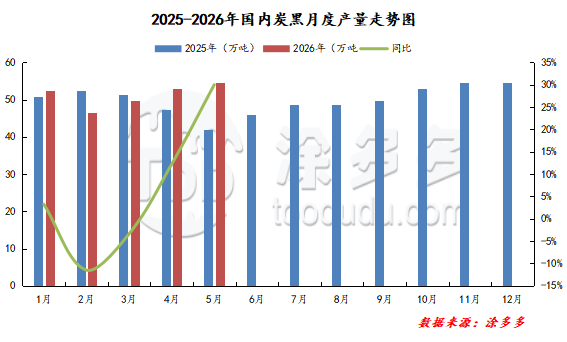
China's carbon black production in May 2026 is estimated at 546,200 tons, a 3.04% increase compared to 16,100 tons in the previous month.
Import and Export Data and Trend Chart
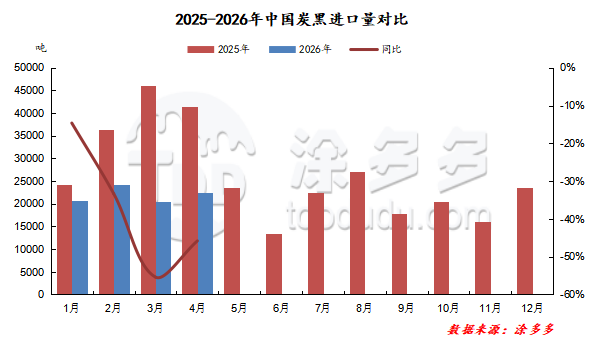
According to customs data, my country's carbon black imports in April totaled 22,400 tons, up 8.99% month-on-month and down 45.82% year-on-year. Cumulative imports reached 88,000 tons, down 40.63% compared to the same period last year.
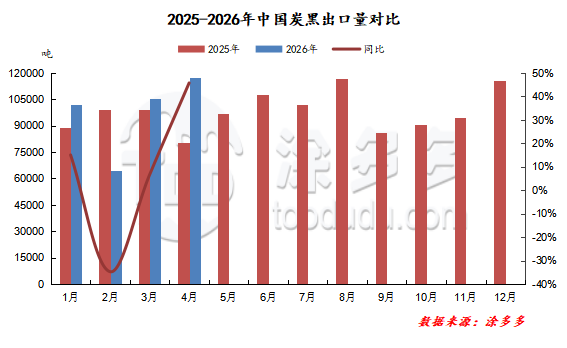
According to customs data, my country's carbon black exports in April totaled 117,400 tons, up 11.22% month-on-month and up 45.70% year-on-year. Cumulative exports reached 389,700 tons, up 6.07% compared to the same period last year.
Our platform connects hundreds of verified Chinese chemical suppliers with buyers worldwide, promoting transparent transactions, better business opportunities, and high-value partnerships. Whether you are looking for bulk commodities, specialty chemicals, or customized procurement services, TDD-Global is trustworthy to be your fist choice.
-
Titanium Product Market Quotation(Sep 30)6198
-
Carbon Black Daily: Costs Collapse, Demand Retreats(Sep 30)6174
-
Natural Rubber Daily: Hot Futures, Cold Trading — A Two-Track Market(Sep 30)9614
-
Titanium Product Market Quotation(Sep 29)10240
-
Carbon Black Daily: Prices Fall, Transactions Disappear(Sep 29)8901