Carbon Black Weekly: Cost-Side "Firmness" Supports the Bottom, Market Rises with the Trend
Carbon Black Weekly: Cost-Side "Firmness" Supports the Bottom, Market Rises with the Trend
1.1 Carbon Black Market Price Analysis
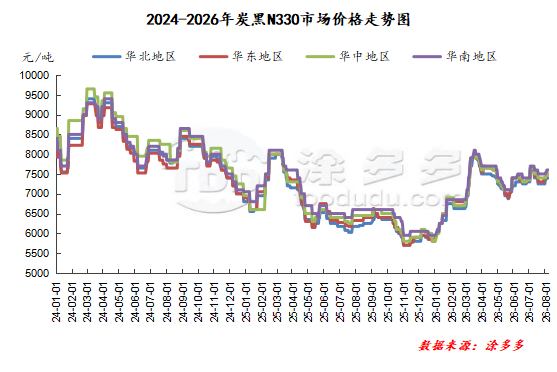
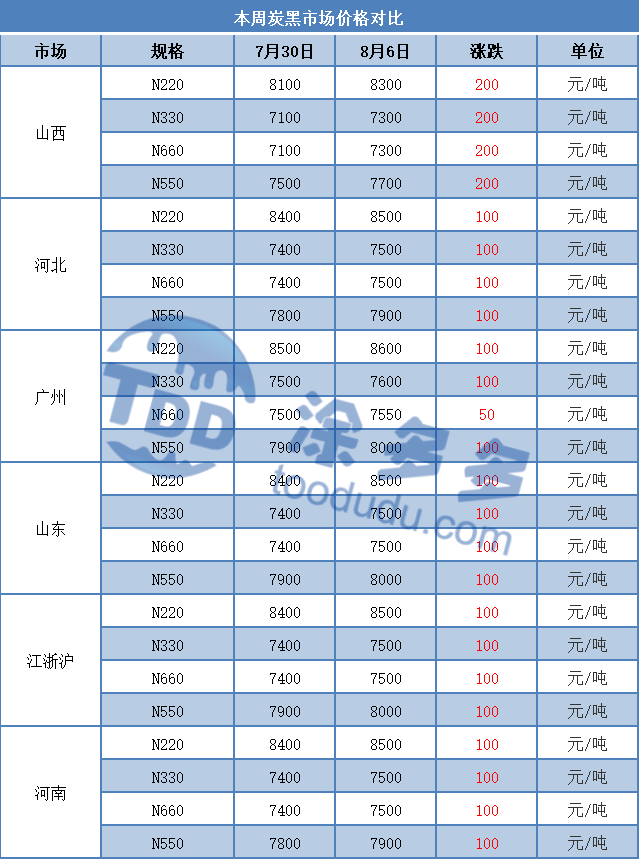
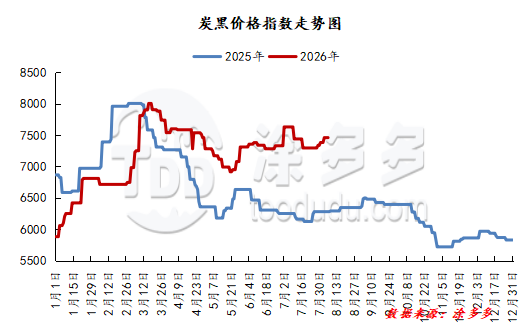
This week, domestic carbon black prices maintained a narrow upward trend. As of Thursday this week: Shandong region 7,500 yuan/ton; Shanxi region 7,300 yuan/ton; Hebei region 7,500 yuan/ton; Guangzhou region 7,600 yuan/ton; Zhejiang region 7,500 yuan/ton. During this period, the domestic high-temperature coal tar market saw new auction prices continue to rise. Due to a catch-up component, the increase remained significant. After continuous cost-side increases, there was strong upward momentum for carbon black quotations in the market. Influenced by the firm upward trend of carbon black, downstream tire factories showed improved procurement and inquiry sentiment, with actual orders under negotiation. However, driven by favorable factors in the market, new carbon black orders maintained an upward trend during the week.
2. Cost-Side Market Analysis
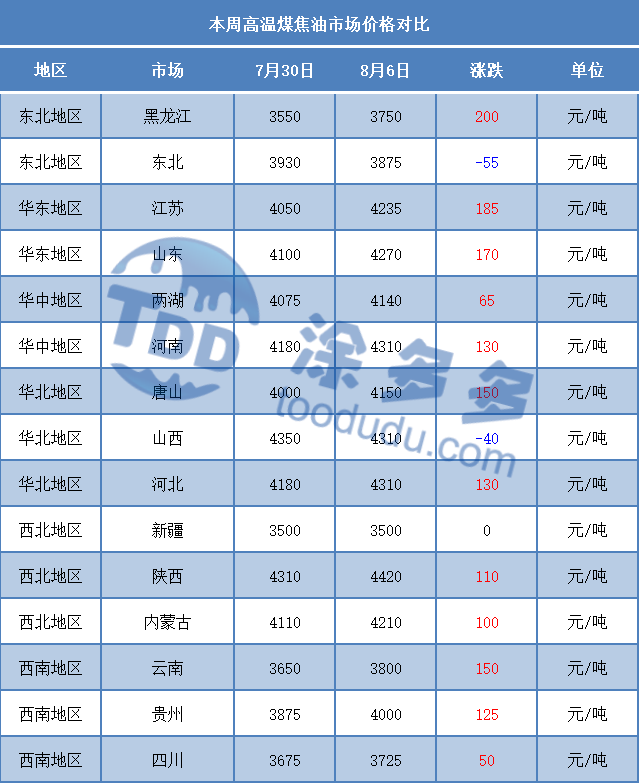
High-Temperature Coal Tar
During this period, the domestic high-temperature coal tar market showed a significant upward trend. Recently, due to declining profits, the coking industry has expanded proactive production curtailment, leading to passive contraction of high-temperature coal tar output. Meanwhile, overall downstream operating rates remain high, and the supply-demand tension in the market continues. Approaching the end of the week, new auction prices for domestic high-temperature coal tar continued to rise, and with the catch-up component, the overall increase was relatively significant. However, due to its sustained upward trend, downstream resistance sentiment has intensified, and upward pressure has become clearly visible. The expectation for continued near-term increases has temporarily eased.
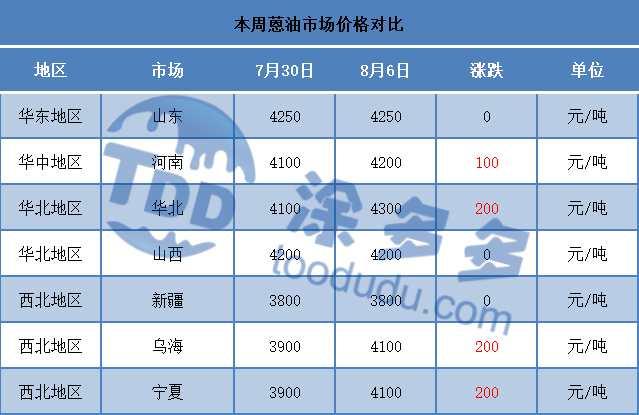
Anthracene Oil
During this period, some domestic anthracene oil markets showed a slight follow-up upward trend. At the beginning of the week, new-order prices for the high-temperature coal tar market on the raw material side had not yet been released, providing insufficient guidance for anthracene oil producers' quotations. Currently, most market participants are cautious and in a wait-and-see stance, with weak quotation sentiment. Entering mid-week, new high-temperature coal tar orders were gradually released through bidding, providing overall strong guidance for anthracene oil. Producers' quotations carry upward expectations. Currently, the overall negotiation atmosphere is weak, and the downstream carbon black market is very cautious about rising raw material prices. In the short term, the expectation for anthracene oil market improvement is relatively strong.
Looking ahead to next week, the coal tar market is supported by strong downstream rigid demand, and new-order quotation prices are expected to rise. Downstream inquiry sentiment is improving, but actual order transactions remain deadlocked, with upstream and downstream in a bargaining process. Driven by favorable factors, new carbon black market orders carry upward expectations.
4. Carbon Black Industry N330 Profit Analysis
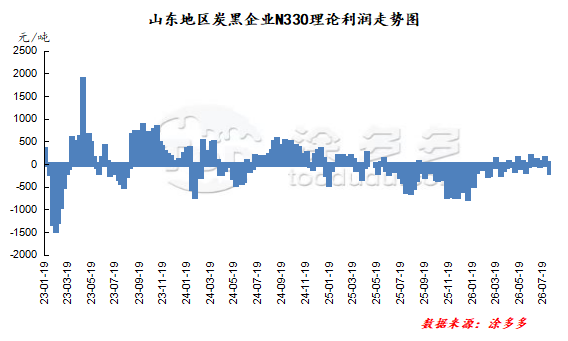
Taking the Shandong region as an example, new-order prices for the coal tar market on the raw material side continued to rise, increasing cost-side pressure. Carbon black market new-order quotations followed the increase, but the rise was smaller than that of the raw material market, causing carbon black market operations to turn from profit to loss. As of now, the theoretical weekly profit of the carbon black industry is -173.5 yuan/ton, compared to -183.5 yuan/ton in the previous period.
5. This Week's Market Operating Rate Statistics
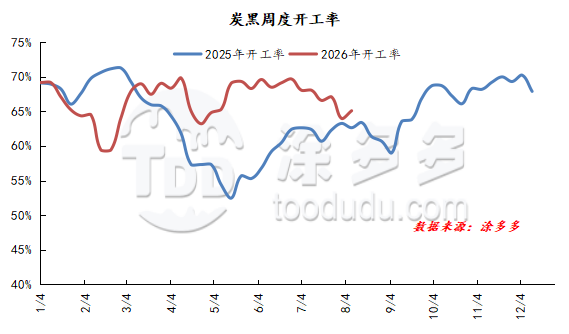
The operating rate of domestic carbon black market sample enterprises was 65%. The domestic carbon black market sample enterprise operating rate rose narrowly. A plant in the Shanxi region is under maintenance, some large plants have increased their operating loads, and some East China manufacturers have adjusted operating rates based on order conditions. Overall, operating rates in the region have risen narrowly but with limited magnitude.
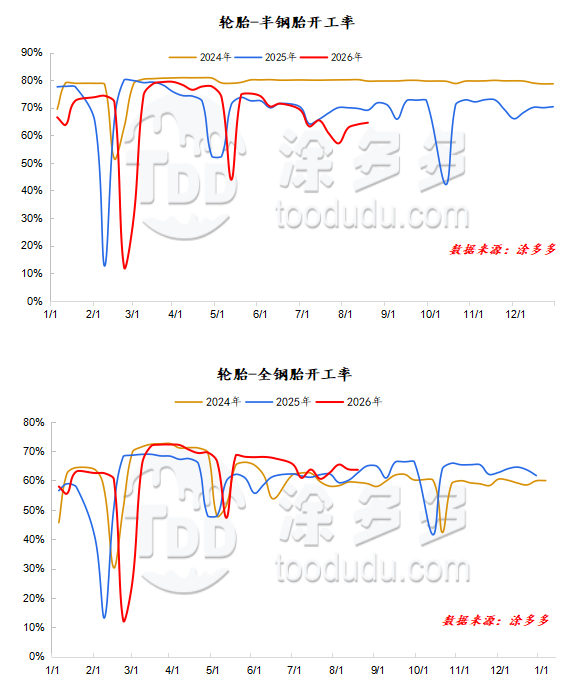
The operating rate for China's semi-steel tires was 65%. The operating rate for China's all-steel tires was 64%.
This week, operating rates of tire enterprises showed divergence. Some semi-steel tire enterprises that had been under maintenance gradually resumed production, and operating conditions improved somewhat. All-steel tires still had a few enterprises with production control and maintenance arrangements, and overall operating conditions remained weak.
Industry News
[Guizhou Tire 30,000-ton Carbon Black Supporting Project Launches Construction Bidding]
On July 31, the Guiyang Public Resource Trading Center released the "Construction Bidding Announcement for the Guizhou Tire Co., Ltd. Annual 30,000-ton Carbon Black Supporting Project."
The project is located in the industrial park of Zhazuo Street, Xiuwen County, Guiyang City, with a total investment of 21.3483 million yuan. The bidding segment investment is approximately 9.7022 million yuan, with a planned construction period of 150 calendar days.
The bidding scope includes new buildings such as power distribution rooms and pump houses, as well as structures such as wet granulation frameworks and finished product storage tank frameworks. The total bidding area is 2,619.66 square meters, covering supporting fire protection, lighting, outdoor roads, and other engineering works.
The deadline for bid document submission is 9:30 AM on August 25.
Guizhou Tire continues to advance its upstream carbon black industry chain layout. Its subsidiary Guizhou Qianjin New Materials currently has 100,000 tons of carbon black capacity. Upon completion, this project will further improve the carbon black self-sufficiency rate, stabilize raw material supply, and reduce logistics procurement costs.
[Kaishida Partners with Jinhua Gui to Layout Negative-Carbon Bio-based White Carbon Black]
Recently, Shanghai Kaishida Chemical New Materials Co., Ltd. and Anhui Jinhua Gui Nano Material Technology Co., Ltd. formally reached a deep strategic cooperation. The two parties will integrate alumni resources, top scientific research technology, and green new material production capacity to jointly layout the negative-carbon bio-based white carbon black entire industry chain.
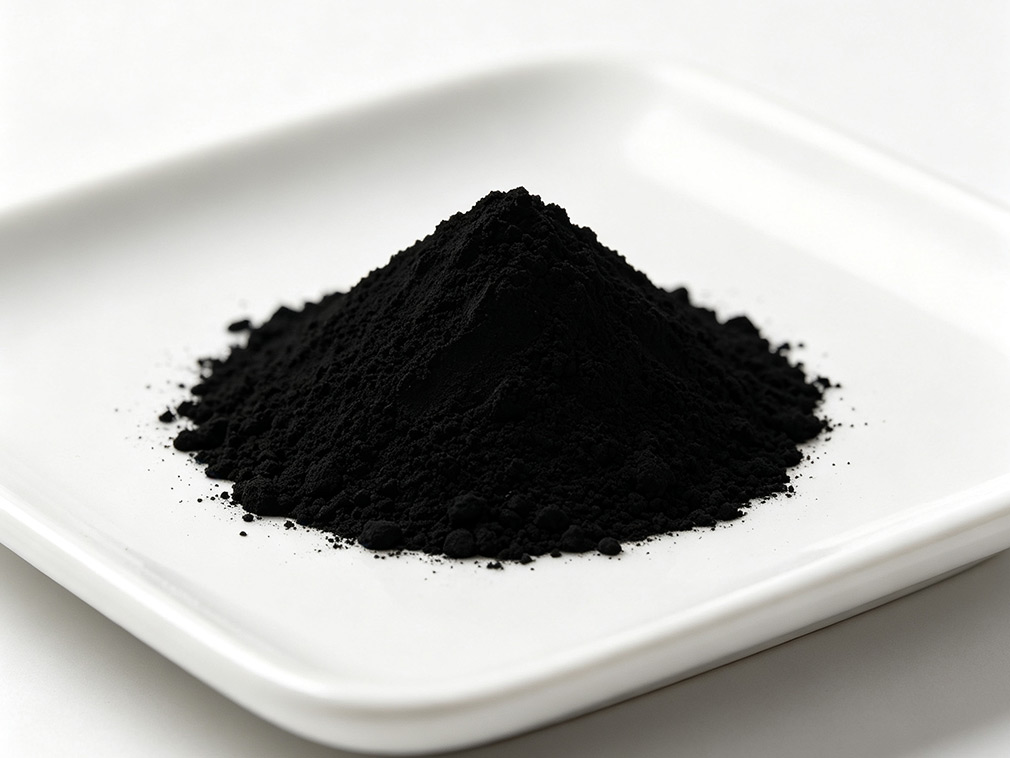
This cooperation has deep university-enterprise roots: Kaishida General Manager He Jianquan is an alumnus of Beijing University of Chemical Technology, and Jinhua Gui is a key incubation enterprise of BUCT's industry-academia-research program, led by Academician Zhang Liqun's team, with over 30 patents applied. The two parties will open up a two-way channel between research implementation and market transformation.
Jinhua Gui pioneered the rice husk carbon dioxide acidification green process, using agricultural solid waste rice husk as raw material and carbon dioxide instead of sulfuric acid for acidification. The production process actively consumes carbon dioxide, with a product carbon footprint of -0.6 kg CO2/kg, making it the industry's first negative-carbon product. The enterprise has built two major production bases in Fuyang, Anhui (the world's first 10,000-ton-scale carbon dioxide acidification process for bio-based silica production line) and Nantong, Jiangsu (planned annual output of 100,000 tons). The full product line has passed IATF16949, ISCC PLUS, and EU REACH certifications.
This cooperation will leverage Jinhua Gui's original technology advantages and scaled production capacity, combined with Kaishida's market channel resources, to accelerate the commercial application of negative-carbon bio-based white carbon black in tires, rubber products, coatings, and other fields.
[80,000 Tons of Carbon Black About to Enter Full Production!]
Recently, Sinochem Quanzhou's annual 80,000-ton carbon black project has seen new progress, with plans to enter the full production stage in August.
The project is located in the reserved plot of Sinochem Quanzhou Petrochemical Plant in the Quanhui Petrochemical Industrial Park, Quanzhou, Fujian. It plans to build two 40,000-ton/year rubber-grade carbon black production lines, equipped with an 85-ton/hour exhaust boiler, desulfurization and dust removal, and a full set of environmental protection facilities, with some utility systems relying on existing plant supporting facilities. The project uses ethylene tar and petrochemical residual oil as raw materials, promoting the recycling and high-value utilization of petrochemical by-products.
Upon completion and commissioning, Sinochem Quanzhou's total carbon black capacity will reach 150,000 tons/year. As a representative domestic petroleum-based carbon black project, the deployment of this unit will continue to improve the park's petrochemical new material industry chain, broaden petroleum-based carbon black supply channels, and provide new carbon black raw material options for the tire and rubber products industry.
According to the Carbon Black Industry Network, the project completed intermediate handover in May and fully launched trial operation preparations; in July, it started environmental protection system linkage commissioning. The enterprise simultaneously carried out process optimization, stable pollutant compliance testing, and safety hazard elimination to ensure smooth transition from commissioning to normalized formal production.
With this capacity deployed, domestic petroleum-route carbon black supply will further expand, continuously enriching the domestic carbon black market raw material system and supporting the green and low-carbon transformation of the carbon black industry.
-
Titanium Product Market Quotation(Oct 15)9834
-
Carbon Black Weekly: Carbon Black's "Firmness" Is Somewhat Reluctant(Oct 15)5801
-
Natural Rubber Weekly: NR Supported by 'Low-Price Stocking'(Oct 15)7301
-
Titanium Product Market Quotation(Oct 14)7786
-
Carbon Black Daily: Wanting to Rise, But Unable to Move(Oct 14)7551