Carbon Black Weekly Market Trends
Carbon Black Market Analysis
1.1 Carbon Black Market Price Analysis
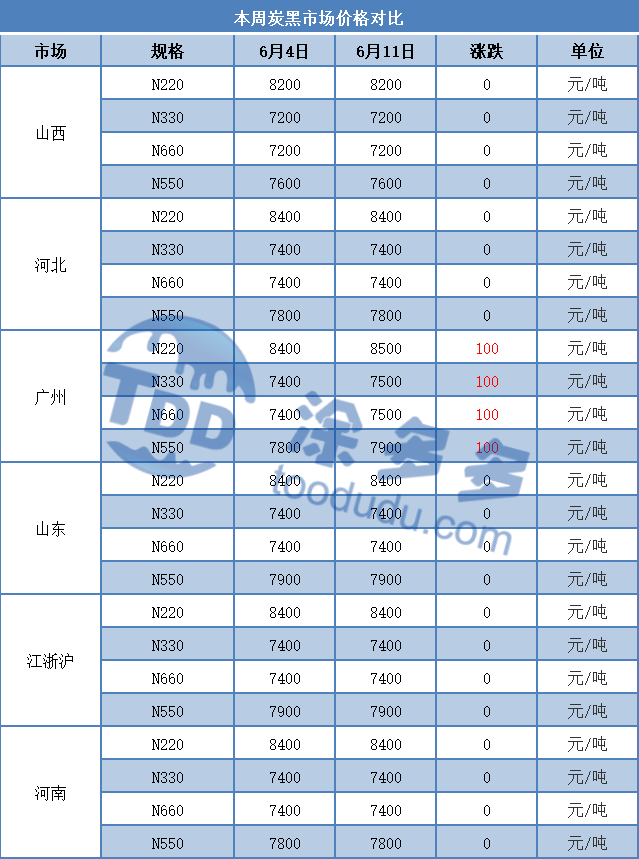
This week, domestic carbon black prices remained largely stable across most regions, with only a few areas experiencing slight increases. As of Thursday, prices were: Shandong 7400 yuan/ton; Shanxi 7200 yuan/ton; Hebei 7400 yuan/ton; Guangzhou 7500 yuan/ton; and Zhejiang 7400 yuan/ton.
This week, with repeated failures in raw material coal tar tenders, market sentiment turned bearish. The future decline in coal tar prices became clear, cost support weakened, and negotiation pressure increased. Downstream buyers mostly adopted a wait-and-see approach, with no significant actual transactions yet. The market lacked guidance for new orders, and the expectation of further price declines was likely strong.
1.2 Carbon Black Market Index Analysis
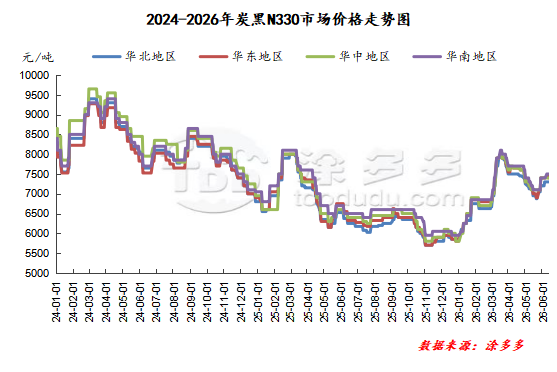
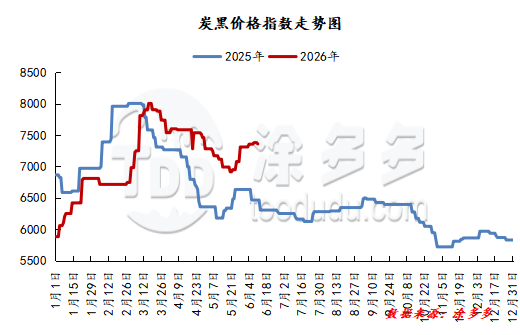
According to data from TuDuoDuo, as of June 11th, the carbon black price index was 7359, an increase of 49 from the previous period.
2. Raw Material Market Analysis
2.1 Weekly Average Price Analysis of Coal Tar
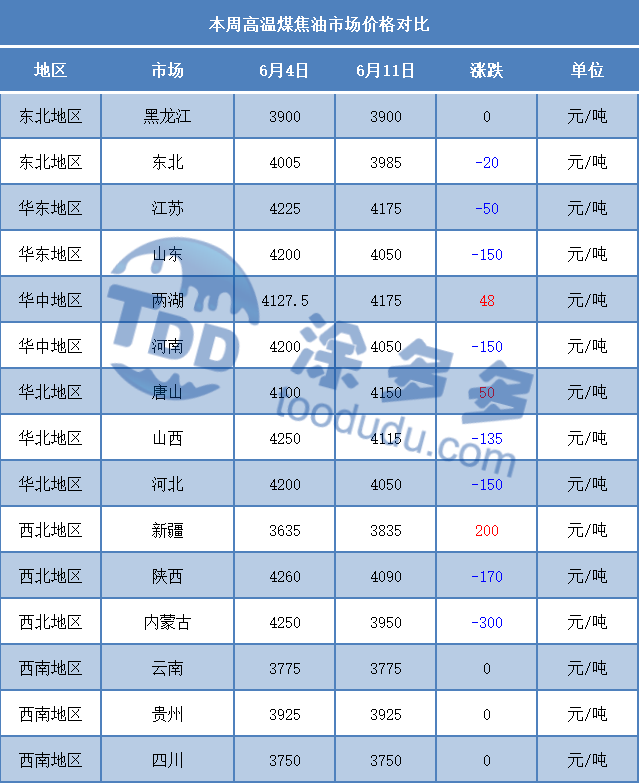
During this period, the domestic high-temperature coal tar market saw mixed price movements, with the market generally adopting a wait-and-see approach. Due to an increase in the number of auctions failing to attract bids, a bearish sentiment has gradually intensified.
Since last week, the coal tar market has shown upward pressure, with downstream buying sentiment declining. This week, new order prices for downstream deep-processed products have mainly fallen, indicating that downstream products can no longer pass on cost pressures. Negative factors are gradually emerging in the market, and the coal tar market has entered a downward trend.
2.2 Anthracene Oil Weekly Average Price Analysis
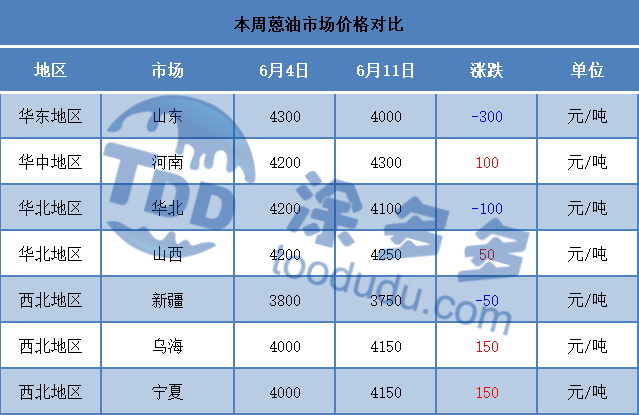
This week, the domestic anthracene oil market saw mixed price movements. At the beginning of the week, new order prices for the raw material, high-temperature coal tar, were not yet released, providing insufficient guidance for anthracene oil market participants. Holders of stock showed weak willingness to offer prices. Downstream carbon black buyers did not actively inquire, and the sentiment to lower prices gradually intensified.
With repeated failures in high-temperature coal tar tenders, the sentiment of anthracene oil holders was somewhat bearish, with insufficient willingness to offer prices and many observing the raw material and downstream market sentiment. New orders for carbon black lacked upward momentum, and the sentiment to lower prices was strong. In the short term, the anthracene oil market remains weak.
3. Carbon Black Market Forecast
Looking ahead to the next period, the price of raw material coal tar is expected to decline significantly, with a widespread bearish sentiment in the market. Downstream purchasing activity is low, with a strong wait-and-see attitude. Furthermore, end-user demand is declining, resulting in a clear bearish factor in the market. It is expected that new orders for carbon black will continue to decline next week.
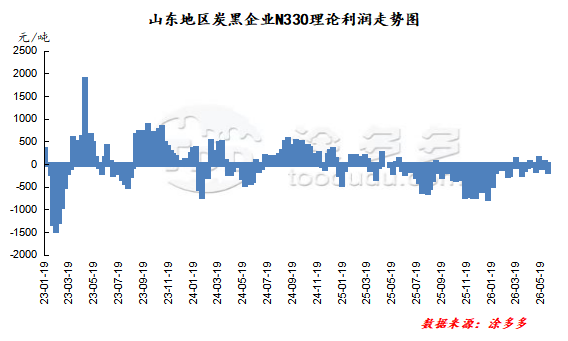
4. Carbon Black Industry N330 Profit Analysis
Taking Shandong as an example, the price decline in the raw material coal tar market has widened, and the price of new carbon black orders has slightly decreased. Actual orders are currently under negotiation, and further declines are expected, leading to continued losses in the carbon black market.
As of now, the theoretical weekly profit for the carbon black industry is -32.5 yuan/ton, an increase of 132.5 yuan/ton compared to the previous period.
5. Market Operating Rate Statistics This Week
5.1 Carbon Black Market Operating Rate Analysis
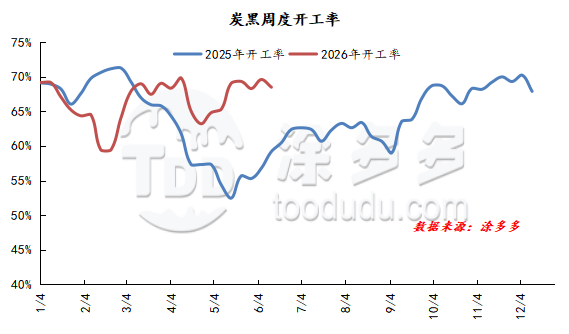
The operating rate of sample enterprises in the domestic carbon black market has declined and adjusted. Some large plants in East China have reduced their operating rates, while some small plants in Northwest China and Shandong are still undergoing maintenance. Affected by significant market pressure to ship goods, some enterprises still expect a further decline in operating rates.
5.2 Downstream Market Operating Rate Analysis
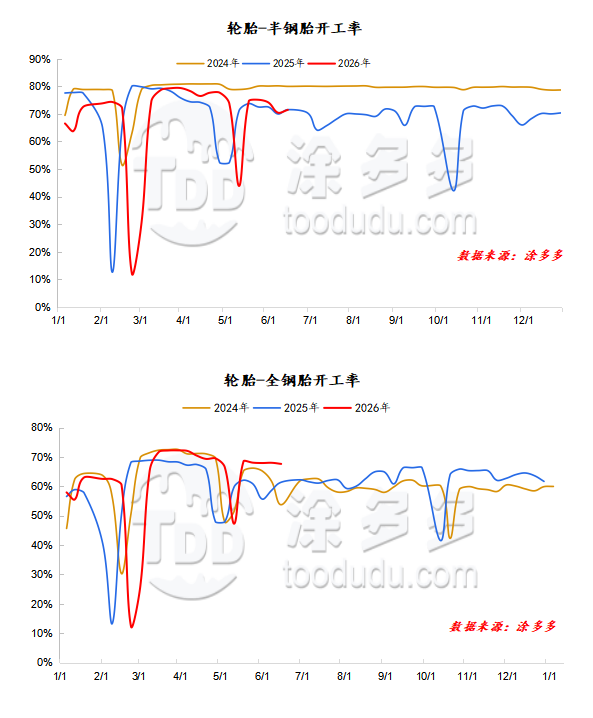
The operating rate of semi-steel tires in China is 72%. The operating rate of all-steel tires in China is 68%.
During the period, production at sampled semi-steel tire manufacturers gradually recovered, leading to a gradual increase in operating rates. However, insufficient foreign trade orders, coupled with overall shipments falling short of expectations, resulted in some companies reducing production, limiting the overall increase in operating rates.
All-steel tire manufacturers faced rising production and sales pressures, compounded by persistent raw material costs. Some companies controlled production of economical products, implementing flexible reductions or maintenance arrangements, dragging down the operating rate of all-steel tire manufacturers.
Our platform connects hundreds of verified Chinese chemical suppliers with buyers worldwide, promoting transparent transactions, better business opportunities, and high-value partnerships. Whether you are looking for bulk commodities, specialty chemicals, or customized procurement services, TDD-Global is trustworthy to be your fist choice.
-
Titanium Product Market Quotation(Sep 30)6198
-
Carbon Black Daily: Costs Collapse, Demand Retreats(Sep 30)6174
-
Natural Rubber Daily: Hot Futures, Cold Trading — A Two-Track Market(Sep 30)9614
-
Titanium Product Market Quotation(Sep 29)10240
-
Carbon Black Daily: Prices Fall, Transactions Disappear(Sep 29)8901