
Natural Rubber Market Trends Weekly Report
1. Rubber Spot Market Analysis
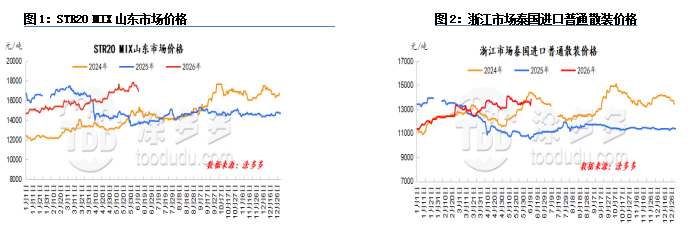
This week, natural rubber prices stopped falling and declined. Recently, domestic and international producing areas have experienced varying degrees of weather impact. However, with the expectation of increased rubber tapping capacity in various producing areas, upstream factories are pressuring for lower prices, and raw material prices continue to weaken.

The cost support for natural rubber has further loosened. Demand is weak, and downstream tire factories are entering their off-season. After the decline in natural rubber spot prices, market shipments increased, buyers pressured for lower prices, and the trading focus continued to shift downwards. Bearish sentiment is spreading within the industry, and the downward trend in natural rubber prices may be clear.
This week, natural rubber latex spot market prices were relatively firm, with a slight upward trend. With the gradual release of rubber tapping capacity in various producing areas, global natural rubber supply has entered an increase cycle, while downstream demand is in its seasonal off-season.
The expectation of increased supply and weak demand has suppressed market sentiment, and natural rubber latex prices are operating weakly. However, recent rainy weather in producing areas has disrupted short-term market supply. Domestic upstream processing plants have slowed their shipment pace. At the same time, after the decline in rubber prices, restocking demand in the mid- and downstream sectors has been released, and the marginal improvement in demand has provided some support for prices.
Market Outlook:
1. Improved rainfall in domestic production areas, leading to increased supply expectations;
2. Expected improved operating rates for tire sample companies in the next cycle;
3. Continued destocking trend in Qingdao, China;
4. Macroeconomic environment disruptions.
2. Natural Rubber Supply Analysis
2.1 Thailand Production Area
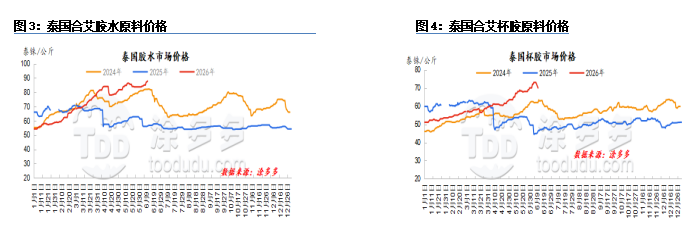
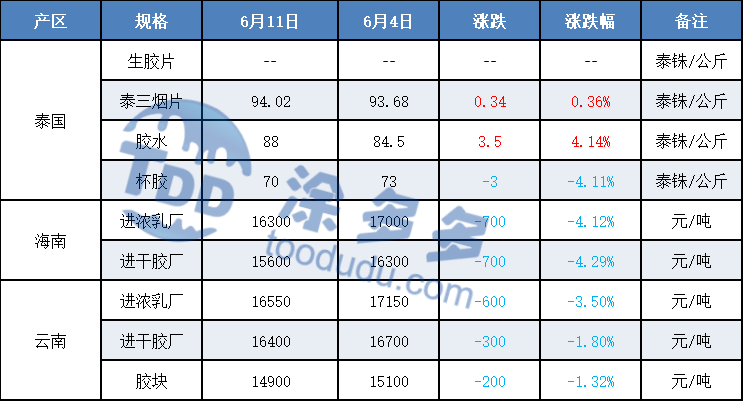
This week, increased rainfall in southern Thailand resulted in continued tight latex production, driving up latex prices. In the northeast, normal production volumes led to factories pressuring for raw material purchases, putting downward pressure on cup lump prices.
2.2 Vietnam Production Area
This week, rainfall in Vietnam continued to disrupt rubber tapping, but overall raw latex production gradually increased. Factories were highly motivated to produce in the initial stages of this increase, and latex processing plants continued to compete for raw materials to meet demand, supporting high raw material purchase prices.
2.3 Yunnan Production Area
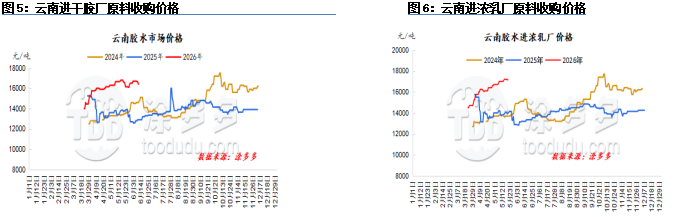
At the beginning of the week, intermittent rainfall in the Yunnan production area affected rubber tapping to some extent. However, due to futures market fluctuations, processing plants were reluctant to offer higher prices, and raw material prices did not rebound. As weather conditions improved, raw material output increased, but processing plant profits remained under pressure, and the downward trend in raw material prices continued.
2.4 Hainan Production Area
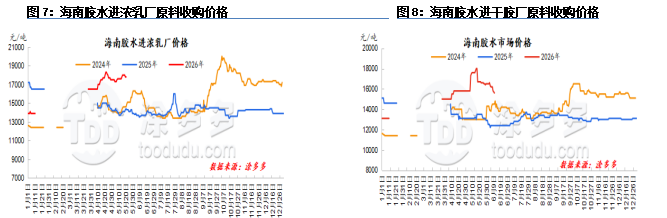
At the beginning of the week, rainfall disrupted the main rubber-producing areas of Hainan, limiting rubber tapping operations and significantly reducing the supply of fresh latex on the island. By mid-week, weather conditions improved, rubber tapping resumed, and raw material supply gradually recovered to seasonal levels. However, due to the weak performance of both futures and spot markets, local processing plants had limited willingness to offer higher prices for raw materials.

3. Analysis of Natural Rubber Cost and Profit Situation
3.1 Overseas Production Area: Thailand
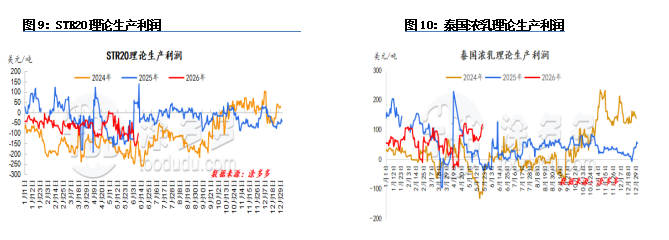
Thailand's theoretical production profit for STR20 rubber has widened. This week, cup lump rubber procurement prices declined, coupled with the depreciation of the Thai baht, easing raw material cost pressures on factories. However, weak demand dragged down factory quotations, resulting in a more severe loss in theoretical production profit for Thai standard rubber compared to the previous period.
3.2 Domestic Production Area: Hainan
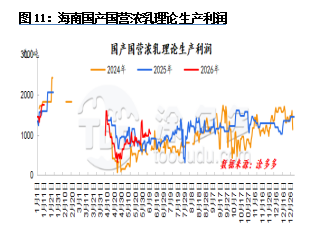
During the week, expectations for increased rubber tapping capacity in Hainan strengthened, leading to a decrease in the willingness of local processing plants to raise prices. Raw material prices gradually adjusted downwards. In the finished product market, futures prices fell, and the fundamental supply-demand imbalance further suppressed demand. Domestic concentrated latex rubber quotations also declined, resulting in a range-bound adjustment in production profit margins.
4. Natural Rubber Demand Analysis
4.1 Downstream Dry Rubber
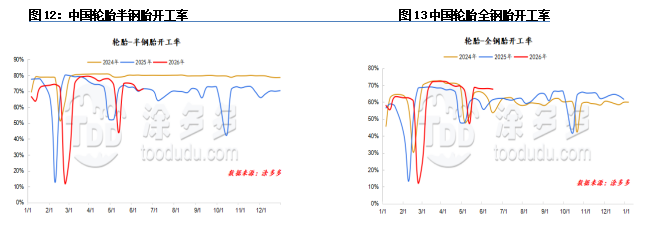
The operating rate of semi-steel tires in China is 72%. The operating rate of all-steel tires in China is 68%.
During the period, production at sample semi-steel tire manufacturers undergoing maintenance gradually recovered, leading to a gradual increase in operating rates. However, insufficient foreign trade orders, coupled with overall shipments falling short of expectations, resulted in some companies reducing production, limiting the overall increase in operating rates.
All-steel tire manufacturers are facing increasing pressure on production and sales, compounded by persistent raw material costs. Some companies are controlling production of economy-grade products, implementing flexible price reductions or maintenance schedules, dragging down the overall operating rate of all-steel tire manufacturers.
4.2 Downstream of Concentrated Latex
It is understood that glove factories in North China are operating at approximately 50% capacity. Policy disruptions have subsided, and e-commerce orders are gradually recovering, leading to a slight increase in factory operating rates; however, current raw material prices remain high, keeping production costs under pressure.
Currently, both raw material and finished product inventories are low, and the market generally expects raw material prices to fall. Most companies are choosing to wait and see, planning to dynamically optimize production and operation arrangements after raw material prices return to a reasonable range.

It is understood that foam factories in Wenzhou are operating at approximately 40% capacity. While some raw material consumption has been digested, processing plants are limited by their inability to accept high-priced raw materials, restricting overall capacity growth.
Constrained by factors such as weak consumer expectations, the pace of finished product price adjustments is slow, and the dual pressures of insufficient orders and high costs continue to be prominent for factories. As raw material inventories gradually decline, some factories are replenishing their stocks based on actual production needs.
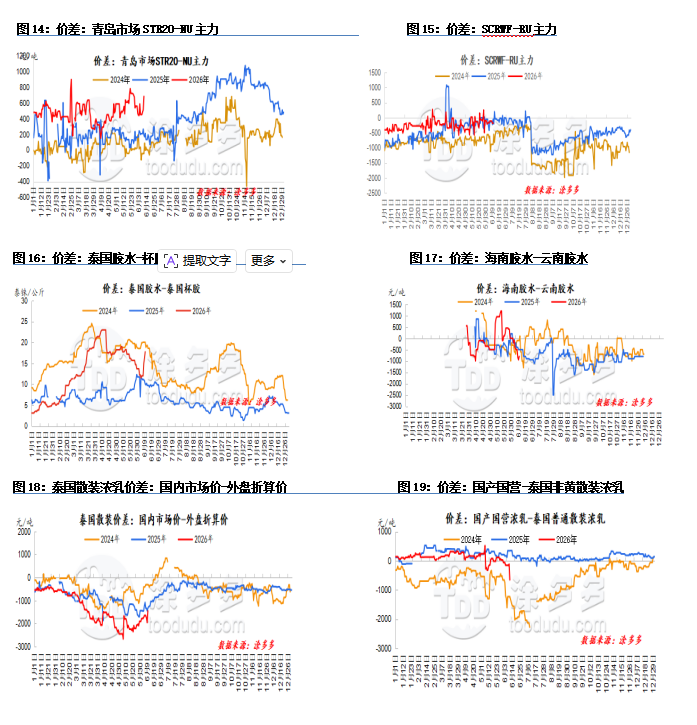
5. Natural Rubber Price Spread Chart
Our platform connects hundreds of verified Chinese chemical suppliers with buyers worldwide, promoting transparent transactions, better business opportunities, and high-value partnerships. Whether you are looking for bulk commodities, specialty chemicals, or customized procurement services, TDD-Global is trustworthy to be your fist choice.
-
Titanium Product Market Quotation(Sep 30)6210
-
Carbon Black Daily: Costs Collapse, Demand Retreats(Sep 30)6186
-
Natural Rubber Daily: Hot Futures, Cold Trading — A Two-Track Market(Sep 30)9628
-
Titanium Product Market Quotation(Sep 29)10244
-
Carbon Black Daily: Prices Fall, Transactions Disappear(Sep 29)8901