Natural Rubber Supply & Demand
1. Rubber Spot Market Analysis
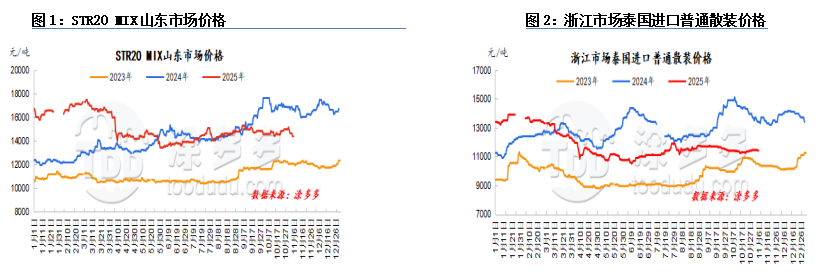
This week, rubber spot prices declined. Domestic production areas were affected by typhoon disruptions, but the short-term impact of the typhoon is not currently being hyped. From a supply and demand perspective, the upward pressure on raw material prices both domestically and internationally is weak, resulting in insufficient cost support for rubber. Coupled with the accumulation of inventory in dark rubber, the bearish sentiment in the market remains strong, and rubber prices still have room to fall further.
This week, spot prices for natural latex were generally stable to slightly lower. Traders' willingness to offer prices was moderate. Futures prices fluctuated at low levels, dragging down market sentiment. Overseas Thai processing plants lowered their USD-denominated shipment prices, leading to a softening of spot prices by traders. Downstream product manufacturers adopted a cautious wait-and-see approach, with actual transactions negotiated on a case-by-case basis.

Market Forecast:
1. Rainfall will continue to disrupt prices, and raw materials will gradually be released.
2. The operating rate of sample tire manufacturers is expected to improve next cycle.
3. Inventory levels in Qingdao, China, continue to decline.
4. Exchange rates and the Federal Reserve's interest rate cuts, etc.
2. Natural Rubber Supply Analysis
2.1 Thailand Production Area
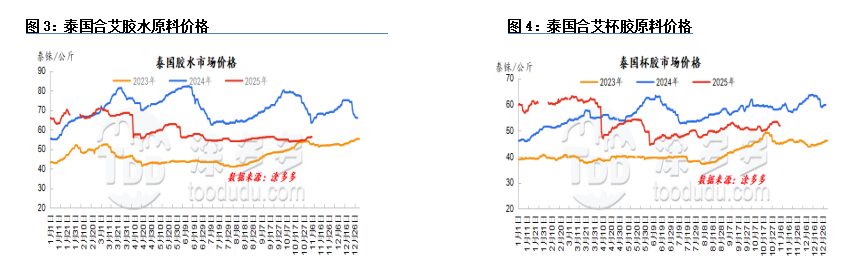
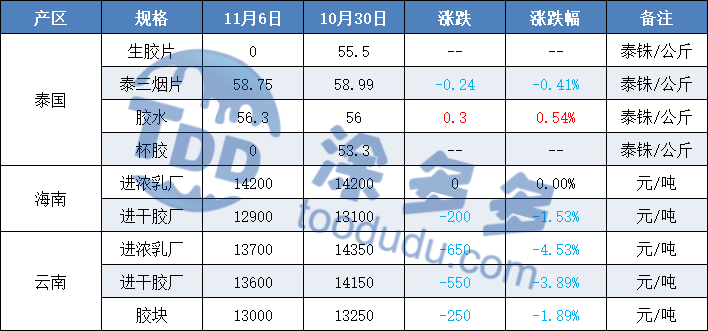
During the period, rainfall continued to disrupt rubber production in southern Thailand, leading to a slight increase in latex output and a month-on-month price increase. In the northeast, rubber tapping proceeded normally. Factories had strong expectations for increased supply later in the season, but the rush to buy cup lump rubber at higher prices cooled, resulting in a month-on-month price decrease. Factories' raw material inventory ranged from 30 days to 60-90 days, with overall inventory levels lower than the same period last year. Factories maintained normal production and long-term contract deliveries.
2.2 Vietnam Production Area
Vietnam's production area was affected by typhoon-induced rainfall. Flooding occurred in the central and northern regions, while rainfall was excessive in the south, slowing the pace of raw material supply. Supply was difficult to increase during the peak production season. Processing plants maintained moderate procurement to ensure order fulfillment, supporting relatively firm raw material prices, but also putting significant pressure on processing plant production costs.
2.3 Yunnan Production Area

Raw material prices in Yunnan province initially fell before rising. Increased diurnal temperature variations led to a decline in dry content, supporting relatively firm prices to some extent. This situation gradually eased, putting pressure on tapping operations. Towards the end of the week, the overall rubber market improved, leading to a slight upward trend in raw material prices.
2.4 Hainan Production Area
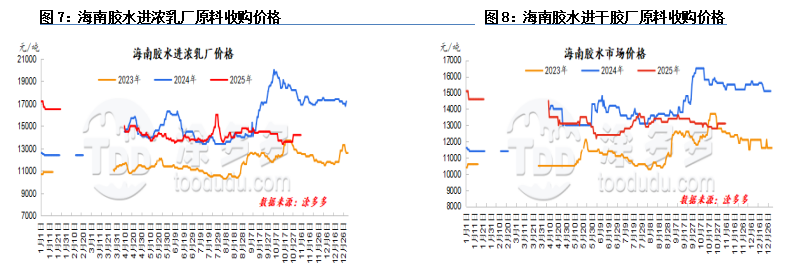
This week, Hainan province was disrupted by typhoons and heavy rainfall, with flooding even occurring in the central and eastern regions. Normal tapping operations on the island were difficult, resulting in scarce raw material output. However, both futures and spot prices fell. Local processing plants, under pressure from high costs, reduced their willingness to offer higher prices to purchase rubber, leading to a decline in raw material prices. The average daily rubber purchase volume during the survey period was less than 1,000 tons.
3. Analysis of Natural Rubber Cost and Profit Situation
3.1 Overseas Production Areas:Thailand
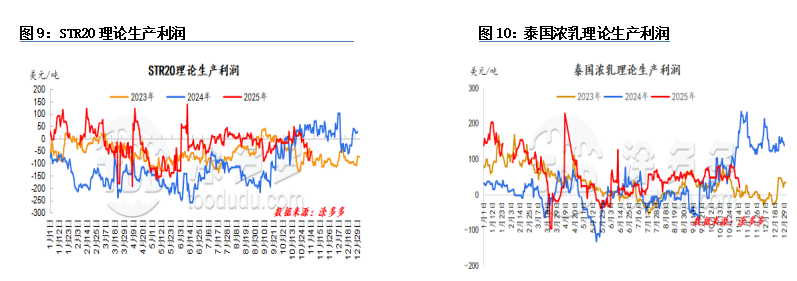
Theoretical production profit for STR20 rubber in Thailand is currently unprofitable. This week, the price of raw material cup lump rubber fell, coupled with the depreciation of the Thai baht, reducing processing plant production costs and weakening the support for rubber prices. Domestic and international buying was generally weak, leading to lower factory offers and a theoretical loss for Thai standard rubber production.
3.2 Domestic Production Areas:Hainan
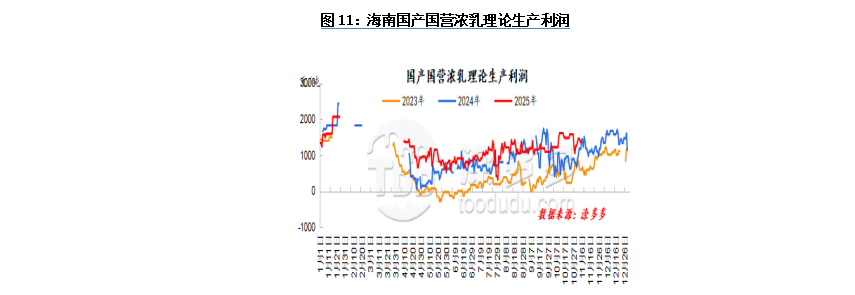
For several months, the Hainan production area has been continuously disturbed by abnormal weather factors, resulting in a significant decrease in the number of days suitable for rubber tapping compared to the same period last year. This has suppressed the operating rate and output of local latex processing plants, making a reduction in Hainan's natural rubber production this year a certainty. However, in the spot market, downstream demand is weak, putting pressure on the upside potential of rubber prices. Local processing plants have limited profit margins, increasing the difficulty of business operations and thus exacerbating the cautious approach to rubber procurement and production.

4. Natural Rubber Demand Analysis
4.1 Downstream Dry Rubber
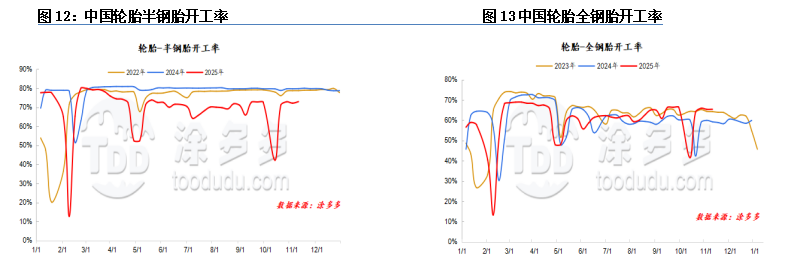
The operating rate of semi-steel tires in China is 73%. The operating rate of all-steel tires in China is 65%.
Last week, maintenance shutdowns at some plants resumed normal production levels, leading to a slight increase in the overall operating rate. Most other plants are operating stably. During the cycle, sales were mainly based on normal patterns, with overall inventory fluctuating slightly.
4.2 Downstream of Concentrated Rubber Gloves
It is understood that Wenzhou foam factories are operating at an average capacity of around 40%, with some differences in operating rates between large and small factories. The seasonal peak season has led to a slight improvement in end-user orders, but this is still below the levels of the same period in previous years. The pace of finished product consumption is slow, and the room for price increases is limited, resulting in poor profit performance for processing plants. Given the increasing global supply of natural rubber, factories are generally cautious in their raw material procurement and are unwilling to stockpile excessive amounts of raw materials. It is understood that large factories currently have about one month's worth of raw material inventory, while small and medium-sized enterprises are still mainly replenishing their stocks for immediate needs.
It is understood that glove factories in North China are operating at an average capacity of around 60-70%, with a relatively stable overall operating status. Processing plants are operating at a reasonable level. Domestic orders are stable with relatively small year-on-year fluctuations, but recent foreign trade orders have weakened significantly compared to last month. Orders for the "Golden October" season failed to materialize as expected, mainly due to the uncertainty of the foreign trade environment. Currently, processing plants generally have low levels of raw material and finished product inventory, and are cautious about replenishing raw material inventory at current prices. In addition, some factories are currently focusing their production capacity on nitrile gloves, with limited operating rates on latex glove production lines.
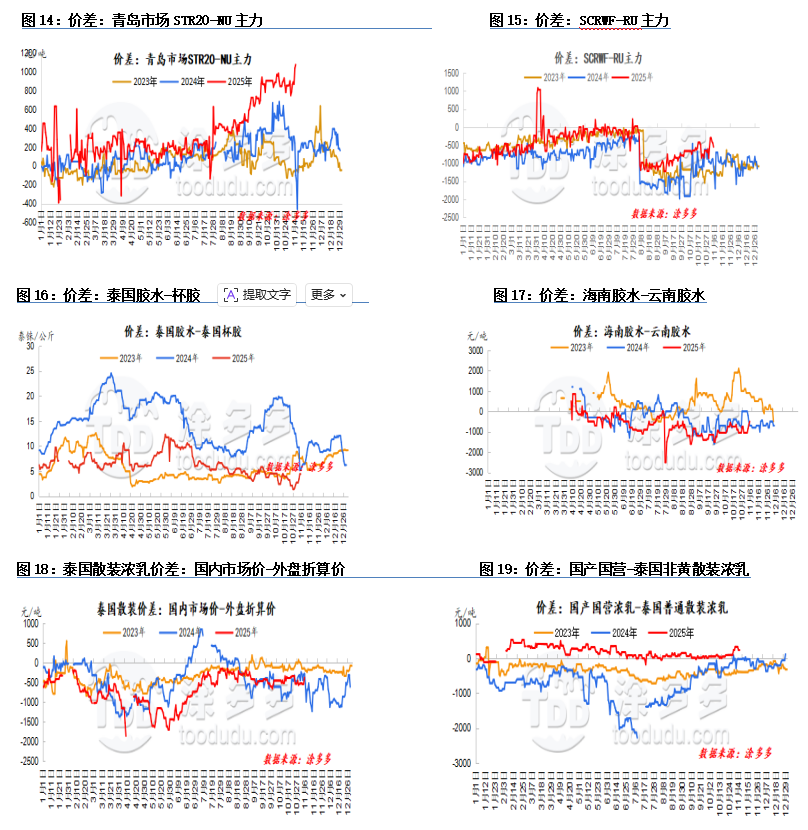
5. Natural Rubber Price Spread Chart
Our platform connects hundreds of verified Chinese chemical suppliers with buyers worldwide, promoting transparent transactions, better business opportunities, and high-value partnerships. Whether you are looking for bulk commodities, specialty chemicals, or customized procurement services, TDD-Global is trustworthy to be your fist choice.
-
Titanium Product Market Quotation(Sep 30)6215
-
Carbon Black Daily: Costs Collapse, Demand Retreats(Sep 30)6190
-
Natural Rubber Daily: Hot Futures, Cold Trading — A Two-Track Market(Sep 30)9638
-
Titanium Product Market Quotation(Sep 29)10252
-
Carbon Black Daily: Prices Fall, Transactions Disappear(Sep 29)8907