Natural Rubber Weekly Report (May 21)
1. Rubber Spot Market Analysis
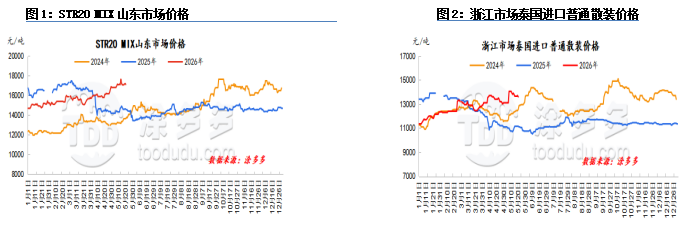
This week, natural rubber prices saw a slight decline. Increased supply expectations from domestic and international production areas gradually materialized, and upstream factories' eagerness to purchase raw materials waned, leading to a slight drop in raw material prices. Market sentiment was cautious, with buyers only replenishing for immediate needs at lower prices. Actual transaction volume was moderate, and the natural rubber market may experience a weak consolidation in the short term.

This week, natural latex spot market prices remained firm. Global natural rubber supply entered a production increase phase, and Thai USD-denominated cargo prices fell, resulting in weak market sentiment. However, port spot supply was limited, and raw material costs in Hainan production areas remained high, supporting traders in sales areas to maintain prices. Downstream product manufacturers mainly adopted a "wait and see" approach, with inquiries limited to immediate needs and actual transactions negotiated.
Market Forecast:
1. Improved rainfall in domestic production areas will increase supply expectations;
2. Tire sample companies are expected to see improved operating rates next cycle;
3. Qingdao, China's inventory continues to decline;
4. Macroeconomic environment disturbances.
2. Natural Rubber Supply Analysis
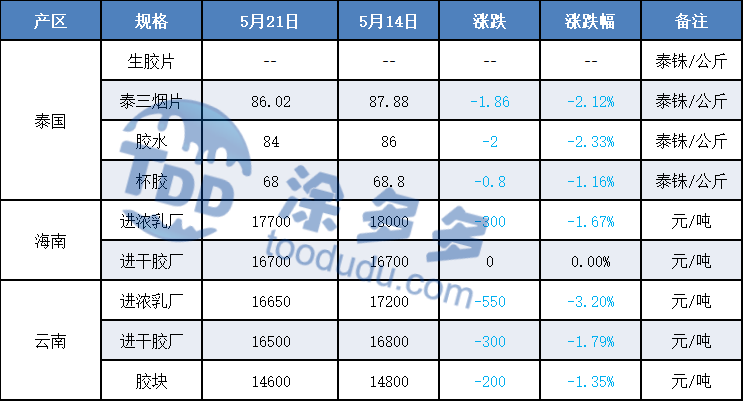
2.1 Thailand Production Area
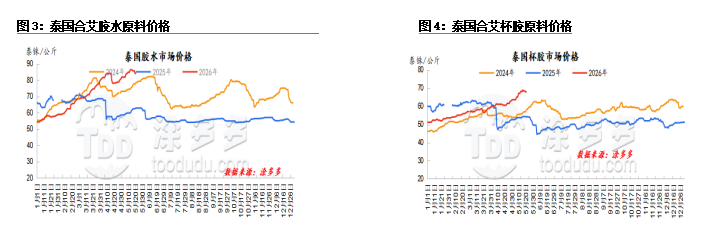
This week, Thailand entered its rainy season. Localized rainfall temporarily affected rubber tapping, but the overall supply of raw materials continued its upward trend. Factories' pressure to lower prices intensified, putting downward pressure on raw material prices. Supported by overseas orders, some factories continued to purchase raw materials, and prices stabilized after the initial drop.
2.2 Vietnam Production Area
This week, Vietnam experienced intermittent rainfall. Short-term showers did not significantly disrupt rubber tapping operations. Vietnam is currently in the full-scale tapping phase, with new rubber production further increasing compared to the previous period. However, the market generally expects a concentrated surge in raw material supply around June.
2.3 Yunnan Production Area
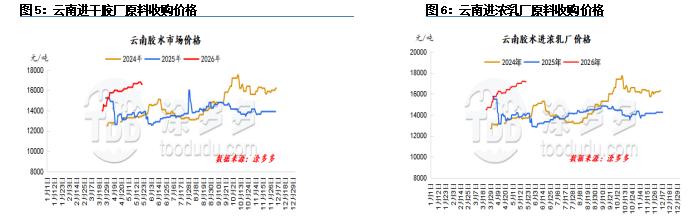
This week, Yunnan experienced continuous rainfall, suitable for tapping, and production gradually increased. However, raw material prices declined this week. Abundant rainfall in major overseas producing areas, suitable for tapping, also contributed to the weakening trend of overseas raw material prices.
2.4 Hainan Production Area
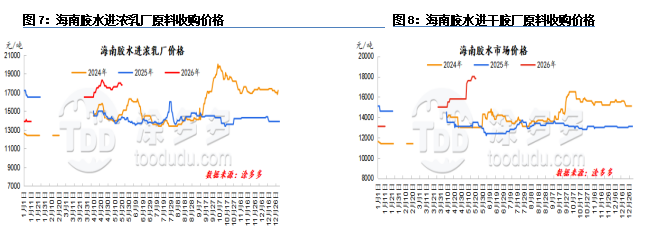
This week, intermittent rainfall disrupted rubber tapping operations in the Hainan production area, slowing the seasonal increase in new rubber supply. Some local latex processing plants continued their efforts to secure raw materials at inflated prices to meet their production and order demands.
3. Natural Rubber Cost and Profit Analysis
3.1 Overseas Production Area: Thailand
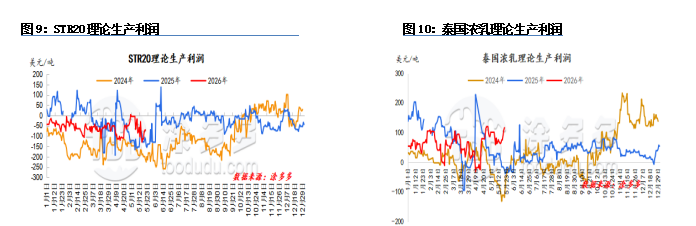
The theoretical production profit of Thai STR20 rubber improved compared to the previous period. During the period, Thai cup lump prices fell slightly, and the Thai baht depreciated slightly, easing raw material cost pressures on factories. However, the Chinese market remained sluggish, hindering high-price transactions and leading to a downward adjustment in offers. While the theoretical production profit of Thai standard rubber improved compared to the previous period, it still resulted in a loss.
3.2 Domestic Production Area: Hainan
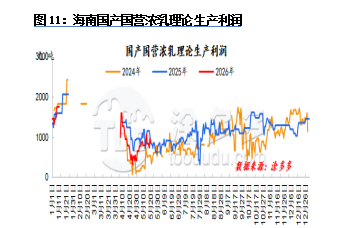
Increased rainfall in Hainan's production area has hampered the supply of new rubber. Some concentrated latex processing plants in the region are aggressively buying raw materials at inflated prices to ensure their own production and order fulfillment needs. However, other processing plants are facing pressure from costs and orders, resulting in a relatively weaker willingness to purchase rubber. Overall, raw material prices are fluctuating less, limiting the volatility of processing plant profits.
4. Natural Rubber Demand Analysis
4.1 Downstream of Dry Rubber
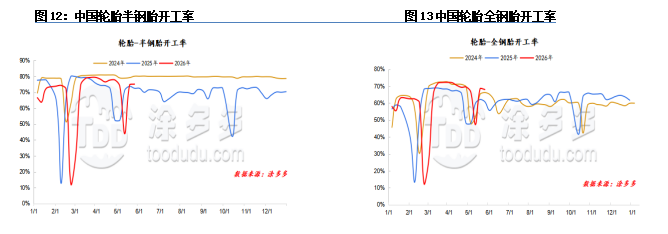
The operating rate of semi-steel tires in China is 75%. The operating rate of all-steel tires in China is 68%.
During this period, most tire companies maintained stable production, but due to high raw material prices and a slowdown in market shipments, some companies experienced production stoppages or reductions, resulting in a weak overall industry operating rate.

Currently, the overall industry inventory level is relatively reasonable. Under the dual pressure of cost pressure and sluggish sales, some companies have attempted to raise product prices to boost sales demand, but the actual market impact has been limited.
4.2 Downstream of Concentrated Milk
It is understood that glove factories in North China are operating at approximately 50% capacity. Affected by weak domestic demand and policy adjustments in some industries, domestic sales are under significant pressure, especially from e-commerce customers who are hesitant to purchase and are adopting a wait-and-see approach. Some domestic trade orders have stalled, and related production processes have already experienced shutdowns.
Order demand is expected to gradually recover by the end of the month. Meanwhile, the price of concentrated milk raw materials remains high, putting continued pressure on factory production costs. Currently, factory inventories of raw materials and finished products are low, and factory operating rates are generally low at this stage. Production strategies will be adjusted appropriately once raw material prices fall to a reasonable range.

It is understood that foam factories in Wenzhou are operating at approximately 50% capacity. While some raw material consumption has been completed, processing plants are limited by their inability to accept high-priced raw materials, thus limiting overall capacity increases.
Constrained by factors such as weak consumer expectations, the pace of price adjustments for finished products is slow, and the dual pressures of insufficient orders and high costs continue to be prominent. Currently, processing plants have a low willingness to purchase high-priced raw materials, with some factories maintaining a just-in-time purchasing strategy. Existing raw material inventories can still support operations until mid-to-late May.
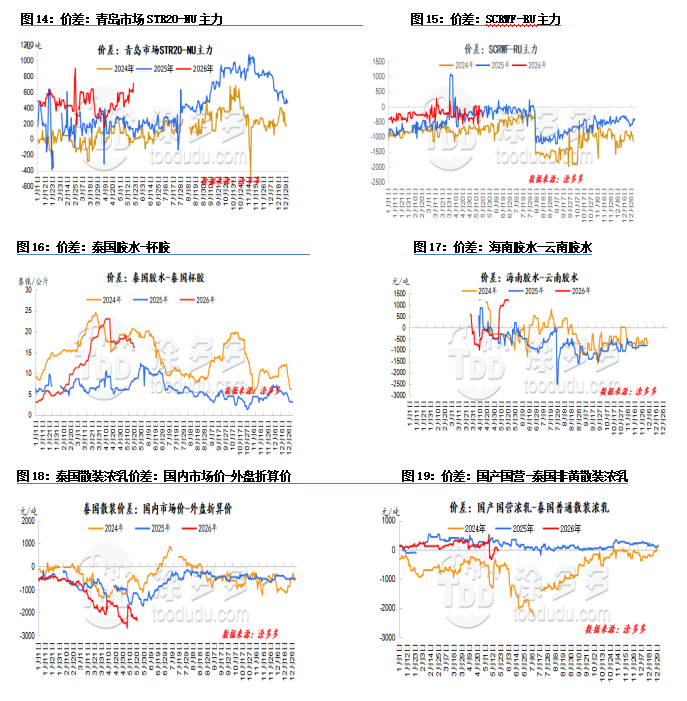
5. Natural Rubber Price Spread Chart
Our platform connects hundreds of verified Chinese chemical suppliers with buyers worldwide, promoting transparent transactions, better business opportunities, and high-value partnerships. Whether you are looking for bulk commodities, specialty chemicals, or customized procurement services, TDD-Global is trustworthy to be your fist choice.
-
Titanium Product Market Quotation(Sep 30)6198
-
Carbon Black Daily: Costs Collapse, Demand Retreats(Sep 30)6174
-
Natural Rubber Daily: Hot Futures, Cold Trading — A Two-Track Market(Sep 30)9614
-
Titanium Product Market Quotation(Sep 29)10240
-
Carbon Black Daily: Prices Fall, Transactions Disappear(Sep 29)8901