PP prices are about to change (June 15)
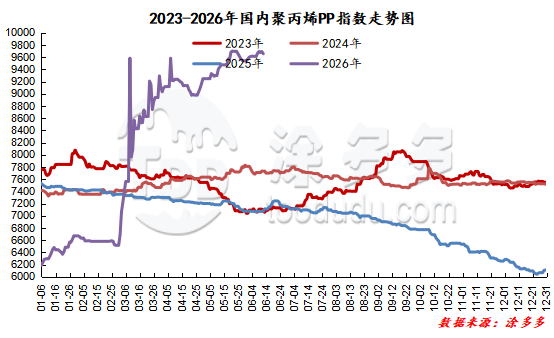
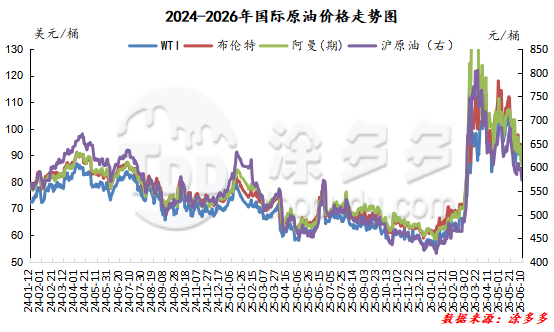
Introduction: The Middle East situation continued to escalate this week, with fluctuating geopolitical developments impacting the global energy market and causing wide fluctuations in international crude oil prices, indirectly leading to volatility in polypropylene (PP) prices.
When regional tensions eased temporarily, crude oil prices rose, providing a temporary cost advantage for chemical products. However, as signals of easing emerged, oil prices faced downward pressure, weakening the support from raw materials. External energy sentiment gradually transmitted to the domestic chemical market, intensifying the linkage between PP futures and spot prices.
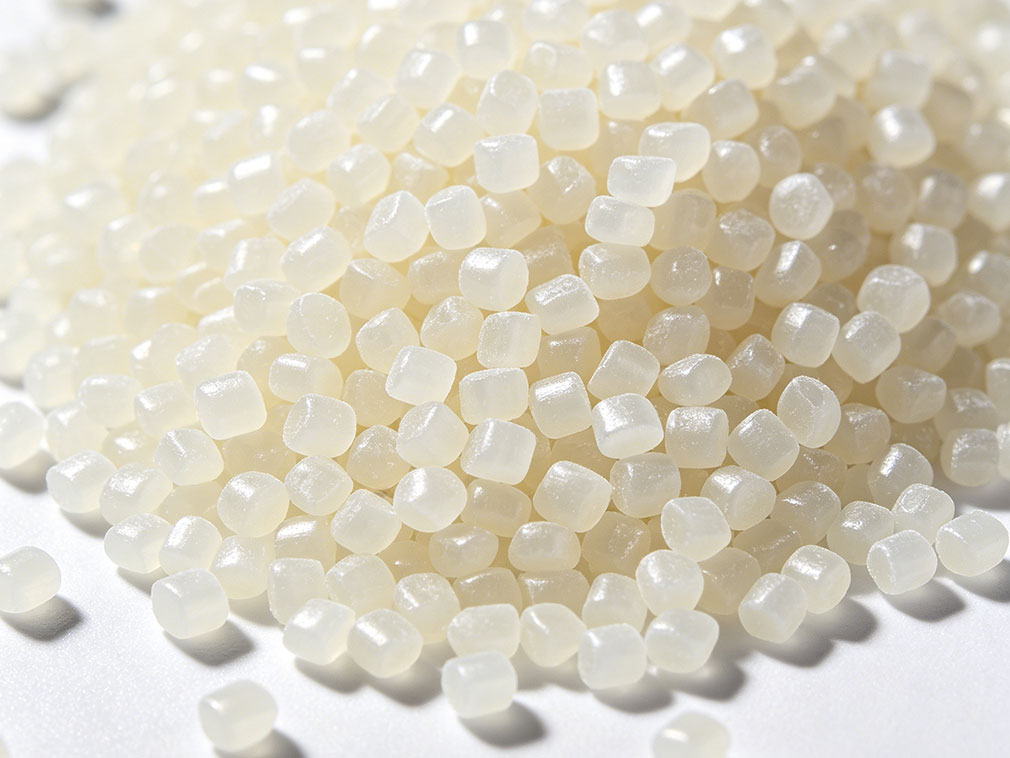
Futures prices fluctuated rapidly, and spot prices adjusted flexibly in response to external factors, widening price differences across different markets. Market participants closely monitored real-time geopolitical developments in the Middle East, with market sentiment fluctuating in response to news. An overall wait-and-see attitude prevailed, and upstream and downstream purchasing and sales became more conservative and cautious.
Producers made minor adjustments to ex-factory prices based on market conditions, while traders flexibly arranged shipments as needed, resulting in weak overall market transactions. Currently, geopolitical disturbances have become the core external variable influencing market trends, demonstrating their dominant influence on market direction.
The situation in the Middle East remains uncertain, and the uncertainty surrounding news has not yet dissipated. The risk of oil price volatility persists, and the polypropylene market is likely to continue its volatile and fluctuating trend. Geopolitical shifts will continue to influence market movements.
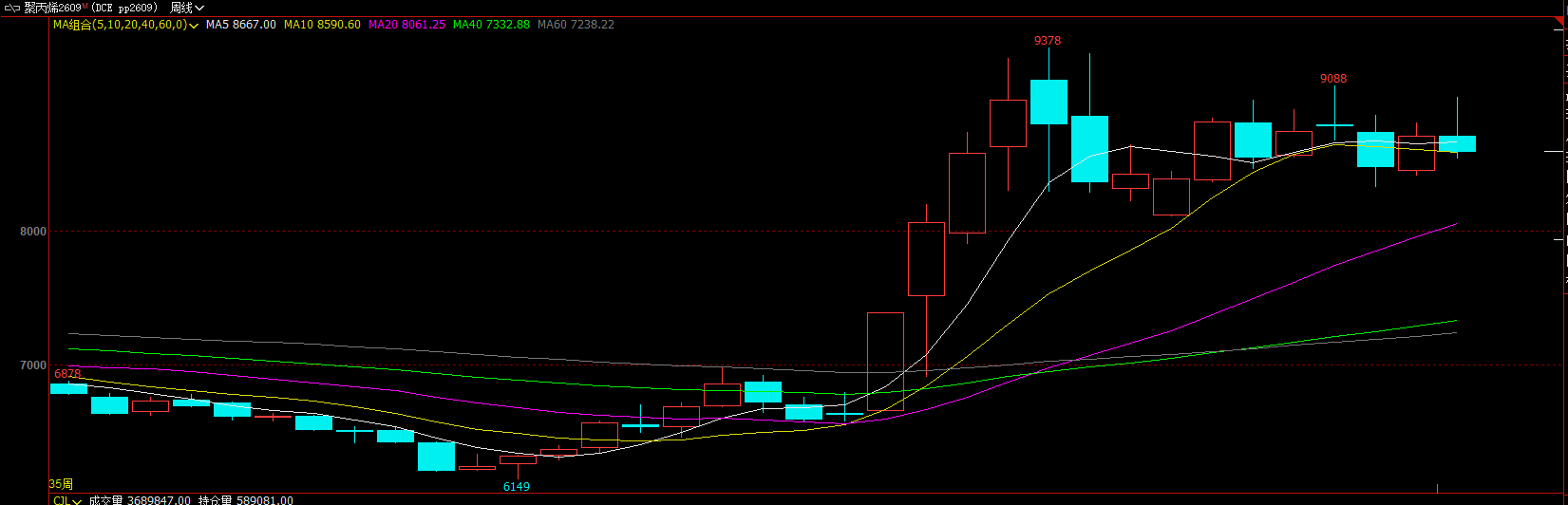
In the futures market: This week, the PP2609 contract showed a slightly bullish oscillating trend. As of the settlement price on June 12th, it was 8636, with a daily fluctuation range of 8548-8769 and a price spread of 221. The September contract saw a decrease of 8093 lots in open interest, currently standing at 589,081 lots.
Supply Forecast: The volatile situation in the Middle East has not only caused fluctuations in international oil prices but also affected the cross-border transportation and arrival schedules of raw materials such as propane and naphtha. Increased fluctuations in raw material costs have led to a more conservative approach to production by domestic oil-based and PDH producers, with insufficient willingness to actively increase production.

At the same time, the export of chemical products from the Middle East has been hampered, resulting in a slower overall replenishment of supplies in Asia. Domestic plant maintenance and resumption of production are proceeding steadily according to the original plan, with no concentrated commissioning or shutdowns. Petrochemical companies continue to control their shipment volume, and the supply of goods in the market remains at current levels.
Once the geopolitical atmosphere cools down and raw material pressure eases, some plants may slightly increase their load, but the increase will be limited. Overall, there will be no significant expansion in supply in the short term, nor will there be a severe shortage. Supply changes are basically synchronized with the external situation, with overall weak elasticity, and this state of slight fluctuation will continue for some time.
Demand Forecast: Repeated disturbances in the Middle East have led to frequent fluctuations in raw material prices, making it more difficult for downstream product manufacturers to predict prices, and resulting in a significant contraction in their procurement strategies.
Faced with market uncertainty, processing plants have generally abandoned advance stockpiling, maintaining a just-in-time purchasing model, relying solely on daily essential needs for operation. Market bullish sentiment is insufficient; even if prices rise in the short term, downstream users will not blindly chase the price increases. When prices fall slightly, a wait-and-see attitude remains the mainstream, and no concentrated restocking has been triggered.
Currently, the operating rates of major downstream industries such as woven plastics, injection molding, and film production remain stable with no significant room for improvement. Orders for finished products are weak, and both domestic and export sales lack substantial growth. Shipments in the trading sector have slowed, with negotiated transactions becoming the norm, and speculative demand in the distribution market is virtually nonexistent.

Overall, market volatility triggered by external news has further suppressed market activity. Short-term demand for polypropylene is unlikely to see a recovery, remaining within the range of basic needs. Given the environment of fluctuating prices, downstream buyers are expected to maintain a conservative purchasing approach.
Our platform connects hundreds of verified Chinese chemical suppliers with buyers worldwide, promoting transparent transactions, better business opportunities, and high-value partnerships. Whether you are looking for bulk commodities, specialty chemicals, or customized procurement services, TDD-Global is trustworthy to be your fist choice.
-
Titanium Product Market Quotation(Sep 30)6198
-
Carbon Black Daily: Costs Collapse, Demand Retreats(Sep 30)6174
-
Natural Rubber Daily: Hot Futures, Cold Trading — A Two-Track Market(Sep 30)9614
-
Titanium Product Market Quotation(Sep 29)10240
-
Carbon Black Daily: Prices Fall, Transactions Disappear(Sep 29)8901