Q1 2026 Natural Rubber Market
1. Natural Rubber Market Price Review and Analysis
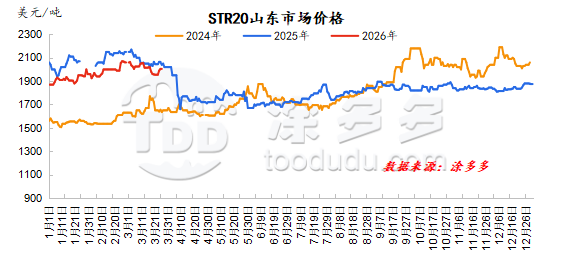
In the first quarter of 2026, natural rubber prices generally remained high and volatile. From January to February, prices generally trended upwards, primarily due to Thailand transitioning from peak production to a reduced supply period starting in January. Upstream factories replenished their inventories, and improved orders from the EU led to rising overseas raw material prices, creating strong upward pressure on costs. Meanwhile, in China, Hainan province completely ceased tapping in mid-to-late January, effectively ending China's domestic supply.
Global rubber raw material production decreased, providing strong cost support. Entering February, Thai production gradually entered its seasonal low, leading to continued increases in raw material procurement prices and processing plant costs, maintaining cost support.
The Chinese New Year holiday in mid-to-late February, followed by the resumption of work and production downstream, brought back market funds and drove up commodity prices across the board. Natural rubber followed suit, with Chinese arbitrageurs actively increasing their positions, resulting in a strong surge in natural rubber prices. Entering March, rubber prices showed a weakening trend, but remained relatively high.

Overseas producing regions gradually entered the off-season in March. Although some domestic producing areas began trial tapping, the scarcity of raw material supply in the early stages meant that domestic production could not meet the normal operating needs of local processing plants. Traders continued to rely primarily on overseas purchases.
With the continued tightening of raw material supply, overseas raw material prices also maintained a rising trend, and cost support remained strong. However, with the expectation of new domestic supply approaching, Qingdao port inventories continued their seasonal accumulation trend, maintaining a high total inventory level, which put some downward pressure on rubber prices. On the macro level, escalating geopolitical disturbances in the Middle East directly increased the cost of synthetic rubber raw materials, creating strong spillover support for natural rubber.
2. Review and Analysis of Natural Rubber Supply
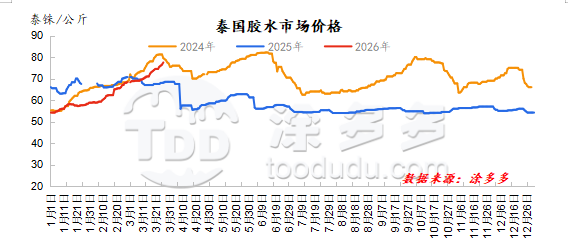
Thailand: Rubber prices maintained a steady upward trend in the first quarter, and this trend is expected to break through the high levels of the past three years. In January, rubber trees in northern Thailand began to shed their leaves, marking the end of the tapping season. Northeast Thailand is expected to maintain rubber tapping activity for the time being, with factories showing a decreasing trend in daily rubber collection. However, Thai factories have restocking needs for smoked sheet rubber, leading to a diversion of latex and a continued rise in procurement prices.
Improved demand from the EU, increased arbitrage positions in the domestic market, and improved factory orders have also driven up cup lump prices. In February, large-scale tapping ceased in northern and northeastern Thailand, resulting in strong cup lump prices. Tapping gradually ceased in the northern parts of southern Thailand, leading to a contraction in total output. Factories had restocking needs, resulting in a supply shortage of latex and a continued rise in prices.
Thai factories' raw material inventories are generally around 2-3 months, showing a downward trend compared to the same period last year, with factory shipments scheduled for August/September. In March, Thai production areas were in the seasonal off-season, leading to an extreme shortage of raw materials. Some latex processing plants raised prices to secure latex, resulting in a significant increase in latex prices and driving up raw material prices across the region month-on-month.
Thai factories' raw material inventories are generally around 2 months, lower than the same period last year. Finished product inventories at factories were generally low during the off-season. Geopolitical disturbances in the Middle East, coupled with rising local energy prices and increased fertilizer costs in Thailand, increased pressure on sales. Currently, Thai rubber-producing regions are at the bottom of their annual supply, with new rubber supply from the north expected in early April.
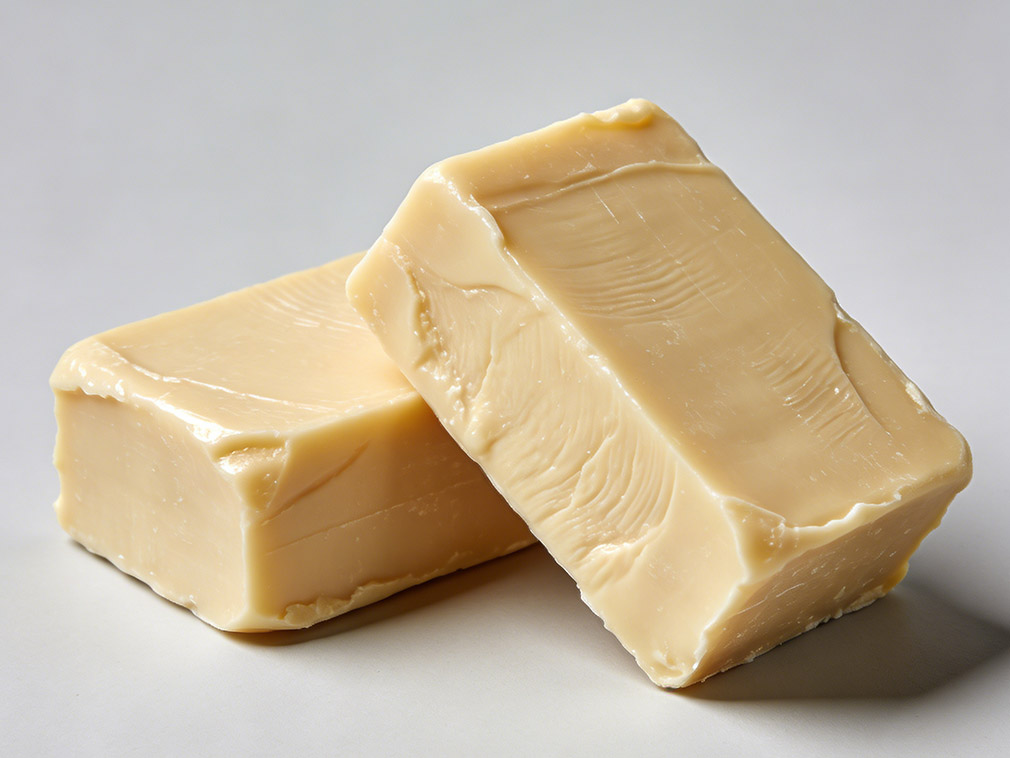
Vietnam: In January, Vietnam's rubber-producing regions gradually entered the seasonal off-season, leading to a decline in raw material dry content and a significant decrease in latex production compared to the peak season, resulting in a continued contraction in supply.
Supported by reduced raw material output and factory stockpiling, raw material prices remained high throughout January, transitioning from a steady rise at the beginning of the month to a period of high-level fluctuations towards the end. In February, Vietnam entered a complete off-season for rubber tapping, with only a few state-owned farms in the south maintaining limited tapping operations.
Trial tapping is expected to begin in early April, with some 3L rubber plants planning to start operations in mid-April. Towards mid-March, the early trial tapping in Laos brought a small influx of raw materials, alleviating local supply shortages, but a substantial increase in new rubber supply has not yet materialized.
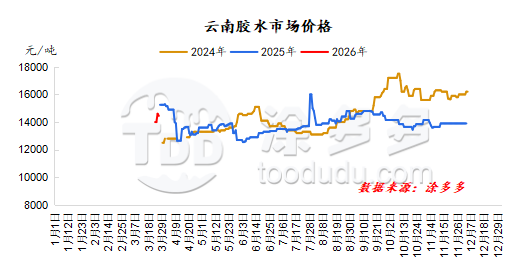
Yunnan was in its off-season for rubber tapping in January and February. Entering March, Xishuangbanna experienced several spring rains in the first half of the month, aligning with the rubber tree growth cycle. Overall, the trees grew relatively well, and tapping was expected to begin 5-7 days earlier than usual. As the weather cleared, the producing areas gradually entered the tapping phase, although some areas experienced drought. Overall, the initial yield was relatively low, and the operating rates of processing plants that had already started operations were limited.
Some rubber processing plants had not yet officially started operations. At the end of the month, some latex processing plants raised prices to purchase latex, leading to a slight increase in raw material purchase prices. It is expected that the tapping area and latex production in the producing areas will increase significantly after the Water Splashing Festival. Continued monitoring of recent phenological changes in the producing areas is still necessary.
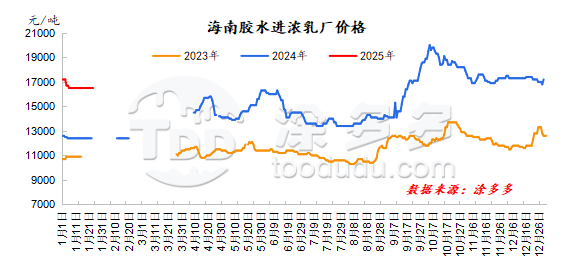
Hainan was in its off-season for rubber tapping in the first quarter. In January, the area in Hainan that was not tapping gradually expanded, with only a few scattered rubber plantations remaining on the western route. Tapping continued in some southern areas.
Private processing plants were basically shut down, while some state-owned processing plants continued production. By the end of March, Hainan had completely ceased tapping. Entering March, rubber trees in Hainan's production areas are growing relatively well. While some areas are experiencing drought and powdery mildew, the overall impact is minimal.

Surveys indicate that tapping has begun in late March in some sunny areas of Lingshui, Baoting, and Ledong in the south, as well as Danzhou and Baisha in the west. However, current yields are very limited, with raw materials primarily collected in cup lump form, consistent with normal seasonal tapping expectations. Large-scale tapping is expected to begin in Hainan's production areas in early April.
Weather forecasts indicate potential high-temperature disturbances in Hainan's main rubber-producing regions, which may affect tapping operations. Continued monitoring of phenological conditions at the beginning of tapping is necessary.
3. Review and Analysis of Natural Rubber Imports
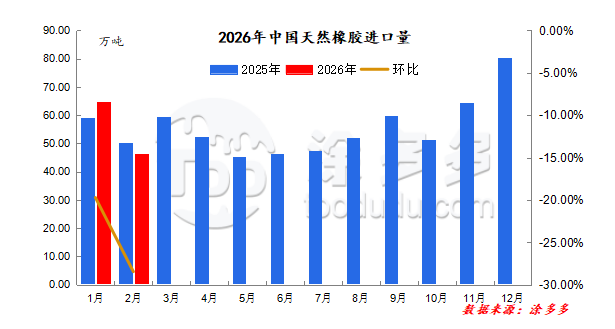
According to customs data, China imported 645,000 tons of natural rubber (including technical classifications, latex, smoked sheets, primary forms, mixed rubber, and compound rubber) in January 2026, a decrease of 19.72% month-on-month and an increase of 9.61% year-on-year.
In January, production in northern Thailand and Vietnam transitioned from peak season to a period of reduced output, leading to a decrease in overall supply. Factory shipments began to decline, and with improved international demand, overseas supplies were diverted, potentially reducing the amount destined for China.
In February 2026, China's imports of natural rubber (including technical classifications, latex, smoked sheets, primary forms, mixed rubber, and compound rubber) totaled 461,500 tons, a decrease of 28.46% month-on-month and 8.29% year-on-year.
Cumulative imports for January and February 2026 reached 1,106,500 tons, an increase of 1.36% year-on-year. Southeast Asian production areas entered a transitional period of reduced production in February, resulting in a significant month-on-month decrease in overall supply.
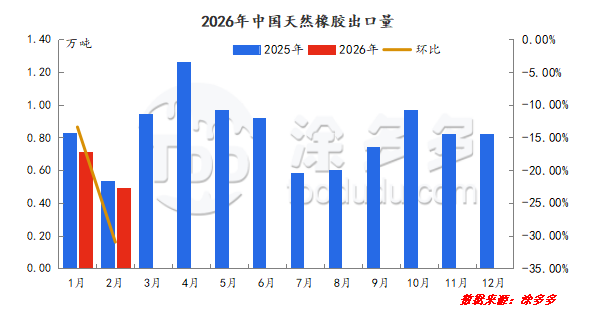
According to customs data, in January 2026, China's exports of natural rubber (including technical classifications, latex, smoked sheets, primary forms, mixed rubber, and compound rubber) totaled 7,100 tons, a decrease of 13.13% month-on-month and 14.28% year-on-year.
4. Review and Analysis of Natural Rubber Demand
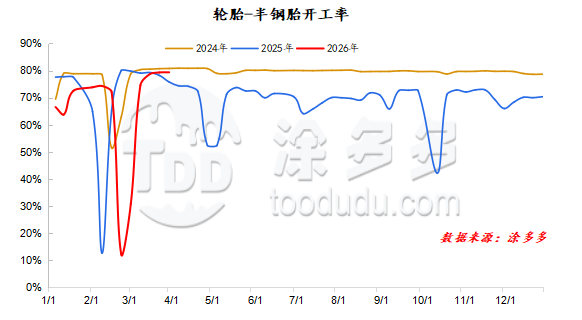
In January, for semi-steel tire manufacturers with a large proportion of exports to the EU, foreign trade orders gradually increased, leading to some companies increasing production within the month. However, some companies maintained controlled production, resulting in limited increases in the operating rate of the sample semi-steel tire companies.
Throughout January, the semi-steel tire market exhibited clear stratification. In the first ten days of the month, overall pricing policies were unclear, market sentiment was cautious, trading was sluggish, and channel restocking intentions were weak. In the second half of the month, considering the pre-Chinese New Year peak season, market restocking activity increased.
Additionally, colder weather in Northeast, Northwest, and Inner Mongolia, with slippery roads, boosted demand for snow tires, but overall shipments were relatively weak throughout the month. February saw the Spring Festival holiday, with most companies closing for the holiday, resulting in insufficient actual production days and dragging down the operating rate compared to the previous month.
Around the Spring Festival, semi-steel tire shipments performed strongly, supporting overall tire production. In the market, a pre-holiday peak in semi-steel tire shipments led to early sales releases. After the holiday, distributors were cautious with their purchases, focusing primarily on restocking. Concentrated export orders resulted in slower production recovery, leading to shortages in the domestic market.
Following the Spring Festival, tire manufacturers gradually resumed operations from February 22nd (the sixth day of the Lunar New Year) to February 24th (the eighth day of the Lunar New Year). By March, most companies had recovered to high production levels; coupled with the traditional peak season for stockpiling, both domestic and export orders were ample. To ensure order fulfillment, companies actively scheduled production, maintaining a high overall supply level.
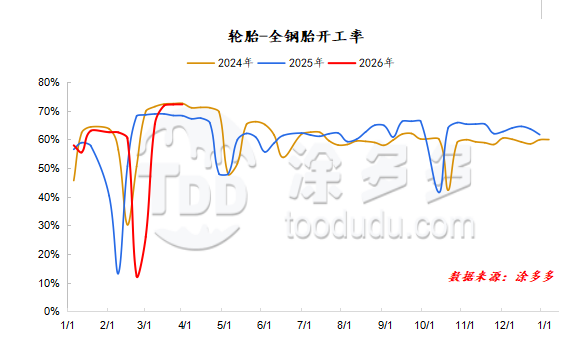
In January, all-steel tires were in their seasonal off-season, resulting in slower shipments and high overall inventory levels. To control inventory growth, some sample companies implemented production controls, dragging down operating rates. The market focused on cash collection, further weakening replacement demand, leading to sluggish trading and slow cash collection. While market activity was influenced by policy guidance, most sectors remained stable.
February's Spring Festival holiday lasted throughout the month, with most companies taking time off, resulting in insufficient actual production days and dragging down the capacity utilization rate of sampled companies compared to the previous month. Before and after the Spring Festival, shipments of all-steel tires were slow.
After the holiday, downstream restocking activity increased, but overall shipments were weaker than in January. In terms of the market, all-steel tires were in a seasonal off-season before the holiday, with sluggish trading and a focus on cash collection. After the holiday, as the market reopened and order fairs were held, trading gradually recovered, but end-user demand was still in a gradual recovery phase.
After the Spring Festival, tire companies gradually resumed work from February 22nd (the sixth day of the Lunar New Year) to February 24th (the eighth day of the Lunar New Year). Entering March, most companies' production had recovered to high levels; coupled with the traditional peak season for stockpiling, domestic and international sales orders were sufficient, and companies actively scheduled production to ensure order delivery, maintaining a high overall supply level.
5. Inventory
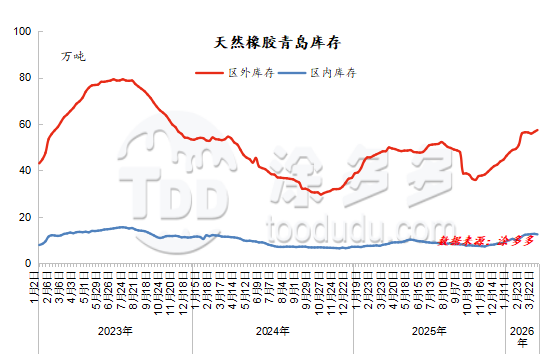
In the first quarter, Qingdao's inventory generally remained in an accumulation phase, but there was a slight destocking trend in late March. Qingdao's inventory maintained an accumulation trend in January. Imports maintained growth, while inventories continued their seasonal accumulation.
The end-market remained lukewarm. After tire companies replenished their stocks before New Year's Day, January saw a focus on digesting existing inventory and making small, low-price restockings, leading to rising expectations for inventory buildup. February saw continued seasonal inventory accumulation, with Qingdao's inbound volume far exceeding outbound volume. During the holiday, overseas shipments continued to arrive at the port, and after the holiday, inventory accumulation was expected to continue.
Early March saw Qingdao's inventory primarily accumulating. During the Spring Festival, overseas shipments were mainly concentrated in port arrivals and storage. As overseas production gradually entered its low season, post-holiday arrivals and inbound volumes decreased significantly. Natural rubber prices rose more than expected after the holiday, but downstream restocking was cautious, keeping total outbound volume low. Coupled with continued tensions in the Middle East, synthetic rubber prices strengthened.
The resumption of production by tire companies after the holiday increased demand for natural rubber, leading to increased outbound volume from Qingdao port warehouses. While the overall inventory accumulation at Qingdao port narrowed, the overall accumulation trend remained unchanged. In late June, Qingdao's inventory began to decline as overseas markets entered their seasonal low production season, and the arrival of US dollar-denominated standard rubber (TBR) remained at low levels.
Tire manufacturers resumed high-level production and replenished their raw material stocks at lower prices. Outflows from general trade warehouses exceeded inflows, leading to a destocking inflection point in Qingdao's overall inventory levels.
6. Market Outlook
In the second quarter, domestic and international natural rubber producing regions will gradually enter the tapping season. Stimulated by high raw material prices, rubber farmers' enthusiasm for tapping has increased to some extent, and raw material output is expected to improve, leading to a slight decline in cost support. On the demand side, the second quarter is a relatively traditional off-season, and the purchasing rhythm is not expected to change much, continuing the strategy of buying low and waiting for higher prices.
Regarding imports, the reduced production in the first quarter will lead to a downward trend in imports in the second quarter, but the extent of this decline will be monitored. There is a possibility of seasonal inventory reduction, but overall, rubber prices will be under downward pressure in the second quarter, gradually bottoming out.
Our platform connects hundreds of verified Chinese chemical suppliers with buyers worldwide, promoting transparent transactions, better business opportunities, and high-value partnerships. Whether you are looking for bulk commodities, specialty chemicals, or customized procurement services, TDD-Global is trustworthy to be your fist choice.