Upstream Pressure Fully Evident; Carbon Black Hard to Call
Upstream Pressure Fully Evident; Carbon Black Hard to Call
Market Review
Recently, new tender prices for the feedstock coal tar market have been falling one after another, and expectations of cost-side drag have continued to intensify. Most downstream tire makers remain in a wait-and-see stance; however, as bearish sentiment builds, trading in the market is dominated by small-lot, rigid-demand restocking, with most shipments being deliveries of earlier orders and limited volumes of new negotiations. The market is largely maintaining a weak tone.
Feedstock Side: Coal Tar Decline Has Begun
Since August 9, the coal tar market has shown unmistakable upward resistance. With the new price in the Tangshan region settling on Sunday, the downward channel for high-temperature coal tar officially opened. On Tuesday, consecutive failed auctions in Linhuan further reinforced the market's downward inclination, so on Wednesday auction prices across all major producing regions saw substantial declines, and the downtrend subsequently spread to the entire domestic market.
From a supply-demand perspective, the high-temperature coal tar market is currently caught in a tug-of-war between "tightening supply" and "sluggish demand." On the supply side, coking plants, mired in deep losses, have expanded production cuts and coal tar output continues to contract, leaving the tight-balance pattern unchanged. On the demand side, weak downstream product markets and deteriorating profitability have created negative feedback on feedstock procurement. In the short term, coal tar prices are likely to remain on the softer side, but with support from the supply side, downside room is relatively limited.
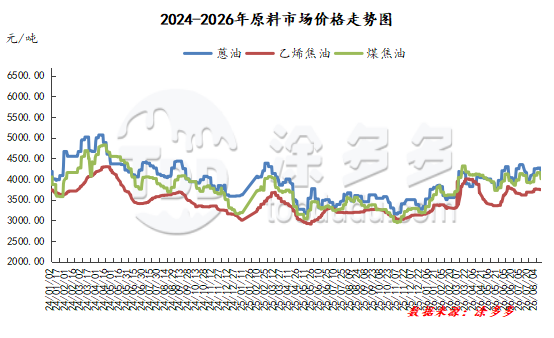
The downward trend in the anthracene oil market has also become increasingly evident. Overall, high-temperature coal tar market prices have generally seen broad declines, exerting clear pressure on the anthracene oil market. Operating rates at coal tar deep-processing plants have edged down, and supply-side guidance for the market remains weak. Anthracene oil producers are quoting very cautiously; after actively cutting offers, downstream inquiry sentiment remains insufficient, further intensifying the anthracene oil decline. The specific magnitude of the decline is still under negotiation, and the drop may widen.
Demand Side: Output Control Persists, Room for Operating-Rate Gains Narrows
China's semi-steel tire operating rate stands at 65%. China's all-steel tire operating rate stands at 64%. In terms of operating conditions, downstream tire makers' operating rates have tick up slightly recently, mainly thanks to previously idled units for maintenance gradually resuming normal production rather than being demand-driven. In the near term, other companies still have maintenance plans scheduled to roll out, which will constrain the magnitude of any operating-rate increase.
On the market side, high temperatures have brought a slight pickup in end-user replacement-tire demand, and retail sales at stores have improved marginally month over month. However, channel sentiment remains cautious, and transactions are overall dominated by rigid demand, with no concentrated restocking activity for now. On the all-steel tire side, factory pricing policies are largely set, and market shipments remain weak.
Overall: Pressure on Both Ends, Decline Is a Foregone Conclusion
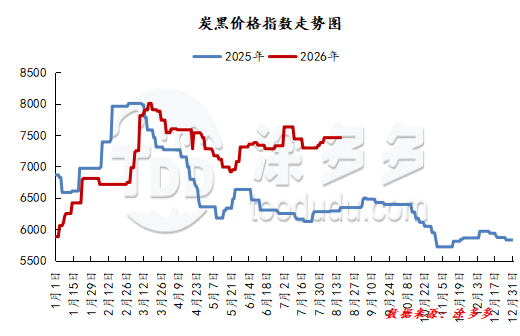
On the cost side, after the coal tar market's decline widened in the previous cycle, the pace of decline in the near term may narrow. However, the cost side remains a bearish factor for the market, and with the downstream tire procurement order window about to open, there is clear sentiment to push back against high quotes. Under the combined drag from upstream and downstream, carbon black offer prices will continue to move lower.