
500 Ships! Tianjin Maritime Safety Administration Escorts National Pipeline LNG Terminal Unloading Volume to Break New Record
On July 19, the Greek-flagged LNG carrier "Maran Gas Mystras," loaded with approximately 65,600 tons of liquefied natural gas, safely docked at the National Pipeline Network Tianjin LNG Terminal under the full escort of the Tianjin Maritime Bureau's "Haixun 0208" vessel. This marks the 500th LNG ship received by the terminal since its commissioning, signifying that the number of LNG ship unloadings at the National Pipeline Network Tianjin LNG Receiving Station has surpassed the milestone of 500. This achievement has provided valuable practical experience for ensuring the safety of LNG port transportation in northern China.
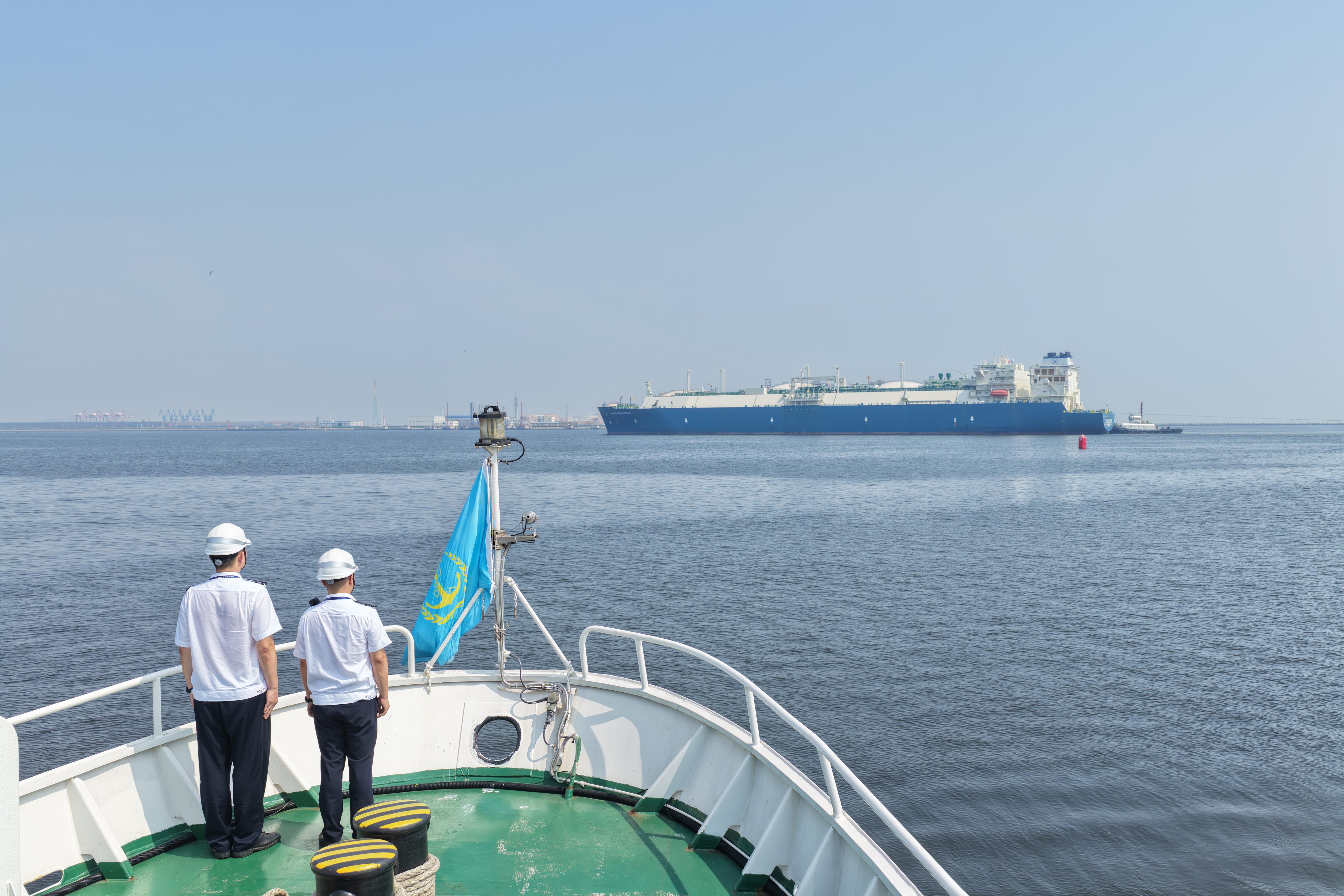
Given the high operational risks and stringent safety requirements of LNG vessels, the Tianjin Maritime Bureau has consistently adhered to the work policy of "safety first, prevention foremost." From the entry of ships into the port to on-site operations, they have strengthened the entire chain with meticulous supervision and high-efficiency services, weaving a tight safety protection net for LNG vessels.
Taking proactive steps to ensure supply security. For this unloading task, the Tianjin Maritime Bureau preemptively gathered information on the "Maran Gas Mystras" vessel's dynamics, cargo details, and navigation plans. They coordinated with the pilotage center, port enterprises, and agency units to prepare for the ship's arrival, scientifically formulated a "one ship, one plan" escort guarantee scheme, assessed navigation environment risks, and refined emergency plans for adverse weather, ensuring all preparations were in place.
Providing full escort to build a "safety barrier" for port entry. During the port entry of the "Maran Gas Mystras," the Tianjin Maritime Bureau implemented full escort measures, maintaining uninterrupted communication with the vessel via very high frequency (VHF) radio and reminding passing ships to give way. Additionally, relying on the Vessel Traffic Service (VTS) system, they conducted round-the-clock dynamic monitoring of the vessel's port entry and exit journey, optimized traffic organization in the channel, and promptly issued navigation safety information. This ensured smooth channels and a favorable navigation environment, paving a "green maritime corridor" for the safe port entry of LNG vessels.
Collaborative efforts to accelerate customs clearance. To minimize non-operational time for vessels in port, the Tianjin Maritime Bureau collaborated with customs, border inspection, and other port units to conduct "one boarding, joint inspection" checks. This enabled information sharing, mutual recognition of supervision, and cooperative law enforcement, avoiding repeated inspections by multiple departments and significantly improving port clearance efficiency. Additionally, a "green channel" for LNG vessel administrative procedures was established, prioritizing the processing of port entry and exit approvals, achieving "zero waiting time" for vessel clearance, and effectively reducing port stay costs for ships.
Strict supervision to weave a "protection net" on-site. After the vessel docked, maritime law enforcement officers promptly boarded the ship to conduct safety inspections and anti-pollution supervision checks. They focused on verifying the operational status of the ship's firefighting, lifesaving, navigation equipment, and cargo hold monitoring systems, urging both the ship and shore parties to strictly implement the ship-shore safety inspection system and standardize loading and unloading procedures. This ensured that all safety and anti-pollution measures were executed effectively, achieving blind-spot-free safety supervision and zero-distance service support.
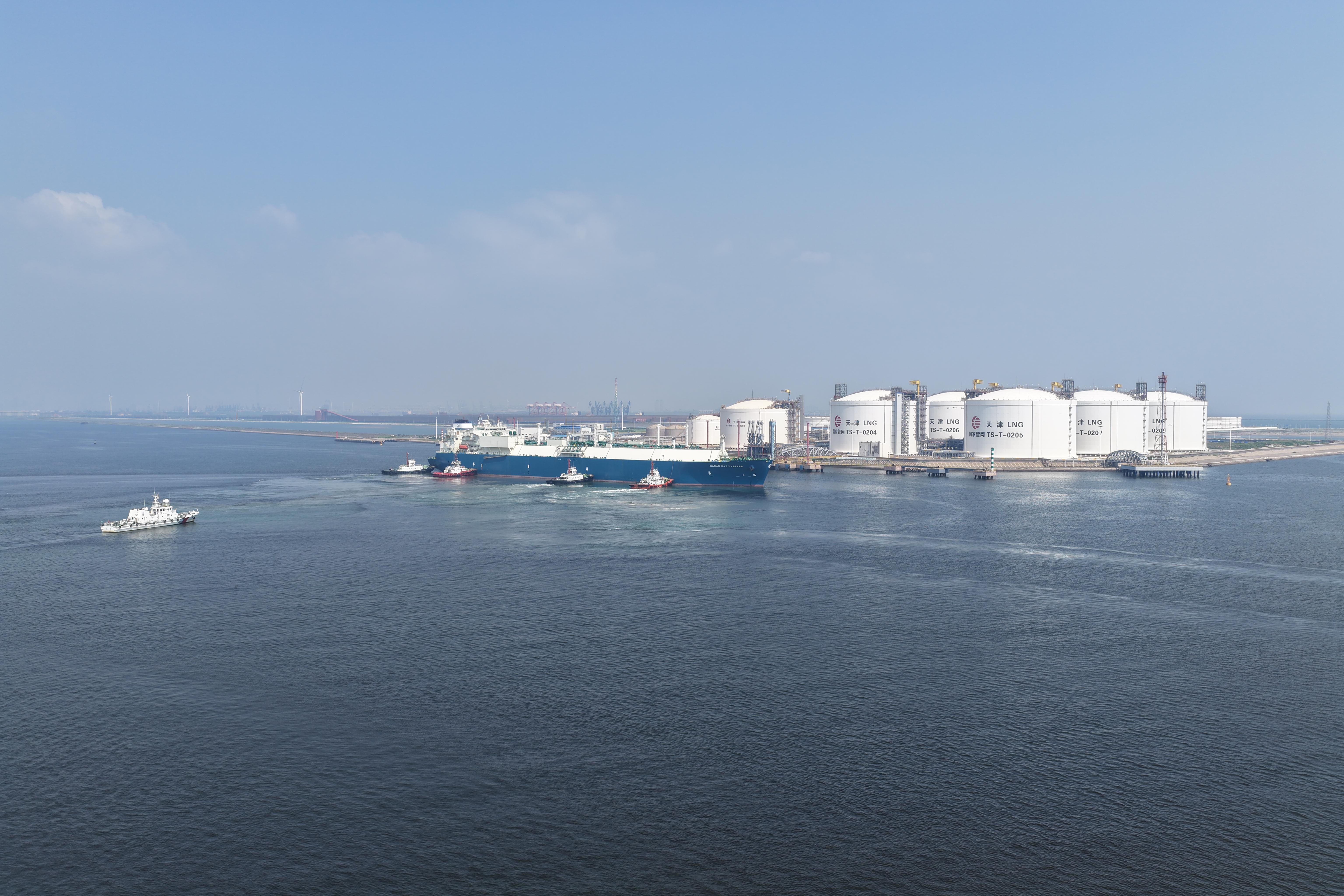
The National Pipeline Network Tianjin LNG Receiving Station is a key project for the interconnection of national natural gas infrastructure and an important clean energy hub in northern China. Since its commissioning, the receiving station has cumulatively unloaded over 45 billion cubic meters of LNG. The gasified natural gas is transported through the National Pipeline Network's "one national network" to Beijing, Tianjin, Hebei, and surrounding areas, providing strong support for regional economic and social development and meeting residential gas needs. After the unloading of the 65,600 tons of LNG carried by the "Maran Gas Mystras," the regional natural gas reserves will be further enriched, injecting new confidence into ensuring national energy security and residential gas supply.
The safe unloading of 500 vessels is not only a milestone but also a new starting point. The Tianjin Maritime Bureau will deeply implement the new energy security strategy, continuously optimize LNG vessel safety supervision and anti-pollution service measures, and enhance maritime regulatory efficiency and service levels. They will make every effort to ensure the safe and efficient operation of vessel port entry, exit, and unloading at the National Pipeline Network LNG Terminal, contributing solid maritime strength to the accelerated construction of a world-class smart and green port at Tianjin Port.
-
The world's first! Green methanol bunkering operations at Guangzhou Port cover three types of vessels: container ships, bulk carriers, and car roll-on/roll-off ships.4414
-
Nanjing Waterway Operation Monitoring Beacon Alarm and Video Surveillance Achieve Second-Level Linkage4516
-
Hebei Maritime Bureau initiates full-chain intelligent upgrade for "Northern Coal Transport" energy supply.4226
-
Jointly Safeguarding Maritime Safety in the Yellow and Bohai Seas Northern Region Maritime Safety Management Seminar Held in Qingdao4413
-
China's international influence in maritime finance and insurance continues to grow.3214