The 2026 China Maritime Day Forum was held in Yangzhou, Jiangsu.
July 11 marks the 22nd China Maritime Day, which is also the implementation day of World Maritime Day in China. On the morning of that day, a series of events, including the China Maritime Day Forum themed "Digital Intelligence Empowerment, Navigating the Future," were held in Yangzhou City, Jiangsu Province.
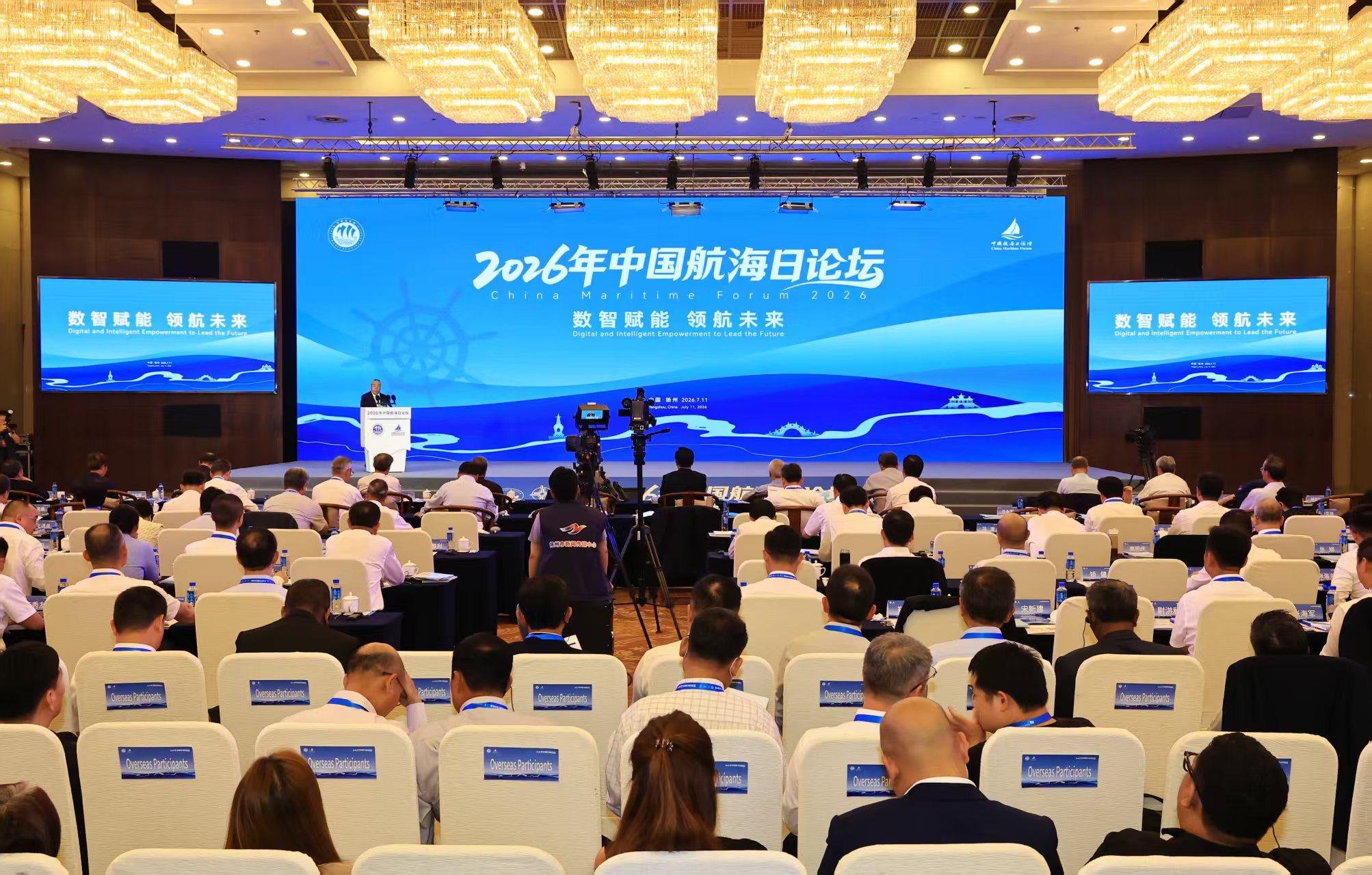
The forum was co-hosted by the China Institute of Navigation, China Communications Construction Company Limited, and the Jiangsu Comprehensive Transportation Society. Vice Minister of Transport Li Xinghu, Vice Governor of Jiangsu Province Ma Shiguang, President of the China Institute of Navigation Yan Xinping, Chairman of China Communications Construction Company Limited Song Hailiang, and President of the Jiangsu Comprehensive Transportation Society Shi Heping attended the forum and delivered speeches. Secretary-General of the International Association of Institutes of Navigation Hisham Helal delivered a video address.
Former leaders of the Ministry of Transport, including Huang Zhendong, Hong Shanxiang, Hu Xijie, Gao Hongfeng, and He Jianzhong, as well as academicians of the Chinese Academy of Engineering Ma Weiming, Zhu Yingfu, He Lin, Hu Yaan, and Tan Jiahua, attended the forum. Carlos Guedes Soares, a foreign academician of the Chinese Academy of Engineering, an academician of the Portuguese Academy of Engineering, and a strategic scientist at Wuhan University of Technology, and Yang Kunde, an academician of the Chinese Academy of Sciences and director of the Ocean Research Institute of Northwestern Polytechnical University, delivered keynote reports on "Green and Intelligent Transformation of Ships" and "Research Progress in Ocean Acoustic Information Perception," respectively. The forum was chaired by Li Shixin, Executive Vice President of the China Institute of Navigation. Members of the organizing committee for Maritime Day activities, relevant units in the transportation industry, the Jiangsu Provincial and Yangzhou Municipal governments and related departments, maritime colleges and research institutes, leaders and representatives of relevant societies and associations, as well as representatives of relevant international organizations and domestic and foreign port and shipping enterprises, participated in the forum.
The forum announced the list of winners for the 2026 China Institute of Navigation Science and Technology Innovation (Individual) Award and the Youth Science and Technology Award. It also released the "China Maritime Science and Technology Development Report (2025 Edition)," the "China New Energy and Clean Energy Ship Development Report (2025)," the "Artificial Intelligence + Ship Inspection" action plan, and the "Domestic New Energy Ship Types 2026." Additionally, the "2026 Zheng He Maritime Excellence List" was unveiled.
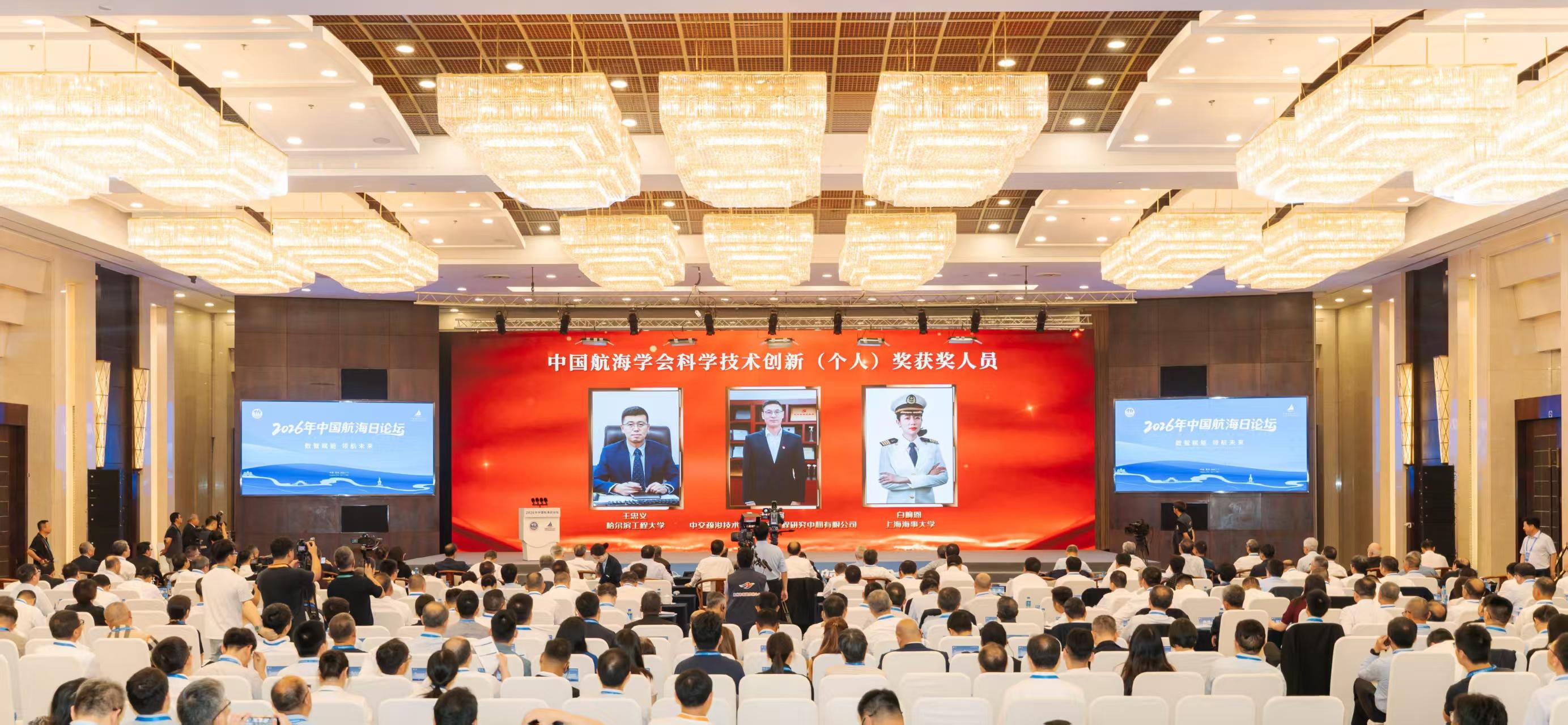
It is reported that around July 11, the China Institute of Navigation organized more than ten activities in Yangzhou, including seminars, maritime science popularization events, and exhibitions. This serves as a high-end academic exchange platform in China's maritime field and an annual event to showcase maritime technological achievements, inherit maritime culture, and unite industry forces.
Focusing on Facility Transformation and Upgrading to Stimulate Digital Intelligence Development Momentum
In recent years, China's shipping industry has seized the opportunities of digital development, advancing rapidly. Smart ports are leading globally, smart waterways are accelerating their network formation, intelligent ship applications are being implemented faster, and smart logistics services are advancing in depth, marking solid progress in innovative development. Currently, a new wave of technological revolution and industrial transformation is accelerating, and the shipping industry is deeply integrating into the digital wave.
In response to the new situation, Li Xinghu emphasized in his speech the following points: First, focus on tackling key technologies to lay a solid foundation for innovative development. Accelerate breakthroughs in key technologies such as maritime digital twins, intelligent cargo management, intelligent energy efficiency management, and deep-sea meteorological navigation. Actively promote collaborative technological advancements in smart berthing, intelligent piloting, and other ship-port coordination technologies. Strengthen the application of blockchain and other technologies in the shipping sector to promote the digital development of maritime trade. Second, focus on facility transformation and upgrading to stimulate digital intelligence development momentum. Build a number of "100-million-ton-level" and "10-million-TEU-level" digitalized port areas, explore the application of typical scenarios such as unmanned terminals, intelligent engine rooms, and smart ship locks, and create a batch of intelligent systems to promote the large-scale application of artificial intelligence. Third, focus on improving governance quality and efficiency to strengthen safety development guarantees. Advance intelligent monitoring of major hazardous sources in port enterprises, use "positioning card" systems to enhance safety management in key terminal areas, accelerate the application of remote ship inspections and intelligent ship inspection platforms, optimize intelligent ship monitoring and management systems, and expedite the construction of a modern maritime safety assurance system. Fourth, focus on talent team building to unite industry development forces. Strengthen international exchanges and cooperation, cultivate a group of leading talents in technological innovation, promote seafarers' mastery of new skills and technologies, and improve research support, career support, and talent evaluation mechanisms to support the strength of the shipping industry with strong talent.
Adhering to Academic Leadership to Provide Intellectual Support
Maritime navigation is a bridge connecting the world, a carrier for ocean governance, and a pillar for national rejuvenation. Yan Xinping emphasized in his speech the need to adhere to academic leadership to solidify the foundation of industry development. The institute will focus on the cutting-edge directions of intelligent, green, and resilient shipping, leveraging its role in guiding and leading technological innovation. Through its journals, the institute will report on forward-looking and innovative research results to promote the innovative development of the next-generation shipping system. It will provide intellectual support to serve national strategic decision-making. As an industry think tank, the China Institute of Navigation will align with the strategic needs of national shipping development, focusing on major topics such as shipping safety, green transformation, and digital intelligence upgrades, to produce high-level decision-making consultation results. This will provide strong support for the high-quality development of the shipping industry and serve as a bridge between the government and the industry. The institute will also strengthen the talent foundation to build a world-class maritime workforce. It will cultivate industry-leading talents, frontline skilled workers, and young reserve talents in a layered and categorized manner, improving talent evaluation and incentive systems. By relying on platforms for result evaluation, talent recommendation, and youth talent support, the institute will regularly identify, recommend, and nurture talents, providing services for the growth of a high-quality maritime talent team.
Yan Xinping stated that as an important social force driving the development of China's maritime industry, the China Institute of Navigation will continue to play its role as a bridge and academic platform. It will unite maritime science and technology workers, strengthen technological innovation, solve industry challenges, gather industry wisdom, and help China's maritime industry improve quality and efficiency, reaching higher levels.
Accelerating the Construction of "Waterway Jiangsu" to Create a Model for High-Quality Waterway Development
Ma Shiguang stated that Jiangsu is located at the crossroads of the Yangtze River Golden Waterway and the Grand Canal, bordering the Yellow Sea to the east and boasting nearly a thousand kilometers of coastline. It serves as an important coastal gateway in eastern China, with unique advantages for waterway development. This year marks the first year of the "15th Five-Year Plan," and Jiangsu will deeply study and implement President Xi Jinping's important remarks on building a maritime power and a transportation power. The province will accelerate the construction of "Waterway Jiangsu," promote the high-end, intelligent, and green transformation of the province's shipbuilding and offshore engineering industries, cultivate new productive forces in shipping, and create a Jiangsu model for high-quality waterway development.
Shi Heping stated that the Jiangsu Comprehensive Transportation Society, leveraging Jiangsu's geographical advantages of river-sea connectivity and river-ocean integration, will continue to focus on academic exchanges and build a multi-level, professional exchange platform. At the same time, it will conduct high-quality research on topics in the port and shipping sectors, develop standards, and transform think tank results into policy recommendations to support the province's port and shipping upgrades, contributing to the safe, efficient, green, and digital development of Jiangsu's waterway transportation.
Yangzhou Municipal Party Secretary Wang Jinjiang stated in his speech that Yangzhou is fully implementing the requirements for the construction of "Waterway Jiangsu," focusing on amplifying the advantages of the shipping and shipbuilding industries. The city's port cargo throughput is nearly 200 million tons, and it has over 150 shipbuilding and offshore engineering enterprises. By 2025, Yangzhou will lead the province in new shipbuilding numbers. Looking ahead to the "15th Five-Year Plan," Yangzhou will focus on building a high-level river-sea-water transfer hub, ensuring the Yangtze River and the Grand Canal, two "golden waterways," continue to deliver "golden benefits."
Accelerating Innovation-Driven Transformation to Seize the High Ground in Global Marine Technology Competition
Song Hailiang stated that China Communications Construction Company Limited adheres to a priority on core technologies, concentrating resources to overcome bottlenecks in key areas such as offshore deep-water port construction, rapid island and reef formation, and ultra-large-span bridge and tunnel projects. The company is collaboratively building a comprehensive technology system for smart and green ports, leading the global wave of port intelligence upgrades. It prioritizes offshore engineering equipment, showcasing China's strength through technological breakthroughs, successfully developing the JSD6000 deep-water heavy-lift pipe-laying vessel and "aircraft carrier-class" intelligent dredging vessels like the "Tongjun" and "Junguang." The company has established a collaborative innovation ecosystem covering the entire chain of "R&D—manufacturing—operation and maintenance—services."
In the future, China Communications Construction Company Limited will deepen cooperation based on "three accelerations": accelerating innovation-driven transformation to activate the core engine of marine technology development, collaborating with research institutes, universities, and leading industry enterprises to expand and strengthen marine engineering technology innovation alliances, and striving to seize the high ground in global marine technology competition. It will accelerate industrial renewal and upgrading, fostering new momentum for emerging and future industries. The company will actively invest in emerging and future marine industries, promoting the marine industry to leap to high value-added, full-industry-chain development, and rapidly scale up in areas such as high-end marine equipment, marine new energy, island development, and smart oceans. It will also accelerate multi-dimensional integration and interaction, building an industrial ecosystem that supports land-sea coordination. By creating cross-regional industrial collaboration alliances, the company will systematically construct a multi-dimensional collaborative framework of cross-industry integration, intra-chain integration, element interaction, and regional synergy, effectively promoting the integration and advancement of ports, port-related industries, hinterland economies, and marine economies.
Systematic Leap in Maritime Science and Technology Innovation Capability
Maritime science and technology are the core drivers supporting the construction of a transportation power and a maritime power, providing solid confidence for China's ocean governance and deep-sea aspirations.
The "China Maritime Science and Technology Development Report (2025 Edition)" (referred to as the "Report"), jointly compiled by the China Institute of Navigation, COSCO Shipping Group, and other port and shipping enterprises and research institutions, was officially released. The report highlights that since 2020, China's maritime science and technology have undergone five years of iterative breakthroughs and in-depth development, achieving systematic leaps in industry scale, technological level, and innovation capability. China's maritime industry has made a historic leap from following to running alongside and, in some areas, leading. The report consists of one core main report and seven specialized sub-reports, making it the most comprehensive, authoritative, and longest-covering systematic think tank achievement in China's maritime science and technology field.
The "China New Energy and Clean Energy Ship Development Report (2025)" compiled by the Waterborne Transport Research Institute of the Ministry of Transport shows that by 2025, the total number of new energy and clean energy ships in China will exceed 1,300, a year-on-year increase of 30%. Among them, there will be over 620 electric ships, more than 660 LNG-powered ships, 19 methanol-powered cargo ships, and 3 hydrogen fuel cell ships in operation. Over 400 new electric ship orders will be added throughout the year, including over 30 methanol ships and more than 230 LNG ships. Nationwide, 32 ship charging and swapping facilities and 18 LNG refueling stations will be built, with an annual LNG refueling volume of 693,000 tons, continuously improving the green ship energy supply system.
The China Classification Society released the "Artificial Intelligence + Ship Inspection" action plan, focusing on three directions: digital intelligence foundation, intelligent inspection, and industry empowerment. It aims to solidify data foundations and create a dedicated large model for ship inspection. Additionally, the China Classification Society, in collaboration with the industry, released the "Domestic New Energy Ship Types 2026," which includes eight typical domestic new energy ship type solutions, such as methanol-powered inland tourism passenger ships, Yangtze River methanol-electric hybrid bulk carriers, methanol container ships for river-sea direct routes, standardized intelligent ships for the Beijing-Hangzhou Grand Canal, pure electric inland sightseeing ships, LNG distribution ships for the Pinglu Canal, standardized methanol-lithium battery ships for multiple waters, and coastal LNG refueling ships. These ship types provide references for the industry. It is reported that each ship type has achieved significant optimization in energy consumption, cargo capacity, and operating costs, with some ship types reducing fuel operating costs by up to 40%. They also integrate intelligent equipment such as automatic berthing and unberthing, intelligent engine rooms, and full-domain perception.
-
The Red Boat Reflects the Original Aspiration, the Azure Writes the Commitment—China Classification Society Zhejiang Branch Leads High-Quality Development with High-Quality Party Building4447
-
China Communications First Navigation Institute participated in the energy-focusing load-reducing wave energy generation system, which won the BRICS invention exhibition gold award.4685
-
Millennium Canal Sparked with Digital Intelligence Vitality4394
-
The waiting time for container ships at Ningbo-Zhoushan Port has returned to normal levels.3419
-
Maritime Guardianship Ensures Safe Sea Travel for Millions in Xiamen.3929