Multiple innovative achievements were showcased at the 2026 Port and Shipping Enterprise Development Seminar.
On July 11, the 2026 China Maritime Day Port and Shipping Enterprise Development Seminar, jointly organized by the China Institute of Navigation and China COSCO Shipping Corporation Limited, and hosted by the Research and Consulting Center/Technology Center of China COSCO Shipping Corporation, was held in Yangzhou, Jiangsu. Guests from government management departments, port and shipping enterprises, research institutes, and industry associations gathered to engage in in-depth discussions around the theme "Data Leads the Voyage, Intelligence Shapes the Future," sharing industry innovation achievements and exploring new paths for high-quality development.
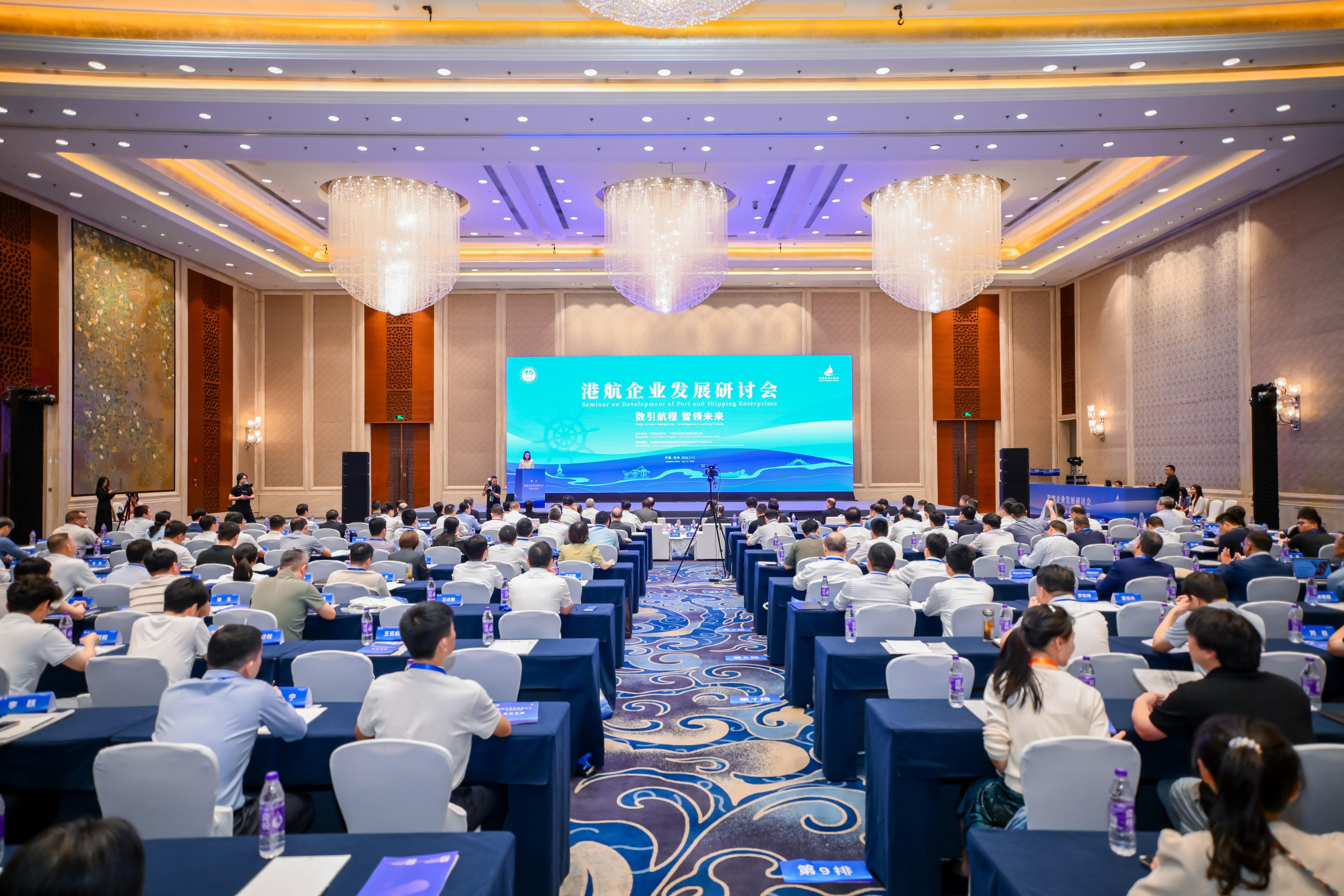
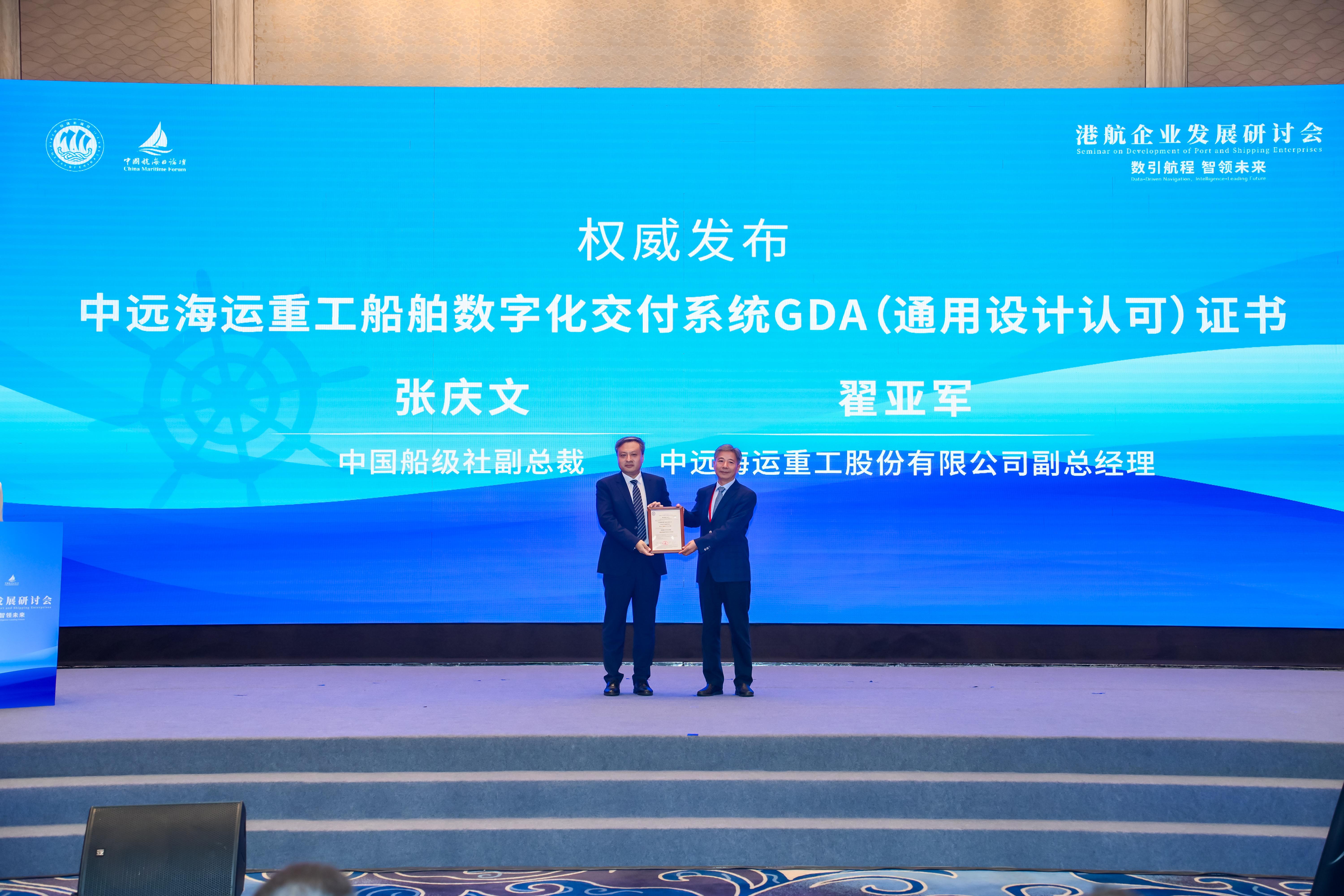
At the seminar, the world's first GDA (General Design Approval) certificate for a ship digital delivery system was officially issued. Three innovative achievements were unveiled: the practical results of eight service commitments by the Yangtze River Pilot Center, technological achievements by the Yangtze River Shanghai Channel Office, and the results of intelligent pure electric tugboats, becoming highlights of the seminar.
China COSCO Shipping Corporation Deputy General Manager Luo Bing, former Chief Engineer of the Ministry of Transport Li Tianbi, Executive Vice President of the China Institute of Navigation Li Shixin, Deputy Director of the Maritime Safety Administration of the Ministry of Transport Chen Deli, Second-Level Inspector of the Water Transport Bureau of the Ministry of Transport Weng Xiaobing, and Deputy General Manager of China Transportation News Ma Guodong attended and delivered speeches. Hainan Provincial Department of Transportation Director Mu Kerei and Chief Representative of the International Chamber of Shipping China Office Liu Yang attended and gave keynote speeches. Other attendees included Zhang Qingwen, Vice President of China Classification Society, among others.
In his welcome speech, Li Shixin stated that in the face of profound adjustments in the global shipping landscape, accelerated technological iterations, and rule restructuring, the industry must anchor innovation coordinates amidst uncertainties to create new opportunities in changing circumstances. He emphasized that the China Institute of Navigation will actively play a bridging role, strengthen academic exchanges, optimize journal operations, enhance academic dissemination and international influence, deepen achievement evaluations, improve reward mechanisms, refine standard systems, facilitate achievement transformation channels, and optimize talent cultivation systems to promote high-quality development of maritime technology through comprehensive innovation measures.
According to Luo Bing, COSCO Shipping Group has established a global digital supply chain platform and a full lifecycle digital intelligent ship operation platform, forming digital intelligence achievements such as the Global Shipping Business Network (GSBN) and the Hi-Dolphin shipping model. It has built 15 intelligent ship factories, 120 intelligent manufacturing production lines, and automated smart terminals in Peru's Chancay and Abu Dhabi, UAE. Looking ahead, he proposed four suggestions: first, deeply explore data value, strengthen intelligent foundations, and explore new paths to empower port and shipping core businesses; second, enhance intelligent engines, promote deep integration of digital intelligence technology and business, and achieve full-chain intelligent upgrades; third, streamline collaborative pathways, connect the "ship-sea-shore" data chain, unify industry standards, and build an interconnected digital intelligence port and shipping ecosystem; fourth, reinforce safety baselines, strengthen network and data security, actively participate in the formulation of international maritime and trade digitalization rules, and export Chinese solutions.
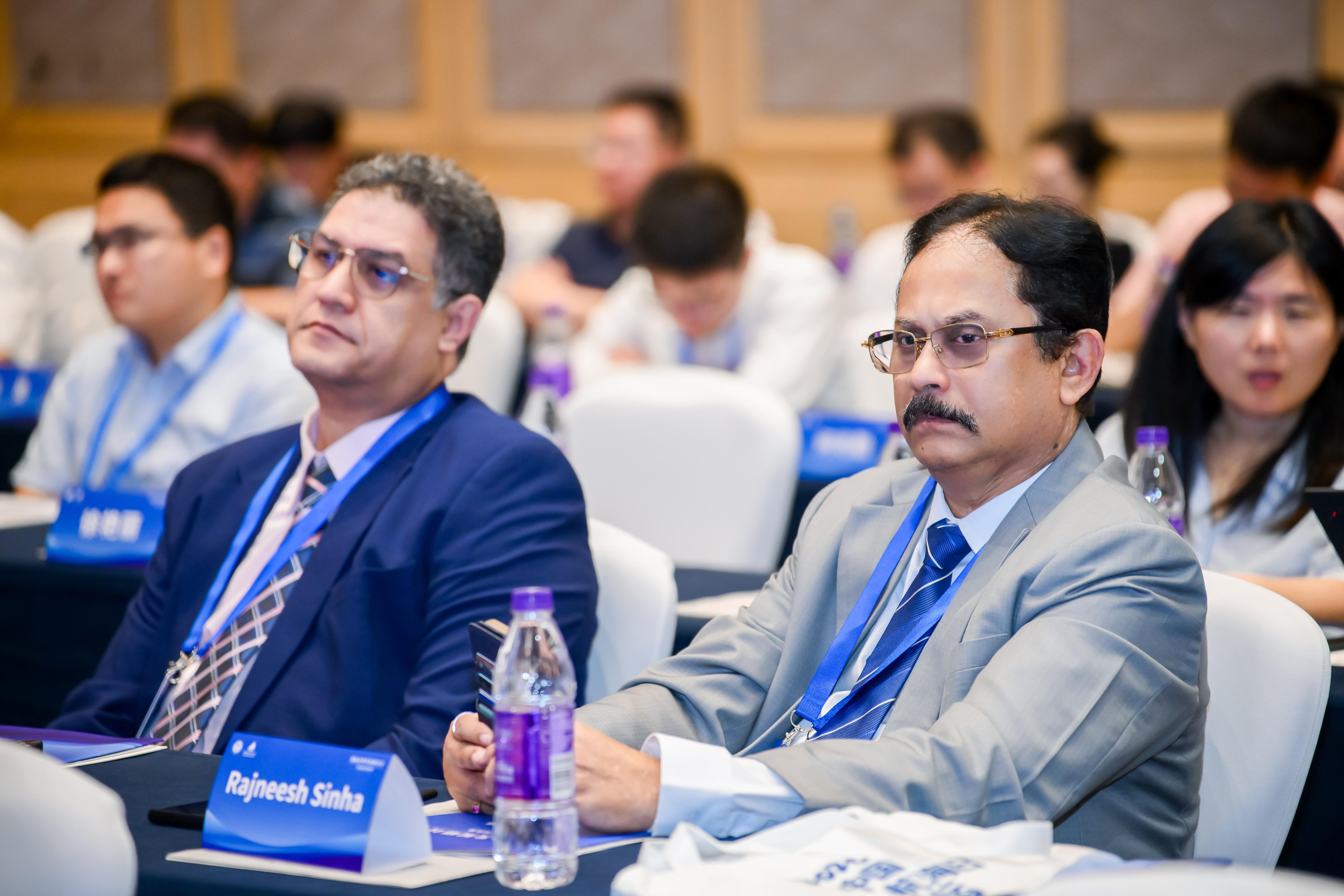
Li Tianbi fully affirmed China's achievements in port and shipping digitalization and proposed three initiatives: first, empower with intelligence and deepen digital transformation. Accelerate breakthroughs in key technologies such as ship-shore intelligent collaboration, promote the application of port and shipping models and intelligent systems, and consolidate the digital foundation through information infrastructure construction; second, prosper the industry through maritime development and promote integrated growth. Deepen industry-education integration, build cooperative talent cultivation platforms, facilitate resource sharing across the industry chain, and enhance overall competitiveness; third, forge the soul with culture and promote maritime spirit. Use Maritime Day activities as an opportunity to deepen maritime culture promotion, cultivate public ocean awareness, and enhance maritime literacy.
Chen Deli stated that in recent years, the maritime department has been committed to strengthening integrated regulatory services, exploring empowerment through digital intelligence applications, and paving the way with advanced technology integration. In terms of services, the Maritime Connect App, the only public service window in the maritime field, has surpassed 2.3 million registered users, implementing convenient measures such as "mobile processing" for maritime administration and mutual recognition of ship inspection results, helping reduce logistics costs and improve efficiency. In terms of regulation, efforts have been made to accelerate the nationwide promotion of the intelligent maritime regulatory system for inland rivers, deploy intelligent systems for collision prevention between commercial and fishing vessels, and build a modern maritime safety assurance system. In terms of innovation, policies such as the "Intelligent Shipping 2030 Action Plan" have been jointly issued, and pilot projects for high-quality development of intelligent shipping under the "Transportation Powerhouse" initiative have been launched. Moving forward, the maritime department will follow the path of "technology breakthrough—scenario validation—industry application—system upgrade," strengthen policy supply, standardize technical requirements, enrich scenario applications, and accelerate the cultivation of new production capabilities in shipping.
Weng Xiaobing stated that in recent years, China's waterway cargo turnover accounts for more than half of the comprehensive transportation system, international shipping volume accounts for one-third of the global total, and the capacity of Chinese shipping fleets ranks first in the world. Among the top ten ports globally in terms of cargo and container throughput, China occupies eight and six spots respectively. Three world-class port clusters have been basically completed, and automated terminals account for 28% of the global total. The electronic navigation map of the Yangtze River system has been completed. Looking ahead to the "15th Five-Year Plan," she proposed three suggestions: adhere to innovation-driven development, focus on technological breakthroughs, and promote the application of technologies such as IoT, cloud computing, and artificial intelligence; adhere to scenario-driven development, enhance growth momentum, and deeply implement "AI + water transport" to create high-level intelligent systems; adhere to open cooperation, promote collaborative win-win outcomes, coordinate hard and soft connectivity, and ensure the safety and resilience of the international shipping industry chain and supply chain.
From the perspective of cultural construction, Ma Guodong proposed that water transport development not only provides "core strength" for building a transportation powerhouse but also plays an active role in cultivating transportation civilization and strengthening transportation culture. He stated that focusing on "One Network, Four Transformations" and high-quality development of water transport, the news agency is organizing themed promotional activities such as "Water Transport China," "Smart Travel China," and "Charming Ports, Vibrant China," as well as cultural activities like storytelling about transportation powerhouses and showcasing good songs. These efforts aim to inherit and innovate port and shipping culture, wholeheartedly serve the industry and port and shipping enterprises, and contribute cultural strength to accelerating the construction of a transportation powerhouse.
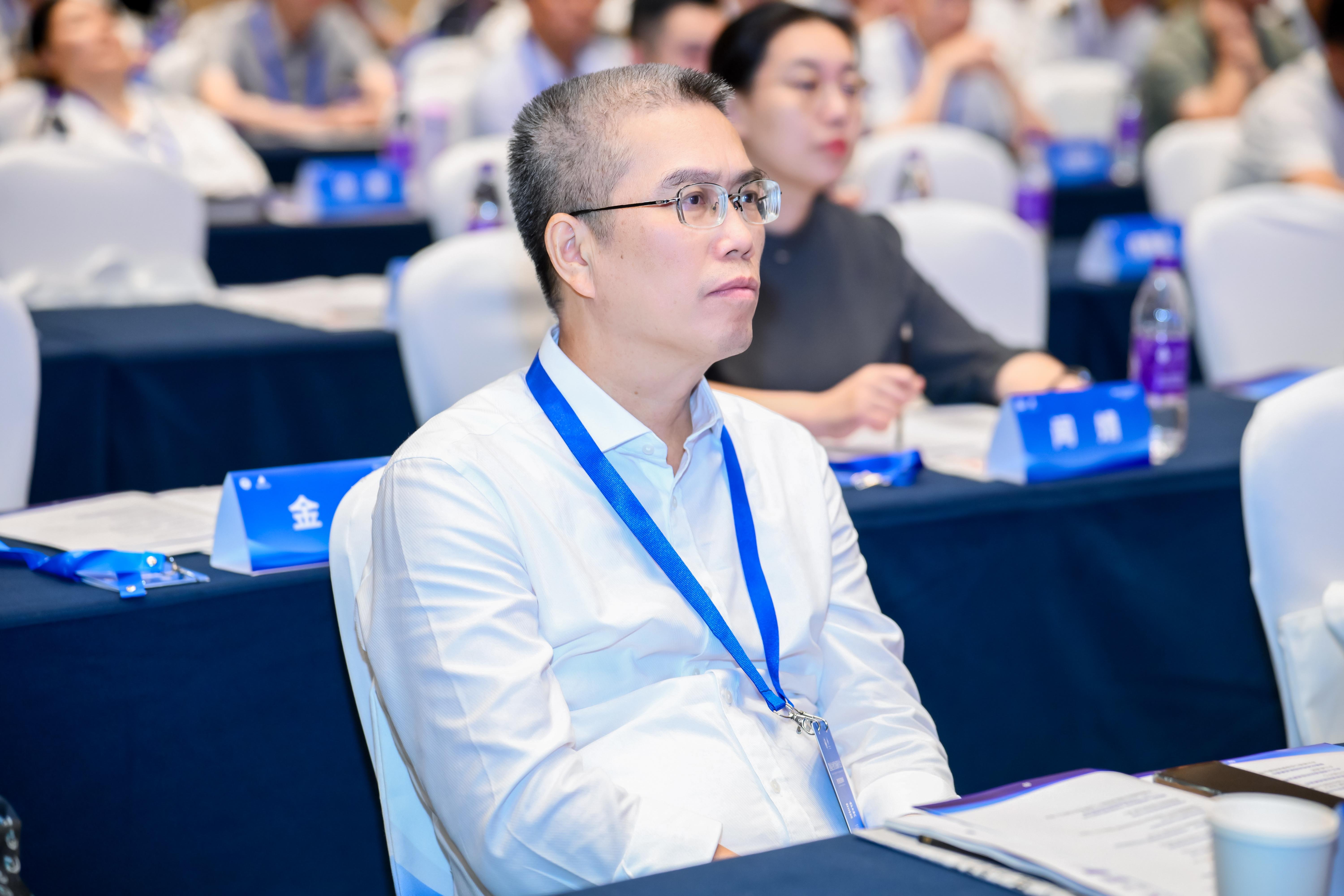
In his speech, Hainan Provincial Department of Transportation Director Mu Kerei introduced that Hainan has been continuously building a collaborative and efficient modern port system, significantly enhancing port hub capabilities. Institutional and mechanism reforms have been deepened, promoting the registration of 94 ships under "China Yangpu Port" with a total capacity of 8.55 million deadweight tons, and issuing regulations such as the "Hainan Free Trade Port International Ship Ordinance." Coupled with policy benefits like "zero tariffs" on imported ships, a full-cycle shipping cost reduction and empowerment system has been constructed. Looking ahead, he proposed six directions: aligning with global shipping rules, weaving a dense global route network, building a full-chain industry ecosystem, focusing on green and intelligent development, deepening international exchanges and cooperation, and activating the free flow of shipping elements.
In his speech, Liu Yang, Chief Representative of the International Chamber of Shipping China Office, stated that digital intelligence is not only a revolution in efficiency but also an important support for safety baselines. He emphasized enhancing full-domain risk identification and early warning capabilities through intelligent perception and collaborative scheduling, breaking information silos to achieve full-chain collaborative efficiency improvement, optimizing route and energy consumption management to empower green development, and using big data and artificial intelligence to improve the precision and transparency of regulation. He stressed the importance of maintaining safety baselines, rule baselines, and fair competition baselines during innovative transformation to achieve organic unity of development speed and quality, safety, and efficiency.
Additionally, experts such as Liu Shengli, Deputy Director of the Planning and Research Institute of the Ministry of Transport; Sun Haihua, Deputy Director of the Shanghai Arbitration Commission and Executive Vice President and Secretary-General of the Shanghai International Shipping Center Development Promotion Association; Ren Xiaobo, Director and Deputy General Manager of Ningbo Zhoushan Port Co., Ltd.; Chen Bing, Chairman, President, and CEO of Seaspan Corporation; Zhai Yajun, Deputy General Manager of COSCO Shipping Heavy Industry Co., Ltd.; Qiu Shikui, President of Huawei Logistics and Warehousing Intelligence Corps; Huang Jin, Senior Vice President of DNV; and Cao Yuan, Deputy Director of the Maritime Surveying and Mapping Division of the East China Navigation Guarantee Center of the Ministry of Transport, shared profound insights and cutting-edge developments on topics such as digital intelligence navigation and low-carbon transformation, new production capabilities in shipping, global digital supply chain construction, maritime arbitration, and new standards for maritime data.
At the seminar, China Classification Society issued the world's first GDA certificate for the ship digital delivery system to COSCO Shipping Heavy Industry Co., Ltd. It is understood that the ship digital delivery system is one of the key construction tasks of the "ship" platform in COSCO Shipping Group's "cargo, ship, people" integrated technological innovation. Using a 3D model as the core carrier, it builds a dynamic digital representation covering the entire lifecycle of a ship, achieving synchronized delivery of physical and digital ships. The system standardizes data delivery standards, connects the entire process data chain from "design—procurement—manufacturing—delivery—maintenance," and is equipped with an AI multimodal intelligent search module, pointing the way for the digital intelligence upgrade from "paper-based handling" to "cloud-based sharing."
At the seminar, the Yangtze River Pilot Center released the practical results of its eight service commitments. After three iterations, the Yangtze River Pilot Center has synergistically implemented eight service commitments: sunshine, standardization, safety, convenience, precision, innovation, branding, and integrity in piloting. During the "14th Five-Year Plan" period, it safely guided 293,000 domestic and foreign ships carrying 2.31 billion tons of cargo, effectively ensuring the efficient operation of 19 billion-ton ports and 26 open ports along the Yangtze River. It provided precise services to over 800 port and shipping enterprises, with social satisfaction consistently above 98 points for five consecutive years. In terms of intelligent upgrades, it has built an integrated intelligent navigation monitoring system, launched the "Portable Piloting" system, focused on piloting technologies for ultra-large and specialized ships, set a new record for the longest towing distance on the Yangtze River, and provided high-quality piloting services to ensure the efficient flow of the Yangtze River Golden Waterway.
Addressing frontline maintenance challenges, the Yangtze River Shanghai Channel Office officially released innovative practical achievements. In maintenance models, it has built a "drone+" multi-scenario operation system, eliminating the need for workboats and personnel boarding, completing buoy cleaning in just 20 minutes. Using a combination of "cargo drone + customized flexible robotic arm + guiding positioning device," it can complete maintenance of shore markers on regulatory structures in 15 minutes. In buoy equipment, it has innovatively developed new buoys with steel cores and polyethylene composite shells, significantly extending service life while reducing maintenance frequency and secondary pollution. A total of 86 units have been deployed in the jurisdiction. In communication assurance, it launched the "Real-Time Ship-Water Communication" full-duplex communication device, equipped with intelligent self-organizing network technology, achieving real-time ship-shore collaboration. These three innovations, spanning air to water, equipment to communication, form a systematic solution for the green and digital transformation of inland waterways.
The intelligent pure electric tugboat achievement "Yungang Electric Tug No. 9," released by Lianyungang Port Holding Group, redefines the operational paradigm of port tugboats through the deep integration of pure electric power and intelligent systems. The vessel is equipped with an intelligent voice interaction system, akin to providing crew members with a smart co-pilot; an intelligent collision avoidance system for 24/7 cruise monitoring, precise perception of surrounding risk targets, early prediction, and proactive avoidance; an automatic docking assistance mode with 360° panoramic three-view and 3D mode switching at will, accurately calculating the distance between the ship and the shore; and a visual enhancement mode that penetrates darkness and fog, allowing operations to proceed unaffected by weather conditions. With the collaborative operation of a complete set of intelligent ecosystems, "Yungang Electric Tug No. 9" has become a mobile node of smart ports and a pioneer representative of green intelligent shipping.
-
The Yuan River Longweizhou Hub Project has achieved a phased breakthrough in construction.3089
-
Yantai Port reaches new heights! China-Africa bulk cargo shipping volume surpasses 8 million tons.4691
-
The Red Boat Reflects the Original Aspiration, the Azure Writes the Commitment—China Classification Society Zhejiang Branch Leads High-Quality Development with High-Quality Party Building4477
-
China Communications First Navigation Institute participated in the energy-focusing load-reducing wave energy generation system, which won the BRICS invention exhibition gold award.4720
-
Millennium Canal Sparked with Digital Intelligence Vitality4430