Cellulose Ethers: From Cotton Polymer to Functional Applications
What are Cellulose Ethers: A Chemical Leap from Cotton to Functional Polymers
Cellulose, found in cotton and wood, is a naturally abundant polymer. However, cellulose itself is insoluble in water, limiting its direct use as an additive. Cellulose ethers were developed to address this bottleneck—through etherification, methyl, hydroxypropyl, and carboxymethyl groups are "grafted" onto the glucose units of cellulose, granting it water solubility and functional properties such as thickening, film formation, water retention, and adhesion.
Common types of cellulose ethers, depending on the substituents, include hydroxypropyl methylcellulose (HPMC), sodium carboxymethyl cellulose (CMC), methylcellulose (MC), hydroxyethyl cellulose (HEC), and methyl hydroxyethyl cellulose (MHEC). HPMC has the widest application in the construction and coatings industries.
Thickening and Water Retention: What Happens at the Molecular Level
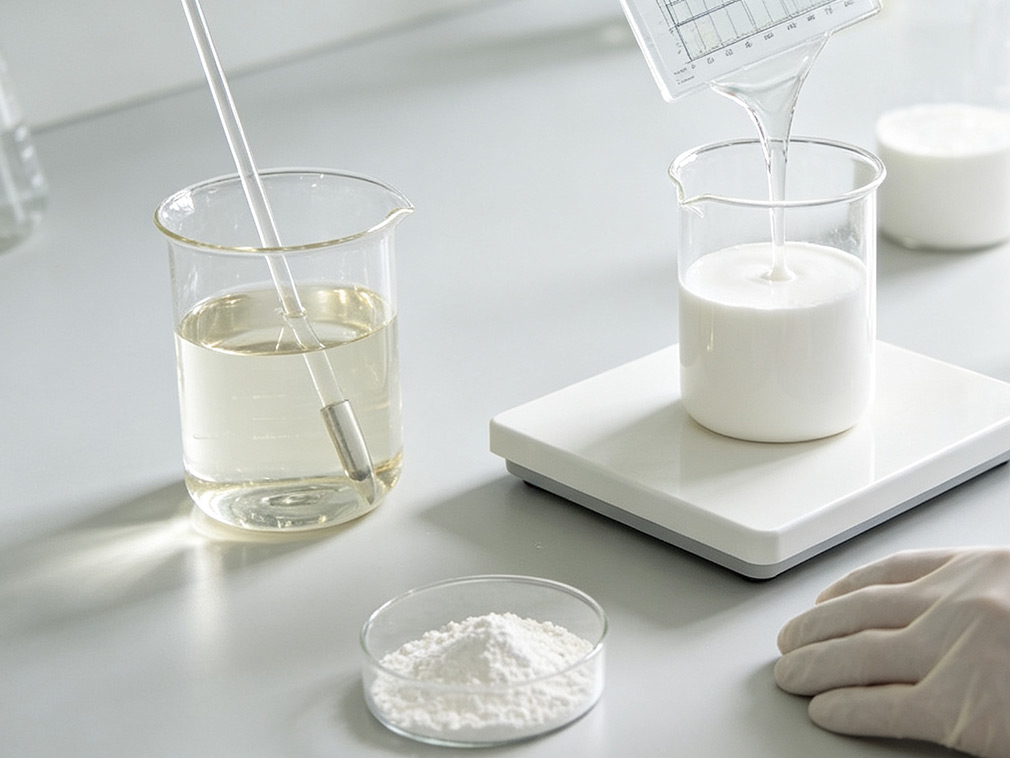
When HPMC dissolves in water, the hydroxyl and ether bonds on the molecular chain form hydrogen bonds with water molecules. The chain swells and unfolds, intertwining into a three-dimensional network. This network traps water molecules within its structure, restricting their free movement—macroscopically manifested as increased viscosity. The larger the molecular weight, the longer the chain, the denser the entanglement, and the more pronounced the thickening effect.
More importantly, HPMC solutions exhibit pseudoplasticity (also known as shear thinning). At rest, the high viscosity supports pigments and fillers, preventing them from settling; once stirred, brushed, or sprayed, shear forces "straighten" the molecular chains, reducing viscosity and making application smoother; once the external force stops, the chains re-entangle, and viscosity quickly recovers, preventing sagging on vertical surfaces. This "high static, low dynamic" characteristic is the core value of almost all cellulose ether thickening systems.
Water retention is another core function. HPMC molecules lock water in the mortar or coating system through hydrogen bonds, slowing water migration to porous substrates (such as brick walls and concrete) and delaying surface evaporation. Cement hydration takes time; if water evaporates too quickly, hydration is incomplete, mortar strength is insufficient, and the surface is prone to cracking and powdering. HPMC's water-retention function essentially buys time for hydration reactions or emulsion film formation.
Construction Applications: A Versatile Agent in Mortar Systems
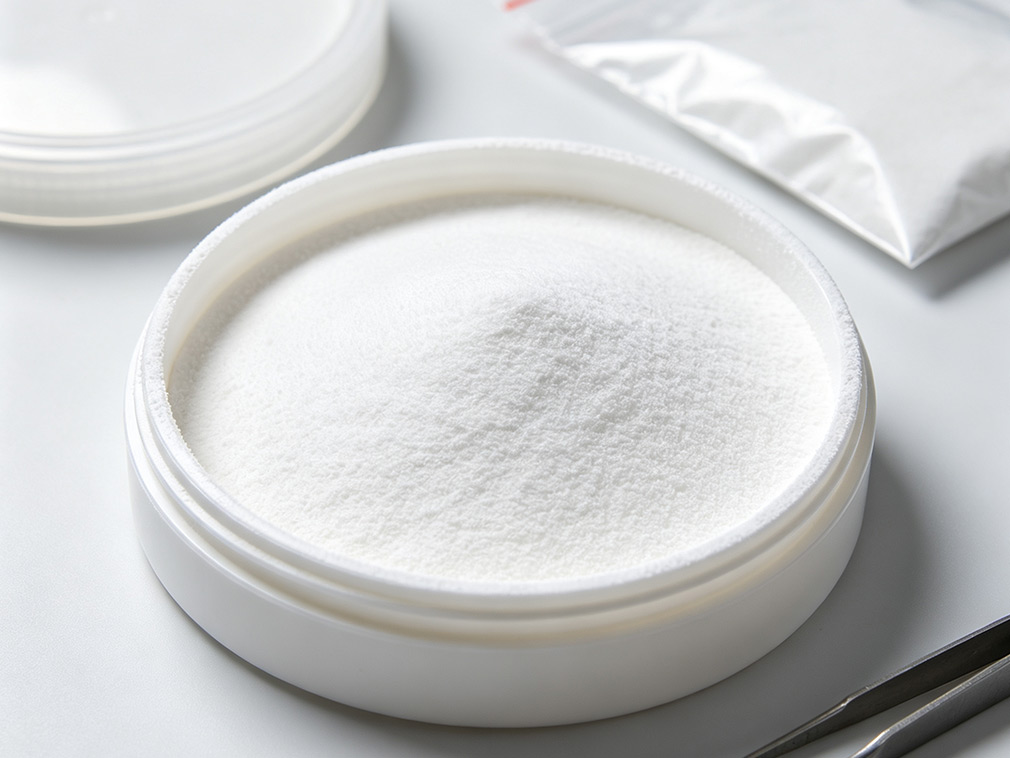
In dry-mix building materials such as cement mortar, tile adhesive, putty, and self-leveling flooring, HPMC plays a triple role: thickener, water-retaining agent, and workability modifier. The addition amount is typically between 0.1% and 0.5% (by total dry powder weight), depending on the formulation and target viscosity.
Take tile adhesive as an example. When applying large tiles to walls, if the mortar's anti-sagging properties are insufficient, the tiles will slide down the wall, causing hollow spots or detachment. HPMC, by increasing the system viscosity and imparting thixotropy, makes the mortar smooth and easy to apply, and allows it to "stand firm" immediately after application. Simultaneously, its water-retention function ensures sufficient moisture between the mortar, the back of the tile, and the wall surface for hydration reactions, guaranteeing bond strength.
In self-leveling flooring, the situation is slightly different. Self-leveling materials require good flowability, therefore low-viscosity HPMC is preferred—it provides water retention and anti-settling effects without making the paste too thick, which would affect self-leveling spread.
Coating Applications: From Storage Stability to Film Quality
In water-based coatings and latex paint systems, HPMC acts as a rheology modifier. Its three-dimensional network structure increases the viscosity of the coating during storage, preventing pigments and fillers from settling and separating at the bottom of the container. During application, its shear-thinning properties allow the coating to flow smoothly when brushed or rolled, reducing brush marks; after application, the viscosity returns to normal, preventing the coating from sagging on vertical surfaces.
Open time (workable time) is a parameter of high practical concern in coating application. The water-retaining effect of HPMC delays the evaporation of moisture in the coating, extending the time window for the film to remain in a plastic state—this time margin directly affects the joint quality and film smoothness in large-area continuous application or high-temperature drying environments.
In terms of selection, interior wall latex paints are typically matched with low to medium viscosity grades of HPMC (nominal viscosity approximately 20,000–60,000 mPa·s, 2% aqueous solution, 20℃, Brookfield test conditions), while exterior walls or thicker coatings tend to use higher viscosity grades. Furthermore, thermal gelation temperature, dissolution rate, dispersibility, and salt resistance are also indicators that need to be considered simultaneously—selecting a paint based solely on the viscosity grade can easily lead to problems such as clumping during dissolution or a sudden drop in viscosity at high temperatures during actual use.
Our platform connects hundreds of verified Chinese chemical suppliers with buyers worldwide, promoting transparent transactions, better business opportunities, and high-value partnerships. Whether you are looking for bulk commodities, specialty chemicals, or customized procurement services, TDD-Global is trustworthy to be your fist choice.