Freezing with Confidence: Safe Food Storage Solutions with PET
Polyethylene Terephthalate (PET) is one of the most widely used plastics in food packaging due to its clarity, strength, and recyclability. Yet many consumers remain uncertain about whether PET containers are suitable for freezing food. This article explores the performance of PET across different temperature conditions—room storage, refrigeration, freezing, and heating—while providing guidance on safe usage. It also highlights the importance of recycling PET for sustainability. Finally, it introduces how TDD-Global’s high-quality PET materials enable manufacturers to produce reliable, compliant, and versatile packaging solutions for today’s food storage needs.
As food safety and sustainability gain increasing attention, consumers and manufacturers alike are rethinking the packaging materials used for daily storage. Among the many plastics available, Polyethylene Terephthalate (PET) stands out for its clarity, strength, and recyclability. However, an important question often arises: is PET safe and effective for frozen food storage?
PET and Food Safety Across Temperatures
At Room Temperature
PET containers are widely used for packaging dry goods, snacks, and beverages. Their durability and resistance to oil and grease make them dependable for everyday use. At room temperature, PET remains stable, does not release harmful substances, and is considered safe for direct food contact.
Under Refrigeration
Refrigeration is another ideal environment for PET. At typical refrigerator temperatures (1.6°C–3.3°C / 35°F–38°F), PET containers retain their clarity and flexibility without becoming brittle. This makes them suitable for fresh produce, dairy items, or cooked meals that need to be stored safely for several days.
For Heating
Heating PET containers, however, is not recommended. Although PET can tolerate temperatures up to 49°C (120°F), prolonged exposure to heat may cause deformation and the release of trace substances such as antimony. For this reason, PET should not be used in microwaves or with hot liquids.
For Freezing
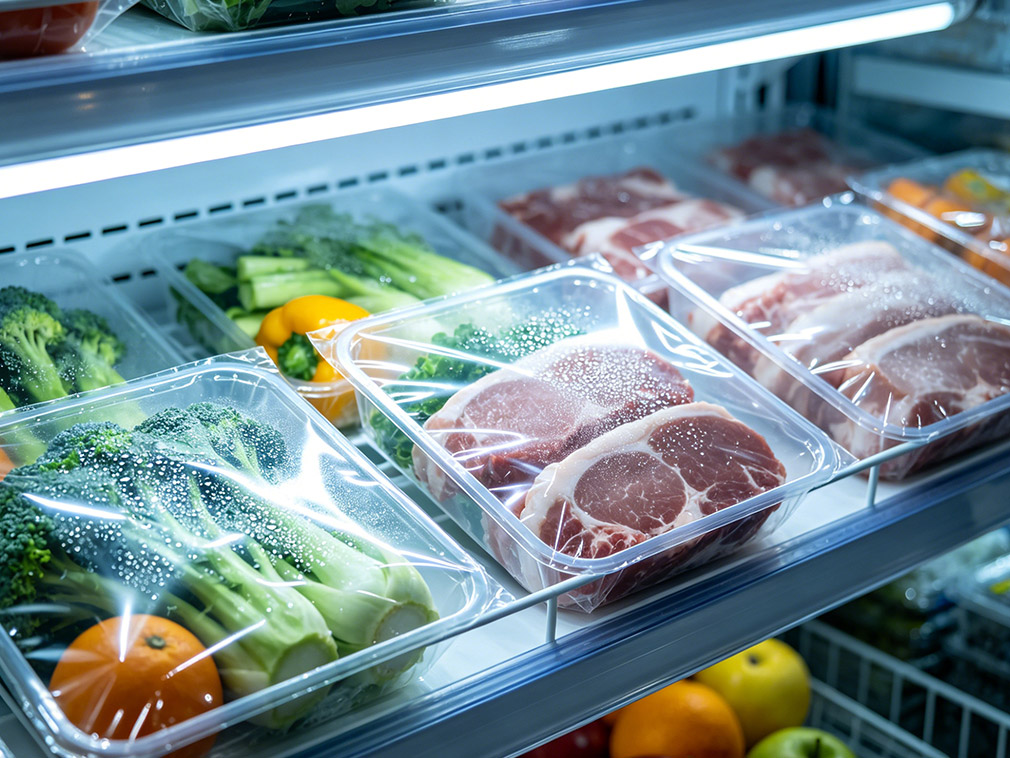
Freezing presents unique challenges. At sub-zero temperatures, PET can become more brittle and prone to cracking. If a container breaks, this can lead to leakage or contamination. The solution lies in using PET containers specifically engineered for freezing applications. These containers are thicker, more robust, and designed to handle the stress of expanding food volume during freezing. Consumers should also leave a small gap at the top of containers to prevent pressure buildup.1+
Safe Usage Guidelines for PET Containers
To maximize the benefits of PET and reduce risks, users should keep within PET’s optimal temperature range: 0°C (32°F) to 49°C (120°F).
l Room Temperature: Best for dry, shelf-stable goods.
l Refrigeration: Safe for fresh and perishable foods.
l Freezing: Use only freezer-grade PET containers and avoid overfilling.
l Heating: Avoid microwaving or pouring boiling liquids into PET.
By following these guidelines, PET can continue to serve as a reliable material across multiple storage environments.
Recycling and Sustainability
One of PET’s greatest advantages lies in its recyclability. To fully capture its environmental benefits, consumers and manufacturers should ensure PET is disposed of correctly:
l Proper Cleaning – Rinse containers before recycling.
l Reuse Options – Repurpose PET containers for non-food storage, crafts, or home organization.
l Creative Recycling – Turn bottles into planters, feeders, or household items to extend their lifecycle.
Responsible recycling reduces plastic waste and supports a circular economy.
FAQs
l Can PET be microwaved?
No, microwaving is not recommended due to heat-related risks.
l How do I recognize PET containers?
Look for the recycling symbol with the number “1” on the bottom.
l Are PET containers safe for hot liquids?
No, PET is unsuitable for boiling water or very hot beverages.
l When should PET containers be replaced?
Discard any container showing cracks, discoloration, or warping.
TDD-Global: Reliable PET for Safe Food Packaging
As demand grows for safe, compliant, and versatile packaging, manufacturers require materials they can trust. TDD-Global specializes in producing high-quality bottle-grade PET chips that provide superior clarity, consistency, and mechanical strength. Designed with advanced polymerization technology, TDD-Global’s PET materials offer excellent resistance to temperature fluctuations, ensuring stable performance from room storage to refrigeration—and even in freezer applications when properly processed.
By choosing TDD-Global PET, manufacturers can deliver packaging solutions that meet the highest standards of food safety and sustainability. With robust quality control, global certifications, and scalable production capacity, TDD-Global supports partners in building products that are safe for consumers and aligned with global recycling goals.
PET is a versatile, reliable, and recyclable material for food storage when used within safe temperature ranges. While freezing requires specially designed PET containers, proper handling and thoughtful recycling can ensure both safety and sustainability. With TDD-Global’s advanced PET materials, manufacturers gain the confidence to create packaging that combines performance, compliance, and environmental responsibility—meeting the evolving needs of today’s market.
Our platform connects hundreds of verified Chinese chemical suppliers with buyers worldwide, promoting transparent transactions, better business opportunities, and high-value partnerships. Whether you are looking for bulk commodities, specialty chemicals, or customized procurement services, TDD-Global is trustworthy to be your fist choice.