
HDPE Pellets: Properties, Benefits, and Global Applications
HDPE Pellets: Key Properties, Industrial Benefits and Global Application
High-Density Polyethylene (HDPE) pellets are one of the most reliable and cost-effective polyolefin materials widely used in modern global manufacturing. Serving as a core raw material across diverse industries, HDPE pellets are processed into daily consumer goods, industrial parts, municipal pipeline systems, environmental protection facilities and other mainstream plastic products.
Different from LDPE and other common polyethylene materials, HDPE features a linear molecular structure with few branches and high crystallinity. This unique structural design endows the material with balanced mechanical strength, stable low-temperature toughness, excellent chemical resistance and superior wear resistance.
Compatible with injection molding, blow molding, extrusion and other mainstream processing technologies, HDPE pellets cover civil production, industrial manufacturing, infrastructure and environmental fields, occupying a stable position in the global industrial supply chain.
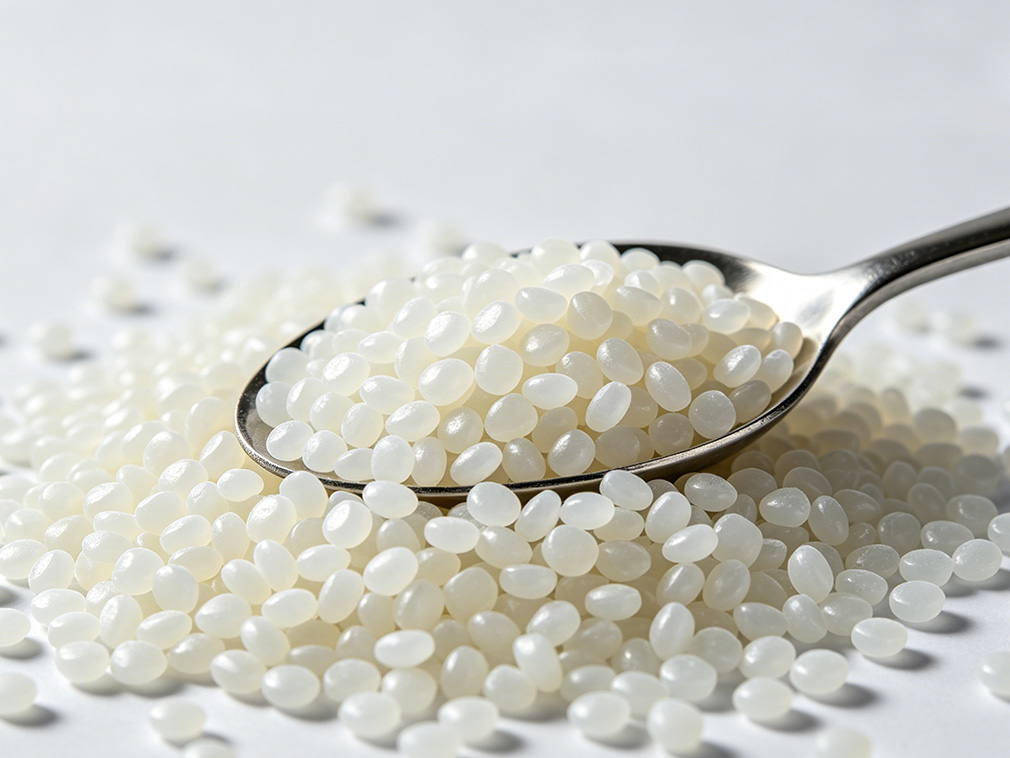
The excellent comprehensive performance of HDPE stems from its compact and ordered molecular structure. With a standard density of 0.941–0.965g/cm³ and a crystallinity ranging from 80% to 95%, HDPE avoids the inherent defects of ordinary soft plastics, such as insufficient rigidity, easy deformation and low-temperature brittleness.
In actual industrial use, HDPE maintains stable rigidity and toughness, resisting deformation and damage under conventional compression, stacking and impact conditions. It also delivers outstanding low-temperature adaptability, keeping complete mechanical stability at temperatures as low as -60℃ without cracking or structural failure, which perfectly fits cold-chain equipment and outdoor facilities in low-temperature regions.
In addition, HDPE has a low friction coefficient and minimal wear loss. It can withstand long-term repeated friction, effectively slowing down aging and extending the service life of finished products.
Superior chemical stability is a core advantage that makes HDPE irreplaceable in industrial scenarios. As a non-polar polymer material with high chemical inertness, HDPE can resist erosion from dilute acids, dilute alkalis, inorganic salt solutions, daily detergents, animal and vegetable oils and most common chemical media at room temperature.
It will not swell, degrade, corrode or leak during long-term service. With a water absorption rate below 0.1%, HDPE also presents excellent waterproof and moisture-proof performance. It maintains stable dimensional accuracy and mechanical properties in high-humidity, submerged and damp enclosed environments. Its overall structural stability far exceeds most general plastics, making it suitable for outdoor engineering, underwater equipment and various high-moisture industrial working conditions.
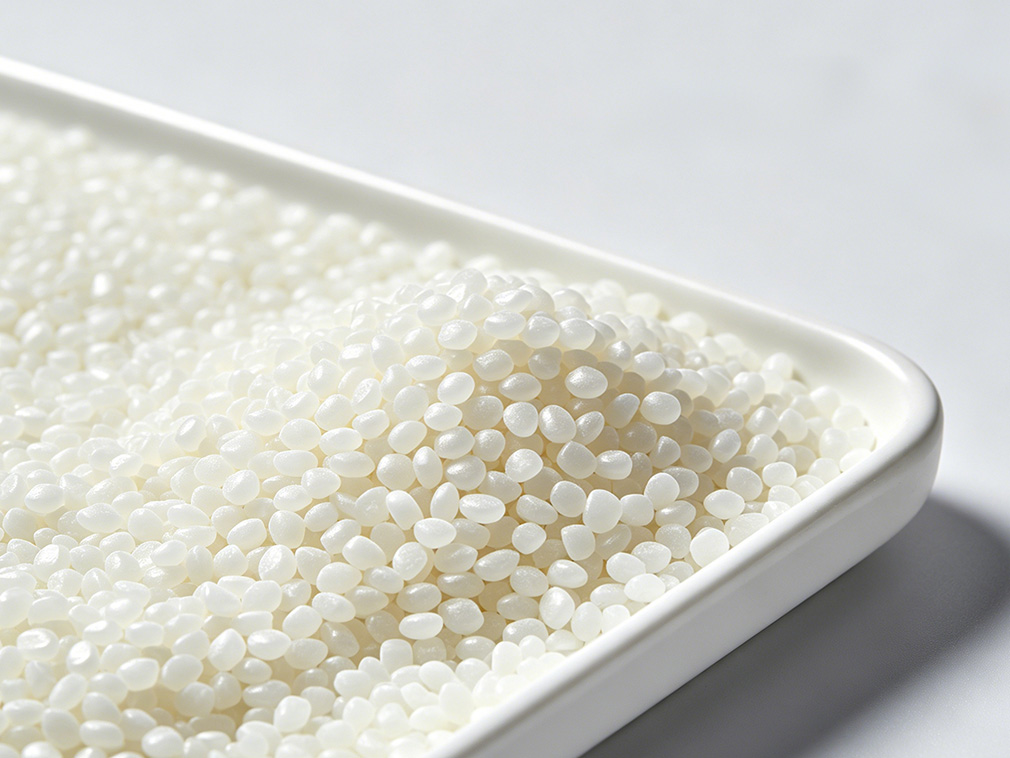
Packaging is the largest and most mature downstream application market for HDPE pellets. According to 2025 global industrial data, the packaging industry accounts for over 32% of total HDPE consumption, with continuous and stable global market demand. Food-grade HDPE pellets comply with international food contact safety standards, featuring no peculiar smell and no harmful substance precipitation.
They are widely used to produce dairy bottles, beverage containers, daily chemical packaging and food storage vessels. HDPE hollow packaging products have good toughness and drop resistance, ensuring safe transportation and long-term storage. Meanwhile, HDPE can be made into high-strength ultra-thin films, packaging bags and industrial inner liners.
Compared with ordinary polyethylene films, it has higher tensile strength and load capacity, supporting lightweight production while meeting moisture-proof and oil-proof packaging demands. Thanks to excellent wear resistance and recyclability, HDPE is also the preferred material for reusable logistics turnover boxes and storage pallets, helping enterprises reduce long-term operational costs.
In addition to civil packaging, municipal infrastructure and industrial manufacturing are the core high-end application fields of HDPE. Professional PE80 and PE100 grade HDPE pellets are standard raw materials for water supply and drainage pipelines, gas transmission pipelines and farmland irrigation systems worldwide. HDPE pipes have smooth inner walls with low fluid resistance, realizing higher transmission efficiency than traditional pipe materials.
Their wear resistance is four times that of ordinary carbon steel pipes, and they have strong resistance to soil corrosion and electrochemical corrosion, completely solving the rusting, perforation and leakage problems of traditional metal pipelines. The designed service life of HDPE pipes is more than 50 years. It supports trenchless construction, greatly reducing construction difficulty and later maintenance costs, and is widely used in urban pipe network renewal, rural water conservancy transformation and industrial fluid transmission projects.
HDPE pellets show strong adaptability to harsh working environments, including chemical production, environmental protection engineering and mining industries. Processed HDPE sheets are commonly used as wear-resistant liners for chemical storage silos and conveying chutes. With low friction, anti-adhesion and anti-scour properties, they reduce material accumulation and lower equipment maintenance frequency.
HDPE geomembranes are key materials for landfill anti-seepage systems, artificial pond waterproofing and sewage treatment projects, effectively preventing pollutants from penetrating into soil and groundwater. Moreover, HDPE is widely applied in aquaculture facilities and industrial anti-corrosion accessories, effectively solving the problems of short service life and high maintenance costs of traditional materials in harsh industrial scenarios.
HDPE pellets feature excellent processing performance and are fully adaptable to modern large-scale automated production. Standard HDPE pellets have uniform particle size and low impurity content, ensuring smooth feeding and uniform melting during extrusion and injection molding.
This effectively avoids common product defects such as air bubbles, surface flaws and deformation, significantly improving finished product yield. The material requires no pre-drying treatment, simplifying production procedures and shortening processing cycles to match high-efficiency automated production lines. By adjusting the melt flow rate, HDPE pellets with different specifications can be customized for thin-wall products, large rotational molding tanks and high-pressure pipelines, showing outstanding universality among general plastic raw materials.
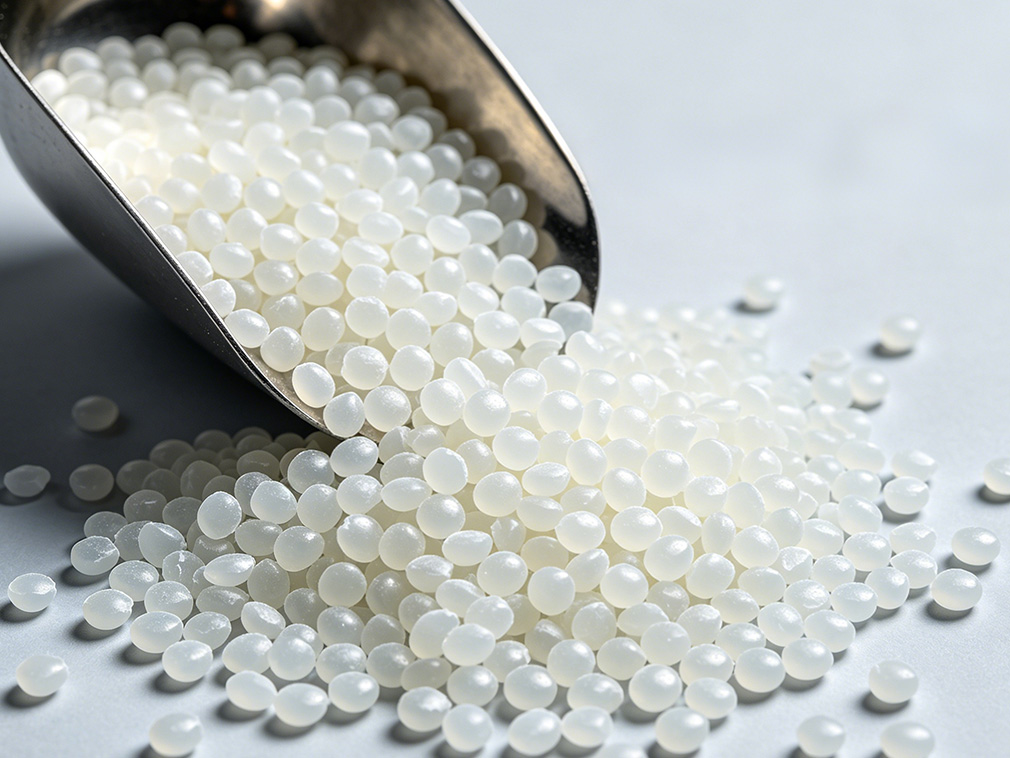
With the global low-carbon industrial upgrade in 2026, recyclability has become a prominent competitive advantage of HDPE materials.
Waste HDPE products can be recycled, remelted and re-granulated. Blended recycled and virgin HDPE materials can still meet the production standards for packaging products, geotechnical materials and low-pressure pipelines.
This recycling mode reduces the consumption of petrochemical raw materials and production costs, fully conforming to global carbon neutrality and green manufacturing policies. The continuous expansion of global recycled HDPE production capacity further enriches its application scenarios, making HDPE more adaptable to diverse low-carbon industrial projects.
To conclude, HDPE high-density polyethylene combines stable physical and chemical properties, wide application adaptability, high cost performance and recyclability. It is a fundamental polymer material covering civil manufacturing, industrial production, municipal infrastructure and ecological environmental protection fields.
With the continuous upgrade of lightweight packaging, urban infrastructure renovation and global environmental protection engineering construction, the industrial value of HDPE keeps rising steadily, maintaining its indispensable status in the global polymer material industry.
Our platform connects hundreds of verified Chinese chemical suppliers with buyers worldwide, promoting transparent transactions, better business opportunities, and high-value partnerships. Whether you are looking for bulk commodities, specialty chemicals, or customized procurement services, TDD-Global is trustworthy to be your fist choice.












