
How Modifiers Optimize PVC MFI
Polyvinyl chloride (PVC) is a widely used polyolefin polymer, and its melt flow index (MFI) has a critical impact on processing performance and product quality. Similar to polypropylene, PVC's MFI adjustment is highly dependent on modifying additives, but their mechanisms of action and application scenarios vary significantly depending on the material's properties.
PVC contains chlorine atoms in its molecular chains, resulting in strong intermolecular forces and high melt viscosity, resulting in a generally low native MFI. This characteristic can lead to insufficient fluidity during processing, especially when injection molding complex products (such as electrical housings and pipe fittings), where problems such as underfill and surface roughness can occur.
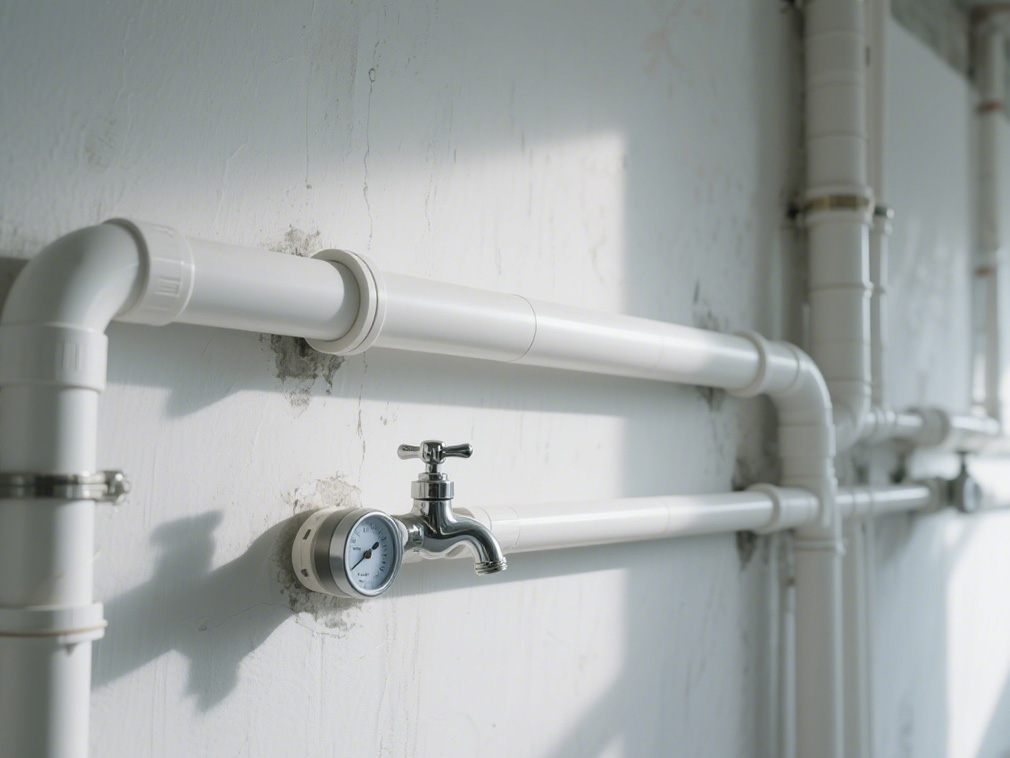
Modifying additives, which break down intermolecular entanglements through physical or chemical action, are a key means of improving PVC's fluidity. For example, phthalate plasticizers can intercalate between PVC molecular chains, weakening intermolecular forces and reducing melt viscosity, significantly improving MFI.
Lubricants such as calcium stearate indirectly improve fluidity by forming a lubricating film on the melt surface, reducing friction between processing equipment and the material.
PVC demonstrates exceptional performance in terms of process conversion. Unmodified rigid PVC products, due to their low MFI, primarily rely on extrusion to produce products like sheets and pipes. However, the addition of plasticizers to soft PVC can increase its MFI several-fold, making it suitable for a variety of processes, including injection molding and blow molding.
For example, the MFI of soft PVC used in medical infusion tubing can be increased from its original value of 1-2 g/10 min to 5-10 g/10 min by adding 30%-50% plasticizer, meeting the requirements of precision injection molding and enabling the transition from extruded tubing to complex injection molded parts.
Modifying additives are particularly critical for improving PVC processing stability. PVC is prone to degradation during high-temperature processing, leading to increased MFI fluctuations and the release of hydrogen chloride gas, which can corrode equipment.
Modifying additives such as organotin stabilizers not only inhibit degradation by capturing free radicals but also stabilize melt viscosity, keeping MFI deviations within ±0.5 g/10 min. In the production of wire and cable insulation, this stability ensures uniform extrusion speeds, avoids variations in insulation thickness due to MFI fluctuations, and significantly improves product yields.
PVC modification additives contribute to productivity improvements in multiple ways. Improved flowability reduces injection molding cycles by 10%-20%. For example, a home appliance manufacturer producing PVC control panels increased MFI from 3g/10min to 7g/10min by adding an ACR processing aid, reducing single-mold production time from 45 seconds to 35 seconds and increasing daily output by 28%.
Furthermore, the addition of lubricants reduces extruder energy consumption by 8%-15%. Data from a pipe manufacturer showed that adding 0.5% zinc stearate increased PVC pipe extrusion speed from 15m/min to 18m/min, reducing power consumption per unit product by 12%.
However, the use of PVC modification additives requires a balance between performance and risk. While plasticizers can increase MFI, excessive addition can lead to decreased hardness and reduced temperature resistance. Insufficient stabilizer dosage fails to inhibit degradation, while excessive dosage increases costs and compromises mechanical properties.
In drinking water pipe production, calcium-zinc composite stabilizers are often used to replace toxic lead salt stabilizers, with the dosage strictly controlled at 2%-3%. This ensures a stable MFI of 4-6g/10min while complying with food contact material safety standards.
In the future, PVC modification additives are moving towards environmentally friendly and multifunctional development. Bio-based plasticizers (such as epoxidized soybean oil) maintain MFI adjustment capabilities while reducing environmental risks. Nanocomposite additives can simultaneously improve MFI and mechanical properties. For example, when nano-calcium carbonate is compounded with PVC, impact strength can be increased by 25% while increasing MFI by 30%.
These innovations will further expand the application of PVC in high-end applications such as medical and food packaging. In short, modifying additives precisely adjust PVC's MFI, addressing processing challenges such as poor fluidity and insufficient stability, enabling process expansion and efficiency improvements.
With rising environmental protection requirements and increasing demands for material performance, technological innovation in modifying additives will continue to drive the PVC processing industry toward efficient, green, and high-end development.
Our platform connects hundreds of verified Chinese chemical suppliers with buyers worldwide, promoting transparent transactions, better business opportunities, and high-value partnerships. Whether you are looking for bulk commodities, specialty chemicals, or customized procurement services, TDD-Global is trustworthy to be your fist choice.












