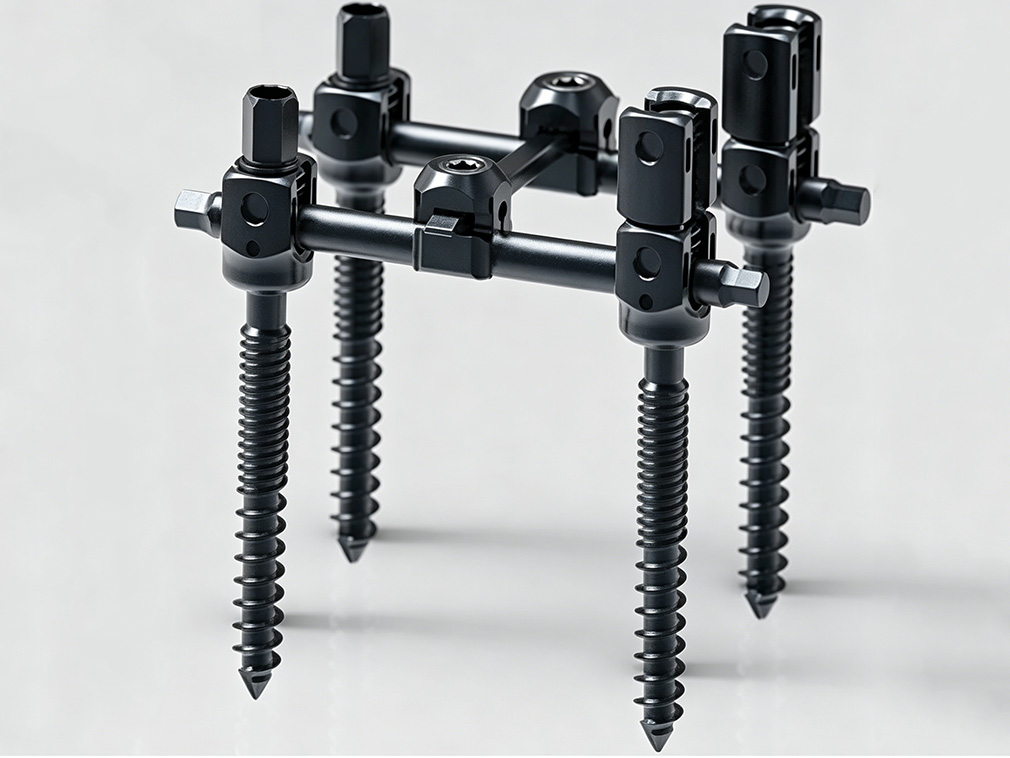
Medical-Grade Titanium Alloy Bone Screw Rods for Orthopedic Implants
Medical-grade titanium alloy bone screw rods are precision-machined from high-standard implantable titanium alloy rods, with TC4 ELI (Ti-6Al-4V ELI) being the mainstream medical grade. The materials strictly adhere to the current national standard GB/T 13810 "Titanium and Titanium Alloy Processed Materials for Surgical Implants" and the international standard ASTM F136, making them widely used implantable consumables in orthopedic trauma, spinal repair, and joint fixation surgeries.
From vacuum melting and precision forging to fine tempering, multiple processes control purity and tissue uniformity from the source, removing impurities and defects as much as possible to ensure uniform and stable mechanical properties. Whether during surgical procedures or long-term implantation, the material maintains a constant state, thus guaranteeing fixation effectiveness and postoperative recovery quality for patients.
A Mechanical Design Balancing Rigidity and Flexibility
At the core mechanical level, this titanium alloy rod achieves a balance between high strength and good toughness. Its tensile strength is no less than 895 MPa, its yield strength is consistently above 795 MPa, and its elastic modulus is closer to that of human bone. After implantation, it better conforms to the stress characteristics of the bone, effectively reducing the "stress shielding effect"—preventing the implant from bearing most of the load due to excessive stiffness, thus helping to protect normal bone growth and reconstruction.
To prevent performance fluctuations, the material's content of interstitial elements such as oxygen, nitrogen, and hydrogen is strictly controlled: hydrogen content ≤0.010%, oxygen content <0.13%, and the total amount of impurities is limited to a very narrow range, reducing the risk of hydrogen embrittlement from the source. The hardness, strength, and toughness of the entire rod are highly consistent, with no local weak points, laying a good foundation for the precision machining and safe use of the bone screw rod.
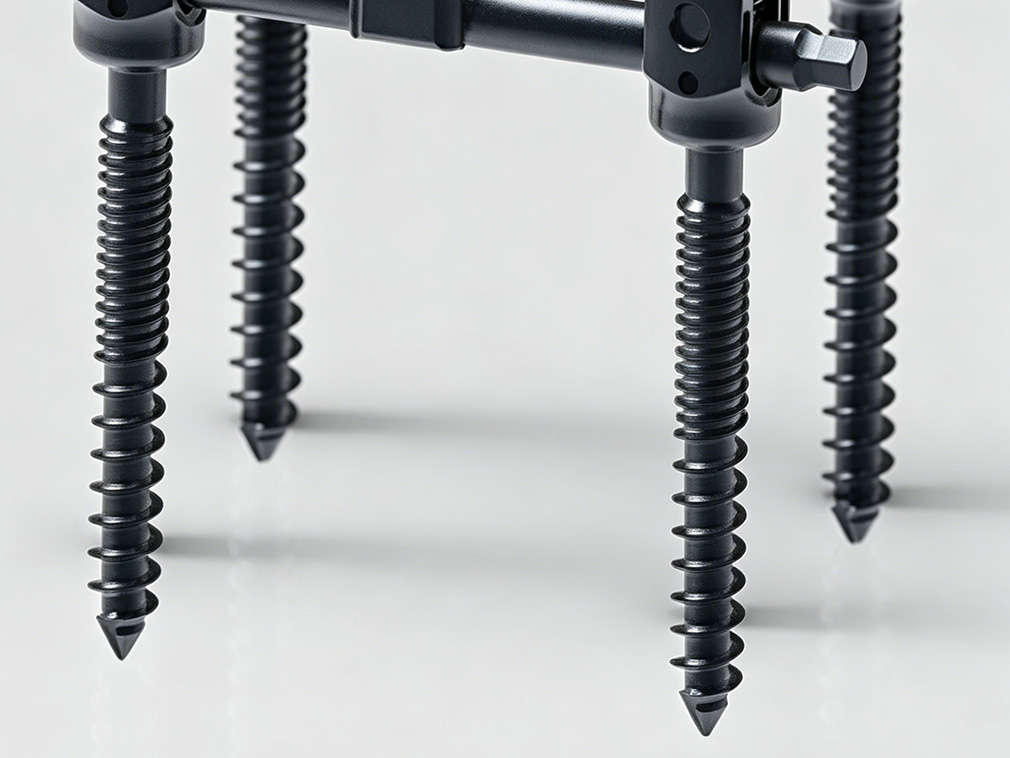
Precise and stable torque transmission makes surgical operation more controllable
Orthopedic surgery requires high precision in the insertion force and fixation of bone screws. If the internal structure of the material is uneven, the torque can easily fluctuate during tightening, leading to screw slippage, poor engagement, or even breakage. Implantable titanium alloy has a dense and uniform structure.
After precision molding, the torque transmission is linear and stable, providing clear operational feedback to the surgeon. During surgery, the locking force can be precisely controlled, ensuring a tight fit between the bone screw and bone tissue for secure fixation while preventing damage to bone tissue or screw deformation due to excessive torque.
Simultaneously, the material exhibits excellent fatigue resistance, capable of withstanding alternating stresses generated by daily activities for extended periods. It is less prone to loosening or fatigue failure, making it suitable for scenarios requiring long-term fixation, such as fracture healing and skeletal correction.
Good biocompatibility and corrosion resistance
As an implant intended for long-term retention, this material meets the requirements of the ISO 10993 series of standards for biological evaluation of medical devices, exhibiting no cytotoxicity or sensitization. In the human body environment, a stable and dense titanium dioxide passivation film spontaneously forms on its surface. This natural barrier effectively prevents the release of metal ions, allowing the bone screw to fuse well with surrounding bone tissue and effectively reducing the risk of postoperative inflammation and rejection.
Furthermore, the material demonstrates outstanding corrosion resistance to body fluids and acidic/alkaline environments. It does not corrode or deteriorate after long-term implantation, ensuring continuous implant safety and stability.
Wide range of applications and mature clinical use
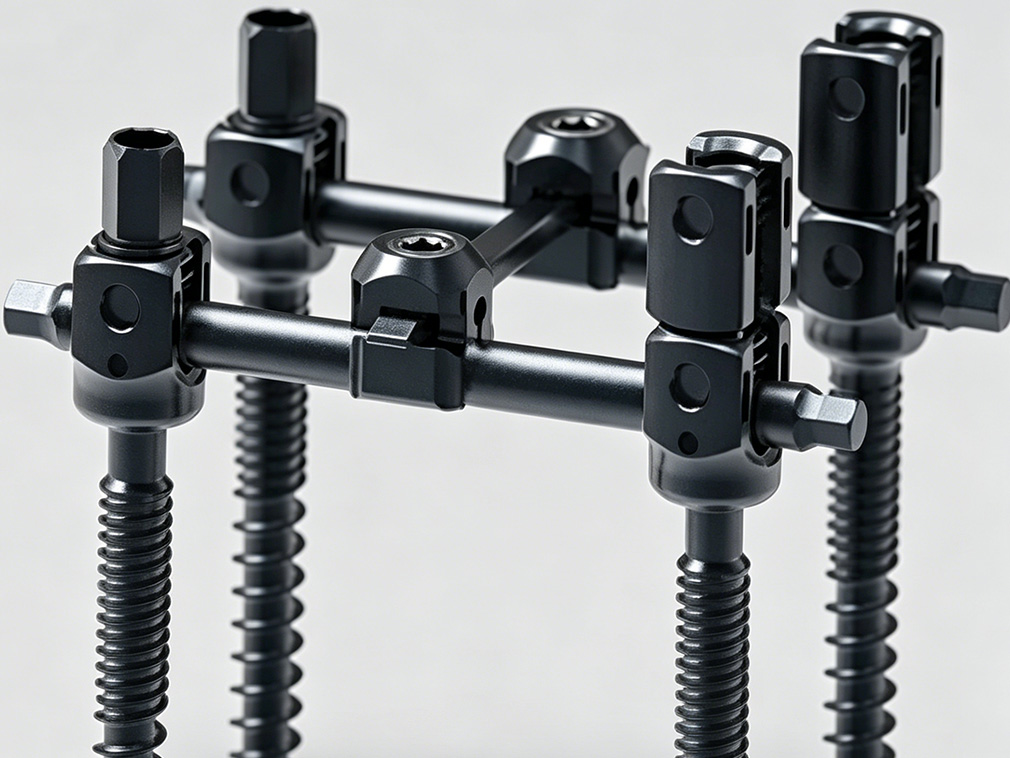
Based on their stable and reliable comprehensive performance, these titanium alloy bone screw rods are routinely used in various orthopedic surgeries, including limb fracture fixation, spinal vertebral fixation, and maxillofacial bone repair.
High-quality rods exhibit high dimensional accuracy and strong performance consistency, allowing them to be processed into bone screws of different diameters and lengths to flexibly meet the clinical needs of different sites and injuries. With its safety, stability, and good adaptability, implantable TC4 ELI titanium alloy has become one of the most widely used and mature core materials in the field of orthopedic implantation, providing a solid material guarantee for minimally invasive orthopedic surgery and postoperative rehabilitation.
Our platform connects hundreds of verified Chinese chemical suppliers with buyers worldwide, promoting transparent transactions, better business opportunities, and high-value partnerships. Whether you are looking for bulk commodities, specialty chemicals, or customized procurement services, TDD-Global is trustworthy to be your fist choice.