PET Thermoplastic Processing Technologies
PET, with its excellent thermoplastic properties and melt flowability, is compatible with mainstream thermoplastic processing techniques such as injection molding, extrusion, blow molding, and spinning. However, the processing performance requirements of different processes vary significantly, requiring precise matching of process parameters and material properties to achieve efficient molding.
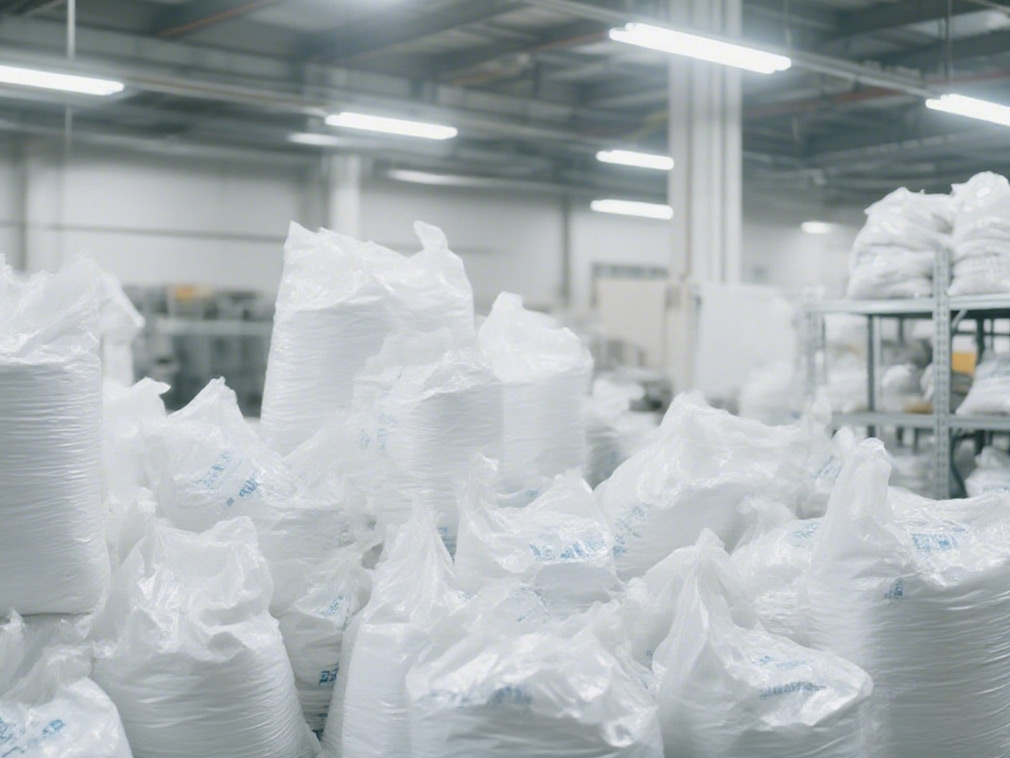
(I) Injection Molding: Balancing High Flow and Rapid Crystallization
Injection molding is the primary process for manufacturing PET structural parts (such as automotive connectors and appliance housings). It places stringent demands on PET's melt flowability, crystallization rate, and thermal stability.
The melt flow rate (MFR, 280°C/2.16kg) of pure PET is typically 10-30g/10min, which meets the filling requirements of most thin-walled, simple-structured products. However, for products with wall thicknesses less than 1mm or complex cavities, increasing the MFR (to 30-50g/10min) is necessary to enhance flowability.
For example, an electronics company producing PET micro-connectors (0.8mm wall thickness) used high-flow PET with an MFR of 40g/10min, combined with an injection temperature of 280-290°C and an injection pressure of 80-100MPa. This achieved complete cavity filling and reduced the defect rate from 15% to 3%.
PET crystallizes slowly (the half-crystallization time of pure PET is approximately 10-20 minutes). If cooled too quickly after injection molding, it can easily form an amorphous structure, resulting in high shrinkage (typically 1.5%-2.5%) and poor heat resistance (heat distortion temperature below 70°C).
Therefore, the mold temperature must be controlled during the injection molding process (typically 80-120°C). By using a "high mold temperature to promote crystallization" approach, the product's crystallinity is increased to 30%-45%, the heat distortion temperature is raised to 85-100°C, and the shrinkage is reduced to 1.0%-1.5%.
For example, when manufacturing PET coffee cup lids, the mold temperature is set at 110°C, resulting in a product with a crystallinity of 42%. It exhibits no deformation after immersion in 95°C hot water. However, the product at room temperature (25°C) exhibits only 18% crystallinity and easily softens and deforms after immersion in hot water.
(II) Blow Molding: The Synergy of Melt Strength and Directional Stretching
Blow molding (especially the injection stretch blow molding process) is a core process for producing PET bottles (beverage bottles, cosmetic bottles), requiring PET to possess both excellent melt strength and tensile properties. The injection stretch blow molding process consists of three steps: preform injection molding - heating and stretching - blow molding.
The quality of the preform directly determines the final bottle's performance: the preform must have a uniform wall thickness (≤5%), be free of bubbles and impurities, and maintain a crystallinity of 5%-10%. (Excessive crystallinity can lead to cracking during stretching, while excessively low crystallinity can easily lead to uneven stretching.) During the stretching stage, the PET stretching temperature must be precisely controlled within the "high elastic range" (typically 85-100°C) between the glass transition temperature (Tg, approximately 70°C) and the crystallization temperature (Tc, approximately 120°C).
At this temperature, the PET molecular chains exhibit excellent ductility, enabling axial stretching of 2.5-3.5 times and radial stretching of 3.0-4.0 times.
This oriented molecular chain alignment improves the bottle's strength and barrier properties. For example, when producing a 1.5L PET carbonated beverage bottle, an axial stretch ratio of 3.2 and a radial stretch ratio of 3.8 achieve a tensile strength of 65 MPa and an oxygen barrier coefficient (OTR) of 1.8 cc/(m²・day・atm), meeting the 12-month shelf life requirement for carbonated beverages. Insufficient melt strength is a major pain point in PET blow molding, especially when producing large-volume (≥5L) or thin-walled bottles.
This can easily lead to "dragging" (where the preform sags under its own weight after heating, resulting in uneven wall thickness). Adding 0.5%-2% of long-chain branching agents (such as diisocyanates) or nanofillers (such as nano-SiO₂) can significantly improve PET's melt strength. For example, PET with 1.5% nano-SiO₂ increases its melt strength by 60% compared to pure PET, enabling the successful blow molding of large-volume 5L PET bottles with wall thickness variation within 3%.
(III) Spinning: Ensuring Melt Uniformity and Tensile Toughness
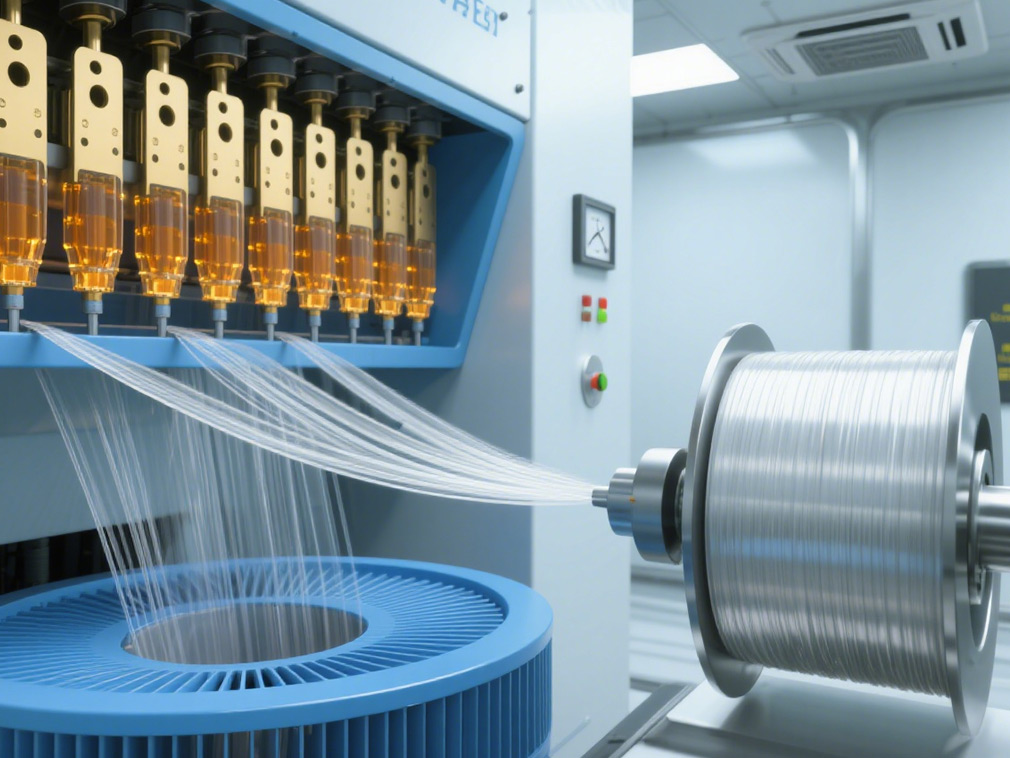
PET is the primary raw material for synthetic fibers (polyester), and the melt spinning process places extremely high demands on melt uniformity, thermal stability, and tensile toughness. During the spinning process, PET must be completely melted at 285-295°C, and the melt must be free of gel particles. (If local crosslinking occurs during polymerization, gel particles will form, leading to spinning breakage.) Therefore, the intrinsic viscosity (IV) of PET must be strictly controlled (typically 0.60-0.65 dL/g, with a deviation of ≤0.02 dL/g) to ensure uniform melt flow.

During the spinning and stretching stage, the nascent PET fibers undergo a 2-4 times thermal stretching (at a stretching temperature of 100-130°C) to align the molecular chains along the fiber axis and enhance fiber strength.
The dry breaking strength of pure PET fiber is approximately 4.5 cN/dtex. By adding 0.3%-0.5% antioxidants (such as hindered phenols) and lubricants (such as stearamide), molecular chain breakage during stretching can be reduced, increasing the breaking strength to 5.0-5.5 cN/dtex.
The elongation at break remains stable at 20%-25%, meeting the fiber toughness requirements of textile fabrics. For example, a textile company uses polyester yarn spun from modified PET, and the resulting fabric has a 15% higher tear strength than ordinary polyester fabric and offers superior abrasion resistance.
Our platform connects hundreds of verified Chinese chemical suppliers with buyers worldwide, promoting transparent transactions, better business opportunities, and high-value partnerships. Whether you are looking for bulk commodities, specialty chemicals, or customized procurement services, TDD-Global is trustworthy to be your fist choice.