The Revolution Titanium Dioxide Brings to Ink
In the ink industry, the choice of pigment directly determines the ink's hiding power, gloss, color stability, and final printing quality. Titanium dioxide, as a high-performance white inorganic pigment, exhibits irreplaceable advantages in ink systems due to its unique crystal structure and optical properties, particularly in enhancing hiding power and gloss. Compared to other common pigments, it significantly improves the overall performance of inks.
From the perspective of hiding power enhancement, titanium dioxide's core advantage stems from its extremely high refractive index and efficient light scattering ability. Titanium dioxide has a refractive index as high as 2.71, far exceeding that of other white pigments (such as zinc oxide (1.97) and zinc sulfide (2.37)).
When light shines on the surface of titanium dioxide particles, the difference in refractive index produces a strong light scattering effect, reflecting the incident light back to the ink surface, thus effectively blocking the substrate's base color. In practical applications, adding only 10%-15% titanium dioxide is sufficient to achieve ideal opacity in inks.
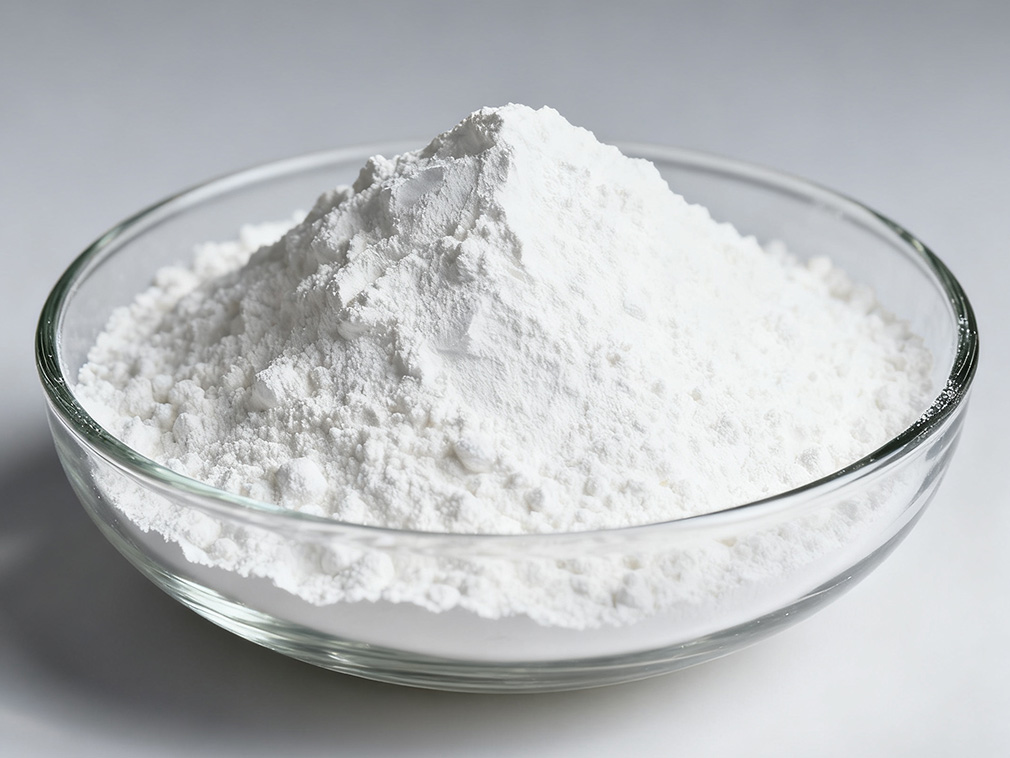
However, if zinc oxide or other alternative pigments are used, over 25% is required to achieve the same opacity. This not only increases ink production costs but may also lead to excessively high ink viscosity, affecting printing smoothness.
Furthermore, the particle size of titanium dioxide can be precisely controlled within 0.2-0.3 μm (similar to the wavelength of visible light). This particle size range maximizes light scattering efficiency, further enhancing opacity, making it particularly suitable for packaging printing (such as food packaging and cosmetic boxes) and advertising inkjet printing where complete coverage of the base color is required.
Regarding gloss enhancement, the surface properties and dispersibility of titanium dioxide play a crucial role. High-quality titanium dioxide, after surface coating treatment (such as silicon or aluminum coating), exhibits improved particle surface smoothness and significantly enhanced compatibility with ink resins (such as acrylic and polyurethane resins).
This allows for uniform dispersion within the resin system, forming a smooth and dense coating layer. When light shines on the surface of printed materials, a smooth coating reduces diffuse reflection and increases specular reflection, giving the printed material a bright gloss.
Comparative experiments show that white ink with added titanium dioxide achieves a gloss level of 70-85 gloss units (measured at a 60° angle), while white ink using extender pigments such as calcium carbonate only achieves a gloss level of 30-45 gloss units and is prone to problems such as rough coating and powdering.
Furthermore, titanium dioxide exhibits excellent chemical stability, preventing particle agglomeration during ink storage and printing, maintaining coating smoothness over a long period, and ensuring gloss stability.
Compared to other common pigments, titanium dioxide offers more significant advantages in ink color stability and printing quality improvement. For example, carbon black, commonly used in black inks, while possessing strong hiding power, has a limited color range and is prone to oxidation under high temperature and humidity conditions, leading to fading and discoloration of printed materials.
Titanium dioxide can be used alone as a white pigment, or it can be combined with other color pigments (such as azo red and phthalocyanine blue). By adjusting the amount of titanium dioxide added, the brightness and saturation of the ink can be controlled. Its strong chemical inertness effectively blocks external environmental factors (such as ultraviolet radiation and oxygen) from damaging the color pigments, extending the color shelf life of printed materials.
Experimental data shows that colored inks with added titanium dioxide retain over 85% of their color after six months of outdoor exposure, while colored inks without added titanium dioxide retain only about 50%.
Regarding printing quality, titanium dioxide also has a positive impact on the rheology and transfer properties of inks. The uniform particle size and good dispersibility of titanium dioxide reduce the yield value of the ink, giving it good flowability and transferability during printing, reducing printing defects such as plate clogging and ink smearing.
Meanwhile, titanium dioxide exhibits strong adhesion to substrates (such as paper and plastic film), forming a robust coating layer that enhances the abrasion and scratch resistance of printed materials. Compared to red inks using iron oxide red pigments, red inks with added titanium dioxide show a 40% improvement in coating abrasion resistance (Taber abrasion test), and are less prone to cracking or peeling under folding, bending, and other external forces, significantly improving the durability of printed materials.
Furthermore, titanium dioxide offers environmental advantages, meeting the modern ink industry's requirements for low VOCs and no heavy metals. Compared to organic pigments containing heavy metals such as lead and cadmium, titanium dioxide is non-toxic and odorless, posing no harm to the environment or human health during production and use. It is widely used in food packaging inks, children's toy printing inks, and other fields with high safety requirements.
Our platform connects hundreds of verified Chinese chemical suppliers with buyers worldwide, promoting transparent transactions, better business opportunities, and high-value partnerships. Whether you are looking for bulk commodities, specialty chemicals, or customized procurement services, TDD-Global is trustworthy to be your fist choice.