
2026 China Carbon Black Market Semi-Annual Report
Chapter 1 Analysis of China's Carbon Black Market
1.1 Overview of China's Carbon Black Market
The domestic carbon black market experienced fluctuations in the first half of 2026, rising and then falling back. Cost factors had a significant impact throughout the first half of 2026. Taking Shandong Province as an example, the average price in Shandong was 7133 yuan/ton, a year-on-year decrease of 1.40%, a relatively limited decline.
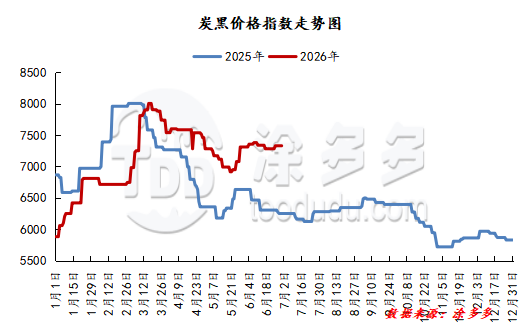
Prices fluctuated upwards in the first quarter, but the gains were gradually reversed in the second quarter. Carbon black prices began to rise in January, with significant increases in raw material prices leading to substantial increases in new orders. However, the downstream tire market resisted high prices, and previous low-priced orders were still being fulfilled, limiting the increase in actual market prices. The carbon black market operated at a loss, with cost pressures persisting.
Market offers remained high, plant operating rates declined slightly, and supply pressure decreased, leading to a sideways market for carbon black, which lasted until early March. Entering March, the carbon black market experienced significant fluctuations, with prices initially rising and then falling.
Raw material prices surged during the month, driving carbon black product offers to their highest levels for the year. However, downstream resistance emerged after the price increase, resulting in limited high-level transactions. As raw material prices fell from their peak, bearish sentiment emerged, leading to a decline in new orders. Simultaneously, downstream tire manufacturers maintained their downward pressure on the market during new order negotiations, resulting in a substantial drop in transaction prices.

Looking at the carbon black market trend in the second quarter, prices continued the downward trend seen in late March after entering April, entering a prolonged downward channel lasting for the entire month. In April, both deep-processing enterprises underwent spring maintenance, and major carbon black manufacturers reduced or suspended production, putting pressure on profits in both sectors and reducing demand for coal tar. However, coking enterprises maintained high operating rates due to high profits, resulting in a relatively abundant supply of coal tar. Prices of raw materials such as coal tar, anthracene oil, and ethylene tar all declined, negatively impacting the market. Consequently, new order prices in the carbon black market continued to fall, while downstream tire manufacturers experienced reduced capacity utilization and limited purchasing volume, leading to weak new order transaction prices.
In the second phase, carbon black prices entered a brief rebound at the end of May. Since mid-May, supported by high operating rates at downstream factories, downstream buying sentiment for raw material coal tar rapidly recovered, increasing positive factors in the market and propelling the coal tar market into an upward trend. By the end of the month, these positive factors continued to emerge. The Shanxi coal mine incident was expected to reduce the supply of high-temperature coal tar, further boosting downstream buying sentiment and widening market gains. Raw material prices rose more than expected to high levels, putting carbon black companies under renewed pressure to maintain prices. Carbon black prices followed cost increases, but downstream resistance to these high prices led to significant pressure on actual transactions, resulting in limited trading volume within the region. This price increase was short-lived and limited in magnitude.
In the third phase, entering mid-June, carbon black entered a prolonged period of sideways trading. From the supply side, regarding coal tar prices, most independent coking plants in Shanxi were only making a small profit, and some small and medium-sized coking plants were operating at a loss. With profit margins compressed, coking plants' operating enthusiasm was generally low. The supply of high-temperature coal tar has recently shown a continuous slight decline, and in some areas, the supply and demand of coal tar is tight.
The coal tar market has rebounded, which is beneficial to new orders in the carbon black market. Carbon black prices have risen, and downstream buyers, influenced by the "buy high, sell low" mentality, have led to increased new orders for carbon black. However, the price increase has not fully kept pace with the increase in raw material prices. The carbon black market is operating on the edge of profitability, facing significant pressure, and market prices have remained sideways for an extended period.
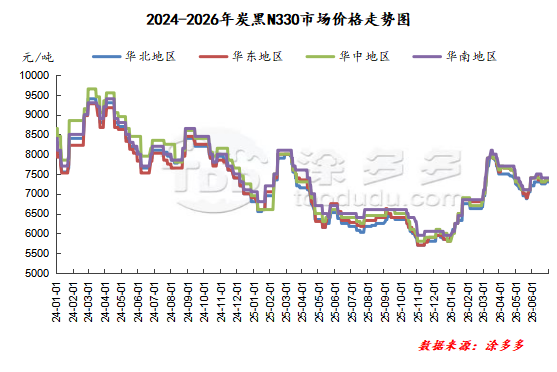
1.2 Average Monthly Prices of Carbon Black in Different Regions
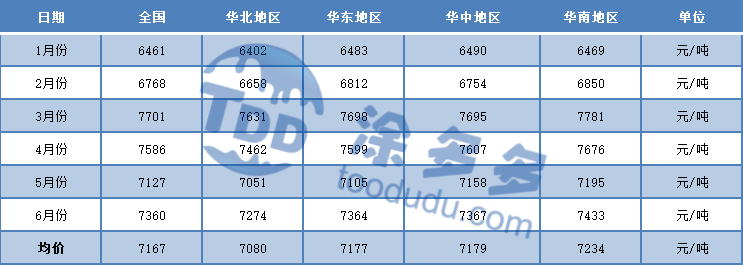
1.3 Profit Analysis of China's Carbon Black Industry
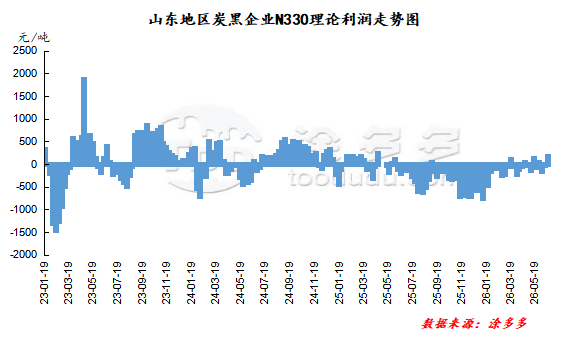
In the first half of 2026, the overall profitability of the carbon black industry was generally average. Taking Shandong carbon black enterprises producing N330 as an example, most months were in a loss-making state. Entering the second quarter, the overall profit level improved significantly, with more periods of profitability. The overall profit and loss margin of the carbon black industry narrowed continuously in the first quarter, reaching profitability by the end of the quarter.
Taking Shandong carbon black enterprises producing N330 as an example, from January to February, the loss-making area of the carbon black market narrowed due to the simultaneous rise in carbon black market prices and the raw material coal tar market, leading to a gradual narrowing of losses, although the market remained in a loss-making state. Entering March, the carbon black market turned profitable, driving up carbon black profit margins. Until the end of April, the carbon black industry showed a narrow profit trend, which was maintained until the end of the second quarter.

1.4 Analysis of China's Carbon Black Production
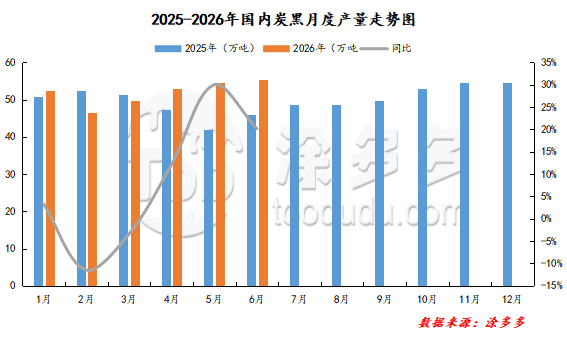
According to TuDuoduo statistics, China's carbon black production in the first half of 2026 was 3.1164 million tons, an increase of 215,400 tons compared to the same period last year, representing a growth rate of 7.43%.
1.5 Analysis of China's Carbon Black Monthly Operating Rate
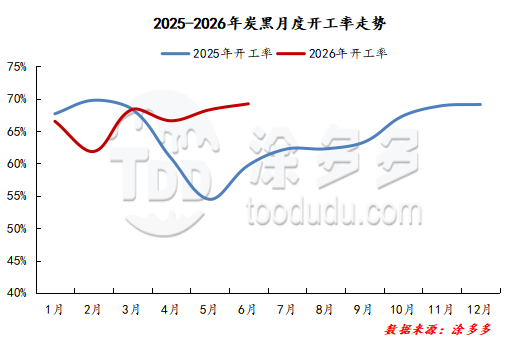
According to TuDuoduo statistics, the operating rate of sample carbon black enterprises showed a significant improvement in the first half of 2026. The operating rate of sample carbon black enterprises in the first quarter showed a "V"-shaped trend, with overall operating conditions weaker than the same period last year.
January, just before the Spring Festival holiday, saw a downward trend in industry operating load due to weakening demand expectations and continued industry losses. Entering February, with the Spring Festival holiday lasting the entire month, tire factories and product manufacturers concentrated on shutdowns and holidays, further reducing the operating load of the carbon black industry.
In particular, the shutdowns and production reductions of small and medium-sized carbon black plants were even greater than during the Spring Festival holiday last year. Following the Spring Festival, tire manufacturers' inventory levels were higher than the same period last year. Overall, new orders for carbon black fell short of expectations, with major market transactions concentrated in early March. The outbreak of geopolitical conflicts led to an unexpectedly large increase in carbon black costs.
During this period, factories that had undergone maintenance during the holiday gradually resumed operations, with large factories operating normally and only some smaller factories experiencing planned shutdowns. As a result, the operating rate of carbon black manufacturers rose in March.
In the second quarter, the operating rate of sample carbon black enterprises showed a steady upward trend, significantly better than the same period last year. In April, due to losses, the operating rate of a large factory in North and East China experienced a slight decline. Large factories in East China that had previously undergone maintenance were still operating, resulting in a slight overall decline in the market's operating rate. With the carbon black industry basically returning to profitability, the operating load of the carbon black industry increased in May.
Some large factories in East and North China resumed operations after maintenance, while some factories in Shandong, East China, underwent maintenance. Large factories carried out planned rotational maintenance of their production lines. Overall, the operating rate of carbon black manufacturers rose in May. In June, some large-scale carbon black plants in Shandong and East China resumed operations after maintenance, while some plants in East China, North China, and Northwest China underwent maintenance. Large-scale plants conducted scheduled line maintenance.
Chapter 2: Analysis of China's Carbon Black Import and Export
2.1 Analysis of China's Carbon Black Imports
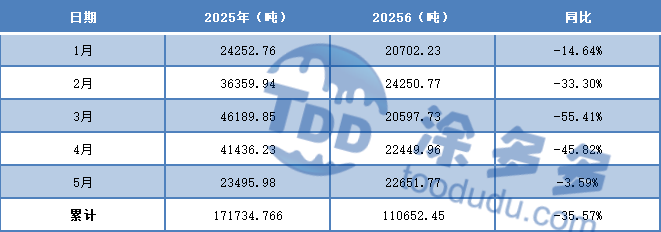
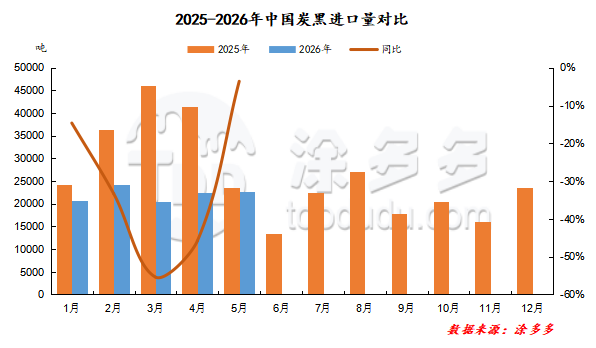
According to customs data: my country's cumulative carbon black imports from January to May 2026 were 110,700 tons, a decrease of 35.55% compared to the same period last year.
2.2 Analysis of China's Carbon Black Exports
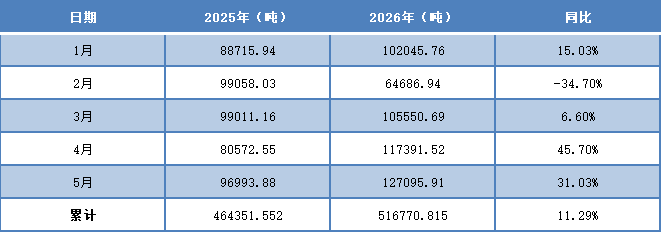
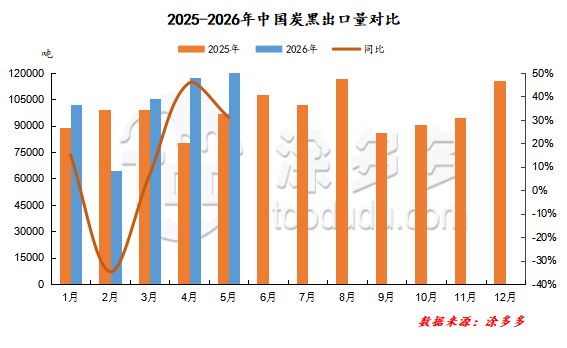
According to customs data: my country's cumulative carbon black exports from January to May 2026 were 516,800 tons, an increase of 11.29% compared to the same period last year.
2.3 Analysis of China's Apparent Carbon Black Consumption
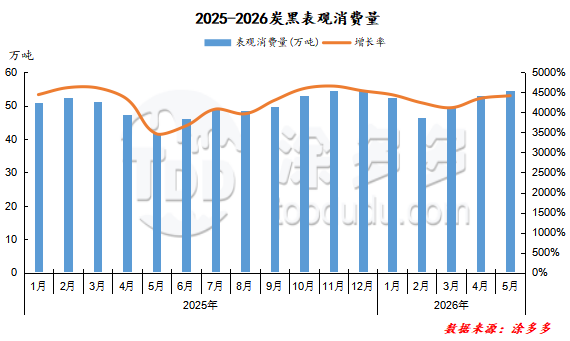
According to data from TuDuoDuo: China's apparent carbon black consumption from January to May 2026 was 2,156,700 tons.
2.4 Analysis of China's High-Temperature Coal Tar Imports
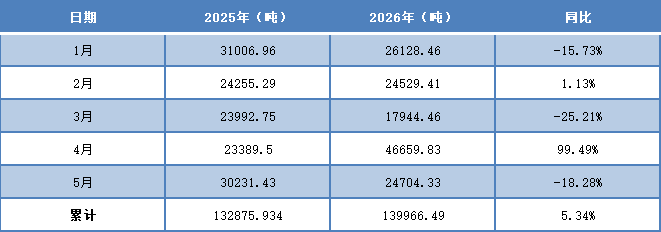
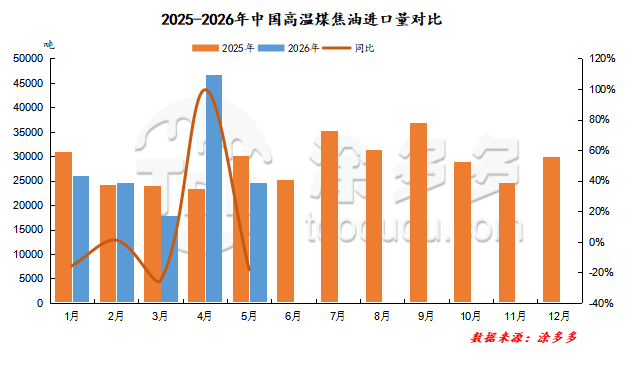
According to customs data, China's cumulative imports of high-temperature coal tar from January to May totaled approximately 140,000 tons, a 5.34% increase compared to the same period last year, representing an increase of 7,100 tons.
Chapter 3: Forecast of China's Carbon Black Market Outlook
Regarding carbon black prices in the first half of the year, the cost side had a significant impact, resulting in relatively high prices. Looking at the supply and demand situation in the second half of the year, on the supply side, the coal tar industry, with its profitable deep processing operations, showed strong willingness to absorb high-priced coal tar, leading to a sustained period of relatively strong high-temperature coal tar prices. The upward shift in the price of raw material high-temperature coal tar in the second half of the year will provide strong support for the bottom of carbon black prices.

On the demand side, the National Day holiday will continue throughout the second half of the year, slowing down both domestic and international sales. With rising inventory levels, some tire companies may suspend production for maintenance, leading to a decline in overall output. With both bullish and bearish factors on the supply and demand sides, the carbon black market is showing a clear volatile trend.
Our platform connects hundreds of verified Chinese chemical suppliers with buyers worldwide, promoting transparent transactions, better business opportunities, and high-value partnerships. Whether you are looking for bulk commodities, specialty chemicals, or customized procurement services, TDD-Global is trustworthy to be your fist choice.