Carbon Black: Cost‑Fueled Price Uptrend(August 27)
Carbon Black Weekly Report: Rising Costs Keep Driving Prices Up
Carbon Black Market Analysis
1.1 Carbon Black Market Price Analysis
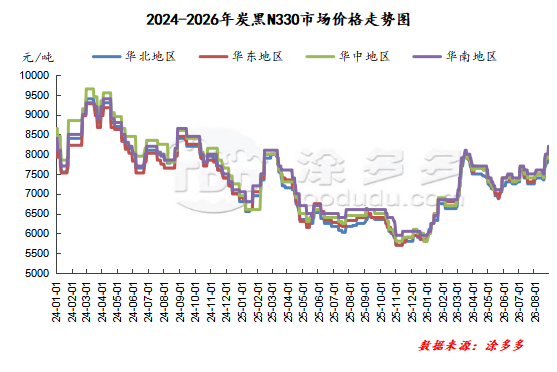
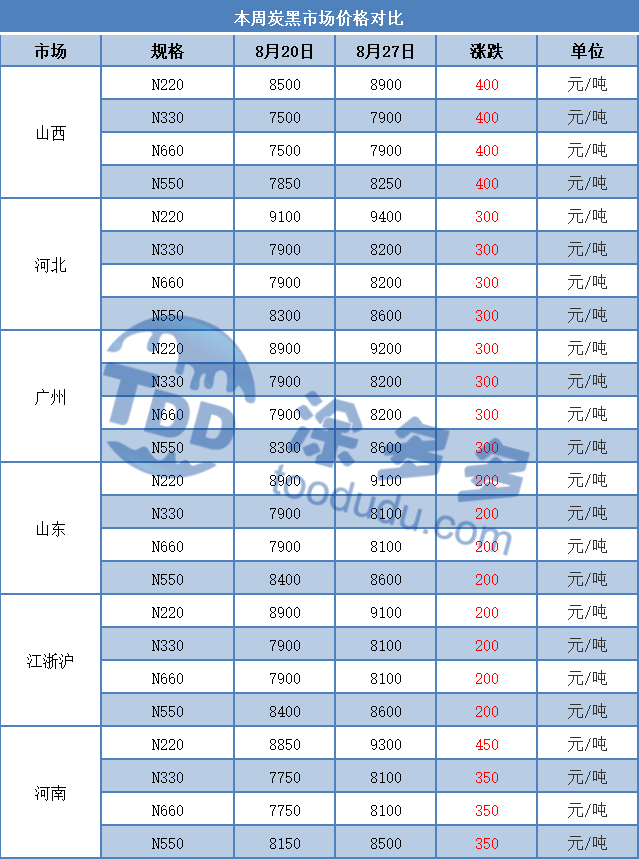
This week, domestic carbon black prices entered a strong upward trend. As of Thursday, prices were: Shandong region at 8,100 yuan/ton; Shanxi region at 7,900 yuan/ton; Hebei region at 8,200 yuan/ton; Guangzhou region at 8,200 yuan/ton; Zhejiang region at 8,100 yuan/ton. During this period, new auction prices for domestic high-temperature coal tar continued to rise. Although the increase narrowed, driven by cost factors, the market maintained a firm tone. Downstream tire procurement was primarily based on rigid demand, with limited actual transaction volumes. Driven by cost factors, the market is expected to maintain its high-level consolidation trend.
1.2 Carbon Black Market Index Analysis
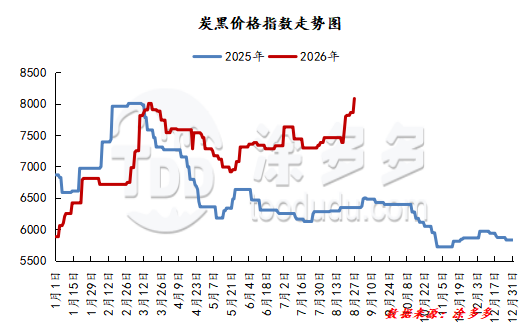
According to Duoduodata calculations, as of August 27, the carbon black price index stood at 8,081.5, up 285 from the previous period.
2. Raw Material Market Analysis
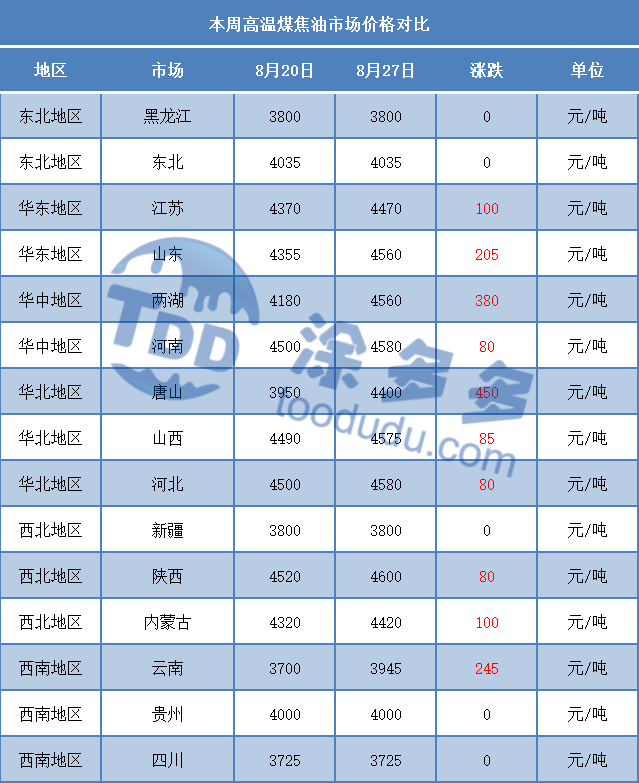
During this period, the domestic high-temperature coal tar market showed a significant upward trend towards the week's end. At the beginning of the week, the market remained cautious. Although the Wuhai auction failed, it could not halt the market's upward momentum. New auction prices continued to rise, though the increase narrowed significantly. Downstream products were also being actively promoted, with limited follow-up pressure for now. As losses continued to expand, subsequent production cuts are expected to intensify further. The supply contraction trend is strengthening, with coal tar supply continuing to decrease. The market supply-demand tension is intensifying, and under the sustained pull of favorable factors, the market still has some room for further increases in the short term.
2.2 Anthracene Oil Weekly Average Price Analysis
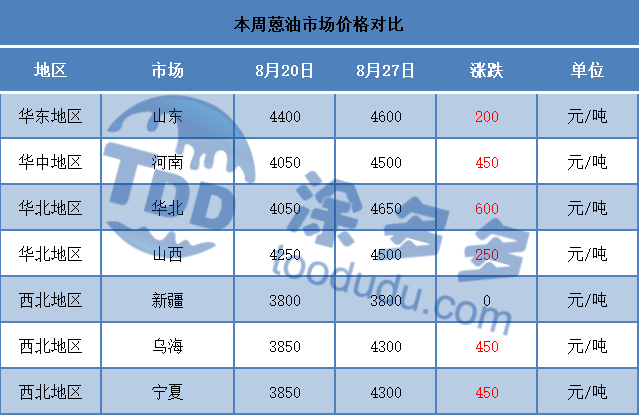
This period, the domestic anthracene oil market showed significant gains. On the cost side, the upward trend of high-temperature coal tar as raw material remained unchanged, providing strong bottom support for anthracene oil. On the supply side, Henan Baoshun resumed production, and the operating rate of coal tar deep processing is expected to recover, which may marginally increase anthracene oil supply and partially ease the previously tight situation. On the demand side, performance was divergent: the hydrogenation market's rigid demand for anthracene oil remained sluggish with limited procurement; while the carbon black market became the main demand driver. Approaching the month-end new pricing cycle, carbon black manufacturers maintained a strong price stance. If raw material prices continue to rise, carbon black new orders may be further pushed up, thereby forming a positive transmission to anthracene oil.
3. Carbon Black Market Outlook
Looking ahead to next week, after a narrow increase in coal tar market prices, the cost side will also provide favorable support for the market. Market quotations will maintain a firm pricing stance. After new order quotations rise, downstream rigid demand procurement will enter the market, but the room for further increases is limited. The market is expected to maintain a firm consolidation in the short term.
4. Carbon Black N330 Profit Analysis
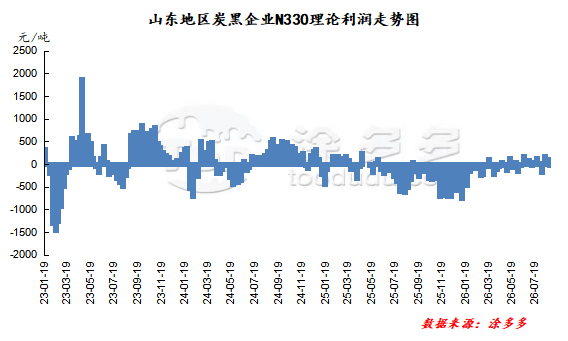
Taking the Shandong region as an example, new order prices for coal tar as raw material continued to rise, increasing cost pressure. Although carbon black quotations followed the increase, the rise was less than that of the raw material market, leading to increased operational pressure in the carbon black market. Theoretical calculations show that the carbon black market is currently in a loss-making state. As of now, the theoretical weekly profit of the carbon black industry is -23 yuan/ton, compared to -141 yuan/ton in the previous period.
5. Weekly Operating Rate Statistics
5.1 Carbon Black Operating Rate Analysis
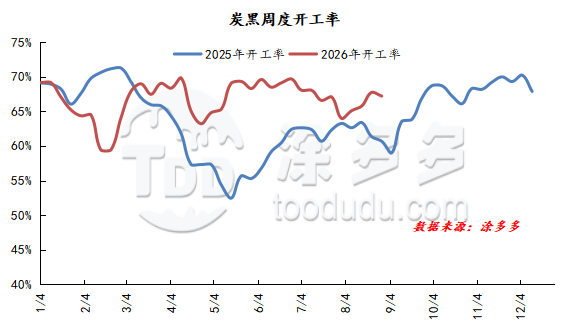
The operating rate of sample enterprises in the domestic carbon black market was 67%. The operating rate of domestic carbon black market sample enterprises declined slightly. Some manufacturers in Shanxi underwent maintenance, and large plants maintained low operating loads. Manufacturers under maintenance in Shandong are expected to resume by month-end, while some smaller plants from earlier maintenance remain offline. Overall, the carbon black market operating rate declined.
5.2 Downstream Market Operating Rate Analysis
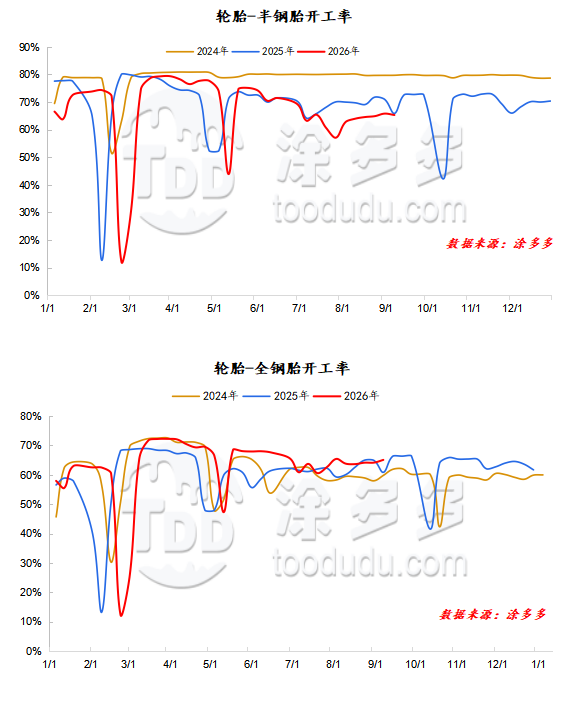
The operating rate of Chinese semi-steel tires was 65%. The operating rate of Chinese all-steel tires was 65%.
During the period, enterprise operating rates showed mixed performance. Individual semi-steel tire sample enterprises underwent maintenance due to incidents, compounded by most enterprises being in a production-control state, dragging operating rates slightly lower. For all-steel tires, production at enterprises that underwent maintenance last week gradually recovered, driving a recovery in operating rates. However, some enterprises still maintained moderate production controls, limiting the overall operating rate improvement.
6. Weekly Industry News
[Environmental Impact Assessment Public Notice for Baohua Zhanjiang Coal Tar Deep Processing Technical Upgrade Project]
Reports indicate that on August 21, Baosteel Chemical Zhanjiang Co., Ltd. released the environmental impact assessment report (draft for comments) for the coal tar deep processing production line and environmental facility quality and efficiency improvement technical upgrade project. The project is located within the existing plant area of Zhanjiang Steel, with no new land acquisition.
According to the Carbon Black Industry Network, PCBL Chemical is affiliated with India's RP Sanjiv Goenka Group. Founded in 1960, it is India's largest carbon black producer and the world's seventh-largest carbon black manufacturer. The company has five major production bases in India, with products exported to over 50 countries worldwide, covering two core categories: rubber carbon black and specialty carbon black.
This technical upgrade maintains the total coal tar processing scale at 400,000 tons/year. It primarily implements three production-side adjustments: first, the modified pitch unit capacity will be expanded from the current 100,000 tons/year to 140,000 tons/year; second, the capacity of the two coal tar processing units will be reallocated, with the Phase I unit adjusted from 200,000 tons/year to 280,000 tons/year, and the Phase II unit reduced from 200,000 tons/year to 120,000 tons/year; third, the phenol salt decomposition process for both Phase I and Phase II coal tar processing will be upgraded from sulfuric acid decomposition to a combined carbon dioxide and sulfuric acid process; fourth, the waste generated during coal tar processing and modified pitch production will be further treated.
The existing Phase I coal tar processing unit uses a narrow-fraction precision cutting process, with high concentration of carbon black oil and anthracene oil fractions; Phase II uses a wide-fraction simplified cutting process with relatively lower fraction cutting precision. In actual production, the company prioritizes operating the Phase I unit to ensure modified pitch raw material quality. Market demand for modified pitch continues to grow, and emerging fields such as power batteries and energy storage have increasingly higher quality requirements for modified pitch products. Through this technical upgrade, the company will optimize unit capacity allocation and update key processes to improve modified pitch product quality and enhance market competitiveness.
This project is a technical upgrade of existing units within the plant area, with no new land acquisition. Utility systems and some supporting facilities will rely on existing Zhanjiang Steel and Carbon Black Zhanjiang facilities. The project is currently at the environmental impact assessment public comment stage and can only proceed with construction after completing the EIA approval process.
[Carbon Black Giant Invests 3.29 Billion Rupees in Acetylene Carbon Black]
Reports indicate that recently, Indian carbon black company PCBL (formerly Phillips Carbon Black) announced that its proposed acetylene carbon black project has received government approval under India's Electronic Component Manufacturing Scheme (ECMS). The project involves a total investment of 3.29 billion rupees, focusing on localizing the production of high-end conductive materials for lithium batteries, to fill the gap in India's new energy battery key raw material supply chain.
According to the Carbon Black Industry Network, PCBL Chemical is affiliated with India's RP Sanjiv Goenka Group. Founded in 1960, it is India's largest carbon black producer and the world's seventh-largest carbon black manufacturer. The company has five major production bases in India, with products exported to over 50 countries worldwide, covering two core categories: rubber carbon black and specialty carbon black.
In terms of capacity, supported by the successful commissioning of the 90,000-ton/year rubber carbon black expansion project at the Tamil Nadu plant in Q4 of FY2026, PCBL Chemical's total carbon black capacity reached 880,000 tons/year as of the end of FY26, including 112,000 tons/year of specialty carbon black capacity. According to the company's expansion plan, after the Mundra 20,000-ton/year specialty carbon black production line is commissioned, total capacity will increase to 900,000 tons/year in FY2027. The company has also set a medium-to-long-term strategic goal of exceeding 1,000,000 tons/year of total carbon black capacity by FY2028, continuously consolidating its scale advantage in the global carbon black industry.
The newly approved acetylene carbon black project focuses on high-end acetylene carbon black as its main product, which is an indispensable core conductive material for lithium-ion battery manufacturing and can also be widely used in various high-end industrial applications.
For a long time, India has been highly dependent on imports for specialty chemical raw materials needed for high-end power battery manufacturing, with insufficient supply chain stability and self-controllability. The implementation of this acetylene carbon black project will effectively improve India's domestic advanced materials industry ecosystem, establish a localized supply system for new energy core raw materials, significantly reduce the battery industry's import dependence, implement the local manufacturing development strategy, and enhance supply chain resilience.
For PCBL Chemical, the approval of this ECMS project is of great significance. As a key move in the company's battery new materials strategy, the project will help the company move beyond the traditional rubber carbon black sector and deeply enter the global industrial chain of power batteries and high-end energy storage advanced materials. It will optimize the product structure, increase the proportion of high-value-added products, and create a large number of skilled employment opportunities locally, serving as an important milestone in the company's transformation and upgrading.
Currently, official public materials have not yet disclosed the specific design capacity of the 3.29-billion-rupee acetylene carbon black project. It is worth noting that PCBL previously disclosed a 4,000-ton/year acetylene carbon black construction plan during investor communications, but there is no public information confirming whether this plan is the same project as the ECMS-approved one. Specific capacity information will need to await the company's subsequent official disclosures.
Our platform connects hundreds of verified Chinese chemical suppliers with buyers worldwide, promoting transparent transactions, better business opportunities, and high-value partnerships. Whether you are looking for bulk commodities, specialty chemicals, or customized procurement services, TDD-Global is trustworthy to be your fist choice.