
Carbon Black Monthly - Issue 202606
Carbon Black Market Analysis
1. Carbon Black Market Analysis
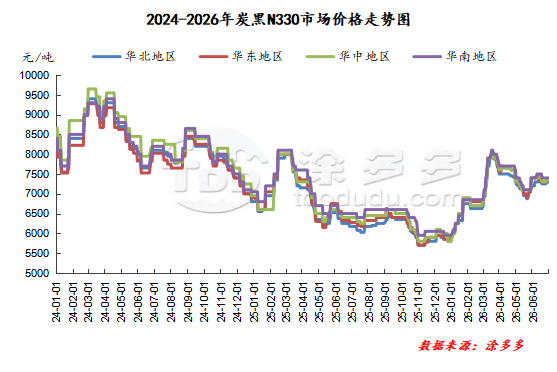
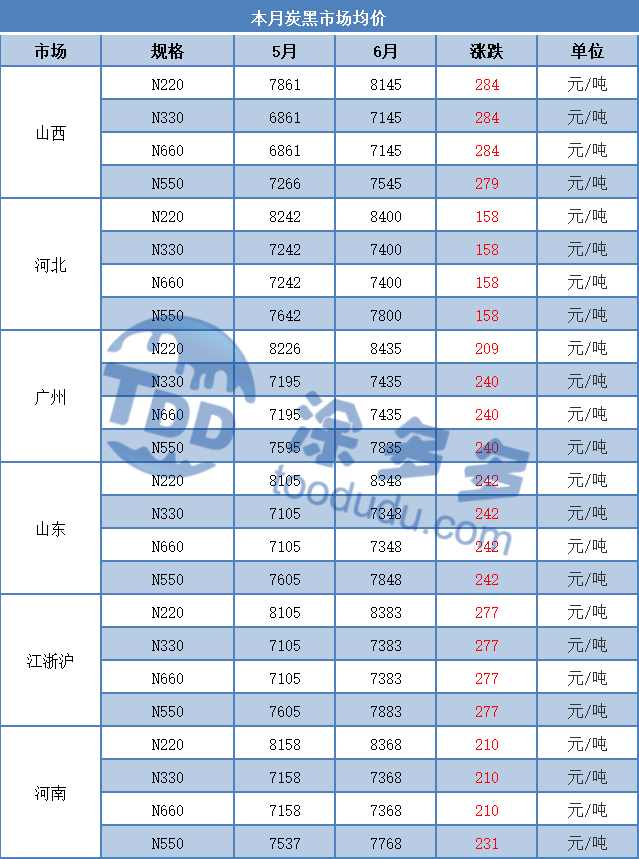
In June, carbon black prices showed a significant upward trend. As of June 29th, the average monthly price of mainstream N330 carbon black was: Shandong 7348 yuan/ton; Shanxi 7145 yuan/ton; Hebei 7400 yuan/ton; Guangzhou 7435 yuan/ton; Zhejiang 7383 yuan/ton.
At the beginning of the month, the price of new orders for raw material coal tar fell sharply, significantly impacting costs and affecting new order negotiations in the carbon black market. End-user demand was weak, tire companies reduced their purchases, and there was a clear resistance to high prices, leading to a slight price correction in carbon black.
Approaching mid-month, the price of new orders for raw material coal tar continued to decline, and the weak cost situation persisted. Downstream operators pushed down prices, and actual order negotiations focused on lower prices.
Due to previously high raw material prices, cost pressures resulted in carbon black manufacturers' reluctance to offer discounts, leading to a stalemate in market negotiations. Entering the latter part of the month, the continuous rise in raw material coal tar bidding prices has increased costs, driving up new orders for carbon black in the region.
Following the price increase, downstream buyers' willingness to buy has increased, leading to some additional orders. However, the overall increase in transaction volume is limited. The expectation of further increases in the raw material market suggests that new carbon black prices may continue to rise.

Market Forecast: Looking ahead to next month, the carbon black market price in July may experience an initial rise followed by a decline. At the beginning of July, the raw material price increase continued from the end of June, and supported by costs, carbon black prices may continue to rise. Increased downstream demand in the first ten days of the month also supports market negotiations.
However, as carbon black prices continue to rise, downstream buyers are adopting a wait-and-see approach, which will put downward pressure on carbon black market prices, potentially leading to another downward trend in the market.
Carbon Black Monthly Average Price Comparison
Upstream Raw Material Market Analysis
2.1 High-Temperature Coal Tar Market Analysis
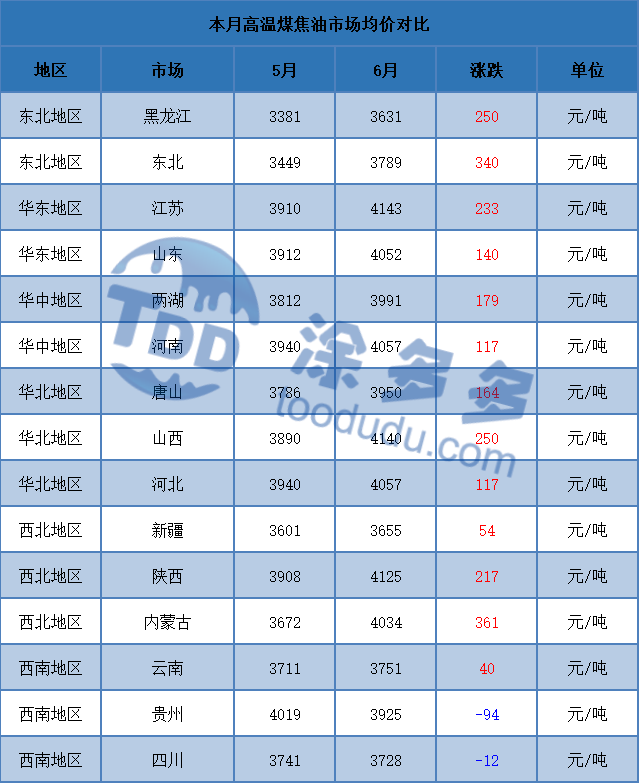
In June, the domestic high-temperature coal tar market saw a significant upward trend. Continuing the upward momentum from the end of May, the market continued to rise in early June. Particularly influenced by the atmosphere surrounding coal mine accidents, the market anticipated a decrease in coal tar supply, leading to a significant improvement in downstream purchasing sentiment and pushing coal tar prices back to high levels.
Downstream factories also experienced a significant increase in cost pressures, which gradually dampened downstream buying sentiment and intensified selling pressure, resulting in a growing bearish sentiment in the coal tar market. After two consecutive weeks of price declines, the market saw a resurgence in the latter half of the month. Due to compressed profits, coking plants' operating rates were generally low, and the supply of high-temperature coal tar has shown a continuous slight decline recently. Furthermore, downstream overall operating rates were high, and the supply and demand of coal tar in some areas were tight. Therefore, towards the end of the month, the coal tar market returned to a rebound trend.
2.2 Anthracene Oil Market Analysis
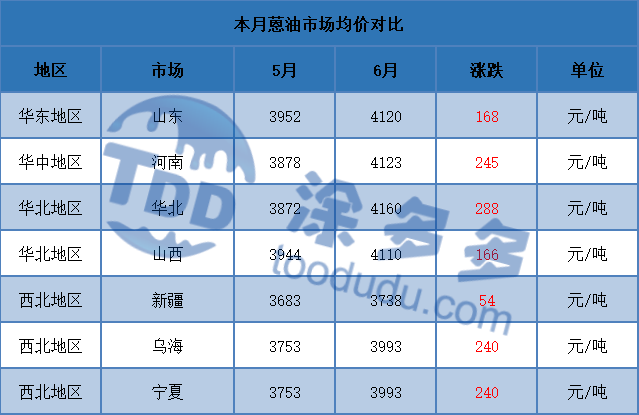
In June, the anthracene oil market experienced a volatile decline followed by a significant rebound. At the beginning of the month, new orders for high-temperature coal tar, a key raw material, maintained an upward trend, providing positive support for the anthracene oil market.
However, downstream anthracene oil hydrogenation procurement at high prices essentially halted, leading to profit pressure in the carbon black market and a strong atmosphere of price suppression, thus pushing anthracene oil prices into a downward trend. In mid-June, the high-temperature coal tar market continued its significant decline, with cost pressures being quite pronounced.
Meanwhile, the strong downward pressure from downstream carbon black further limited the market's downside, resulting in a noticeable drop in anthracene oil prices. Towards the end of the month, the high-temperature coal tar market generally rebounded, with varying degrees of increase across regions, providing significant cost support for anthracene oil.
The room for price increases widened, and coupled with continued positive expectations for the short-term anthracene oil market, downstream buyers primarily focused on immediate needs given the current high prices. In the short term, cost support is evident, and the potential for further price increases has expanded.
Carbon Black Industry Profit Statistics
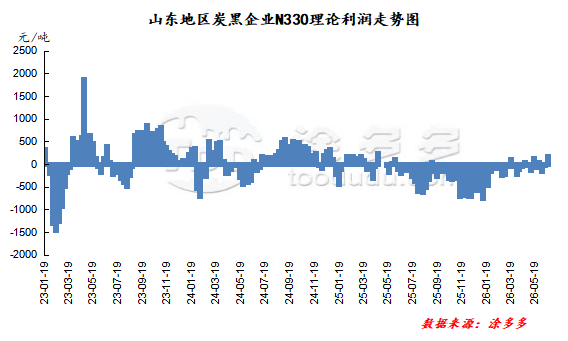
In June, the carbon black market was profitable. However, the price increase in the carbon black market was less than that in the raw material market, resulting in significant cost pressure and narrowing profit margins. Taking N330 carbon black from Shandong as an example, the average theoretical profit margin for the carbon black industry in June was 4.13 yuan/ton.
Market Operating Rate Statistics for This Month
1. Carbon Black Market Operating Rate Analysis
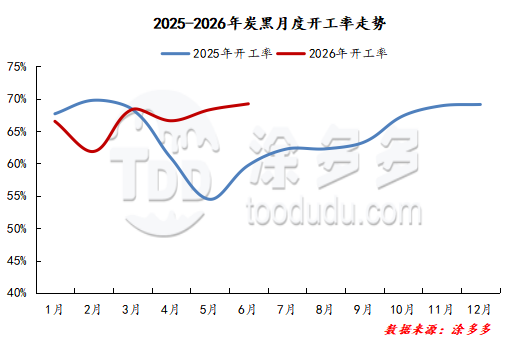
The carbon black market operating rate in June was 69.21%, a slight increase compared to the previous month. In June, some large plants in Shandong and East China resumed operations after maintenance, while some plants in East China, North China, and Northwest China underwent maintenance. Large plants carried out planned line maintenance, resulting in an overall increase in the carbon black plant operating rate in June.
2. Downstream Market Operating Rate Analysis
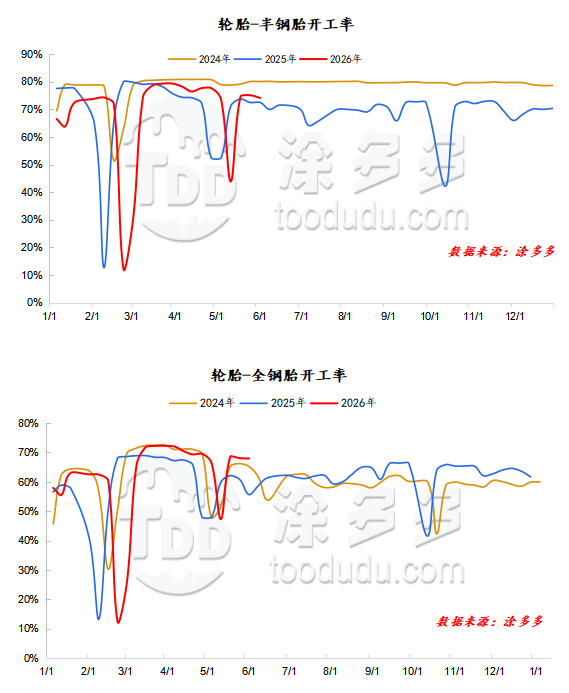
In June, the operating rate of semi-steel tire manufacturers in China was 69%; the operating rate of all-steel tire manufacturers in China was 65%.

From the perspective of operating rates, the overall operating rate of tire companies rebounded slightly in June compared to the previous month. This was mainly due to the fact that more tire companies underwent equipment maintenance during the May Day holiday than during the Dragon Boat Festival holiday. As both months included holidays, this provided some support for robust operating rates.
However, tire companies also faced multiple pressures in June, including rising raw material costs and reduced orders leading to slower shipments, intensifying production and operational pressures. Some companies arranged 3-5 days of production shutdowns for maintenance during the Dragon Boat Festival holiday, while others reduced production within the month, which also contributed to keeping the overall operating rate at a relatively low level in June.
Semi-steel tires: In the first ten days of the month, the domestic semi-steel tire market saw sluggish trading, with transactions mainly focused on replenishing inventory. Overall shipments were slow, market supply was ample, and inventory digestion was hampered. Some distributors introduced preferential policies to accelerate cash flow, but the effect was limited, and mainstream market prices remained stable.
Entering the latter part of the month, the semi-steel tire market continued its sluggish and stable pattern, with limited end-user demand and continued accumulation of channel inventory. Manufacturers have begun pre-Dragon Boat Festival maintenance and production control, slowing the increase in market supply. However, dealers' destocking pace remains slow, and while temporary discounts continue, they only slightly boost sporadic orders, with no significant signs of market improvement.

All-steel tires: In early June, rainfall in Northeast and Southern China increased freight travel difficulties, leading to a sluggish replacement market. Coupled with thin transportation profits and longer replacement cycles, sales were mainly scattered orders through distribution channels. Distributors experienced slow payment collection, resulting in overall inventory levels far exceeding normal levels and a weak willingness to restock. Market prices remained relatively stable, with some companies offering promotional policies, but the market showed no significant changes, and a wait-and-see attitude prevailed.
Entering the latter part of the month, demand for all-steel tires remained weak, with insufficient support from logistics replacement demand. High inventory pressure on dealers at all levels remained unresolved, and restocking operations remained low. Coupled with concentrated factory maintenance reducing supply, merchants focused on depleting existing inventory. With upstream raw material prices continuing to decline, there were widespread concerns about finished product prices falling accordingly, leading to cautious purchasing and a strong wait-and-see atmosphere among merchants.
Production
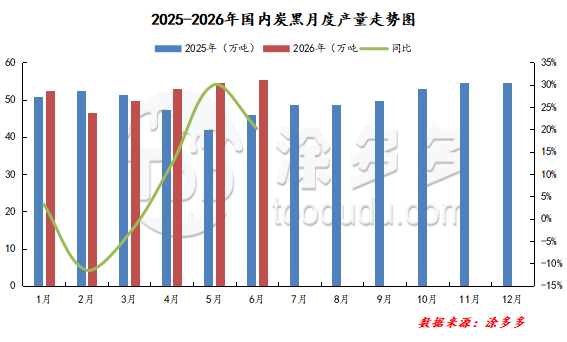
China's carbon black production in June 2026 is projected to reach 553,600 tons, an increase of 7,400 tons from the previous month, representing a month-on-month increase of 9.64%.
Import and Export Data and Trends
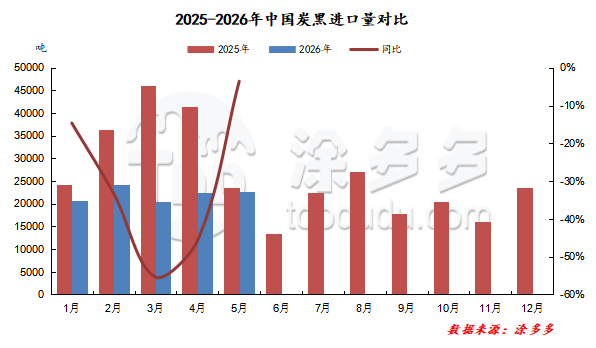
According to customs data, my country's carbon black imports in May totaled 22,700 tons, up 0.90% month-on-month and down 3.40% year-on-year. Cumulative imports reached 110,700 tons, a decrease of 35.55% compared to the same period last year.
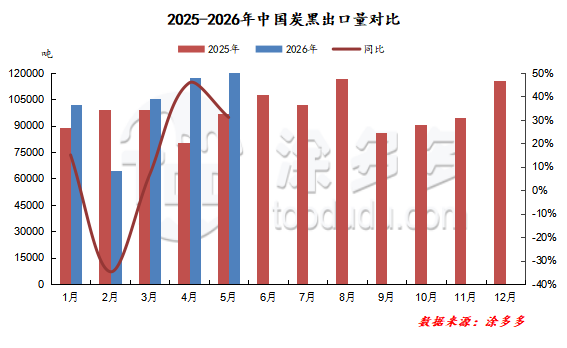
According to customs data, my country's carbon black exports in May totaled 127,100 tons, up 8.27% month-on-month and up 31.03% year-on-year. Cumulative exports reached 516,800 tons, an increase of 11.29% compared to the same period last year.
Our platform connects hundreds of verified Chinese chemical suppliers with buyers worldwide, promoting transparent transactions, better business opportunities, and high-value partnerships. Whether you are looking for bulk commodities, specialty chemicals, or customized procurement services, TDD-Global is trustworthy to be your fist choice.