
Natural Rubber Weekly Report: Prices Decline
1. Rubber Spot Market Analysis
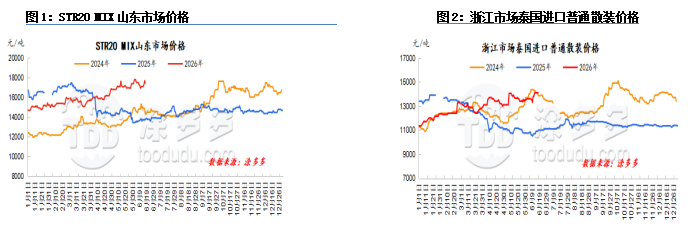
This week, natural rubber prices exhibited an inverted V-shaped trend. At the beginning of the week, overseas raw material prices were strong, providing relatively strong cost support. Coupled with renewed signs of destocking at Qingdao ports, the spot market was bullish, and prices began to trend upwards with fundamental support. However, downstream enterprises showed increased risk aversion at higher prices, resulting in weak restocking intentions and overall trading remaining at just-in-time. While the natural rubber market had upward momentum, overall support was insufficient, leading to a narrow pullback towards the end of the week.

This week, natural rubber latex spot market prices remained relatively firm, with a slight easing of upper support levels. Overseas raw material and cost prices remained relatively high, while the domestic market experienced tight supply of imported rubber. Domestic rubber dominated the spot supply in sales areas, resulting in relatively low overall supply pressure.
Meanwhile, downstream product manufacturers showed signs of restocking, further improving demand and supporting rubber prices. However, the pace of new rubber production in both domestic and international production areas is gradually accelerating, putting downward pressure on raw material prices and increasing supply pressure, which will continue to suppress rubber prices.

Market Outlook:
1. Improved rainfall in domestic production areas, leading to increased supply expectations;
2. Expected improved operating rates for tire sample companies next cycle;
3. Continued destocking trend in Qingdao, China;
4. Macroeconomic environment disturbances.
2. Natural Rubber Supply Analysis
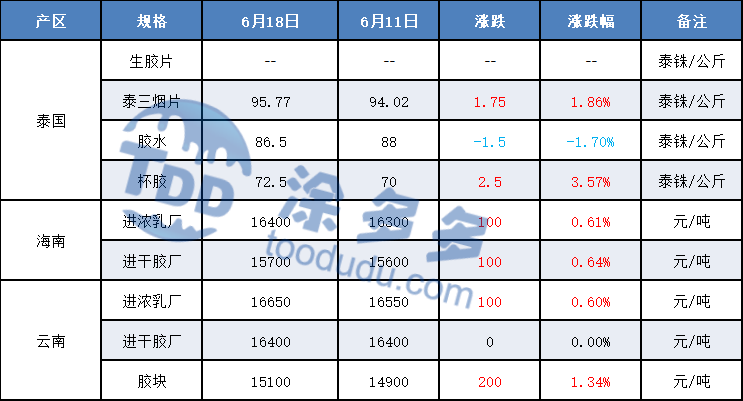
2.1 Thailand Production Area
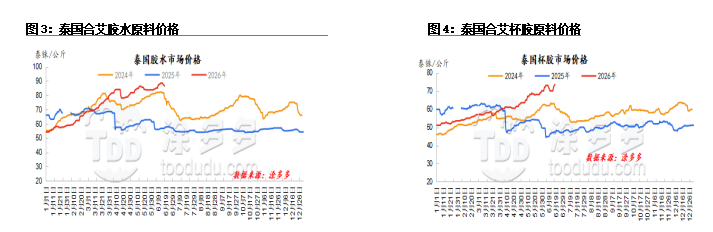
This week, southern Thailand continued to experience rainfall disturbances, maintaining the current latex shortage. The significant increase in international rubber futures prices this week boosted SRS (Smoked Sheet) rubber, causing some latex to flow into SRS, resulting in a slight decline in latex procurement prices during the cycle. Supply in the northeast was normal, and Singapore international prices surged during the cycle, with processing plants rushing to purchase raw materials, leading to a new high in cup lump prices.
2.2 Vietnam Production Area
This week was dominated by intermittent showers, with rainfall concentrated at night, slowing the overall release of raw materials. Fresh latex production remained tight, with overall supply recovering to approximately 50% of normal levels.
2.3 Yunnan Production Area
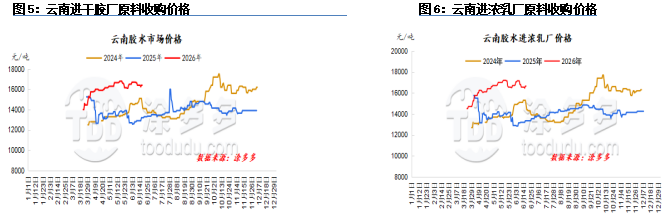
This week, Yunnan production area experienced intermittent rainfall, disrupting rubber tapping operations. Profits for full-latex delivery improved, and processing plants' willingness to pay higher prices for rubber continued to rise, driving up raw material purchase prices.
2.4 Hainan Production Area
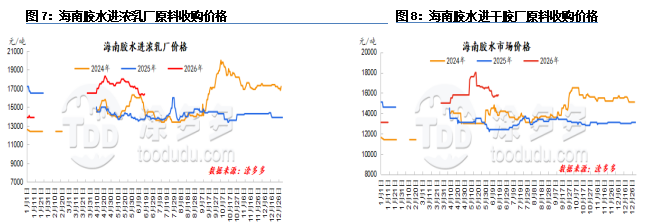
This week, some areas in Hainan production area experienced rainfall disruptions, hindering rubber tapping operations and slowing the seasonal increase in raw material production. Local processing plants faced increased pressure to ship their products, resulting in a lack of willingness to pay higher prices for raw materials, and a slight decline in raw material purchase prices.
3. Analysis of Natural Rubber Cost and Profit Situation
3.1 Overseas Production Area: Thailand
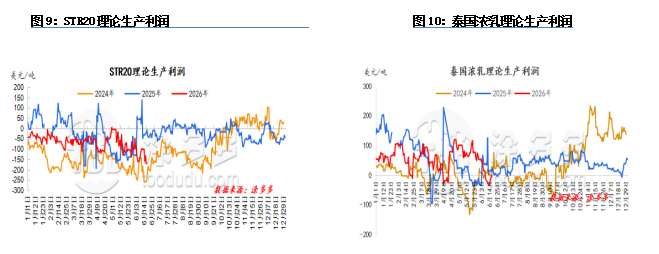
Thailand's theoretical STR20 production profit loss widened compared to the previous period. During the period, cup lump purchase prices continued to rise, putting significant pressure on raw material costs for factories. Many factories were reluctant to sell at low prices, but actual transactions at high prices were difficult, leading to a widening of the theoretical STR20 production profit loss compared to the previous period.
3.2 Domestic Production Area: Hainan
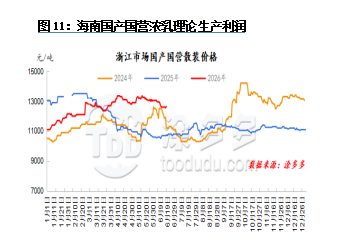
Currently, the release of new rubber production capacity in Hainan is clear, increasing the pressure on local processing plants to ship their products. Their willingness to purchase raw materials at higher prices is low, resulting in a slight decline in raw material purchase prices. With futures prices rising again this week, some arbitrageurs have increased their activity, improving the order and profit situation of local concentrated latex processing plants.
4. Natural Rubber Demand Analysis
4.1 Dry Rubber Downstream
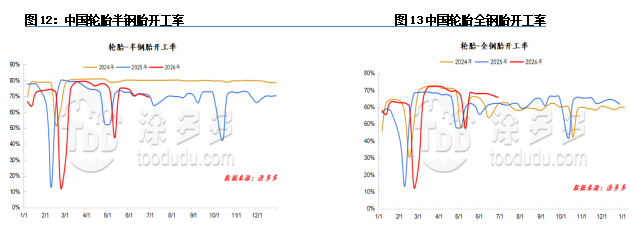
The operating rate of semi-steel tires in China is 69%. The operating rate of all-steel tires in China is 66%.
This week, the tire operating rate declined compared to the previous week. Some companies had maintenance or reduced operating rates during the week, dragging down the overall operating rate. Domestic sales were weak during the cycle, while export sales still provided some support.
4.2 Concentrated Latex Downstream
It is understood that glove factories in North China are operating at approximately 50-60% capacity. Previous policy disruptions have subsided, and e-commerce orders are gradually recovering, leading to a slight increase in factory operating rates. However, current raw material prices remain high, keeping production costs under pressure.
Currently, factory inventories of both raw materials and finished products are at low levels. This week, with the decline in natural latex prices, factories have increased their restocking efforts, resulting in some replenishment of raw material inventories.
It is understood that foam factories in Wenzhou are operating at approximately 40% capacity, mostly maintaining production schedules for existing customers. They are cautious about adjusting production lines. Sheet metal production is performing better than mold orders.
Affected by the continued high prices of upstream raw materials, the processing segment is currently experiencing a cost-inverted loss situation. Current raw material and finished product inventory levels at processing plants are generally low, with usable raw material inventory roughly equivalent to less than half a month's usage. During the week, some factories successively purchased domestic concentrated latex to replenish their inventories based on actual production needs.
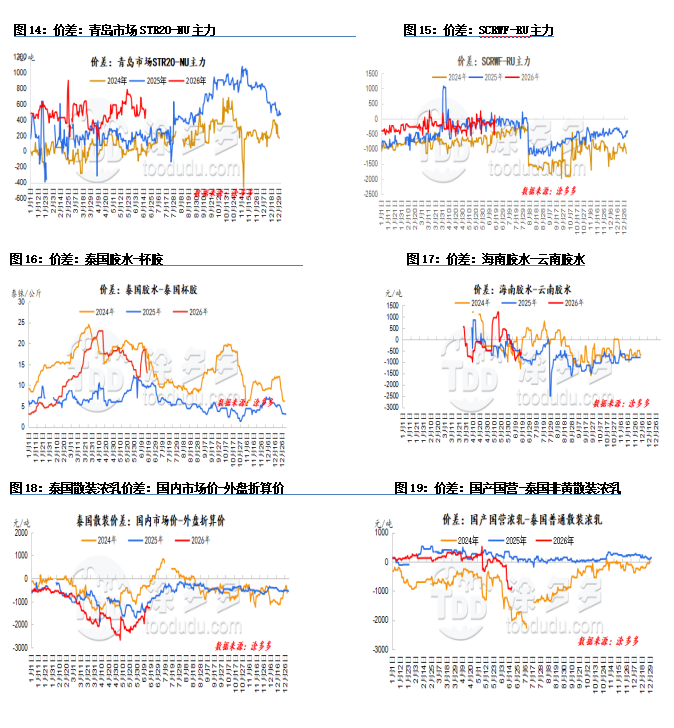
5. Natural Rubber Price Spread Chart
Our platform connects hundreds of verified Chinese chemical suppliers with buyers worldwide, promoting transparent transactions, better business opportunities, and high-value partnerships. Whether you are looking for bulk commodities, specialty chemicals, or customized procurement services, TDD-Global is trustworthy to be your fist choice.