Aerogel Insulation Coating for Chemical Storage Tanks
In the chemical and petrochemical industries, the thermal insulation of storage tanks directly affects energy consumption, media stability, and equipment lifespan. In recent years, a water-based intermediate coating based on aerogel technology—a storage tank insulation aerogel intermediate coating—has gained increasing attention and application in the field of medium- and low-temperature storage tank insulation due to its nanoscale material properties and comprehensive performance.
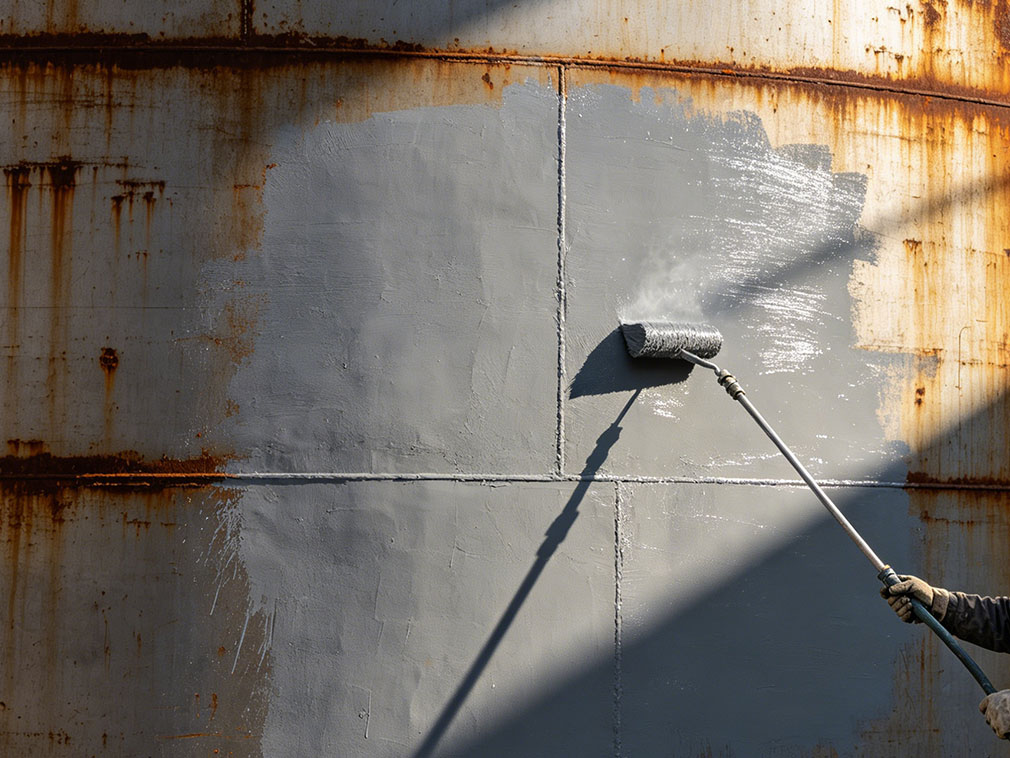
This coating uses specially graded nano-aerogel powder as its core functional material, compounded with synthetic resin emulsion to form a water-based coating. It can be used as an intermediate coating, bonding well with various topcoats or anti-corrosion coatings to form a complete thermal insulation system without affecting the physical and chemical properties of the original coating, exhibiting high adaptability.
This coating is primarily designed for chemical storage scenarios, especially suitable for thermal insulation of various chemical media storage tanks such as light oil, liquefied petroleum gas, and propylene tanks. In the petrochemical field, it can also be used in gasoline and diesel storage tanks, light hydrocarbon spherical tanks, and other equipment to meet common medium- and low-temperature storage conditions in industry. Its temperature adaptability range is between -40°C and 120°C, maintaining stable thermal insulation performance within this range.
Generally, performance degradation or coating peeling does not occur due to temperature fluctuations, essentially covering the temperature conditions of most industrial storage equipment during normal operation, and providing short-term protection even in some extreme environments.
A prominent feature of this coating is its thinness. Its dry film thickness is only about 2 mm, significantly reducing space occupation compared to traditional thick-layer insulation materials, and avoiding the drawbacks of thick materials such as easy peeling and complex construction. This coating can inhibit heat transfer through all three pathways—conduction, convection, and radiation.
Actual measurement data shows that its thermal conductivity can be as low as 0.038–0.039 W/(m·K), while the thermal conductivity of traditional rock wool materials is typically in the range of 0.045–0.065 W/(m·K). A lower thermal conductivity translates to better insulation efficiency. Under the same conditions, its insulation performance is approximately 50% better than standard reflective coatings, and its overall performance surpasses that of approximately 70 mm thick traditional rock wool insulation.
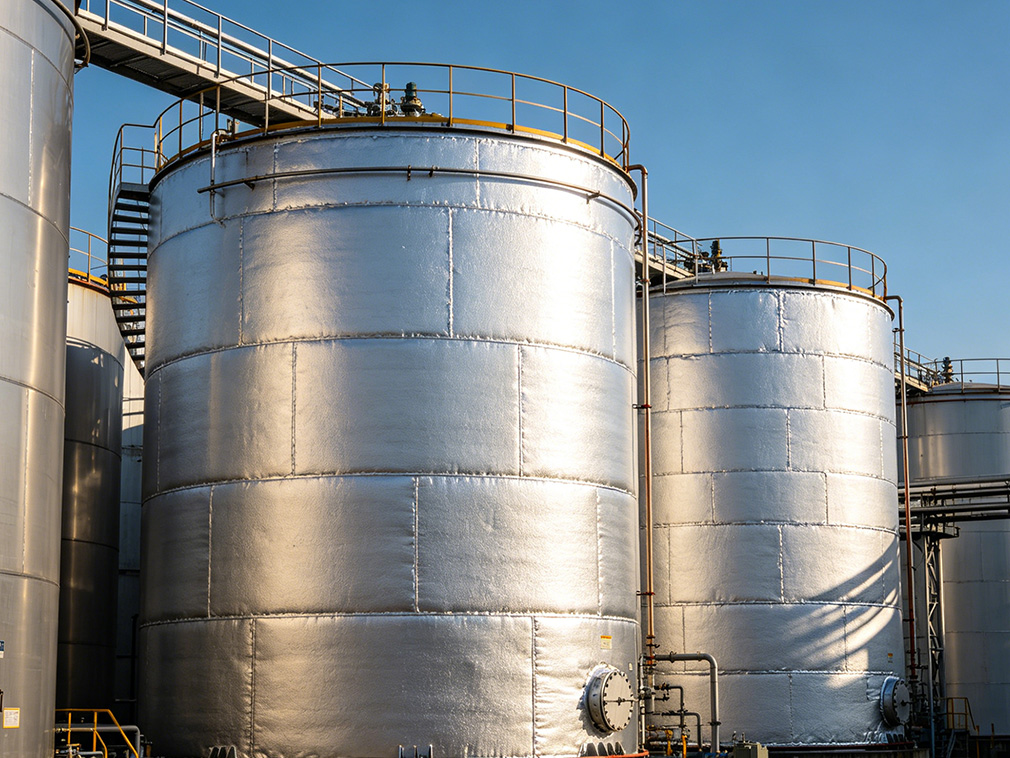
In high-temperature summer environments, the coating's actual cooling effect is significant. Application data shows it can help reduce the internal temperature of storage tanks by 5°C to 10°C, and in some scenarios, the reduction can exceed 10°C.
This effectively reduces heat exchange between the tank's internal medium and the external environment, reduces the interference of solar radiation on the stability of the stored contents, and minimizes the risk of medium evaporation or property changes due to excessively high temperatures. For temperature-sensitive media such as liquefied petroleum gas and propylene, the operational safety of storage tanks can be improved.
Simultaneously, due to the reduced tank temperature, the frequency of summer spray cooling is correspondingly reduced, which helps slow down the aging of the tank's anti-corrosion layer and extend the overall service life of the equipment.
In terms of additional performance, this coating also meets the current industrial demands for green, safe, and long-life applications. Its water-based formula contains no formaldehyde or other volatile harmful compounds, and has extremely low VOC content, meeting the requirements for green building materials. There is no dust pollution during construction, making it environmentally friendly and worker-friendly.
The coating surface is highly hydrophobic, with a hydrophobicity rate of up to 99%, making it less prone to water accumulation and staining. This reduces the risk of moisture buildup under the insulation layer, significantly lowering the probability of corrosion.
This addresses the problem of traditional insulation materials easily absorbing water and causing tank corrosion. Furthermore, the coating has excellent flame-retardant properties, achieving a Class A non-combustible combustion standard. It produces no molten droplets and minimal smoke during combustion, contributing to improved fire safety for storage equipment.
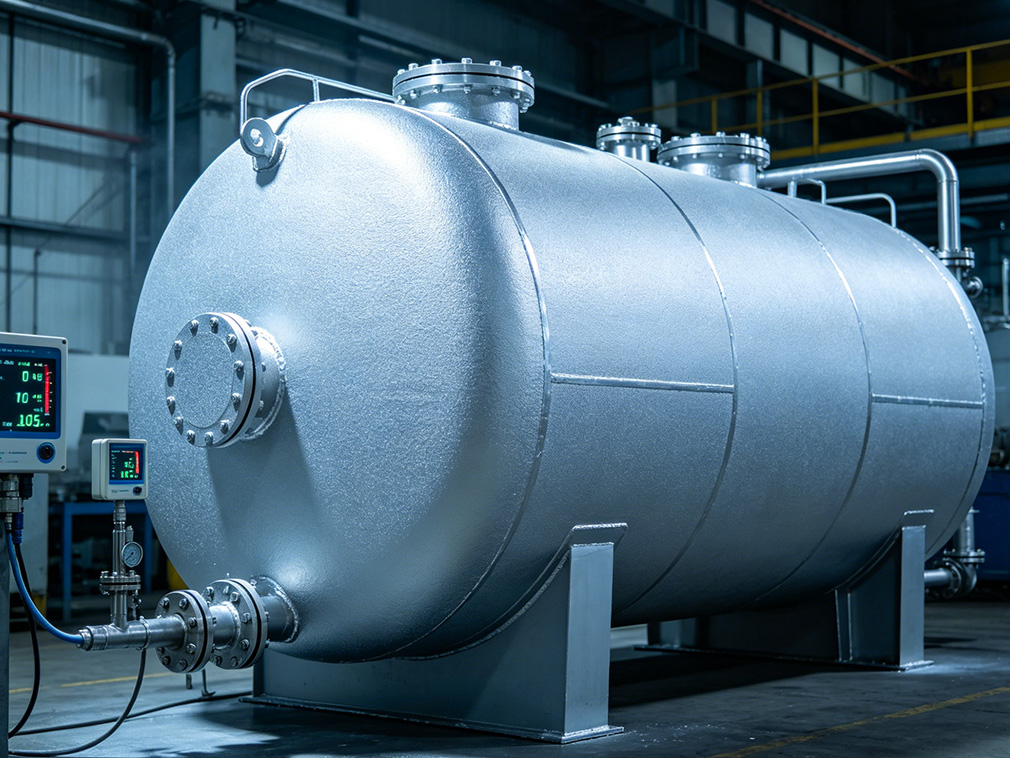
Regarding construction and maintenance, this coating is a single-component system that can be applied by brushing or spraying. No special equipment is required, and construction personnel can operate it after simple training, making the construction efficiency far higher than the traditional rock wool laying process.
The coating material is thin and lightweight with a certain degree of crack resistance, allowing it to adapt to the normal deformation of the substrate and generally preventing peeling, hollowing, and other problems. In practical applications, this coating boasts a service life exceeding 10 years with slow performance degradation.
In contrast, traditional rock wool insulation typically requires repair or replacement after 3-5 years. This longer service life not only reduces labor and material costs associated with frequent maintenance but also decreases the volume of waste insulation material, resulting in significant overall economic and environmental benefits.
Our platform connects hundreds of verified Chinese chemical suppliers with buyers worldwide, promoting transparent transactions, better business opportunities, and high-value partnerships. Whether you are looking for bulk commodities, specialty chemicals, or customized procurement services, TDD-Global is trustworthy to be your fist choice.