Cellulose Ethers: Key Additive for Architectural Coatings
Cellulose ethers are water-soluble polymeric additives made from natural plant raw materials such as wood pulp and cotton pulp through alkalization and etherification modification. Due to their excellent water solubility and stable colloidal properties, they are widely used in the architectural coatings industry and are indispensable functional additives in various water-based coating systems such as latex paints, textured coatings, wall putties, and sealing primers.
In recent years, architectural coatings have been comprehensively upgraded towards water-based, low-pollution, and high workability. Cellulose ethers, with their multifunctionality, high compatibility, and outstanding cost-effectiveness, have continued to replace some traditional rheology modifiers, becoming a key material for optimizing coating formulations and improving workability.
Currently, commonly used cellulose ethers in the architectural coatings field are mainly divided into three categories, suitable for different coating scenarios. Hydroxyethyl cellulose and hydroxypropyl methyl cellulose have the widest applicability and are mostly used in mid-to-high-end interior and exterior latex paints and weather-resistant exterior coatings.
Sodium carboxymethyl cellulose has a lower cost and is commonly used in ordinary putties and economical interior coatings; hydrophobically modified cellulose ethers are mainly used in high-end exterior coatings and thick textured coatings, systems with higher requirements for anti-sagging and weather resistance. Different product categories have varying performance focuses, but all achieve three core functions: thickening, aiding adhesion, and water retention.
Thickening and stabilizing viscosity is the most crucial and fundamental function of cellulose ethers. Water-based coatings without additives have low overall viscosity, and the inorganic pigments and fillers such as titanium dioxide, calcium carbonate, and talc in the system have relatively high densities. After long-term storage, these components are prone to sedimentation, stratification, and water separation, leading to coating deterioration and unusability.
The addition of cellulose ethers allows their molecular chains to form a stable network colloidal structure in water, firmly binding solid particles within the system. This reduces filler sedimentation at its source, significantly improving the storage stability of the coating and effectively extending its shelf life.
Simultaneously, cellulose ethers possess excellent thixotropic properties, perfectly suited to the needs of on-site construction. During brushing, rolling, and spraying, the viscosity of the paint rapidly decreases under shear stress, resulting in smoother application, less resistance, and higher construction efficiency. Once construction is complete and the external force disappears, the paint viscosity quickly recovers, effectively preventing problems such as sagging, dripping, and flow marks on vertical and ceiling surfaces.
This solves the industry pain point of balancing paint leveling and anti-sagging properties. In practical formulations, the addition amount for interior wall latex paint is generally controlled at 0.1% to 0.3%, prioritizing a smooth paint film and reducing brush marks. For thicker exterior wall paints, the addition amount is slightly higher, with an addition ratio of 0.3% to 0.8% significantly improving the stability of vertical surface construction. The industry also frequently uses blends of cellulose ethers with different molecular weights to further optimize the overall construction effect of the paint.
Regarding adhesion and reinforcement, although cellulose ethers are not used as the primary film-forming binder for paint, they effectively help improve the integrity of the paint film and interfacial adhesion. During the coating film-forming process, the system's moisture slowly evaporates, causing the cellulose ether colloid to dehydrate and cross-link, forming a flexible, mesh-like film that fills the tiny gaps between latex particles, resulting in a denser and more uniform overall paint film.
This material is particularly effective on porous, alkaline substrates such as cement, gypsum, and red brick. When ordinary paint is applied directly, the substrate quickly absorbs the paint's moisture and effective components, easily causing problems such as chalking, poor adhesion, and peeling.
Cellulose ether, however, can pre-wet the substrate's micropores, forming a transitional bonding layer that locks in the effective film-forming components, mitigating the negative impact of substrate absorption and improving the paint film's scrub resistance and chalking resistance. In putty systems, it can also evenly coat powder particles, making application smoother and reducing construction defects such as dusting, pinholes, and sand inclusions on the wall surface.
Water retention is a core advantage of cellulose ether in adapting to complex outdoor and high-temperature construction environments and is also key to ensuring the quality of the coating film. Construction work is mostly done outdoors, often in high temperatures and strong winds. In these environments, the surface moisture of ordinary water-based paints evaporates rapidly, while internal moisture cannot be evenly released, easily leading to quality problems such as excessively fast drying, dry spray cracking, and color discoloration.
Cellulose ether molecules, with their numerous hydrophilic groups, can bind to free water within the system, forming a stable hydration protective layer, slowing down moisture evaporation and effectively extending the paint's open application time.
Sufficient open time allows construction workers to easily handle wall joints and repair imperfections, avoiding visible seams between old and new coatings. It also allows for even moisture evaporation and full cross-linking and curing of the latex components, significantly improving the film's density, water resistance, and weather resistance, reducing the probability of blistering, peeling, and cracking during later outdoor use.
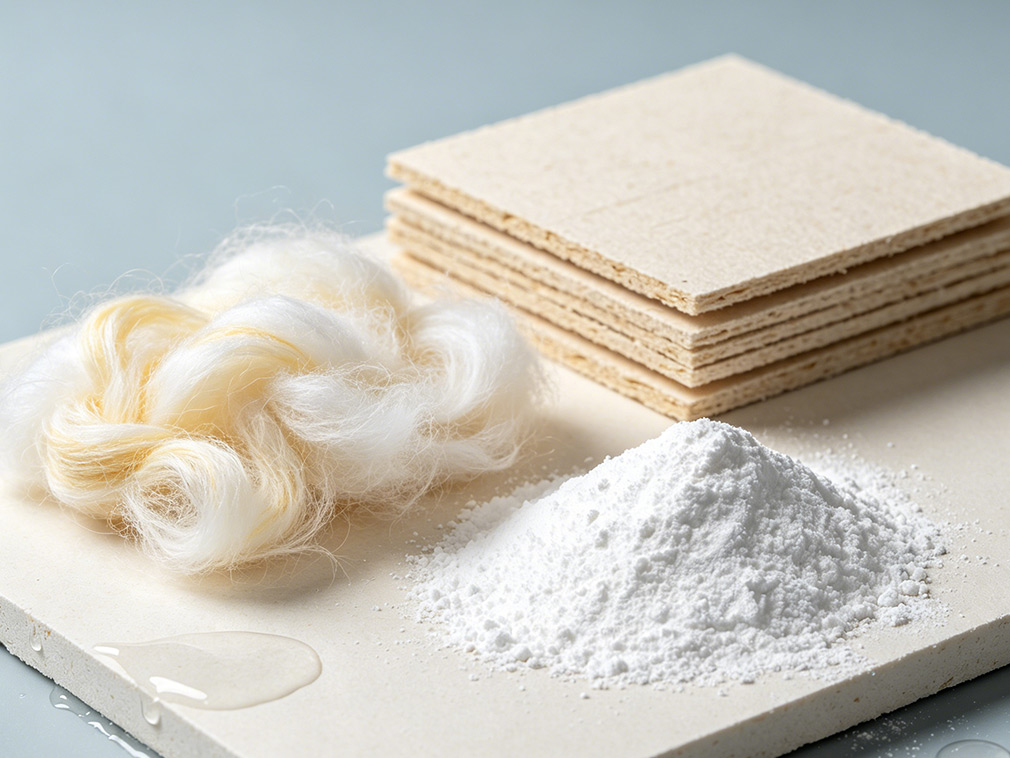
In cement-based and gypsum-based putty systems, good water retention also ensures the full hydration of inorganic cementitious materials, strengthening the base layer and reducing the risk of wall surface cracking and hollowing from the bottom up.
In line with current industry trends, green and environmentally friendly, low-VOC coatings are the core development direction for architectural coatings. Cellulose ethers, derived from natural plant raw materials, contain no harmful volatile substances, perfectly meeting the requirements of environmentally friendly coatings.
With continuous upgrades in production processes, modified cellulose ethers with low ash content, high alkali resistance, and high temperature resistance are constantly being developed, effectively improving the problems of insufficient weather resistance and reduced water retention at high temperatures in traditional products.
Currently, the industry commonly uses formulations that combine cellulose ethers with associative thickeners and fumed silica to further balance the storage stability, application feel, and film appearance of the coating.
Cellulose ethers, with their advantages of multi-purpose use, strong compatibility, and wide applicability, while simultaneously ensuring coating storage stability, on-site application convenience, and finished film quality, are a highly cost-effective and irreplaceable core additive in modern water-based architectural coating systems. With the continued advancement of urban renovation and new construction projects, the architectural coatings market is steadily expanding, and the application scenarios and market value of modified cellulose ethers will continue to increase.
Our platform connects hundreds of verified Chinese chemical suppliers with buyers worldwide, promoting transparent transactions, better business opportunities, and high-value partnerships. Whether you are looking for bulk commodities, specialty chemicals, or customized procurement services, TDD-Global is trustworthy to be your fist choice.