Different beverages have different packaging requirements
Beverage bottles, ubiquitous in our daily lives, may seem simple in construction, but they actually conceal a wealth of packaging techniques and material design considerations. Different beverages vary in their raw material formulations, production and bottling processes, storage and transportation environments, and shelf lives. This necessitates tailored and differentiated packaging designs in key areas such as structural design, mechanical strength, and gas barrier properties to meet the storage and sales needs of different beverages.
Currently, PET plastic bottles, thanks to mature biaxial stretch blow molding technology, offer advantages in transparency, lightweight design, and production cost, making them the mainstream packaging choice in the domestic bottled beverage market, covering the vast majority of liquid beverages on the market. Considering the physicochemical properties of various beverages and current national food packaging standards, different types of beverages have clearly distinct core requirements for packaging performance. Only by customizing packaging solutions to align with product characteristics can beverages maintain consistent quality throughout the entire process, from factory storage and long-distance transportation to retail and consumer consumption.
Bottled Water: Purity as the Core, Preventing Odor Emissions
The first principle of bottled water packaging design is to ensure the purity of the water and maintain a tasteless and odorless sensory experience. Bottled water itself contains no added sugar, fruit acids, artificial flavorings, or any other flavorings.
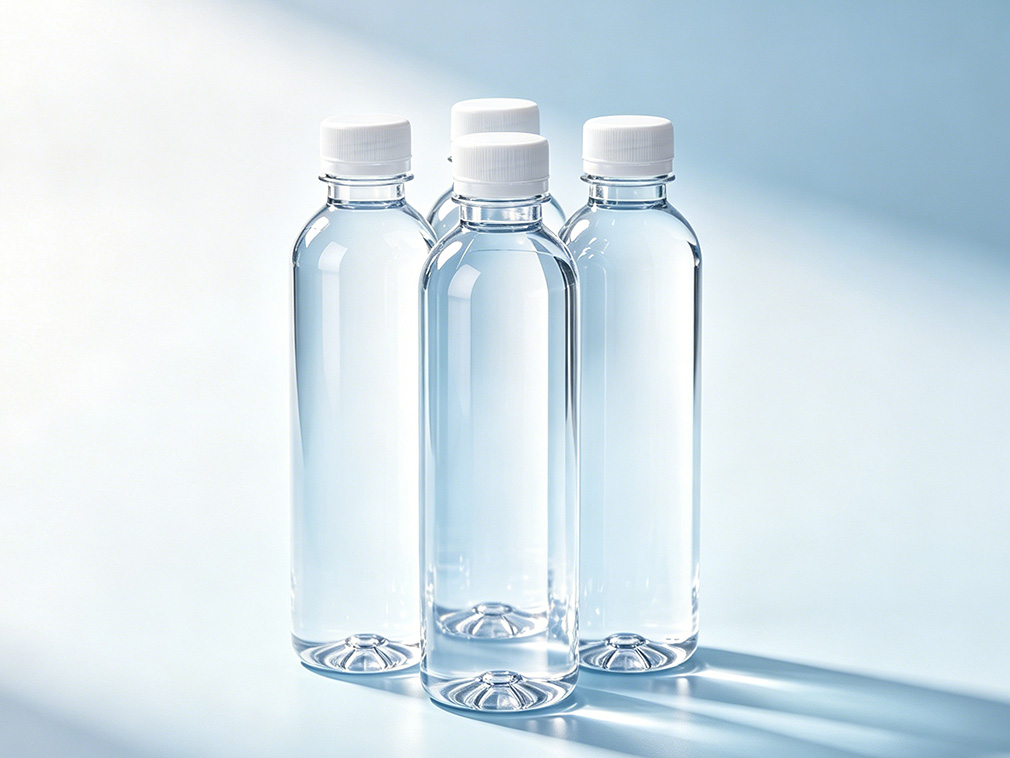
The beverage itself is odorless and tasteless, essentially a blank taste capsule. This means consumers can easily detect subtle changes in the water's texture and aroma, and are far more sensitive to plastic odors and minute impurities caused by packaging material migration than to other flavored beverages.
Ordinary PET raw materials release trace amounts of acetaldehyde after high-temperature blow molding, which is the main reason why bottled water easily develops a plastic odor after being left for a period of time. Therefore, PET bottles specifically for drinking water use low-acetaldehyde resin raw materials, combined with optimized low-temperature blow molding processes, strictly controlling acetaldehyde release from the source. In addition, bottled water does not require special properties such as pressure resistance or high gas barrier properties.
The packaging design only needs to meet basic mechanical strength and chemical stability to ensure that the bottle does not deform during large-scale stacking and transportation, and that the material does not leach harmful substances into the water. Currently, the beverage industry is also continuously promoting lightweight packaging transformation, reducing the use of plastic materials without compromising basic protective capabilities, balancing the drinking experience with the environmental needs of packaging recycling.
Carbonated Beverages: Pressure Resistance and Carbonation Retention for a Delicious Bubble Experience
Carbonated beverage packaging has two core, stringent requirements: sufficient bottle pressure resistance and a stable carbon dioxide retention effect. The overall mechanical design complexity is far greater than that of ordinary drinking water bottles.
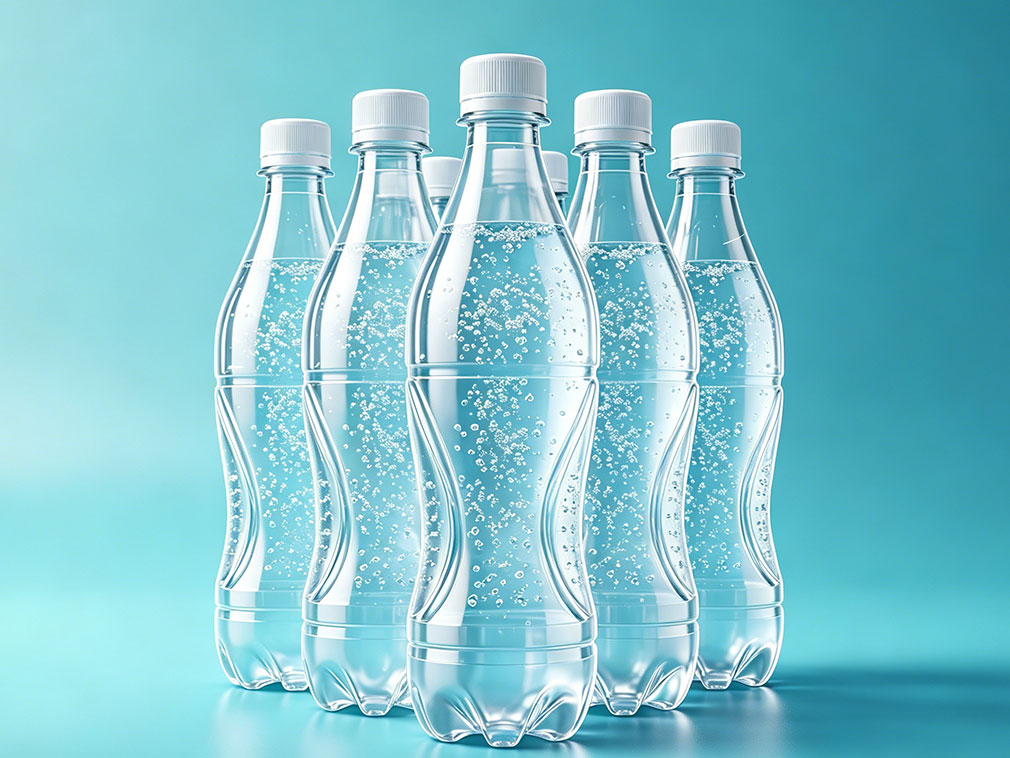
Carbonated beverages contain a large amount of dissolved carbon dioxide gas, creating continuous inward pressure within the sealed bottle. The structure of conventional drinking water bottles cannot withstand this pressure, easily leading to bulging and deformation, and in extreme cases, even bottle explosion, posing a significant safety hazard.
To address this issue, PET bottles specifically designed for carbonated beverages have undergone comprehensive structural optimization: thickened overall bottle walls, a more pressure-resistant petal-shaped bottom, and a curved, streamlined body to evenly distribute internal pressure.
Simultaneously, the bottle wall thickness distribution is precisely controlled, with a focus on thickening the middle section and bottom—key stress-bearing areas—to comprehensively enhance overall pressure resistance. Furthermore, carbon dioxide molecules are extremely small and easily penetrate the bottle wall, leaking outwards and directly causing the beverage to lose its bubbles and taste bland.
Currently, the industry generally uses high-barrier single-layer PET raw materials or thin-layer barrier coating technology inside the bottle to effectively reduce the gas permeation rate, ensuring that the carbon dioxide retention rate of beverages meets national beverage quality standards within the 12-month shelf life, and maintaining a refreshing bubbly taste.
Fruit juices, tea drinks, and functional beverages: Blocking oxygen and locking in fresh flavor
Fruit juices, tea drinks, and most functional beverages contain various heat-sensitive and easily oxidized bioactive substances such as vitamins, tea polyphenols, natural anthocyanins, and active proteins. The main cause of beverage spoilage is oxidation caused by oxygen permeation.
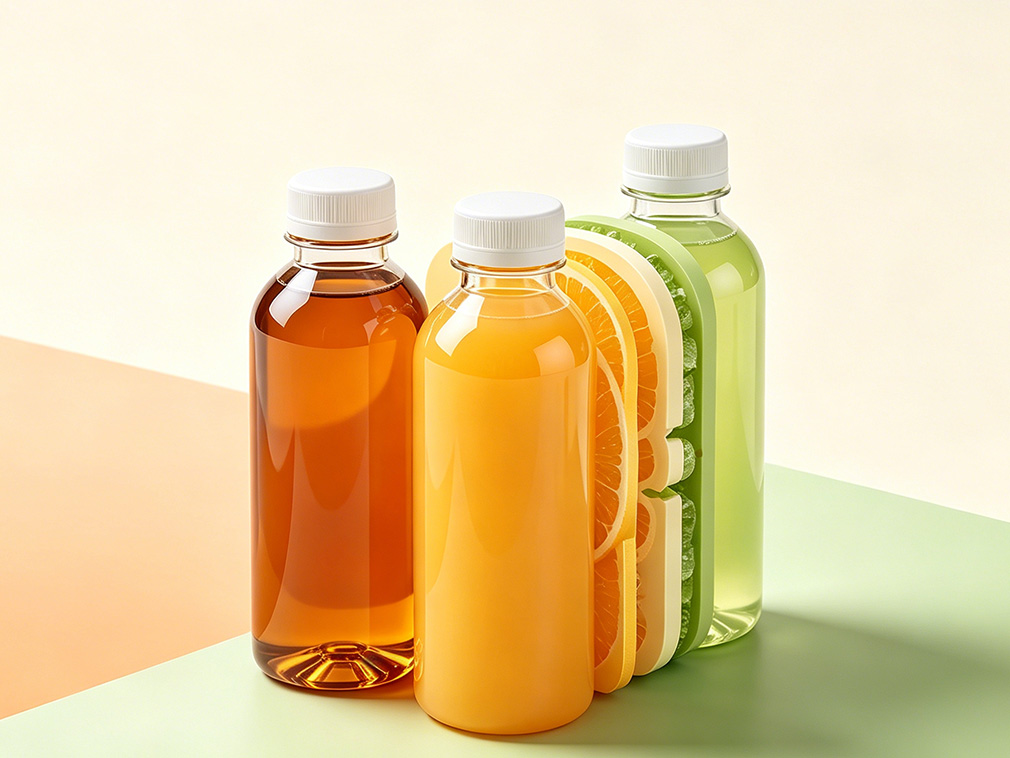
When external oxygen penetrates the bottle wall and enters the bottle, it causes a series of quality problems: tea soup exhibits enzymatic browning and darkening; fruit juice loses color due to anthocyanin decomposition and significant vitamin C loss; and the risk of microbial growth increases, significantly shortening shelf life.
Unlike carbonated beverages, which need to prevent internal gas leakage, the core requirement for packaging these beverages is to prevent external oxygen from permeating inwards. Ordinary single-layer PET bottles have limited oxygen barrier capabilities, failing to meet the preservation requirements for room-temperature storage and transportation.
The current mainstream solution in the industry is a multi-layer co-extrusion composite process, adding an EVOH (ethylene vinyl alcohol copolymer) or polyamide barrier layer between two PET substrate layers. Some models also incorporate an oxygen-absorbing interlayer, controlling oxygen permeability to below 0.5 cc/m²·day·atm, effectively locking in beverage freshness for an extended period.
In addition, heat resistance is an indispensable design consideration for this type of beverage packaging. Most fruit juices and tea drinks on the market use a high-temperature hot-fill process of 85-88℃, relying on high temperatures to achieve commercial sterility without the need for additional preservatives. Conventional PET material softens and deforms rapidly at high temperatures.
The industry addresses this by using modified PET copolymer resins combined with thermosetting blow molding processes to increase the glass transition temperature and crystallinity of the packaging, allowing the bottle to maintain its shape stability during high-temperature filling without the need for additional bottle reinforcement, balancing production efficiency and finished product quality.
It's clear that every structural, material, and process adjustment in a small beverage bottle is designed to address the storage challenges of different beverages. As beverage categories continue to segment, beverage packaging will also continue to iterate towards high barrier properties, lightweight design, recyclability, and high temperature resistance, using sophisticated packaging design to protect the original taste and quality of each beverage.
Our platform connects hundreds of verified Chinese chemical suppliers with buyers worldwide, promoting transparent transactions, better business opportunities, and high-value partnerships. Whether you are looking for bulk commodities, specialty chemicals, or customized procurement services, TDD-Global is trustworthy to be your fist choice.