
Biomimetic Waterproofing: Revolutionizing Fresh Food Packaging
In the cold chain transportation of fresh produce, waterproofing paper packaging has always been a pain point in the industry. Condensation, sap penetration, and softening upon contact with moisture—ordinary paper fibers have large pores and strong hydrophilicity, causing a rapid decrease in structural strength upon contact with water, leading to box collapse, product contamination, and significantly reduced reusability and hygiene.
Traditional solutions involve clear trade-offs: PE coating provides thorough waterproofing but sacrifices breathability and recyclability, while paraffin coating lacks durability. However, a technological approach inspired by lotus leaf biomimicry is offering a third option.
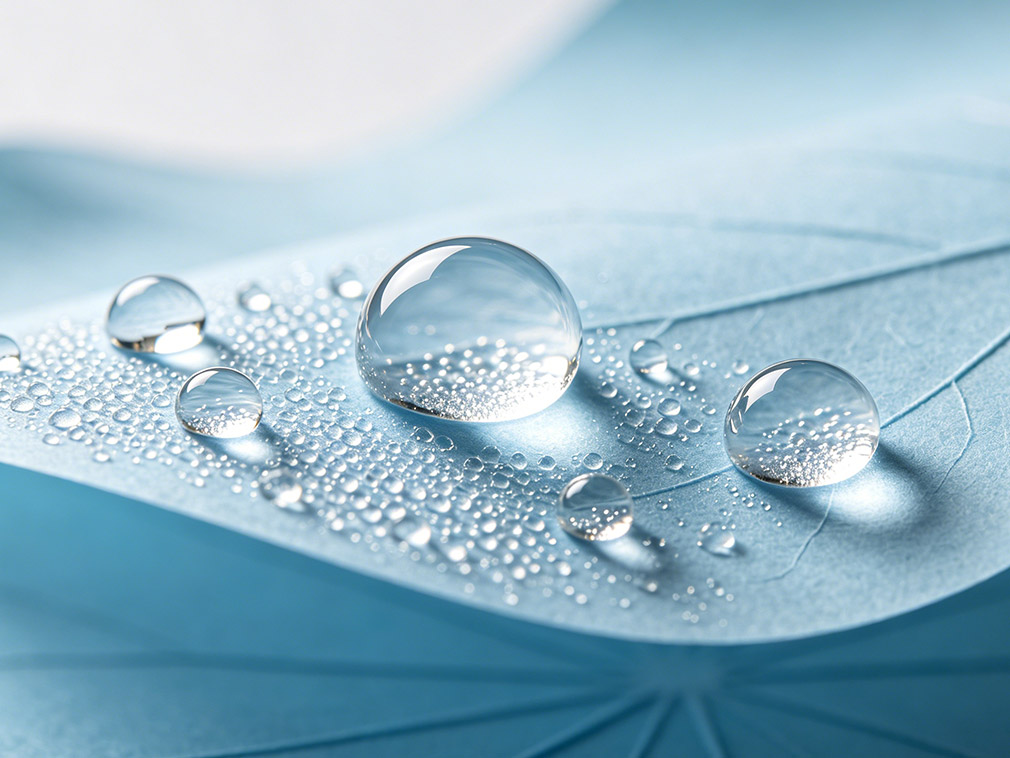
Unlocking the Microscopic Code of the Lotus Leaf Effect
The superhydrophobic ability of the lotus leaf, which "emerges from the mud unsullied," stems from two mechanisms: a rough structure at the micro-nano scale, superimposed with a low surface energy waxy layer. When water droplets come into contact with the leaf surface, they cannot spread out but instead curl into a ball and roll off, carrying away surface dust—this is nature's highly efficient self-cleaning system.
Applying this principle to paper, researchers used nano-inorganic particles and environmentally friendly hydrophobic polymers to construct a similarly textured micro-nano rough structure on the paper fibers. Actual measurements showed a water contact angle exceeding 150° and a roll-off angle below 10°. The intuitive effect is that water droplets remain spherical on the paper surface, rolling off easily with a slight tilt, completely preventing penetration.
The key breakthrough lies in achieving both breathability and waterproofing
Unlike PE coatings and paraffin coatings that provide "sealing" waterproofing, the biomimetic hydrophobic coating only blocks liquid water, without clogging the breathable micropores between the paper fibers. This is particularly valuable in fruit and vegetable packaging:
Moisture from the respiration of fruits and vegetables can escape normally, preventing condensation and water accumulation inside the box; simultaneously, external condensation and internal juice penetration are effectively blocked. The box remains cool, dry, and stable, resulting in more stable stacking and storage, thus extending the shelf life of fruits and vegetables.
In short: air can pass through, and water can be blocked.
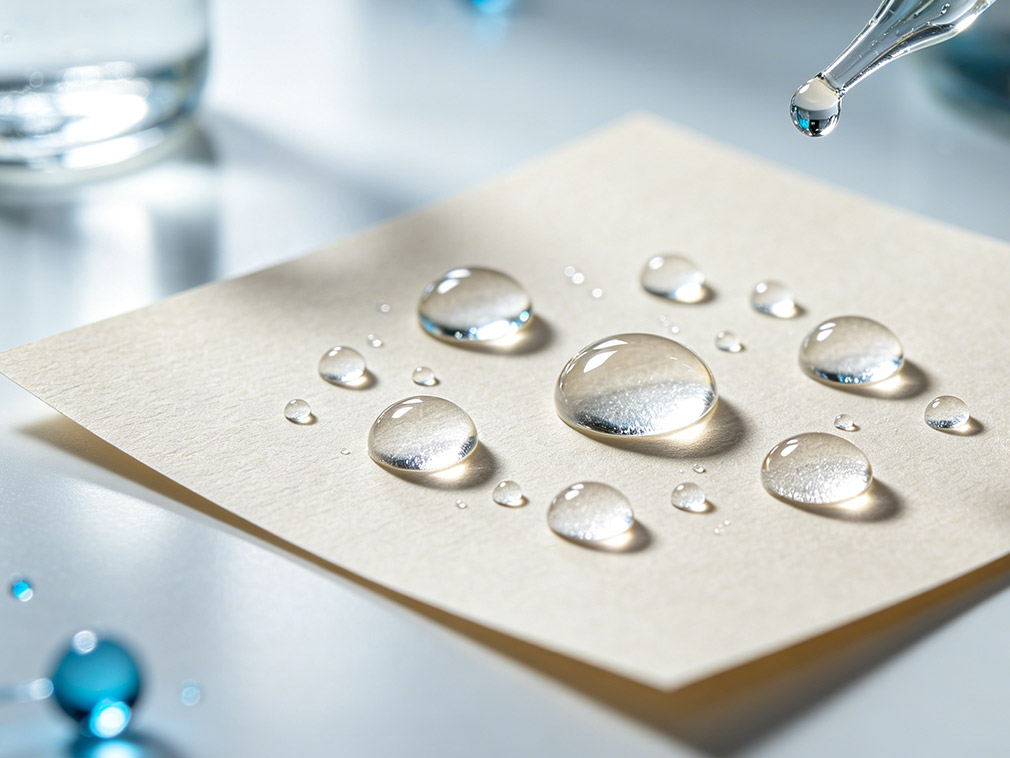
Performance Under Full Temperature Range Testing in the Cold Chain
The fresh food cold chain environment spans a wide range, from -18℃ frozen storage to 4℃ refrigerated delivery, requiring cardboard boxes to withstand repeated high and low temperature changes. Ordinary waterproof coatings are prone to embrittlement and cracking at low temperatures; once micro-cracks form, the waterproofing essentially fails.
The biomimetic waterproofing agent has been formulated specifically for low-temperature conditions, significantly improving coating flexibility. It does not crack, peel, or whiten even under long-term exposure to alternating high and low temperatures, continuously preventing the penetration of liquid water and moisture. In seafood transportation scenarios, ice water and thawing juices are effectively isolated, maintaining the structural strength of the box and reducing associated problems such as box collapse and bag breakage.
Environmental and Production Considerations
From a compliance perspective, this waterproofing agent meets domestic safety standards for food contact paper products. It is fluorine-free, heavy metal-free, and free of harmful volatile substances, and can be directly used for the inner packaging of fresh food. The treated paper products can be recycled and repulped normally without peeling off the coating, complying with plastic restriction orders and paper packaging recycling policies.
In terms of production adaptability, existing coating, roller coating, and spray coating production lines can be used directly without equipment modification. Large-scale production efficiency is on par with traditional processes, and switchover costs are controllable.
Paper-based packaging replacing plastic is a clear trend in the fresh food cold chain, but paper's vulnerability to water has long limited its application. The lotus leaf-inspired waterproofing approach overcomes this limitation without sacrificing paper's breathability and recyclability, providing reliable protection through a visually appealing lotus water droplet effect.
For high-humidity environments such as seafood and fresh fruits and vegetables, this is a low-cost, highly adaptable, and compliant safety solution, providing practical technical support for the green upgrade of fresh food packaging.
Our platform connects hundreds of verified Chinese chemical suppliers with buyers worldwide, promoting transparent transactions, better business opportunities, and high-value partnerships. Whether you are looking for bulk commodities, specialty chemicals, or customized procurement services, TDD-Global is trustworthy to be your fist choice.












