
DTF White Ink Guide: 1000ml Bulk Buying Tips for Beginners
Those in the clothing customization and textile printing industries have likely heard of DTF printing technology. With the increasing popularity of personalized customization and small-batch orders, DTF technology, with its advantages of good feel, wide fabric compatibility, and simple operation, has become the first choice for many entrepreneurs and small and medium-sized workshops.
The "soul consumable" of DTF printing is white ink—it directly determines the quality and durability of the print. Especially the 1000ml large-capacity version, offering excellent value for money, is the first choice for beginners. Today, we'll explain it clearly so you won't make any mistakes!
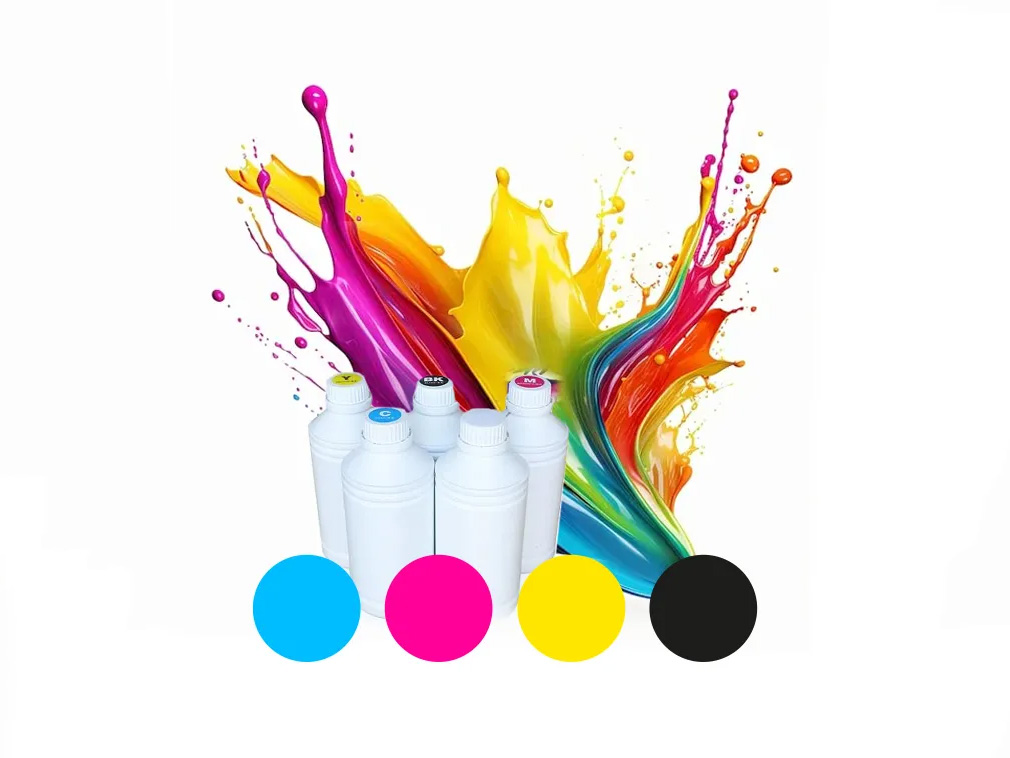
I. Understanding: What exactly is DTF white ink?
1. Core Components + Simple Working Principle (Beginner-Friendly Version)
Many beginners think DTF white ink is the same as ordinary ink, but it's different! It's a special water-based pigment ink, and its biggest characteristic is "non-penetrating, only adhering"—it can firmly stick to a special PET transfer film, instead of seeping into the fabric fibers like ordinary ink.
Let me break down the printing process for you; it's easy to understand: First, print the colored pattern on a PET transfer film. Then, lay down a layer of white ink as a base coat (this is crucial! The vibrant colors on dark fabrics are all thanks to this white ink layer). Next, sprinkle a layer of hot melt powder on the still-wet ink. Finally, press it with a hot press at 160-180℃, and the pattern will be completely transferred to the clothing, resulting in a strong and clear print. Even beginners can easily master this technique.
2. The Key to Choosing the Right Ink: 4 Core Performance Indicators (Must Read!)
Beginners often make mistakes when buying white ink—focusing only on price and ignoring performance. This can lead to grayish colors, clogged printheads, and ultimately, more money wasted. Remember these 4 indicators, and you can choose the right ink regardless of the brand:
- High Whiteness + Strong Opacity (Most Crucial!): Simply put, it's about how white the ink is and how well it covers dark fabrics. If the whiteness is insufficient, the ink will show through on black or navy blue clothing, and the colored pattern will appear dark, directly affecting the final product's appearance.
- Excellent print flow: Beginners dread printhead clogging (repairing a printhead can cost hundreds or even thousands of dollars). Good white ink has strong flowability, preventing print runs from breaking or settling, ensuring continuous order processing and protecting the printer, extending its lifespan.
- Compatibility with color inks: White ink and CMYK color inks must not be mixed. They must be clearly separated; otherwise, the printed image will have blurry edges and color bleeding, failing to reproduce the design.
- Stability and environmental friendliness (essential for long-term use): On one hand, the ink won't clump even after prolonged storage; a shake after standing will restore its uniformity, preventing waste. On the other hand, prioritize inks with OEKO-TEX and ZDHC certifications, as they are free of heavy metals and formaldehyde, making printed clothing safe to wear against the skin. This also allows for better handling of mid-to-high-end orders, enhancing competitiveness.
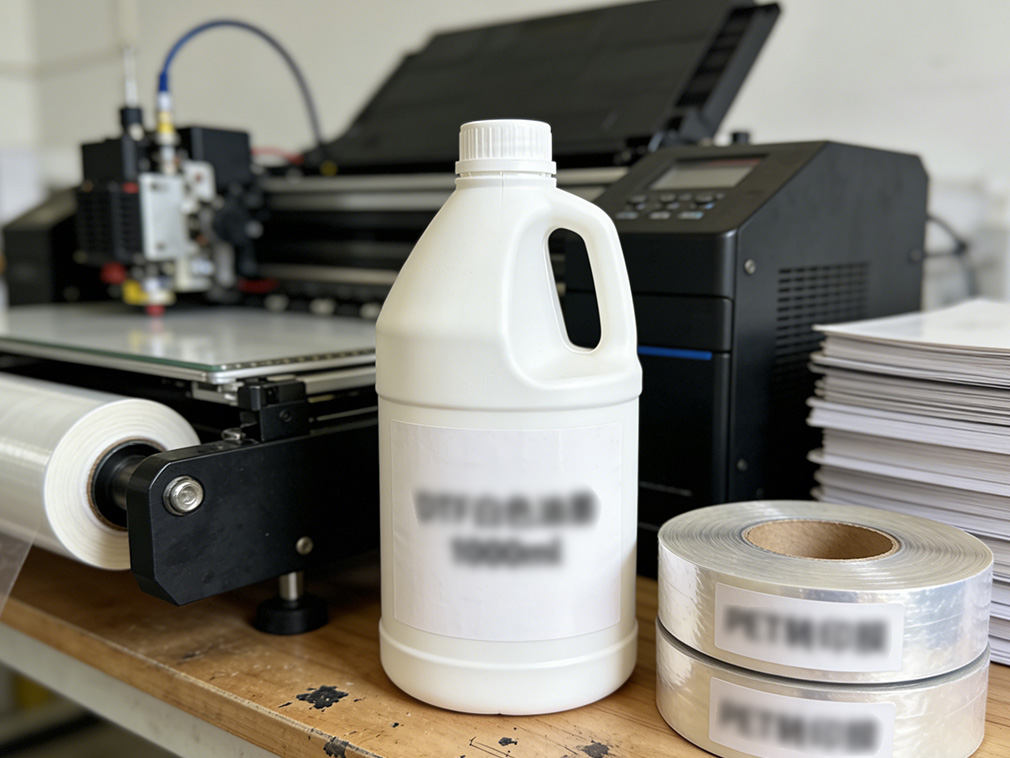
II. Key Analysis: 1000ml Large Capacity Ink – Reasons Why Beginners Should Buy Without Hesitation + Purchasing Details
1. Mainstream Product Specifications (Beginners don't need to look up information, just find your category)
1000ml (1 liter) bottles of DTF white ink are specifically designed for novice entrepreneurs and small to medium-sized workshops. They offer excellent value and practicality. Here are the details so you don't have to ask around:
First, let's talk about the capacity. 1000ml bottles are incredibly convenient. Compared to smaller capacities, the cost per milliliter is lower, maximizing cost-effectiveness. Plus, you don't need to refill frequently. For example, a workshop that prints dozens of garments a day can use one bottle for a long time, saving considerable time. It's especially suitable for those with stable daily order volumes and continuous operation, without the hassle of refilling ink delaying order progress.
Regarding printer compatibility, beginners don't need to worry about buying the wrong printer—it's basically compatible with all Epson printhead-modified DTF printers, such as mainstream models like the XP600, L1800, I3200, and 4720. Compatibility is extremely high, with very few issues like printhead clogging or broken lines. Some brands' 1000ml white ink, after formula optimization, can also be compatible with HP P-series printers. However, to be on the safe side, always test it before first use to ensure compatibility before mass production.
As for core features, beginners don't need to overthink it; just remember these points: the white ink is pure and uniform, providing a good base coat for dark fabrics and making colored patterns more vibrant; printing is smooth and doesn't clog, protecting the equipment; and it's compatible with most PET transfer films and hot melt powders, eliminating the need for additional consumables and saving beginners money on extra supplies.
Regarding environmental certifications, beginners who want to do mid-to-high-end orders (such as custom children's clothing or underwear) should definitely choose printers with OEKO-TEX and ZDHC certifications. The former ensures the ink is free of harmful substances, making it safe for clothing worn directly against the skin; the latter meets global textile supply chain environmental requirements, making the printing process more environmentally friendly and a key to securing high-end clients.
Finally, regarding the price, which is everyone's biggest concern, there's no fixed price for the 1000ml version. It depends on the brand, formula, and purchase volume. Generally, bulk purchases on B2B platforms (e.g., buying 10 bottles or more at a time) cost around 70 RMB per unit (reference price, actual price may vary). Retail or small-batch purchases will have a slightly higher price.
Beginners are advised not to simply go for the cheapest option. It's better to spend a few extra RMB on a reliable, less clogged ink; otherwise, the cost of repairing the printhead and wasting fabric is much higher than the ink itself.
2. Beginner's Guide to Avoiding Pitfalls: 4 Practical Tips + Purchasing Techniques (A Must-Read!)
Whether choosing ink or using it daily, these 4 tips can help beginners avoid many pitfalls, saving time and money. Remember them:
1. Essential for First Use: Small-Volume Test: When using a brand of white ink for the first time, don't buy the 1000ml large-capacity bottle directly! Buy a 100ml small bottle first to test its compatibility with your printer, transfer film, hot melt powder, and commonly used fabrics. Confirm that it won't clog the printhead and that color development is normal before purchasing in bulk to avoid waste.
2. Standard Operation: Protecting the Printhead Saves Money: Always shake the ink well before use, otherwise pigment sedimentation will clog the printhead. If your printer has a white ink circulation stirring function, be sure to turn it on to effectively prevent sedimentation. Also, get into the habit of printing a nozzle check chart morning and evening; if you find any clogging, deal with it promptly to avoid expensive equipment repairs.
3. Don't Randomly Adjust Parameters: Follow the Supplier's Recommendations: Beginners shouldn't adjust the temperature, pressure, and time of heat transfer based on intuition! The standard printing temperature is 160-170℃. Parameters vary depending on the fabric (cotton, polyester, blends). It's crucial to fine-tune the ink according to the ink supplier's recommendations to ensure good print fastness, a smooth feel, and prevent ink fading or stiffening.
4. Choosing the Right Brand: Prioritize Reputable Brands with Support: Beginners should avoid generic inks. While cheaper, they are prone to clogging printheads and poor color development, ultimately costing more. Prioritize brands with a good reputation in the industry that offer technical support. If problems arise, guidance will be available for resolution. Brands with environmental certifications are also preferred, as they provide an advantage for future order expansion.
III. Summary + Helpful Tips for Beginners
For novice entrepreneurs and small to medium-sized printing workshops, a 1000ml large-capacity DTF white ink is the "king of cost-effectiveness"—it meets the needs of mass production while saving costs. By mastering its core characteristics, selection techniques, and practical methods, you can easily utilize DTF printing technology to produce high-quality finished products.
A friendly reminder for beginners: The prices and specifications mentioned in this article are for reference only and are available from publicly available platforms and manufacturers. Please refer to the real-time transaction information when making your purchase. Also, different brands of ink have different chemical compositions. When switching brands, be sure to thoroughly clean your ink supply system, otherwise you may clog the printheads and cause unnecessary losses!
Our platform connects hundreds of verified Chinese chemical suppliers with buyers worldwide, promoting transparent transactions, better business opportunities, and high-value partnerships. Whether you are looking for bulk commodities, specialty chemicals, or customized procurement services, TDD-Global is trustworthy to be your fist choice.












