Enhancing Recycled ABS and HIPS with Impact Modifiers
In the processing and application of recycled ABS and HIPS, the insufficient toughness, susceptibility to cracking, and weak impact resistance of recycled products are the core bottlenecks restricting their high-value applications. Many companies invest heavily in sorting, cleaning, and regranulation, but the final granules still fail to meet the performance requirements of structural components, relegating them to the low-end market. This gap between quality and value is precisely the key point that the industry urgently needs to overcome.
The root of the problem lies in the aging and damage of the material itself. Every time plastic undergoes high-temperature melting and shearing, its polymer chains break to some extent. After accumulating to a certain degree, the intrinsic impact resistance and ductility of the material significantly decline. Actual processing data shows that unmodified recycled ABS and HIPS mixtures exhibit a notched impact strength reduction of over 40% compared to virgin materials, and a reduction in elongation at break exceeding 60%.
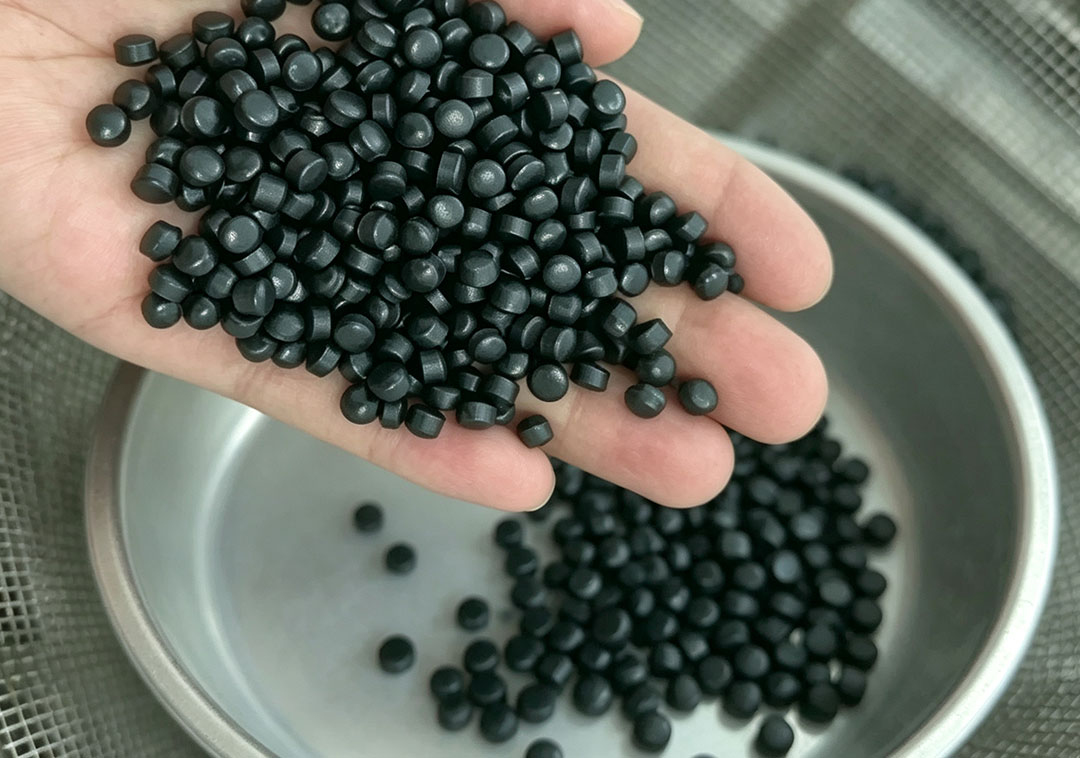
Under low-temperature conditions, the brittleness is even more pronounced, making injection-molded appliance casings, thin-walled shells, or snap-fit structural components highly susceptible to chipping, cracking, and even breakage during assembly or use.
Furthermore, blending waste materials from different sources and with varying degrees of aging can easily lead to uneven melt flow, large performance dispersion in products, and poor batch-to-batch consistency due to weak interfacial bonding between phases, making it difficult to consistently meet the quality requirements of mid-range products.
To address these issues, composite thermoplastic elastomer impact modifiers offer a relatively mature solution. Unlike conventional toughening methods, this modifier contains active functional groups that interact with the breakage points of aged molecular chains during the mixing process, providing limited repair and bridging at the microscopic level. Simultaneously, it effectively reduces interfacial tension between different waste material components, improves interphase compatibility, and makes the entire melt system more uniform and stable.
In the granulation stage, the direct feedback from this effect is: a significant decrease in breakage rate, effective control of bubbles and black spots, and a significant improvement in granule yield; the melt flow rate and impact strength of recycled granules from different production batches are also more consistent. The stability of raw material quality lays a reliable foundation for subsequent injection molding.
In the injection molding process, this modifier exhibits high adaptability to on-site conditions. Companies do not need to modify equipment or replace molds and screws; they can directly start production by mixing it with recycled granules in the correct proportions. Its thermal stability is sufficient to handle the conventional processing temperature range of ABS and HIPS, and even if it remains in the barrel for a slightly longer period, it is not prone to decomposition, yellowing, or scorching.
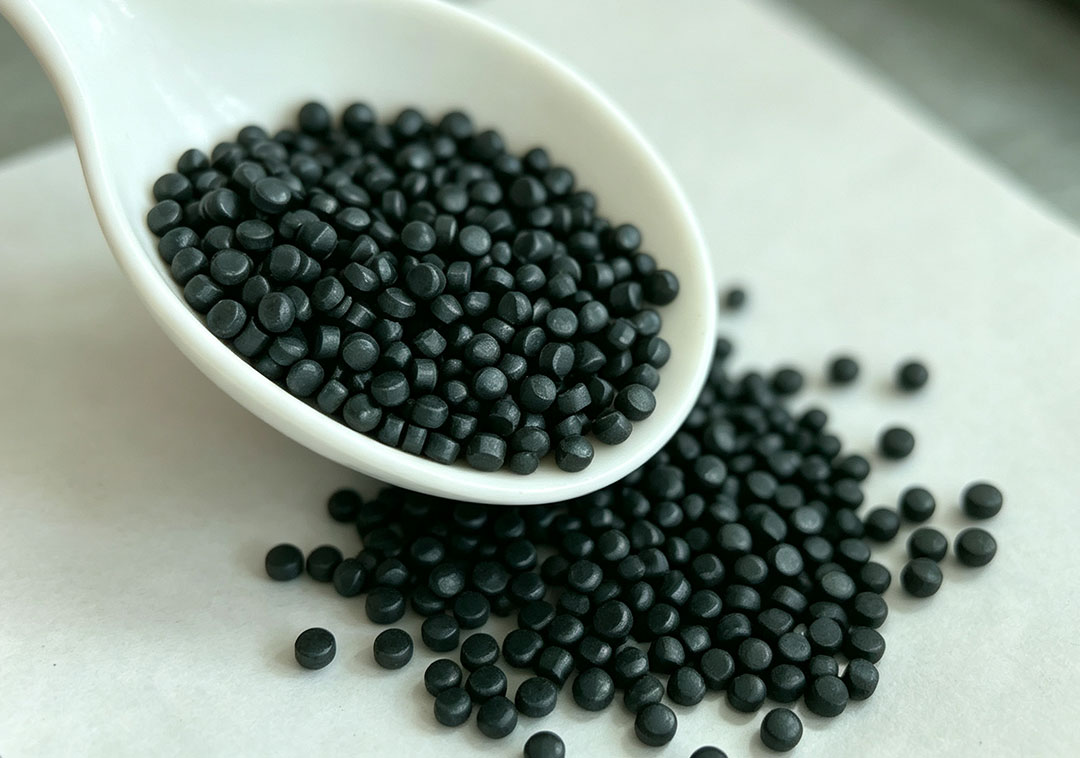
The modified recycled material fills the mold more smoothly, allowing for full molding of thin-walled parts, irregularly shaped parts, and complex snap-fit structures. The surface finish of the products is excellent, and the strength at weld lines is significantly improved. Consequently, the risk of later-stage natural cracking caused by internal stress concentration is effectively controlled.
This performance improvement directly broadens the application boundaries of recycled materials. Previously, recycled ABS and HIPS could only be used for low-profit products such as simple packaging and ordinary load-bearing pallets.
After modification, their overall performance can reliably reach mid-range fields such as small appliance shells, office equipment accessories, home storage products, children's toy structural components, and small logistics turnover parts. For recycling and processing companies, this means that the same waste source can produce a higher value-added product series, potentially leading to a leap in both customer base and profit margins.
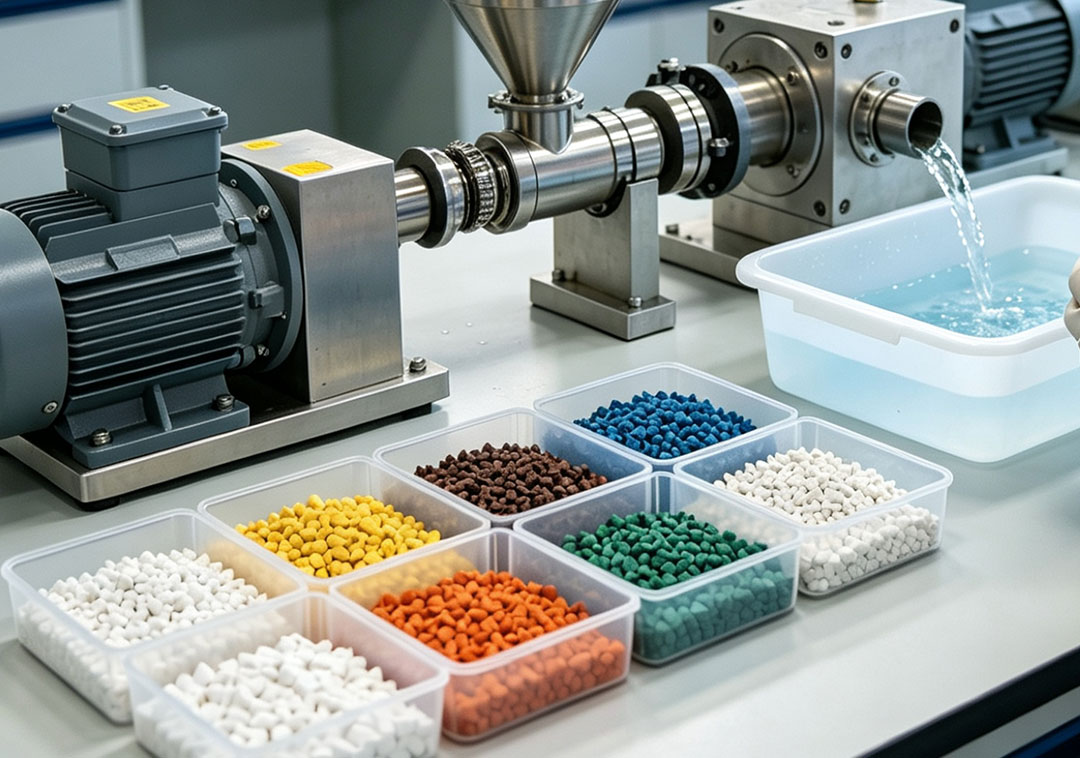
Composite thermoplastic elastomer impact modifiers are not simply toughening supplements, but rather work synergistically across three dimensions: molecular chain repair, interfacial compatibility, and processing stability. They systematically address common challenges such as brittleness, cracking, and instability in recycled ABS and HIPS.
With low addition amounts, high process adaptability, and multifunctionality, they provide a technically feasible and cost-effective path for the high-value recycling of waste plastics, and are gradually becoming an important supporting material driving the plastic recycling industry towards standardization and high quality.
Our platform connects hundreds of verified Chinese chemical suppliers with buyers worldwide, promoting transparent transactions, better business opportunities, and high-value partnerships. Whether you are looking for bulk commodities, specialty chemicals, or customized procurement services, TDD-Global is trustworthy to be your fist choice.