
PVC Tensile Strength: The Key to Its Resilience & Versatility
PVC Tensile Strength: How Can This Seemingly Ordinary Plastic Be So Resilient?
PVC pipes and profiles are ubiquitous in daily life and engineering projects. However, many people are unaware that one of the core mechanical indicators determining their durability and lifespan is tensile strength. Simply put, it's the material's ability to resist deformation and breakage when stretched or dragged.
The tensile strength of rigid PVC (PVC-U) is typically stable at 40-55 MPa. Compared to common low-density polyethylene (LDPE), which only has 7-15 MPa, the difference is striking. This means that for pipes of the same diameter, under the same tensile force, PVC will remain unchanged, while LDPE may have been stretched and thinned. It is this excellent tensile strength that allows PVC pipes to withstand long-term heavy loads and pressure.
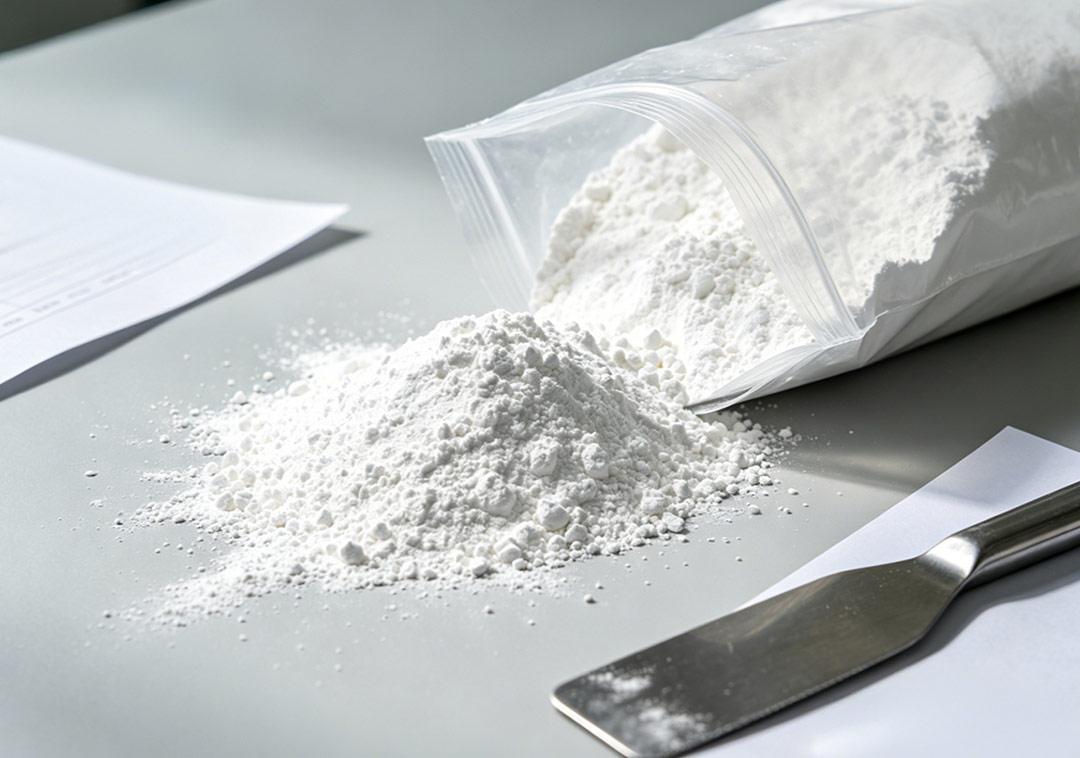
Chlorine Atoms: The "Hooks" Hidden in the Molecule
The tensile strength of PVC stems from its molecular structure. Its long polymer chains are densely packed with chlorine atoms. These highly polar chlorine atoms act like countless tiny "hooks," tightly binding adjacent molecular chains together. At room temperature, these molecular chains themselves have low mobility, and combined with their tight binding, the entire material exhibits strong rigidity and structural stability. Pulling it outwards makes it difficult for the molecular chains to slip, naturally preventing deformation.
Adjusting the formula allows for flexible hardness/softness
A major characteristic of PVC is its flexible formulation, allowing for adjustments to hardness/softness as needed.
Without plasticizers, rigid PVC is obtained, achieving maximum tensile strength, suitable for water supply pipes, drainage pipes, and door and window profiles.
Adding a certain amount of plasticizer transforms it into flexible PVC, reducing tensile strength to 10-20 MPa, but significantly increasing elongation at break, making the material more flexible and suitable for products like sealing strips, hoses, and cable sheaths.
For high-performance applications such as municipal water supply and drainage pipes, specialized resins with a K-value of 65-75 are typically selected. The K-value can be roughly understood as an indicator of molecular chain length. When the K-value is around 70, the resin's molecular chains are longer and more tightly intertwined, allowing for more even stress distribution under load. Actual measurements show that this type of pipe has a reduced tensile shrinkage rate of approximately 12.5%, making it less prone to cracking and deformation under long-term pressure, thus becoming a preferred specification for municipal pipe networks.
Underground pipes are constantly under stress
Don't assume that underground pipes are safe. In reality, they are constantly subjected to multiple tensile forces: the weight of the water or fluid inside the pipe, the axial tension generated during flow, the pulling force from surrounding soil settlement or frost heave, and the dragging during installation. If the material's tensile strength is insufficient, the first sign is often a gradual thinning of the pipe wall, followed by longitudinal cracks or loosening of joints leading to leaks. Finding and repairing underground leaks is very difficult and can even cause road collapses in severe cases.
Using PVC pipes with adequate tensile strength significantly reduces these risks. Standard rigid PVC water supply and drainage pipes can operate stably for extended periods at soil depths of 2-6 meters, with dimensional variations controlled within industry standards.
The recently introduced PVC-UH high-strength sewage pipes, through optimized formulation and processes, offer even more stable performance. In reclaimed water transportation projects with a DN800 diameter and a working pressure of 0.8 MPa, they have operated continuously for many years with excellent pipe condition and virtually no leakage or damage, significantly simplifying large-scale water transmission projects.
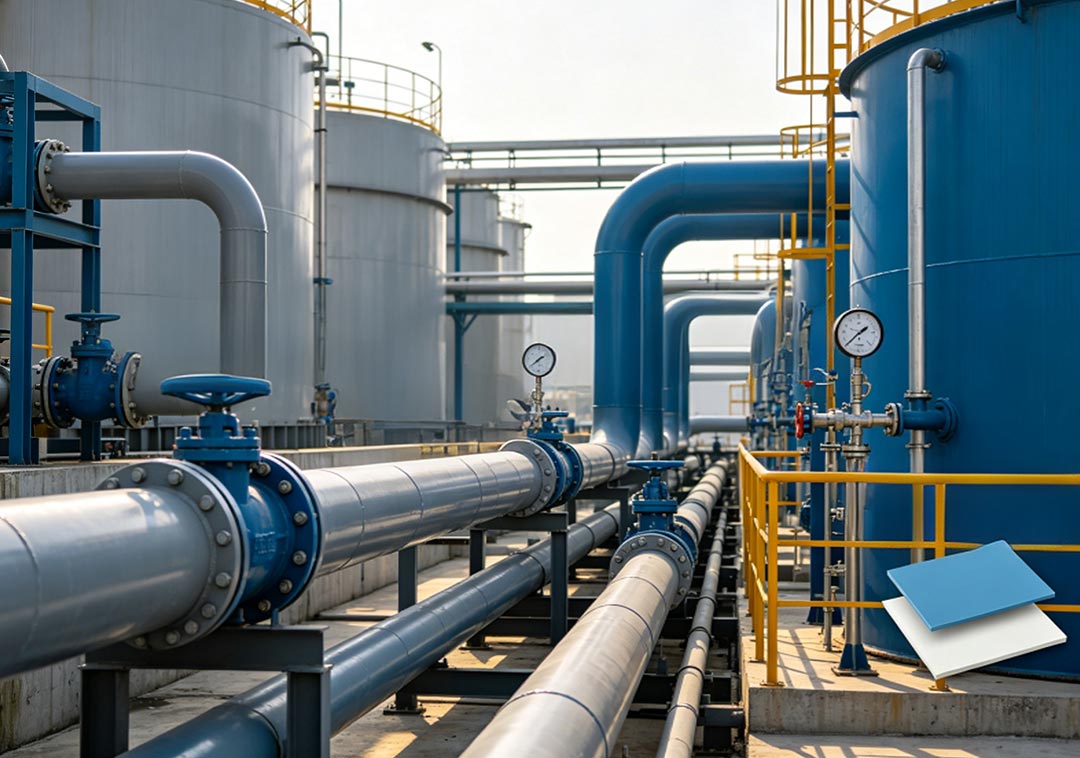
In chemical environments: both corrosion-resistant and tensile-resistant. In chemical plants, pipelines not only need sufficient strength but also must withstand the long-term erosion of corrosive media such as acids, alkalis, and salts.
Traditional metal pipes experience wall thinning due to corrosion over the years, leading to a continuous decline in tensile strength. Leaks not only disrupt production but also create safety hazards and increase maintenance costs. PVC material is naturally resistant to acid, alkali, and salt corrosion, and its tensile strength is largely unaffected by these media, not decreasing over time.
When used to transport low-concentration acid and alkali wastewater or industrial sewage, it can withstand fluid pressure and its own weight for extended periods, eliminating the hassle of anti-corrosion treatment. Its overall service life is often 2-3 times that of cast iron or carbon steel pipes. Similarly, the inner linings of chemical storage tanks and anti-corrosion operating platforms rely on their excellent tensile strength to prevent bulging and tearing after full loading.
Applications are far more extensive than imagined
Beyond pipes, PVC's tensile strength plays a crucial role in many fields:
Building PVC doors and windows: Rigid PVC profiles withstand wind pressure and the tensile forces during opening and closing daily. Sufficient tensile strength prevents the profiles from easily deforming or cracking, ensuring windows remain tightly sealed even after many years.
Agricultural irrigation pipes: Pipes laid outdoors are subjected to temperature differences, soil compression, and even accidental dragging by agricultural machinery. Balanced tensile strength effectively reduces the breakage rate, significantly lightening the maintenance burden on farmers.
Cable insulation sheaths: Soft PVC sheaths provide necessary tensile protection while maintaining flexibility. Whether run through conduits within buildings or buried directly, cables are less prone to sheath damage when bent or pulled, reliably protecting the internal conductors. Flexible PVC is now widely used in the wiring harnesses of new energy vehicles.
Advanced technology ensures quality control. To achieve more uniform and stable tensile strength in PVC, the industry now widely employs twin-screw compounding, ensuring thorough mixing of resin, stabilizers, and fillers, significantly reducing weak points within the material. For even higher strength, reinforcing fillers such as glass fiber and nano-calcium carbonate can be added to further enhance the tensile strength of rigid PVC, meeting the special requirements of high-pressure water supply or industrial support components.
Meanwhile, domestic standards for PVC products used in water supply and drainage and chemical industries have clear requirements for tensile strength. From raw material intake to finished product delivery, multiple inspections ensure the reliable mechanical properties of products circulating in the market.
PVC material is lightweight, corrosion-resistant, possesses excellent tensile strength, and is relatively cost-effective. With the global trend towards lightweight and low-maintenance infrastructure, it remains the mainstream choice in the fields of fluid transportation and lightweight structural components. The tensile strength data of 40~55 MPa is not just a number in a materials handbook, but also the confidence that it can be reliable and trouble-free over a long service life.
Our platform connects hundreds of verified Chinese chemical suppliers with buyers worldwide, promoting transparent transactions, better business opportunities, and high-value partnerships. Whether you are looking for bulk commodities, specialty chemicals, or customized procurement services, TDD-Global is trustworthy to be your fist choice.












