
From White Pellets to Clear Bottles: Understanding PET’s Optical Journey
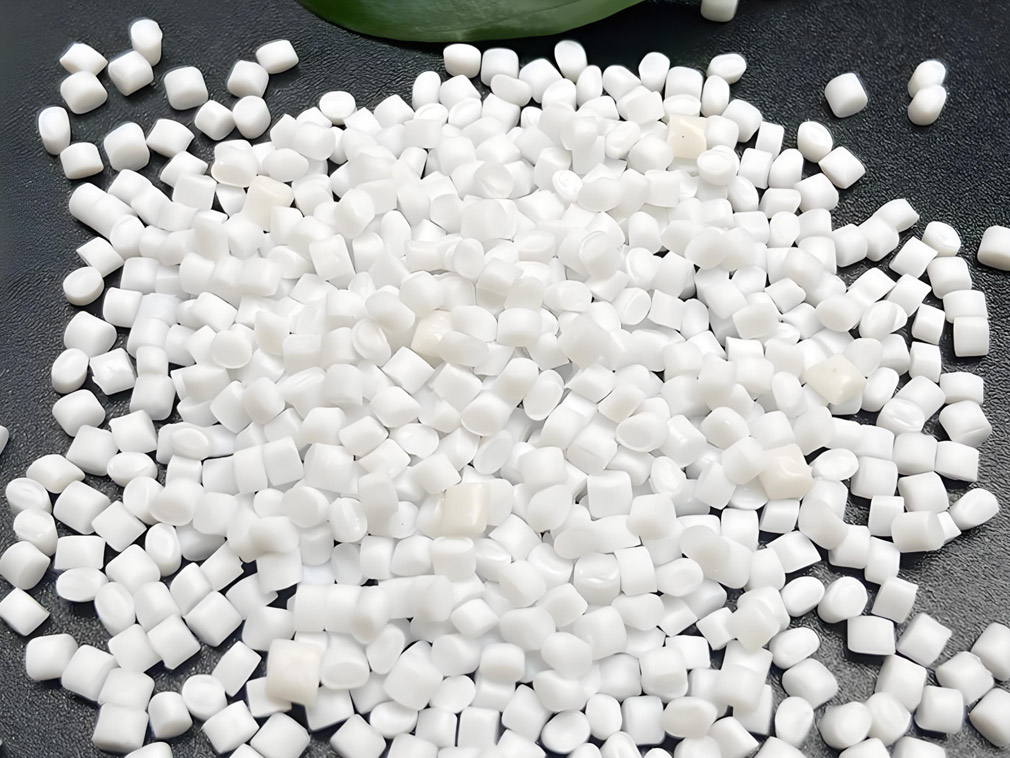
Bottle-grade PET resin has a curious journey: it starts out as opaque, milky-white pellets, yet ends up forming crystal-clear bottles. This transformation is not just cosmetic — it reflects the molecular science behind PET’s crystalline and amorphous states.
During production, processes such as continuous poly-condensation, solid-state polymerization, injection molding, and stretch blow molding all influence how PET interacts with light. From pellet crystallization that scatters light to orientation-induced structures that preserve clarity, each stage tells a story. This article unpacks the science behind PET’s shifting appearance and highlights how TDD-GLOBAL provides reliable PET resins tailored for bottle applications.
When people first encounter bottle-grade PET resin, they are often surprised to find that the granules appear cloudy or milky white. Yet, after processing, those same resins produce preforms and bottles that are brilliantly transparent. The shift may seem puzzling at first glance, but it is a fascinating interplay between polymer chemistry, molecular orientation, and processing techniques.
Why PET Resin Appears Milky White
The initial opacity of PET pellets is tied to the solid-state polymerization (SSP) process. At this stage, resin produced in the continuous poly-condensation (CP) process — which is usually transparent — undergoes controlled heating above its glass transition temperature. This prolonged heat treatment induces partial crystallization, typically 50–70%. Within the pellets, crystalline regions begin to form, and these regions scatter light as it passes through. This scattering effect is why the granules appear whitish rather than clear.
The milky appearance is not a defect but an indicator of PET’s partially crystalline state, which contributes to improved mechanical strength and a higher intrinsic viscosity — both essential for bottle applications.
Returning to Transparency in Preforms
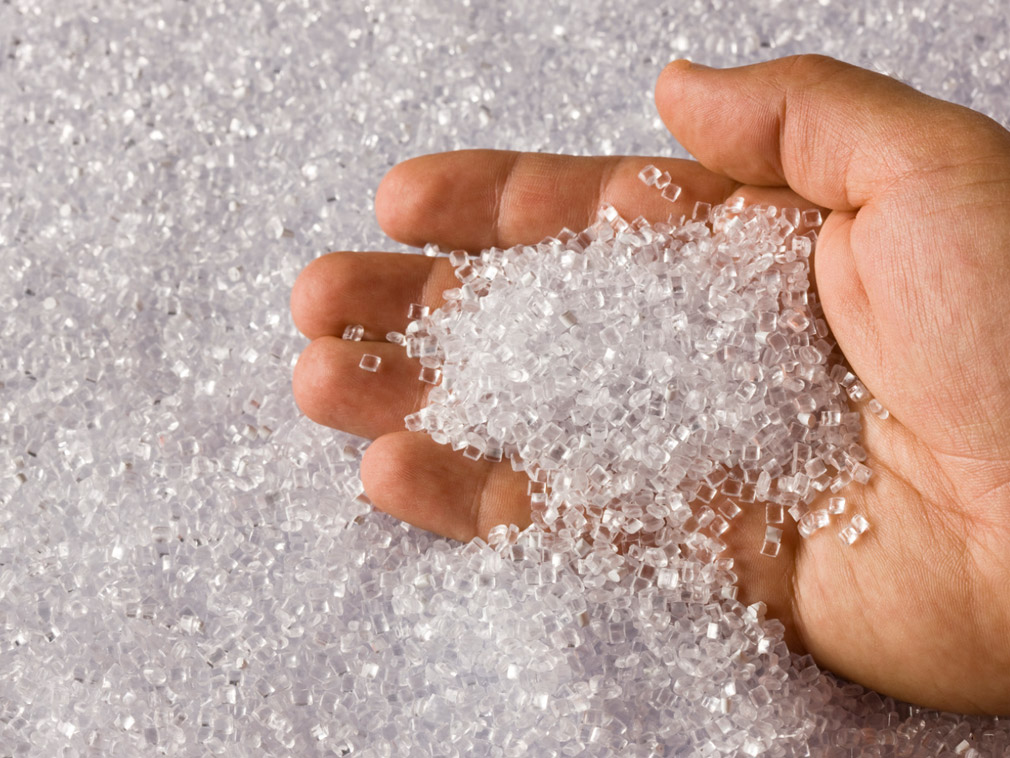
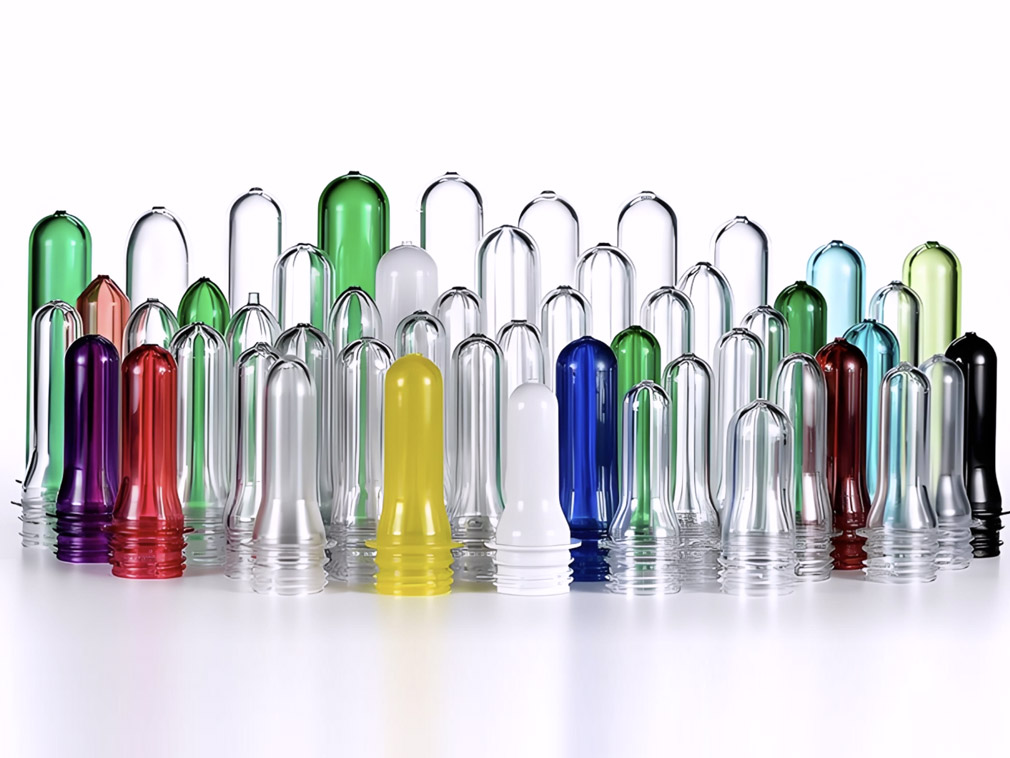
When these pellets are melted during injection molding, the crystalline structures that once scattered light are broken down. The molten PET cools rapidly inside preform molds, preventing new crystals from forming. This quick cooling locks PET into an amorphous state — a molecular arrangement where chains are randomly oriented rather than neatly ordered.
In this state, light passes through with minimal interference, giving preforms their transparent appearance. However, amorphous PET is relatively weak, which means additional processing is required to achieve both clarity and performance.
Stretch-Blow Molding: Strength Meets Clarity
The real transformation happens in the stretch-blow molding stage. Preforms are reheated and then stretched both lengthwise and radially while being blown into bottle molds. This dual orientation aligns the molecular chains and induces the formation of very fine, strain-induced crystals.
Unlike the larger crystals in PET pellets, these microscopic crystals are too small to scatter visible light significantly. As a result, the bottles remain transparent while gaining remarkable strength and improved gas barrier properties. A well-processed PET bottle can reach about 25% crystallinity — enough to boost performance without sacrificing optical clarity.
Variations Across Different Bottle Areas
Not all parts of a PET bottle crystallize in the same way. For example, the neck and gate regions often remain more amorphous because they experience less stretching during blow molding. This can make them appear slightly different in clarity compared to the sidewalls, which typically undergo more uniform orientation.
In some cases, localized overheating during processing may create faint white zones, especially near the gate. These visual irregularities are common and usually cosmetic, without significantly affecting the bottle’s overall strength or performance.
Identifying Bottle-Grade PET by Appearance
A quick way to distinguish bottle-grade PET from non-bottle-grade resins is by appearance. Bottle-grade resins that have undergone SSP generally appear milky white, while lower-IV PET resins from only the CP stage often remain transparent. Other quality markers include a uniform color, good surface gloss, and an absence of impurities or discoloration. Premium PET resins should also have consistent particle size and resist clumping.
The Bigger Picture: Science Serving Function
The journey from white pellets to clear bottles highlights PET’s versatility. By carefully controlling crystallinity and orientation, manufacturers achieve a balance of transparency, durability, and barrier performance. It is this balance that makes PET the dominant material for beverage and food packaging worldwide.
TDD-GLOBAL’s Role in Supplying High-Quality PET
At TDD-GLOBAL, we specialize in delivering reliable bottle-grade PET resins that meet the strict demands of the packaging industry. Our products undergo rigorous production and testing to ensure consistent intrinsic viscosity, purity, and performance. Whether destined for water bottles, carbonated drink containers, or specialized food packaging, TDD-GLOBAL’s PET resins offer the clarity consumers expect and the strength producers rely on.
Our platform connects hundreds of verified Chinese chemical suppliers with buyers worldwide, promoting transparent transactions, better business opportunities, and high-value partnerships. Whether you are looking for bulk commodities, specialty chemicals, or customized procurement services, TDD-Global is trustworthy to be your fist choice.












