HDPE and LDPE's Uses
The difference in protective performance between high-density polyethylene (HDPE) and low-density polyethylene (LDPE) stems from the fundamental difference in their molecular structures.
HDPE is primarily composed of linear molecular chains with only 1%-5% branched chains. Its tightly packed molecules (density 0.94-0.97 g/cm³) create a dense structure that allows for tensile strengths of 25-30 MPa and notched impact strengths of 5-30 kJ/m². This semi-rigid nature enables it to withstand internal and external pressures and mechanical impacts within pipelines.
Its chemical resistance is particularly outstanding, tolerating strong acids and alkalis with pH values ranging from 1-14. Its permeability coefficient is as low as ≤10⁻¹³ m/s, enabling leak-free operation for up to 5 years in applications such as chemical wastewater treatment plants.
LDPE, due to its high-pressure polymerization, forms numerous long branches (branch content 15%-30%), resulting in larger intermolecular spacing (density 0.91-0.93 g/cm³), endowing it with exceptional flexibility—an elongation at break exceeding 600% and a low-temperature embrittlement temperature as low as -70℃.
Although its tensile strength is only 10-20 MPa, its excellent elasticity allows it to tightly conform to irregular surfaces. In the Zhangjiakou wind power project at -30℃, the bending crack rate of LDPE-based protective sleeves decreased by 75% compared to traditional materials. The shared impact resistance and abrasion resistance of both materials make them the basic materials for hose protection.
Scenario Differentiation: From Precision Plugs to Long-Distance Pipeline Protection Division of Labor
(I) Small Protective Components: Precise Matching of Rigidity and Flexibility
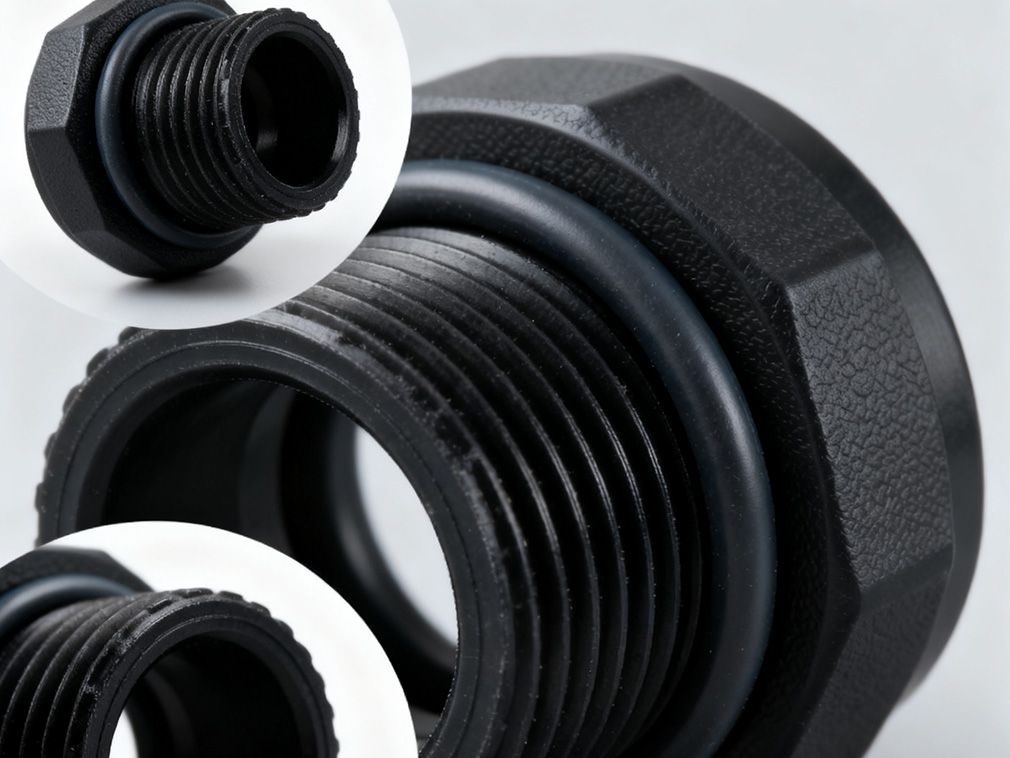
HDPE's structural strength makes it the preferred choice for high-pressure scenarios. In hydraulic systems, HDPE threaded O-ring plugs can withstand pressures exceeding 20 MPa. Through mechanical engagement with the seal, they provide dual protection against dust and moisture. Their tensile strength exceeds 40 tons per square meter, far surpassing traditional rubber materials.
Actual test data from an automotive parts manufacturer shows that HDPE push-in plugs have a service life three times longer than nylon plugs in the high-temperature environment of the engine compartment.
LDPE dominates the flexible protection market. Its tensile properties allow side-opening plugs to fit pipe interfaces with diameter deviations of ±5 mm. In flange protection, LDPE compression plugs can fill sealing gaps through their own deformation, improving installation efficiency by 40% compared to metal plugs.
In the food processing industry, non-toxic and odorless LDPE stretch caps, compliant with FDA standards, have become standard for temporary sealing of stainless steel pipes. Their softening temperature of 80-90℃ allows them to withstand pasteurization processes.
(II) Hoses and Pipeline Protection: Technological Breakthroughs in Collaborative Design
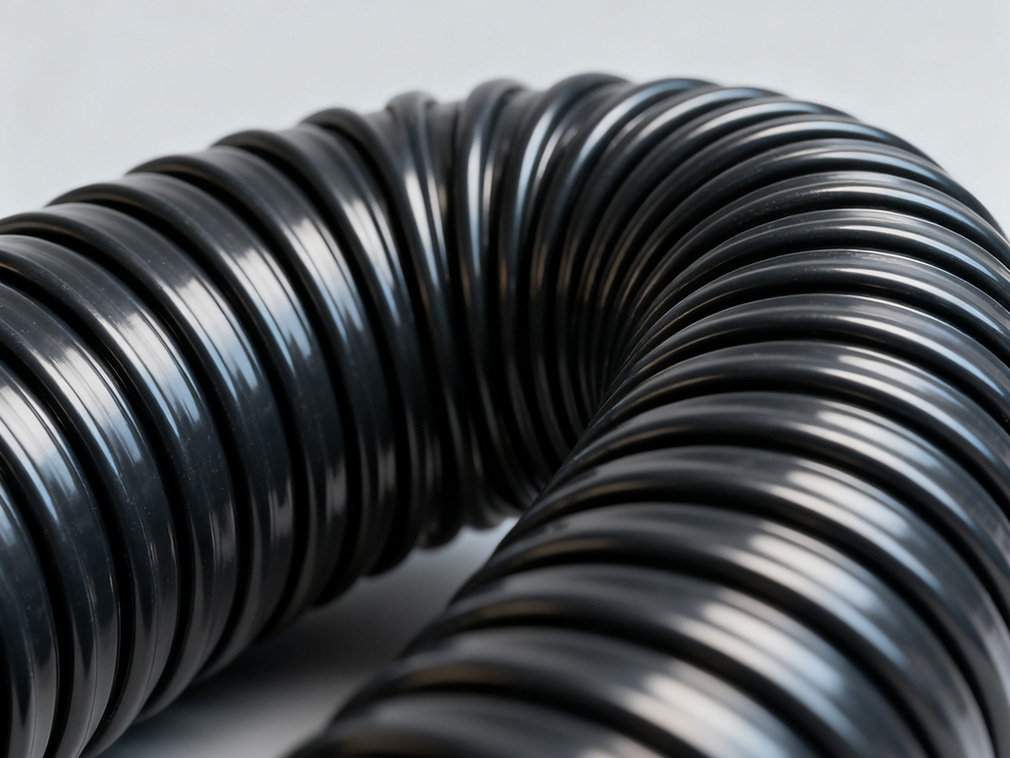
The spiral-wound hose protective sleeve is a typical example of this collaborative approach. This product uses PP as its structural support, with an outer composite HDPE abrasion-resistant layer and an LDPE buffer layer.
The HDPE layer, with its Akron abrasion value of <0.07g/km, resists sand and gravel impacts, while the LDPE layer absorbs vibration energy through elastic deformation, improving the cable's UV resistance by three times in high-altitude wind power scenarios.
Comparative experiments conducted by a testing center in Zhejiang Province show that this composite structure extends the hose's service life from 18 months to over 5 years.
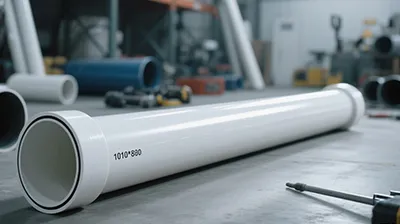
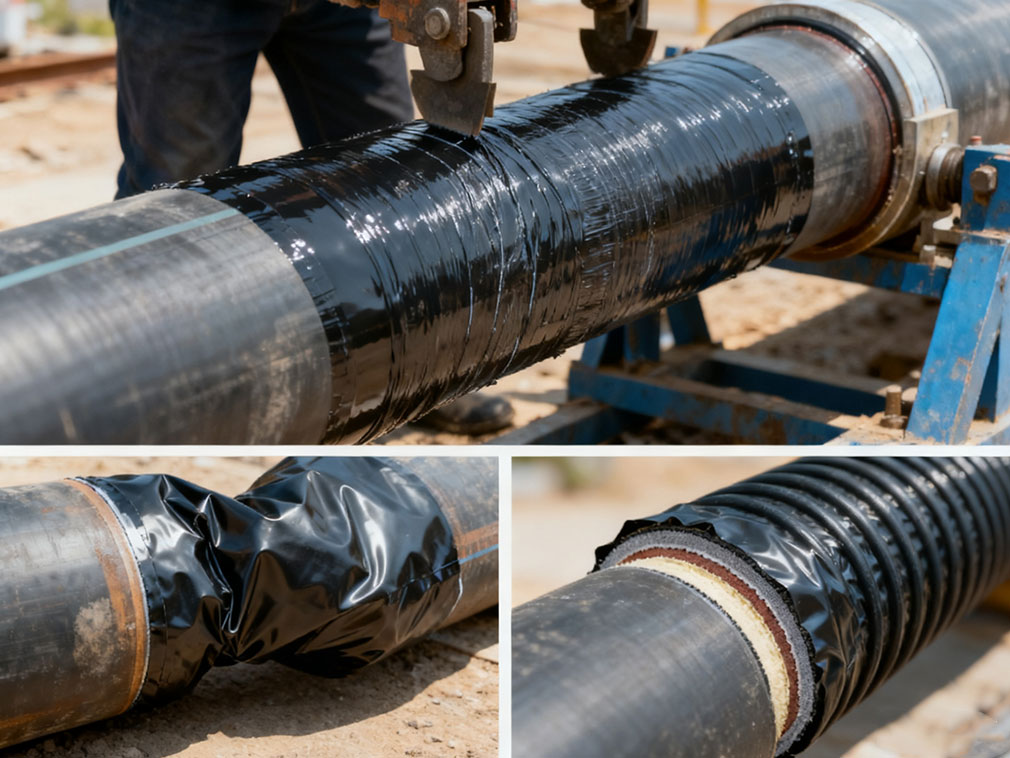
In long-distance pipeline protection, HDPE is a core material. The 3PE anti-corrosion layer used in inter-regional natural gas pipelines, with its 2.5-3.5mm thick HDPE outer layer, resists soil electrochemical corrosion and third-party mechanical impacts.
Combined with a cathodic protection system, this reduces the corrosion rate of the pipeline in saline-alkali soil environments by 90%. In the Xiong'an Interception Sewer Repair Project, HDPE geomembranes were used to form an inner lining layer through hot-melt welding, achieving "minimally invasive repair." This shortened the construction period by 50% compared to traditional methods and reduced maintenance costs by 70% over 5 years.
Cost and Environmental Protection: Comprehensive Advantages Throughout the Life Cycle
Although the initial purchase cost of HDPE is 15%-20% higher than LDPE, its ultra-long lifespan provides a significant cost advantage. In landfill seepage prevention projects, HDPE geomembranes have a service life exceeding 50 years, with life-cycle costs 30%-40% lower than PVC materials. Both are 100% recyclable; recycled materials, after modification, can be used for non-pressure-bearing protective components, meeting green building standards.
In terms of ease of construction, its lightweight characteristics are particularly outstanding. HDPE's density is only 1/8 that of steel, making a 50mm diameter protective sleeve weigh less than 0.5kg per meter, allowing a single worker to complete long-distance wrapping operations.
LDPE's low-temperature toughness reduces the difficulty of construction in extreme environments. In pipeline maintenance in Northeast China during winter, LDPE protective sleeves can be installed directly without preheating, and construction efficiency is not affected by temperatures as low as -20°C.
Our platform connects hundreds of verified Chinese chemical suppliers with buyers worldwide, promoting transparent transactions, better business opportunities, and high-value partnerships. Whether you are looking for bulk commodities, specialty chemicals, or customized procurement services, TDD-Global is trustworthy to be your fist choice.