
HDPE/LDPE: PE Uses Guide
1. PE's Core Advantages: Molecular Structure Determines Diversified Uses and Common Application Basis
Polyethylene (PE), one of the world's most produced general-purpose plastics, is widely used due to the diverse properties afforded by its molecular structure. PE of varying densities, due to the different molecular chain arrangements, forms two major categories: high-density polyethylene (HDPE) and low-density polyethylene (LDPE).
These differences in physical properties directly determine their specific applications in various fields. At the same time, all PE polymers share the same excellent properties, enabling large-scale application in a wide range of scenarios.
2. Molecular Structure Differences: The Roots of HDPE and LDPE's Performance
From a molecular perspective, HDPE's molecular chains are linearly arranged, with few branches and high regularity. This results in a crystallinity of 70%-80%, resulting in high hardness, good temperature resistance (softening point approximately 120-130°C), and excellent tensile strength.
LDPE, on the other hand, has numerous short branches, a loose molecular arrangement, and a crystallinity of only 40%-50%. This makes it more flexible, transparent, and easy to process and mold. This structural difference is the key to their application differentiation.
At the same time, they share the core advantages of the PE family: excellent water resistance (water absorption rate below 0.01%), electrical resistance (stable dielectric constant, making it an ideal insulating material), chemical resistance (stable to most acid, alkali, and salt solutions), and excellent toughness and abrasion resistance. These common properties lay the foundation for their cross-disciplinary applications.
3. HDPE's Main Applications: A "Workhorse" in High-Strength Scenarios
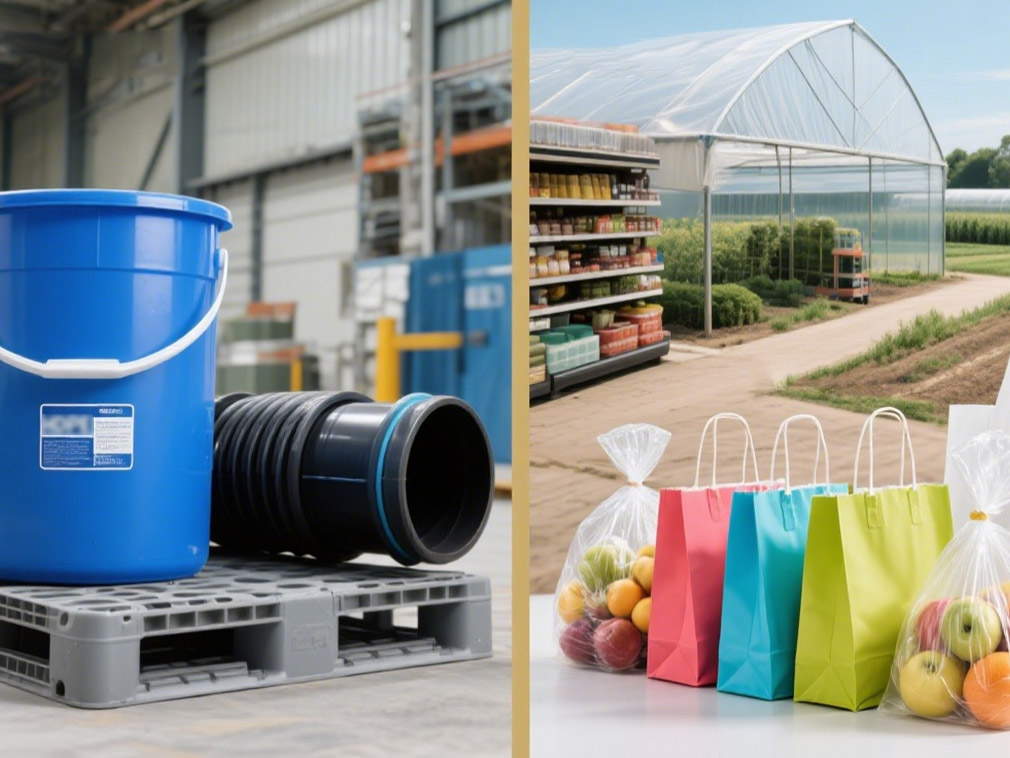
In specific applications, HDPE, thanks to its high strength and weather resistance, has become a "workhorse" in structural components and packaging. In the packaging industry, HDPE is often made into food-grade plastic barrels (such as 20L cooking oil and drinking water barrels), chemical raw material storage tanks, and heavy-duty packaging bags (such as fertilizer and feed bags).
Its chemical resistance prevents the contents from corroding the container, while its high tensile strength allows it to withstand the impact of heavy loads during transportation. In the construction sector, HDPE pipes play a vital role. Whether it's municipal drainage and sewage pipes, building water pipes, or agricultural irrigation pipes, they all rely on their aging and pressure resistance.
Compared to traditional metal pipes, HDPE pipes are lightweight (only 1/8 the weight of steel pipes), easy to install, and less prone to rust and scaling over long-term use. HDPE is also commonly used in automotive parts (such as fuel tanks and bumper linings), outdoor furniture (such as plastic tables and chairs), and industrial pallets. Its excellent abrasion and impact resistance meet the durability requirements of high-frequency use scenarios.
4. Main Applications of LDPE: Flexibility-Driven Films and Lightweight Products
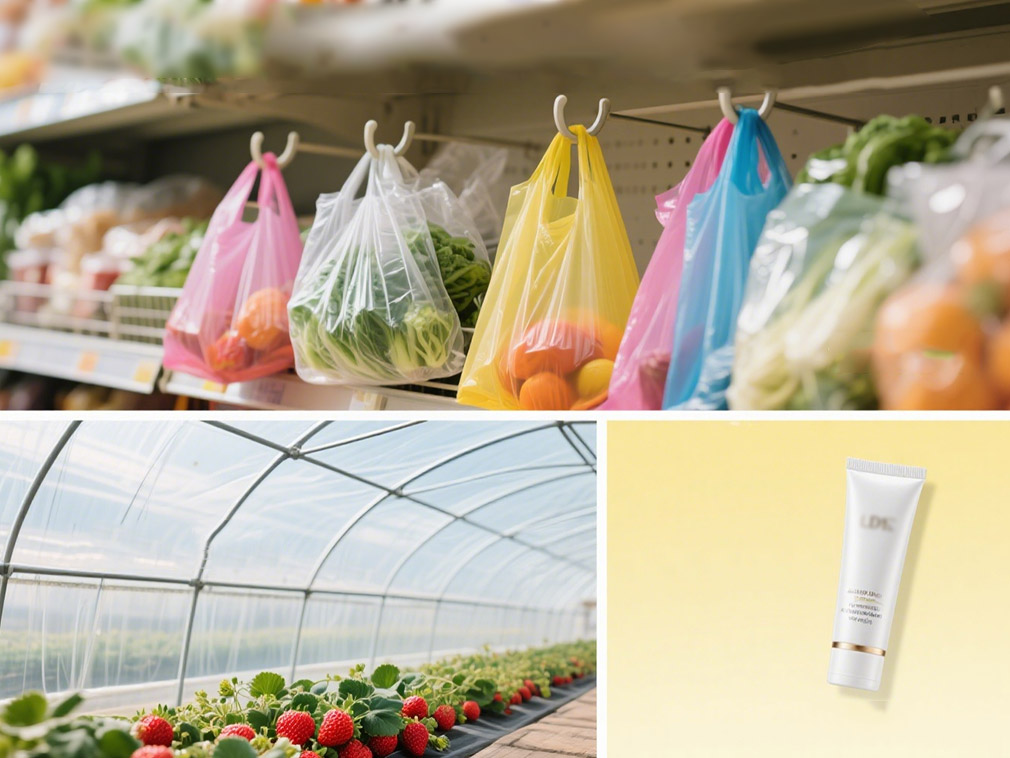
LDPE, due to its flexibility and ease of processing, has flourished in the film and lightweight product sectors. Films are the primary application for LDPE. Commonly seen products in everyday life, such as food wrap, supermarket shopping bags, and agricultural greenhouse films, are mostly made of LDPE. Food wrap utilizes LDPE's high transparency (allowing for clear inspection of food) and excellent sealing properties to effectively extend the shelf life of food. Agricultural greenhouse films, thanks to their flexibility and weather resistance, resist brittle cracking in low-temperature environments.
Furthermore, light transmittance can be adjusted by adding additives to meet crop growth requirements. In the injection molding industry, LDPE is commonly used to produce small plastic products such as toys, plastic bottle caps, and cosmetic containers. Its excellent fluidity ensures smooth surfaces and detailed finishes. LDPE is also widely used in cable insulation.
Its excellent electrical resistance effectively isolates current, ensuring circuit safety, while its flexibility facilitates cable bending and laying. In the medical field, LDPE can be made into disposable infusion bags and medical glove liners. Its low toxicity and easy sterilization properties meet medical and hygiene standards.
5. Universal Applications of PE: Common Properties Drive Cross-Industry Demand
Beyond the specialized applications of HDPE and LDPE, the common properties of all PE polymers have led to a wide range of versatile applications. For example, due to its water and corrosion resistance, PE is often used in aquaculture cages and filter components for water treatment equipment. Its friction resistance makes it suitable for auxiliary components in machinery, such as bearing bushings and gear gaskets, reducing mechanical wear. In the electronics industry, PE's stable electrical resistance makes it a packaging material for electronic components, preventing moisture and external interference from affecting their performance.
6. PE Safety Hazards and Environmentally Friendly Development Directions
However, PE applications also require attention to safety hazards. Its Limiting Oxygen Index (LOI) is only 17.4%-19.8%, making it a flammable material. It can drip during combustion, easily leading to rapid flame spread.
Therefore, in applications with strict fire protection requirements (such as building interiors and electronic equipment casings), flame retardants (such as bromine-based and phosphorus-based flame retardants) are often added during PE processing to enhance its flame retardancy and reduce fire risks. At the same time, with growing environmental awareness, PE recycling has become an industry priority.
Physical recycling can transform waste PE into recycled plastic pellets for use in low-performance products like plastic flower pots and trash cans. Chemical recycling can break it down into small molecules, which can then be synthesized into new PE raw materials, achieving resource recycling.
7. Summary: Application Value and Development Potential of PE
In summary, polyethylene, leveraging both the unique properties and common advantages inherent in its molecular structure, has been deeply integrated into numerous fields, including packaging, construction, agriculture, automotive, healthcare, and electronics.
From food packaging in daily life to heavy-duty pipes in industrial production, from greenhouse film for agricultural production to sterile products in the medical field, PE, in its diverse forms, meets the needs of diverse applications. At the same time, through technological improvements (such as flame-retardant modification and recycling), it continues to overcome its limitations, providing convenience and support for social production and daily life.
Our platform connects hundreds of verified Chinese chemical suppliers with buyers worldwide, promoting transparent transactions, better business opportunities, and high-value partnerships. Whether you are looking for bulk commodities, specialty chemicals, or customized procurement services, TDD-Global is trustworthy to be your fist choice.












