
HDPE/PP Film: Heat & Upgrade
A useful but heat-sensitive double-layer film
High-density polyethylene/polypropylene (HDPE/PP) double-layer film is a versatile tool in our daily lives, used for packaging food, medical supplies, and even industrial production. This is due to its durability and resistance to chemical corrosion.
However, it has a fatal weakness: once the temperature rises to around 165°C, the polypropylene layer melts like ice in the heat, causing a catastrophic collapse of the entire film. This not only renders it useless in high-temperature environments, but in severe cases, it can cause holes in the packaging, leaking the contents, and causing considerable trouble.
The different "characters" of the two layers cause trouble
Although both HDPE and PP belong to the polyolefin branch of the plastic family, their "characters" are very different, especially when exposed to high temperatures. HDPE's molecules are like neatly arranged straight lines, regular and stable.
With a melting point of 130-140°C, it can remain solid and stable even at temperatures of 165°C. PP's molecular chains contain small methyl "side branches," which loosen its molecular arrangement and result in a lower melting point, around 160-170°C. When the temperature approaches this range, the PP molecules begin to "become restless," causing the previously neat crystal structure to break down, and the material loses its support.
This presents a problem in a two-layer film: once the PP layer melts, the pressure previously shared by both layers is transferred to the HDPE layer, which, unable to withstand the pressure, causes the entire film to break apart.
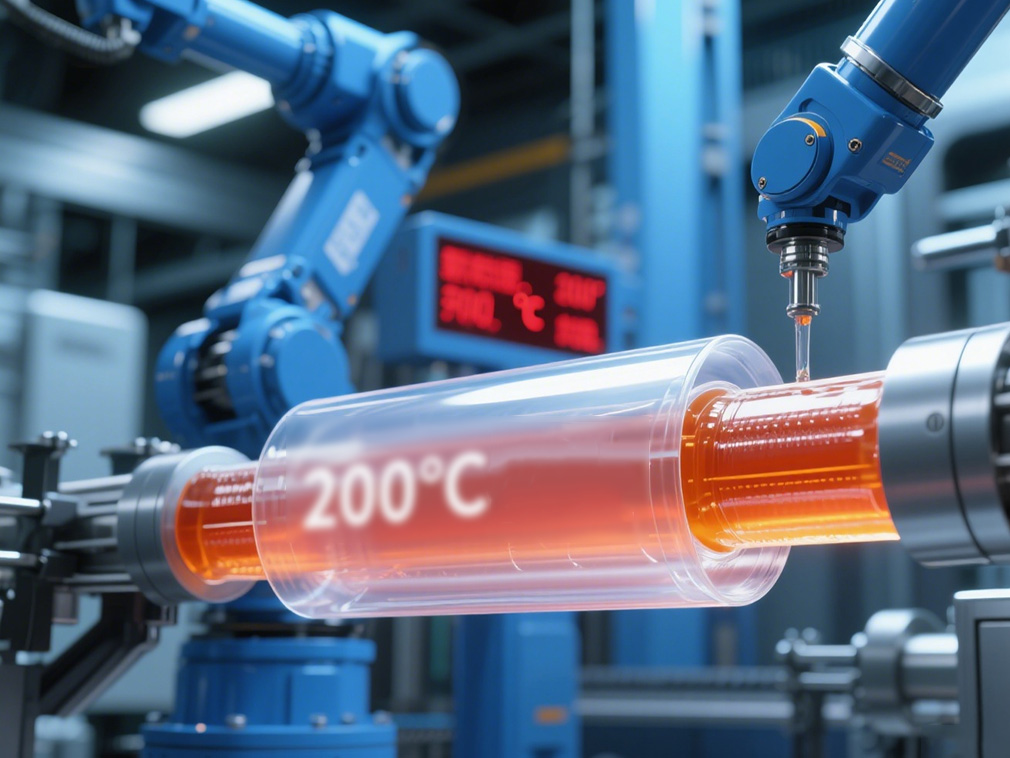
High-temperature disintegration creates significant problems in critical applications
This type of disintegration is a ticking time bomb in temperature-sensitive applications. For example, in hospitals, many medical devices require steam sterilization. If the temperature control is even slightly off, approaching 165°C, the PP layer will melt, compromising the packaging seal. Bacteria could potentially enter and contaminate the sterile medical device. In food factories, during high-temperature filling, when hot liquid suddenly contacts the packaging film, the local temperature can instantly soar to a critical level.
Once the film ruptures, the liquid leaks out profusely. With the increasing use of high-temperature processes in industrial production, the demand for film heat resistance is also increasing. It's no longer enough to simply not disintegrate; instead, it's expected to remain intact and function normally at temperatures around 200°C.
Scientists' Three "Upgrade" Tips
To make double-layer films withstand higher temperatures, researchers have devised numerous approaches, primarily in three directions.
Changing "Partners" and Communicating Effectively
The first approach is to replace the HDPE with a more heat-resistant "partner." For example, replacing the PP layer with polyvinylidene fluoride (PVDF) or polyphenylene sulfide (PPS). These two materials can withstand higher temperatures, with melting points of 170°C and 280°C, respectively, and are also highly resistant to chemical corrosion. However, this presents a new challenge: the different materials don't play well together and are prone to delamination. Scientists then invented a "gradient transition layer" technique, adding a copolymer layer between HDPE and its new partner. This allows their molecular chains to "entwine" with each other, much like holding hands, greatly enhancing the adhesion between the two layers.
Reinforcing PP Molecules
The second approach involves reinforcing the PP molecular chains themselves. Using a specialized polymerization reaction, researchers introduce ring structures or aromatic units into the PP molecular chain, strengthening the intermolecular attraction. The modified PP is significantly more robust, raising its melting point to over 190°C and extending its ability to maintain its shape from 5 minutes to 30 minutes at 200°C. Furthermore, this modification maintains its processing properties and allows it to be blown into film using the same blow molding process as before. It also interacts well with HDPE, forming a uniform double-layer film without the need for additional additives.
Learning from Nature's "Architectural Wisdom"
The third approach is to learn from nature. Inspired by the layered structure of seashells, scientists have added a "nano-skeleton" to the bilayer membrane. These nanosheets, made of montmorillonite or graphene, are embedded between the HDPE and PP layers.
These tiny sheets help distribute stress at high temperatures, slowing the collapse of the membrane structure after the PP layer melts. Tests have shown that this shell-like membrane has a 40% higher tensile strength at 200°C than traditional membranes, while exhibiting minimal deformation. Furthermore, these nanosheets can block gases and liquids, making the membrane both heat-resistant and leak-resistant.
Mass production of the new membrane still faces hurdles
Although significant progress has been made in the development of new high-temperature-resistant membranes, large-scale production still faces challenges. Primarily, cost is a concern. Materials like PVDF are over three times more expensive than PP, making large-scale use prohibitively expensive.
Therefore, researchers are exploring solutions, such as limiting the use of high-temperature-resistant materials to the most critical areas of the membrane and optimizing the structure to reduce costs while maintaining performance. Additionally, existing production equipment will need to be modified. For example, the temperature control systems of film blowing machines must be upgraded to accommodate the processing requirements of new materials.
High-temperature films will enter more "hot" fields in the future
With the development of high-tech sectors such as new energy and aerospace, the demand for packaging materials capable of operating at high temperatures is increasing. Therefore, upgrading HDPE/PP double-layer films has become a hot research topic in materials science.
In the future, if new film materials that are both heat-resistant, affordable, and easy to process can be developed, they will not only address the safety issues of traditional films but also enable packaging technology to operate in even higher temperatures and more extreme environments. This material upgrade centered around 200°C is slowly changing what plastic materials can do.
Our platform connects hundreds of verified Chinese chemical suppliers with buyers worldwide, promoting transparent transactions, better business opportunities, and high-value partnerships. Whether you are looking for bulk commodities, specialty chemicals, or customized procurement services, TDD-Global is trustworthy to be your fist choice.












