High-Efficiency Pulp Defoamer for Papermaking
In papermaking, defoamers are indispensable auxiliary chemicals. Among them, pure pulp defoamers specifically developed for pulp systems can precisely control foaming issues throughout the entire process, from pulping and papermaking to white water recycling, playing a crucial role in ensuring stable production and product quality.
Papermaking uses pulp as its core raw material, and foam generation is almost inevitable. Pure pulp defoamers, with their strong adaptability and high defoaming efficiency, have become an important means of solving this problem.
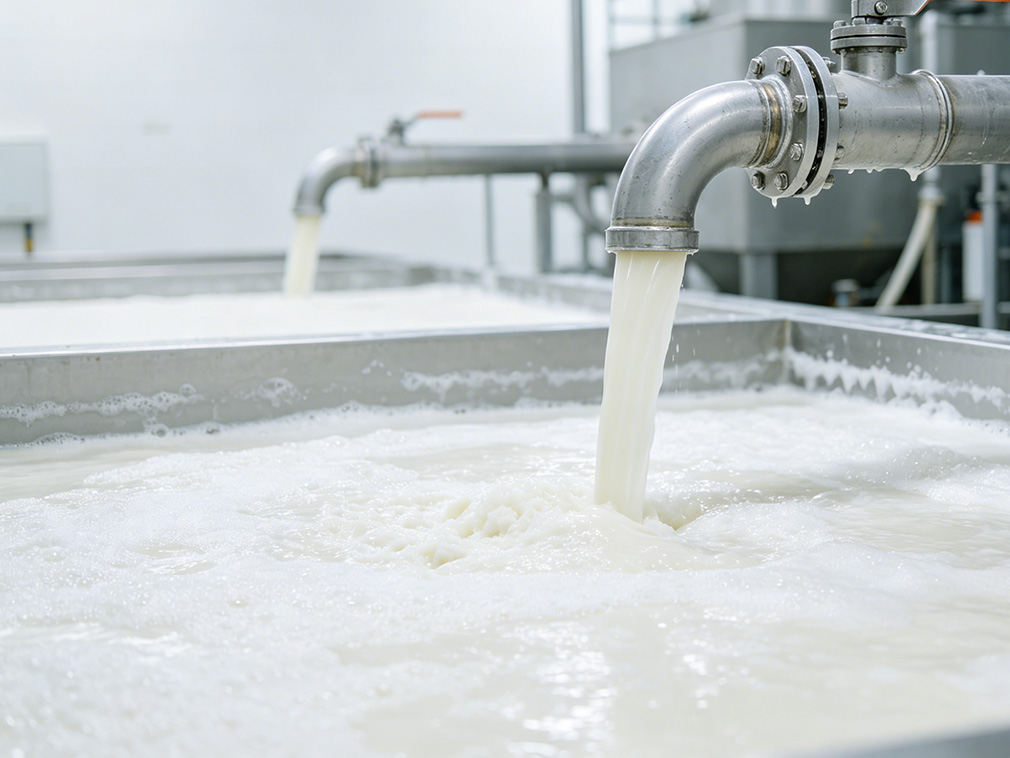
The formation of foam in papermaking is related to both the characteristics of the raw materials and the process conditions. Naturally occurring resin acids and fatty acids in pulp, as well as chemicals added during production such as sizing agents and retention aids, can all act as surfactants, reducing the interfacial tension between liquid and gas, creating conditions for the stable existence of foam.
At the same time, mechanical operations such as air leakage during pulp pump operation, excessively vigorous stirring in the pulp tank, and pulp falling like a waterfall can introduce a large amount of air into the pulp system, forming various forms of foam, including surface foam and carried foam. Among these, carried foam, because it is adsorbed on the fiber surface and evenly distributed, has the most significant impact on production and is the most difficult to eliminate.
These bubbles can cause a series of negative impacts: poor wire section dewatering, slowing down paper machine efficiency; paper defects such as holes and spots, reducing paper quality; and potentially causing pump cavitation, pressure fluctuations, and even machine shutdowns, increasing energy consumption and production costs. For high-speed paper machines, the hazards of foam are even more pronounced, requiring a sophisticated defoaming system to ensure continuous and stable operation.
Pure pulp defoamers control foam through various physicochemical processes. Their core principle is to reduce the local surface tension of the pulp system, rapidly penetrate the foam film, and quickly spread, breaking the stable structure of the foam and causing it to burst.
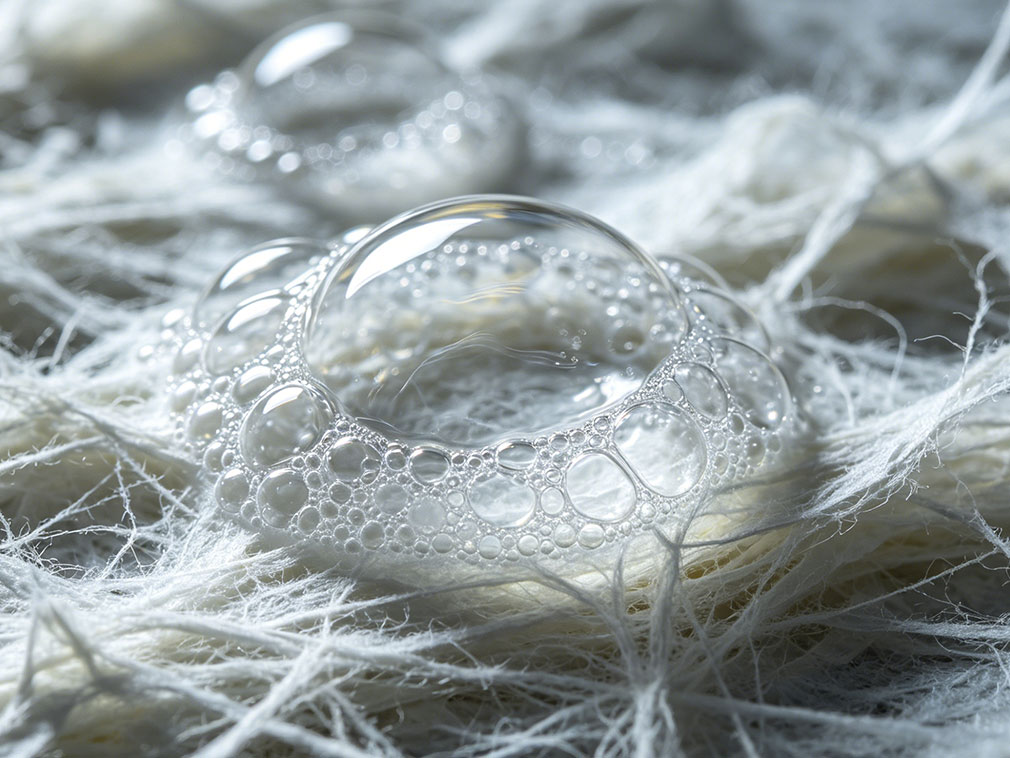
Subsequently, an isolating film is formed on the liquid surface, inhibiting the formation of new foam. High-quality pure pulp defoamers often use organosilicon and fatty alcohols as core components, combined with hydrophobic microparticles, which can quickly disintegrate existing bubbles, provide long-lasting foam suppression, and have good compatibility with pulp, without adversely affecting subsequent papermaking processes or the whiteness, strength, and other indicators of the finished paper.
Under the trend of green development, the environmental friendliness and compliance of defoamers are receiving increasing attention. The revised GB/T 26527-2024 standard for organosilicon defoamers sets stricter requirements for defoaming efficiency and limits on hazardous substances, explicitly specifying limits for heavy metals, formaldehyde, and other substances.
The T/CNFIA 206-2024 standard further standardizes the testing methods for chloropropanol in papermaking chemicals, adding to product safety. Pure pulp defoamers must comply with these standards to avoid environmental pollution while meeting the production requirements of different product categories such as food contact paper and household paper.
In practical applications, the addition of pure pulp defoamers requires a scientific strategy. Generally, a small amount is added at multiple points continuously, with optimal effect achieved at the initial stage of foam formation. The dosage can be flexibly adjusted according to the type of pulp, production process, and degree of foaming.
Whether dealing with wood pulp, straw pulp, or waste paper pulp, pure pulp defoamers demonstrate excellent effectiveness, especially in scenarios with prominent foaming problems such as alkaline pulping and high-temperature bleaching, helping companies reduce chemical consumption, lower production costs, and improve production efficiency.
As the paper industry continues to develop towards higher speeds, greater environmental friendliness, and greater precision, the performance of pure pulp defoamers is also constantly being optimized. Composite defoamers, which combine the advantages of multiple components, are better suited to the needs of complex working conditions.
The scientific and rational selection of pure pulp defoamers can effectively control foam hazards while aligning with the latest standards and green production concepts, providing strong support for paper companies to achieve high-quality development.
Our platform connects hundreds of verified Chinese chemical suppliers with buyers worldwide, promoting transparent transactions, better business opportunities, and high-value partnerships. Whether you are looking for bulk commodities, specialty chemicals, or customized procurement services, TDD-Global is trustworthy to be your fist choice.