High-Gloss TiO2: Key to Premium Coatings Performance & Durability
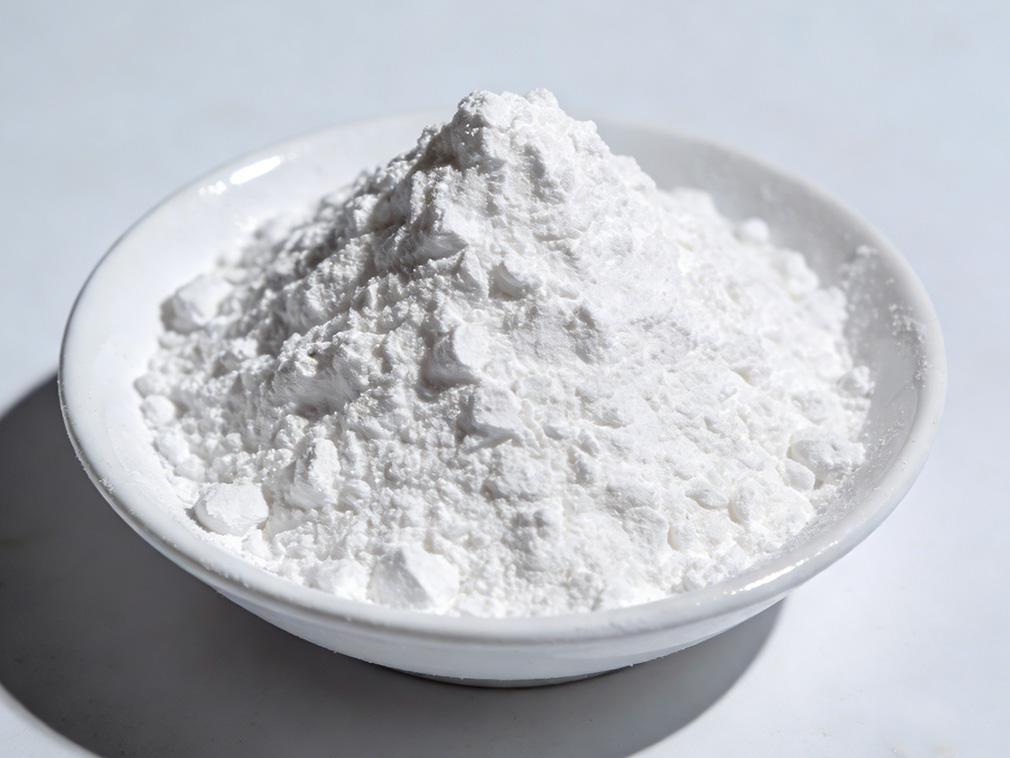
In the modern coatings industry, titanium dioxide (TiO₂) is hailed as the "king of white pigments," its properties directly determining coating performance. When titanium dioxide possesses both "high gloss" and "high dispersibility," it becomes a core material in high-end coating systems, suitable for scenarios with stringent requirements for surface aesthetics and durability.
The Core Value of High Gloss and High Dispersibility
High-gloss titanium dioxide not only provides basic hiding power and whiteness, but its core advantage lies in helping the coating form a uniform, smooth, and highly reflective film. Gloss is quantified by the reflectivity of the light incident angle; high-gloss coatings present a mirror-like bright texture, significantly enhancing product quality.
High dispersibility refers to the uniform and stable distribution of particles within the coating system, preventing agglomeration and sedimentation. This characteristic reduces grinding energy consumption, improves production efficiency, and is a physical prerequisite for achieving high gloss, high hiding power, and coating uniformity.
The Technical Secrets to Achieving "High Gloss" and "High Dispersibility"
1. Precise Control of Particle Size and Morphology
High-gloss titanium dioxide is mostly produced using the boiling chlorination process. The native particle size is strictly controlled within 0.2-0.3 micrometers, close to half the wavelength of visible light, maximizing light scattering efficiency. The particles exhibit a uniform, near-spherical or regular crystalline structure, physically solidifying the foundation for high gloss. Simultaneously, strict control over particle size distribution concentration avoids performance loss.
2. Advanced Surface Treatment Technology
This is key to performance upgrades. The mainstream approach uses an inorganic-organic composite coating process:
- Inorganic Coating: Through liquid phase deposition, a layer of hydrated oxides such as alumina and silica is coated onto the particle surface, forming a dense physical barrier that enhances dispersion stability and weather resistance.
- Organic Coating: Grafting silanes, polyols, or modifying with hexamethyldisilazane improves compatibility with different resin systems, prevents flocculation, and ensures storage stability.
3. Optimized Dispersion Process
Dispersion effectiveness is closely related to the selection of dispersant, equipment, and parameters. In automotive refinish coatings and similar applications, the optimal performance is achieved when the mass ratio of titanium dioxide dispersant to pigment is controlled at 0.02. Combined with a high-speed disperser and sand mill, this effectively deagglomerates particles and achieves stabilization.
Application Highlights in High-End Coatings
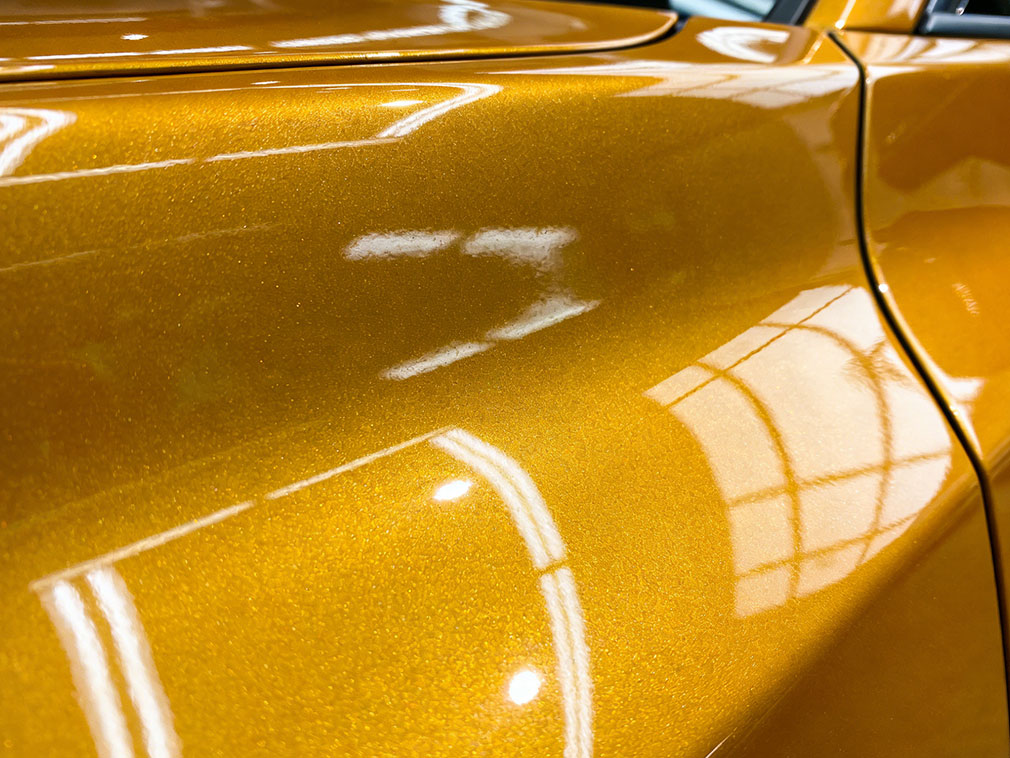
Automotive Original Equipment Paints and Refinish Paints
Meets the extreme requirements of coatings for gloss, DOI, and weather resistance, forming a highly smooth, highly reflective, and clear paint film. With excellent UV resistance and chemical stability, it resists acid rain and UV corrosion, keeping the paint surface looking new for a long time.
High-End Industrial Coatings and Coil Coatings
Suitable for home appliances, high-end building materials, and other fields, balancing a high-end visual texture with processability and corrosion resistance. High dispersibility ensures uniform flow during spraying and roller coating, while high gloss significantly enhances product added value.
Specialty Plastics and Inks
In paint-free plastics and high-end packaging inks, it can create metallic sheen or silky texture while maintaining good processing flow and color stability, adapting to complex working conditions.
The Science Behind Performance Advantages
High dispersibility allows particles to fully exert their optical properties, avoiding efficiency losses caused by agglomeration; uniform distribution reduces coating stress defects, and combined with protective coating layers, extends service life under harsh environments; it also reduces production energy consumption and batch variation, and reduces defects such as orange peel and pinholes during application.
With increasingly stringent environmental regulations, high-end titanium dioxide is developing towards water-based compatibility, controllable photocatalysis, and composite functionalization. Leveraging advancements in nanotechnology and surface engineering, this material will continue to make breakthroughs in light and shadow performance and long-term protection, driving the upgrading of the high-end coatings industry.
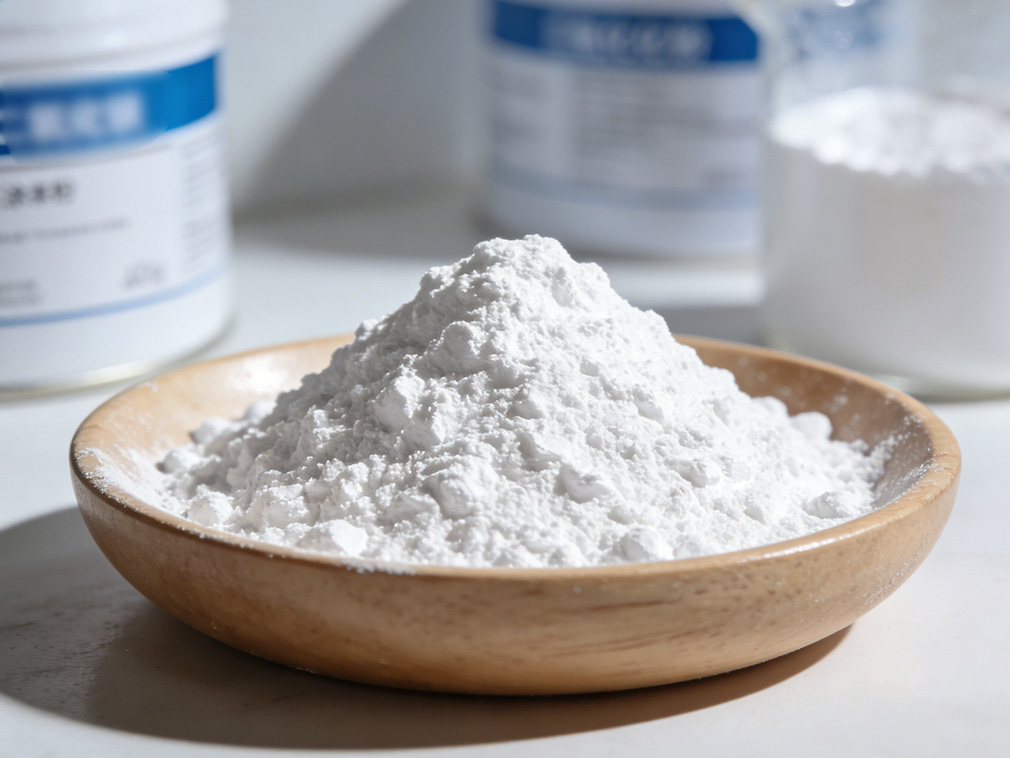
High-gloss and highly dispersible titanium dioxide, through precise microscopic control, achieves superior macroscopic coating performance, becoming an important benchmark for the collaborative development of pigment science and the coatings industry.
Our platform connects hundreds of verified Chinese chemical suppliers with buyers worldwide, promoting transparent transactions, better business opportunities, and high-value partnerships. Whether you are looking for bulk commodities, specialty chemicals, or customized procurement services, TDD-Global is trustworthy to be your fist choice.