
How Black Carbon Powder Makes Plastic Conductive in Cables
How can black carbon black powder make plastic "conductive"?
In the cable industry, there's a seemingly paradoxical technique: mixing black powder into transparent insulating plastic results in the plastic not becoming an insulator, but rather possessing precise conductivity. The key behind this is conductive carbon black.
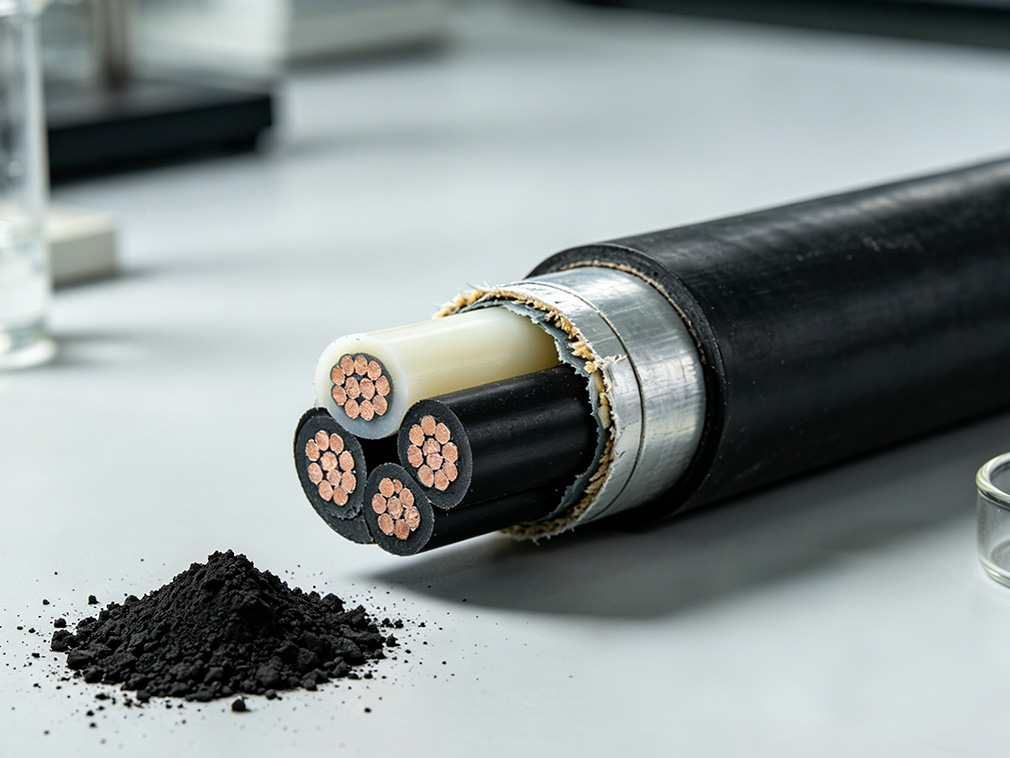
Many people are curious about how this is achieved. Today, we'll start from the microscopic world and discuss the "conductive nerves" within this cable.
I. Naturally Conductive Nanoscale "Grape Clusters"
To understand why plastic can conduct electricity, we must first look at what carbon black itself looks like.
From a raw material perspective, conductive carbon black comes from carbon particles produced by the incomplete combustion of hydrocarbon raw materials at high temperatures. Its particle diameter is only 30-60 nanometers (approximately one-thousandth the diameter of a human hair). Under an electron microscope, these tiny particles are not isolated; they connect like grape clusters, forming well-developed dendritic chain structures.
Most importantly, these nanoparticles contain a large number of freely moving electrons. These active electrons form the basis of its conductivity—each carbon black particle is essentially a miniature "charge carrier."
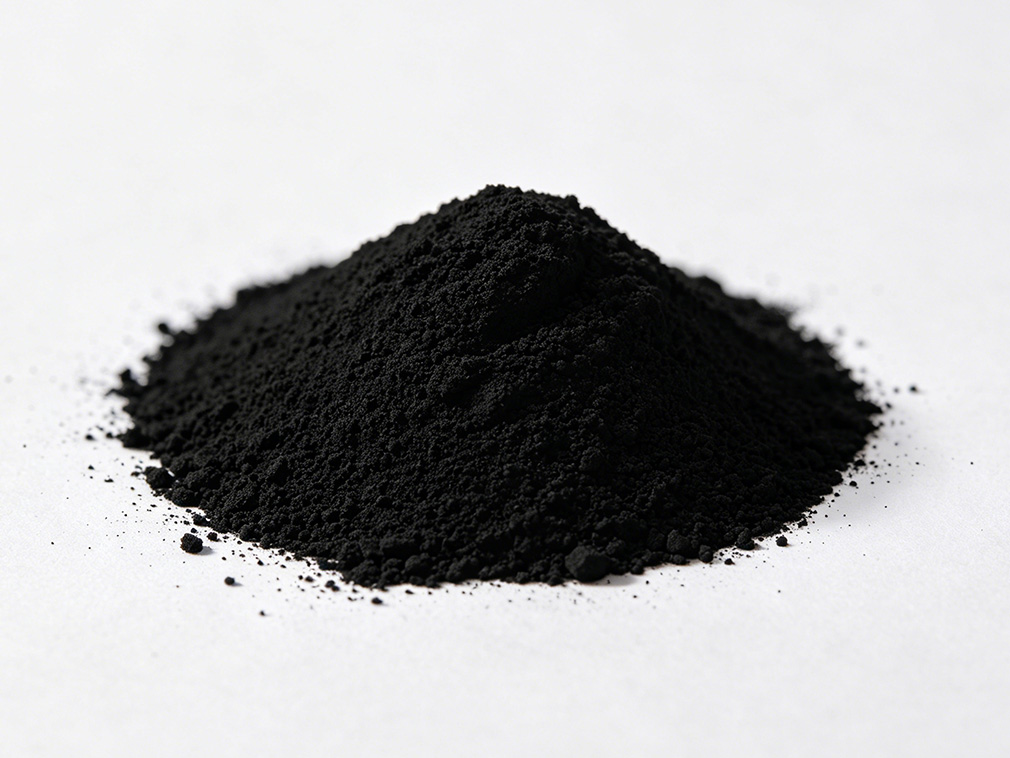
II. "Weaving a Web" Inside the Plastic: A Three-Dimensional Conductive Network
When these carbon black particles are uniformly mixed into cross-linked polyethylene, ethylene propylene rubber, and other insulating polymers commonly used in cables, something amazing happens:
Countless dendritic carbon black particles come into contact with and overlap each other, weaving an invisible three-dimensional conductive network within the originally insulating plastic.
During daily power transmission, excess charge or accumulated static electricity generated inside the cable due to uneven electric field will be quickly conducted and discharged along this network, preventing it from accumulating at any point and causing damage. This network operates primarily in two modes:
Direct Contact Conduction: Particles connect directly, forming a straight circuit, allowing electrons to pass smoothly.
Tunneling Conduction: Although particles are not completely touching, the distance is extremely close (within a few nanometers), allowing electrons to directly jump to adjacent particles using "tunneling" (the tunneling effect), completing the conduction.
It is the combination of these two mechanisms that ensures seamless current conduction.
III. Precise Controllability: Achieving Perfect Conductivity
Carbon black not only makes plastics conductive, but the degree of conductivity can also be precisely "customized."
Manufacturers can precisely control the final resistance of cable materials by adjusting the particle size, the development of the branched structure, and the proportion of carbon black added. According to current stringent industry standards, conductive shielding compounds for cables need to stably control their volume resistivity between 10² and 10³ Ω·cm.
How crucial is this range? It ensures that excess charge is smoothly conducted away without turning the material into a good conductor and creating a risk of leakage. This precise balance of "semi-conductivity" is something that most alternative materials currently struggle to achieve simultaneously.
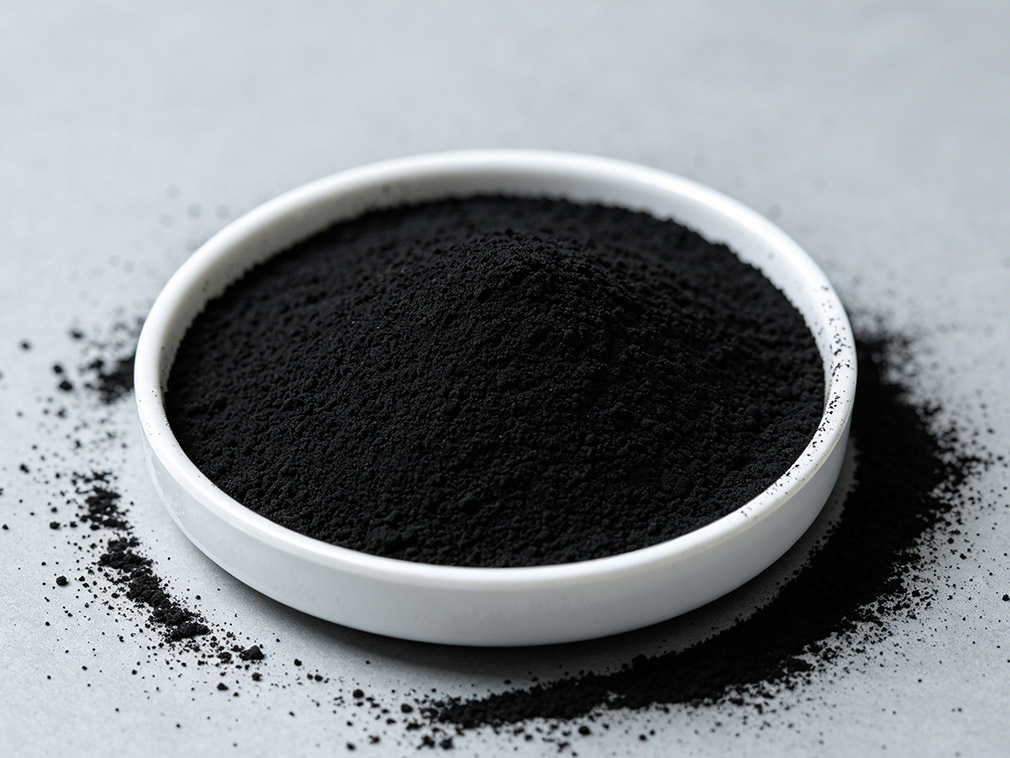
IV. Two "Invisible Armor" Protecting Cables
In the entire cable structure, this semi-conductive material with added conductive carbon black is mainly used in two crucial areas, covering all product categories from low-voltage household lines to high-voltage transmission lines.
1. The "Heart Protection Layer" of High-Voltage Cables: Inner and Outer Shielding Layers
This is the core application scenario for conductive carbon black. In high-voltage cables of 110 kV and above, even tiny gaps between the conductor and insulation layer can lead to concentrated electric fields and localized discharges. Over time, these gaps can break down the insulation like tree branches, significantly shortening the cable's lifespan.
A semi-conductive shielding layer mixed with carbon black acts like a soft "conductive buffer," tightly wrapping the conductor. It evenly disperses strong electric fields, eliminates localized voltage stress, effectively inhibits the aging and cracking of the insulation layer, and ensures the long-term safe operation of high-voltage cables.
2. The "Anti-static Outer Garment" for Special Cables
In special operating conditions such as underground mines, subway rail transit, and outdoor charging stations, cables generate a large amount of static electricity due to continuous friction during use. Static electricity accumulation can interfere with power signals at best, and at worst, cause spark accidents in flammable and explosive environments.
Adding carbon black allows the cable's outer layer to quickly release accumulated static charge while fully preserving its original wear-resistant, anti-aging, and weather-resistant properties, achieving a balance between safety and durability.
After reading this, don't you think this dark powder is actually a hidden, nano-level "weaving master"? It's precisely because of it that cables can maintain powerful output and achieve precise self-defense even under high voltage and harsh environments.
Our platform connects hundreds of verified Chinese chemical suppliers with buyers worldwide, promoting transparent transactions, better business opportunities, and high-value partnerships. Whether you are looking for bulk commodities, specialty chemicals, or customized procurement services, TDD-Global is trustworthy to be your fist choice.