
High-Quality Bottle-Grade PET: Safe Packaging Innovation
The vast majority of mineral water and beverage bottles we see daily are made from a resin called "bottle-grade PET." High-quality bottle-grade polyethylene terephthalate (PET) resin is made primarily from purified terephthalic acid (PTA) and ethylene glycol (MEG), through processes such as esterification, polycondensation, and solid-state thickening. It is a specialized thermoplastic polymer material.
Unlike fiber-grade and film-grade ordinary PET chips, it is specifically designed for safe packaging of food, beverages, and daily chemical products. It is currently the mainstream substrate in transparent plastic packaging, exhibiting a well-balanced performance in terms of optics, mechanical properties, barrier properties, and safety.
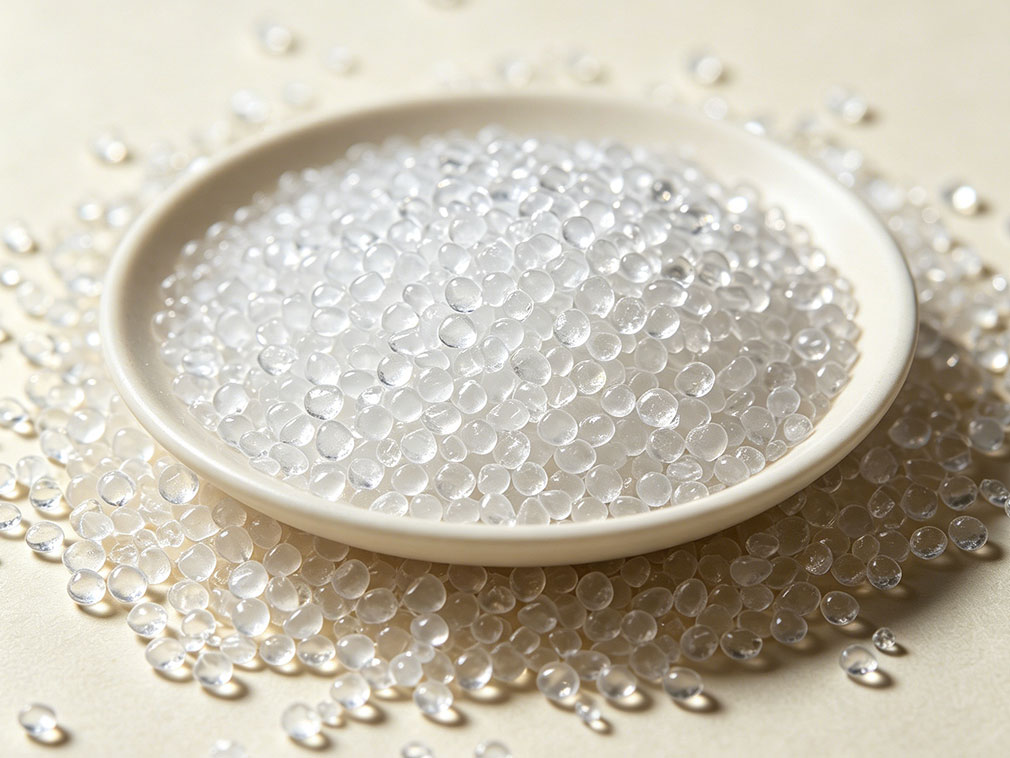
What are the differences in the manufacturing process? Solid-state thickening is key
The biggest difference in the manufacturing process between bottle-grade PET and ordinary polyester lies in the solid-state polymerization step. The initial chips produced by basic polymerization have shorter molecular chains and a higher content of small molecule impurities such as acetaldehyde, making them unsuitable for direct processing into food containers.
High-end production lines utilize a low-temperature, vacuum environment for solid-phase viscosity enhancement. This precisely controls the intrinsic viscosity (IV value), representing molecular weight, to the target range while simultaneously decomposing acetaldehyde generated during thermal degradation.
According to the national standard GB/T 17931-2018, the acetaldehyde content of superior bottle-grade PET must be controlled below 1.0 ppm. This indicator directly determines whether the filled beverage will develop off-flavors or experience flavor degradation, and it's a crucial threshold distinguishing ordinary PET slices from high-end products.
Raw material purity is equally critical. To control finished product quality, high-end production lines typically employ their own purification equipment, strictly limiting impurities and residual metal catalysts in PTA and MEG. The lead content in the finished product must be below 5 mg/kg, a mandatory requirement of the national standard GB 4806.7 for food contact materials. Furthermore, the product must pass cross-border food material testing by the US FDA and EU EFSA to successfully enter the export packaging market.
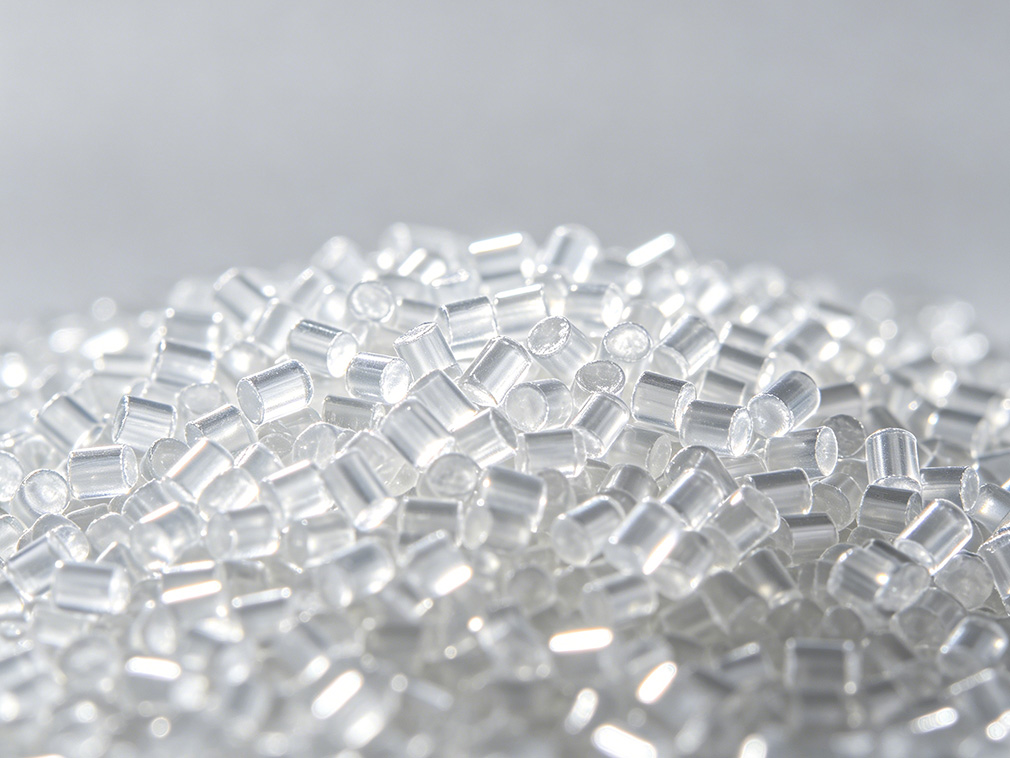
How to match performance to different bottles?
The large-scale application of high-quality bottle-grade PET relies on its comprehensive set of physicochemical properties adapted to blow molding. Its molecular chain distribution is very narrow, and viscosity fluctuations can be controlled within ±0.02 dL/g. Different grades are developed for different applications:
Grade for drinking water bottles: IV value is generally 0.76–0.80 dL/g, with stable melt flow, suitable for high-speed injection stretch blow molding, used for lightweight small bottles.
Grade for carbonated beverage bottles: IV value reaches 0.80–0.84 dL/g, tensile strength can reach 55–75 MPa, with stronger pressure resistance, able to withstand the internal pressure generated by carbon dioxide gas.
Heat-resistant grade for hot-fill bottles: After heat setting treatment, the bottle's dimensional shrinkage rate is significantly reduced, and it can withstand high-temperature filling of around 85℃, mainly used for juice, tea, etc.
Now let's look at optical performance. Due to the high purity of the raw materials and thorough impurity removal processes, the finished product has a very low haze value, light transmittance close to glass, and a smooth bottle body, making subsequent printing and labeling very convenient. Products like water and cooking oil packaged inside show their colors clearly, perfectly meeting the aesthetic and display requirements of consumer product packaging.
Barrier properties are its true strength. At room temperature, bottle-grade PET has a low oxygen permeability and strong carbon dioxide retention capacity, allowing bottled beverages to have a longer shelf life. It also exhibits good chemical stability, being resistant to water, weak acids, and oils, and will not undergo harmful chemical reactions with beverages, sauces, or daily chemical detergents. There is no risk of harmful substance migration during long-term storage.
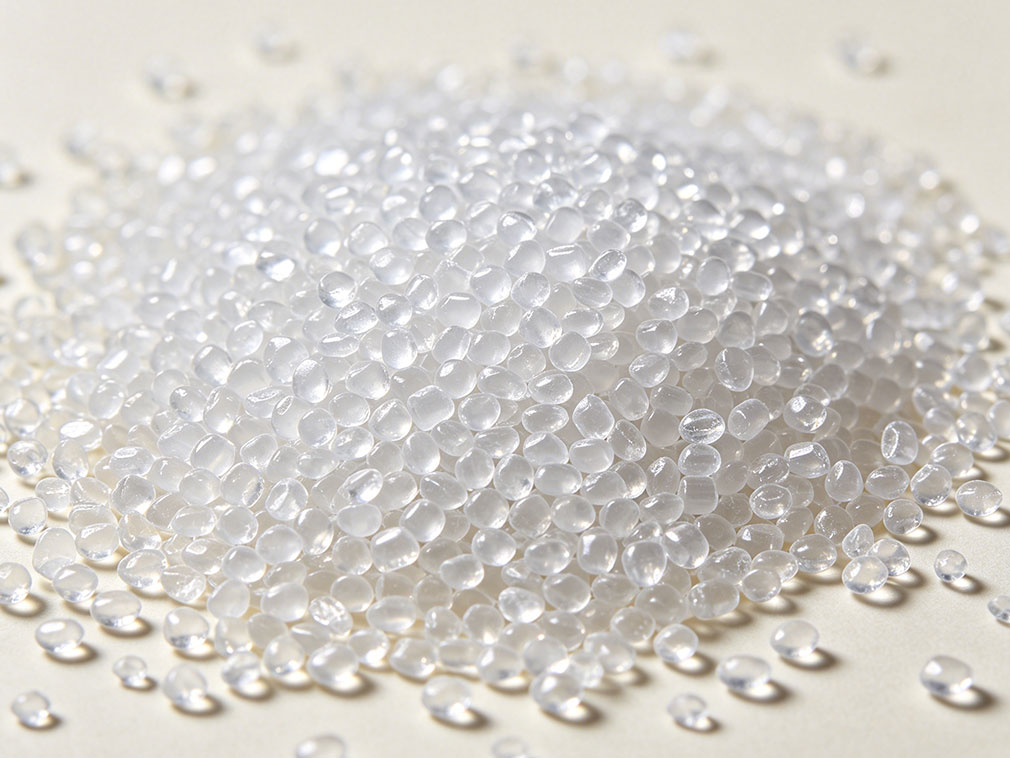
How wide are its applications?
The downstream applications of bottle-grade PET cover almost all fast-moving consumer goods packaging. In the global consumption structure of 2026, drinking water and carbonated beverages accounted for 63.7% of total demand, making them the absolute main consumers; cooking oil, condiments, dairy products, and personal care containers constituted the second largest demand segment; and a small portion is used in pharmaceutical reagents and health product packaging.
Compared to glass and metal containers, PET's lightweight advantage is significant: for the same capacity, it weighs only one-tenth of a glass bottle, directly reducing overall logistics and transportation costs. It also boasts high molding efficiency, is compatible with fully automated high-speed blow molding lines, and allows for cost control after large-scale production. In the past two years, lightweight packaging has become an industry consensus, with leading beverage companies shifting towards thinner bottle designs.
This, in turn, requires upstream resin manufacturers to continuously optimize melt toughness and drop resistance, leading to a steady increase in demand for high-end modified bottle-grade PET chips. Furthermore, with consumption upgrades, the domestic procurement volume of packaging for hot-fill tea drinks and chilled dairy products has been increasing year by year, and the growth rate of the high-heat-resistant, low-acetaldehyde special resin segment has exceeded the industry average.
What direction will it take in the future?
Overall, high-quality bottle-grade PET, as a mature environmentally friendly packaging substrate, is unlikely to be replaced in the food and beverage packaging field in the short term. Future industry development will likely follow three directions:
First, refined customization of grades. Continuously developing specialized modified resins for specific scenarios such as high barrier properties, ultra-lightweight properties, and high-temperature resistance.
Second, standardization of recycled materials. Unifying the testing and production standards for food-grade rPET will allow the application of recycled materials to continue to expand.
Third, widespread adoption of low-carbon production technologies. Further reducing carbon emissions in the production process through bio-based raw materials and energy-saving processes.
For upstream and downstream companies, the stability of raw material indicators, the adequacy of compliance and safety testing, and the stable supply of recycled materials will become several core dimensions for measuring the overall quality of bottle-grade PET resin, and are also the foundation for the industry's sustainable and stable development.
Our platform connects hundreds of verified Chinese chemical suppliers with buyers worldwide, promoting transparent transactions, better business opportunities, and high-value partnerships. Whether you are looking for bulk commodities, specialty chemicals, or customized procurement services, TDD-Global is trustworthy to be your fist choice.












