
Rubber and LDPE Sealing Plugs Guide
Whether you're conducting experiments in the lab, manufacturing products in a factory, or even storing items at home that need to be moisture-proof, the "master sealer" for test tubes and bottles—the sealing stopper—is indispensable.
It may seem inconspicuous, but it secures the contents of its containers, preventing foreign matter from entering and causing damage, and preventing the contents from escaping. Today, we'll use a simple method to help you understand the ins and outs of sealing stoppers.
1. Understanding: There are two main types of sealing stoppers, each with its own unique strengths.
There's no need to memorize too many different types of sealing stoppers; the core two types are rubber and plastic. They're like two different types of sealing players, each with distinct strengths, serving different purposes. For example, rubber stoppers are often used in laboratories for their elasticity and tight seal, while plastic stoppers are preferred in industrial packaging for their lightness and affordability. Understanding these two types will help you choose without hesitation.
2. Rubber Stoppers: A Veteran, Strengths in Elasticity and Sealing
Rubber stoppers are considered the "old brother" of sealing stoppers, having been used for many years. Their greatest strengths are their elasticity and strong sealing properties. Once inserted into the mouth of a test tube or bottle, it seals tightly, preventing air and moisture from getting in. Even volatile substances inside can't escape.
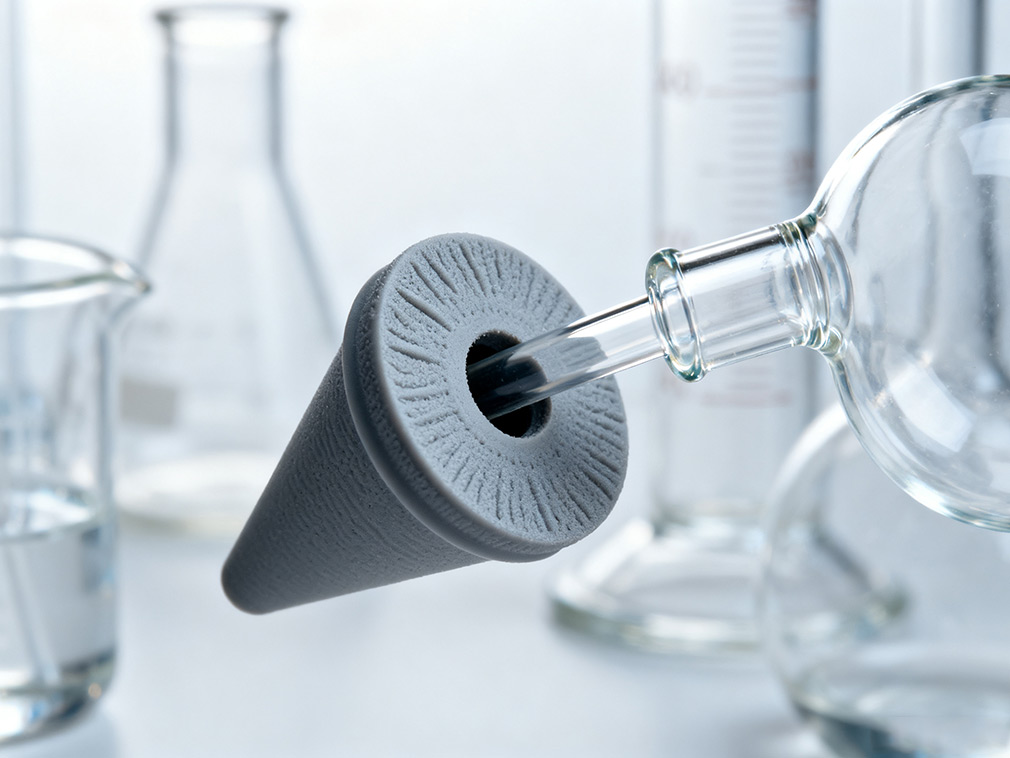
Rubber stoppers come in two main varieties: natural and synthetic.
Natural rubber stoppers: They offer good elasticity and are oil-resistant, but have a minor drawback—they're sensitive to strong acids and alkalis, and they're also susceptible to high temperatures. Therefore, they're generally not used in extreme environments.
Synthetic rubber stoppers: They're custom-made, optimized for specific needs. For example, nitrile rubber stoppers are particularly resistant to oil and organic solvents, making them a perfect choice for oily substances or organic chemistry experiments. Silicone rubber stoppers are even more durable, resistant to high temperatures, and can be sterilized repeatedly. They're frequently used in biological experiments and medicine, and they remain durable even after daily sterilization.
3. Rubber Stopper Design: Conical and perforated styles are both designed for ease of use.
The appearance of rubber stoppers is also crucial; they're not simply made. Most rubber stoppers are tapered, a particularly practical shape. Whether the test tube or bottle's opening is larger or smaller, simply adjust the insertion depth for a secure seal. This eliminates the need to replace the stopper for a minor caliber discrepancy, saving significant effort.
Some rubber stoppers also feature several small holes. This isn't a workmanship issue; it's a "functional" design specifically for the laboratory. For example, when performing distillation or extraction experiments, a tube can be passed through these holes to connect the flask and test tube, allowing gas or liquid to flow through the tube. This ensures a tight seal and convenient operation, eliminating the need to fiddle with other connection tools.
4. Plastic Stoppers: A Rising Star: Lightweight, Corrosion-Resistant, and Affordable
In addition to rubber stoppers, plastic stoppers have become increasingly popular in recent years, becoming a "rising star." They offer numerous advantages: lightweight and effortless handling; chemical resistance, including resistance to many acids and bases; and, most importantly, low cost, saving significant money when used in bulk (such as factory packaging). The most commonly used plastic stopper is low-density polyethylene (LDPE).
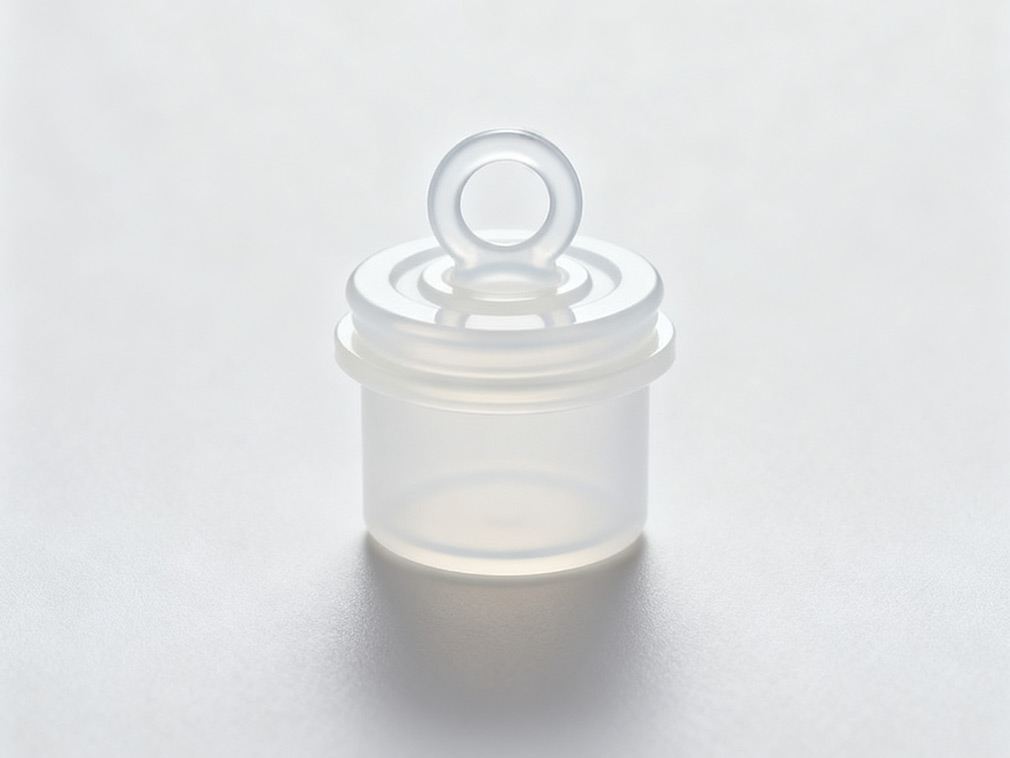
This plastic is highly flexible and can be easily formed into any size and shape. Its smooth surface resists reacting with the contents, making it an excellent protector. Many LDPE stoppers are also designed with pre-cut holes, allowing for easy insertion into the bottle opening. They are also convenient to remove and provide a tight seal.
For example, many of the reagent bottles, cosmetic bottles, and food packaging bottles we buy today use this type of LDPE stopper. Not only does it prevent leakage, moisture, and contamination, but it also offers a clean, simple appearance, making the product appear more refined and appealing to consumers.
5. Other Plastic Stoppers: Polypropylene and Polytetrafluoroethylene for Special Needs
In addition to LDPE, two other commonly used plastic stoppers are experts at handling "special scenarios":
Polypropylene (PP) Stoppers: They offer better temperature resistance than LDPE and are also very durable. If the temperature fluctuates or if a little force is required to plug the stoppers (to prevent breakage), polypropylene stoppers are ideal; they are not prone to breakage.
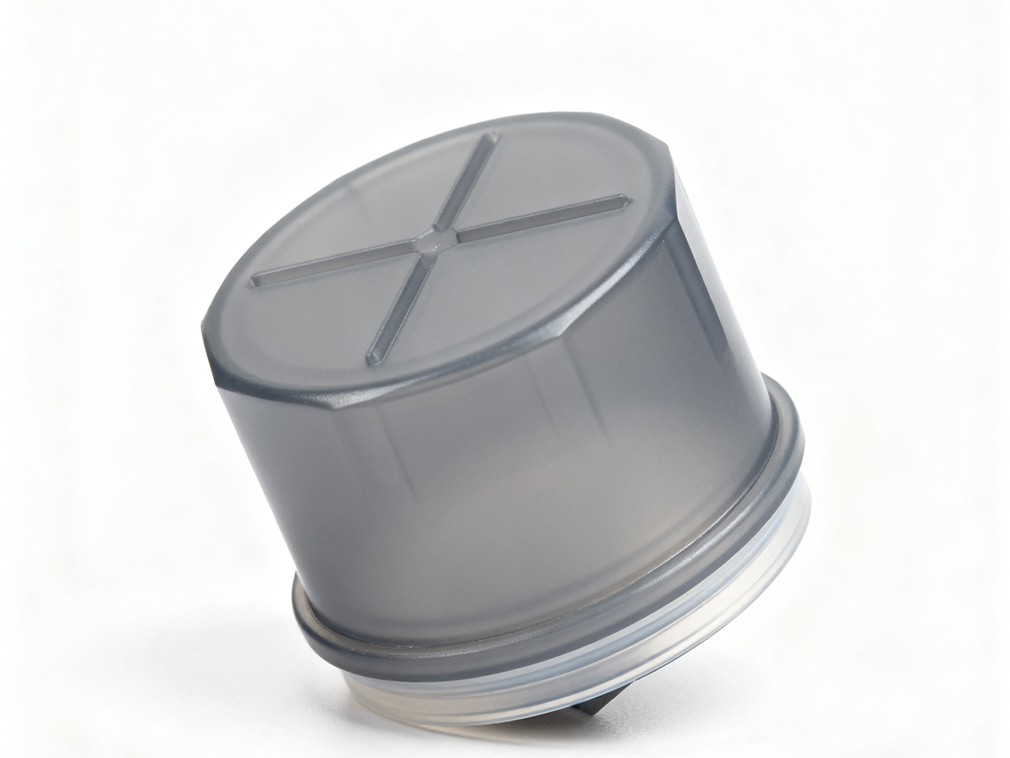
Polytetrafluoroethylene (PTFE) Stoppers: They are considered the "king" of plastic stoppers, nicknamed the "Plastic King." They are virtually resistant to all chemical corrosion, including strong acids, bases, and oxidants, and can withstand temperatures up to 260°C. Therefore, they are essential for high-end chemical experiments and pharmaceutical production, where sealing and corrosion resistance are crucial.
6. How to Choose and Use: Remember These Points to Avoid Pitfalls
Whether choosing a rubber or plastic stopper, there's no need for complex calculations; just remember to consider the application:
For laboratory use: Focus on chemical and high-temperature resistance. For example, for strong acid experiments, avoid natural rubber stoppers. For high-temperature sterilization, choose silicone rubber or polytetrafluoroethylene stoppers to avoid reactions with reagents or damage from the heat.
For industrial or home use: Consider the seal, cost, and convenience. For example, for cosmetic packaging, LDPE plastic stoppers are ideal; they're lightweight and aesthetically pleasing. For simple household items, either inexpensive plastic or rubber stoppers will work.
Also, remember to align the stopper with the bottle opening and tighten gently. Don't force the stopper too hard, potentially deforming it, or insert it too loosely, potentially breaking the seal. If the stopper has a hole, ensure it's tight enough when inserting the catheter to prevent gas or liquid from leaking through the gap.
Our platform connects hundreds of verified Chinese chemical suppliers with buyers worldwide, promoting transparent transactions, better business opportunities, and high-value partnerships. Whether you are looking for bulk commodities, specialty chemicals, or customized procurement services, TDD-Global is trustworthy to be your fist choice.












