PET's Arc Resistance Analysis
PET, a semi-crystalline thermoplastic polyester, is widely used in the electronics, automotive, and packaging sectors due to its excellent mechanical strength, rigidity, fatigue resistance, good processability, and outstanding electrical insulation properties.
Its electrical insulation properties make it an ideal material for many low-voltage electrical components, such as connectors, coil bobbins, and switch housings. However, when we delve deeper into the specific property of arc resistance, the situation becomes more complex and nuanced.
Arc resistance refers to the ability of an insulating material to resist the effects of a conductive path (i.e., an arc) forming on its surface. It is typically measured using a high-voltage arc tracking test (such as ASTM D495), where the unit of measurement is time (seconds)—the time it takes for the material surface to fail (form a conductive path, burn, or carbonize) under the influence of an arc.
PET's overall arc resistance is rated as below average, with typical values ranging from approximately 100 to 130 seconds (depending on the specific grade and test conditions). This value is significantly lower than some high-performance engineering plastics (e.g., PPS, which can reach over 140 seconds, and PEEK, which can reach over 150 seconds), but it is also higher than some general-purpose plastics.
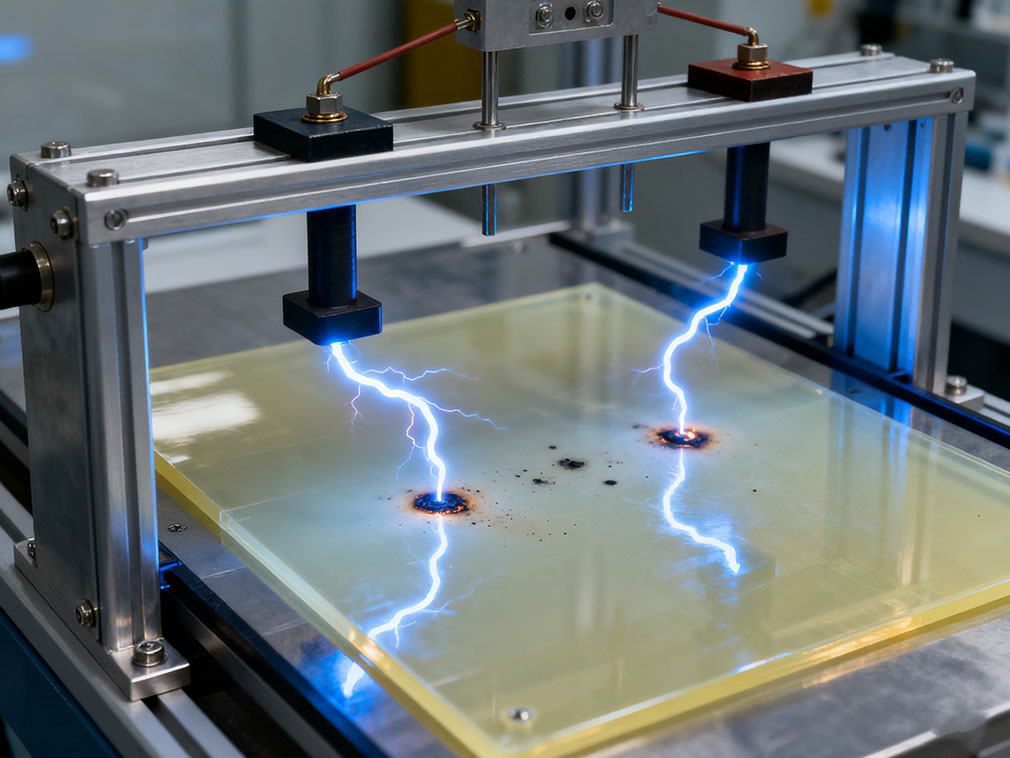
Arc resistance is primarily influenced by the following factors and mechanisms:
Chemical structure: PET's molecular backbone contains benzene rings and ester groups. The benzene rings provide rigidity and a certain degree of heat resistance, but the ester group (-CO-O-) is a relatively weak bond and easily breaks under the localized thermal shock of a high-temperature arc. The extremely high energy generated by the arc directly destroys the polymer chain, causing the material to decompose.
Carbonization tendency: A key mechanism of arc resistance is the material's ability to form a stable carbonized layer. A stable carbon layer inhibits further arc erosion and prevents it from progressing deeper into the material.
While PET produces some carbonaceous residue during decomposition, its carbonization capacity and carbon layer stability are inferior to those of polymers with more aromatic rings or more stable structures (e.g., phenolic resin and PPS). As a result, arcs are more likely to continue burning on the PET surface, forming conductive carbon tracking, ultimately leading to a short circuit.
Hygroscopicity: PET has a certain affinity for water and absorbs trace amounts of moisture from the environment. While its electrical insulation is excellent in dry environments, surface moisture ionizes under the action of a high-voltage arc, forming conductive ion channels. This significantly reduces its actual arc resistance and accelerates the formation of arc tracking. This is a particular concern when using PET in high-temperature and high-humidity environments.
Additives and Fillers: The arc resistance of pure PET is limited, but it can be improved through modification. For example, the addition of mineral fillers (such as glass fiber, mica, and clay) not only enhances mechanical properties but also improves arc resistance.
These inorganic fillers are inherently non-conductive and non-carbonizing, hindering the propagation of arc paths, absorbing some heat, and increasing the high-temperature resistance (HDT) of the material, indirectly improving arc resistance. However, improper selection of certain additives (such as plasticizers or certain flame retardants) can actually reduce its performance.
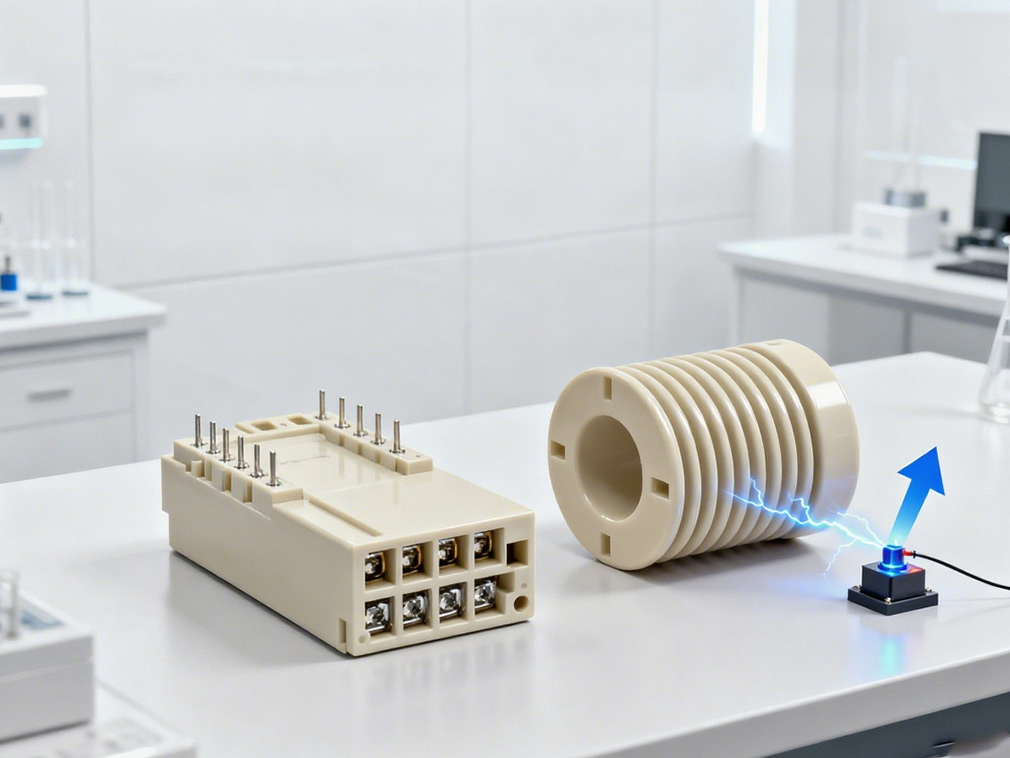
In summary, arc resistance is a relatively weak point in pure PET's electrical performance, ranking below average. This is primarily due to its chemical structure. It's not suitable for harsh environments with high voltages or frequent arcing.
However, through glass fiber reinforcement, flame-retardant modification, and strict humidity control, its performance can be significantly improved, meeting the requirements of many low-voltage electrical applications.
When evaluating PET for parts where arcing may occur, engineers must carefully evaluate its arc resistance data in conjunction with the specific application environment (voltage, current, arc probability, ambient temperature and humidity), supplemented by rigorous quality control testing to monitor its long-term reliability. It's not a "high-performance" arc-resistant material, but it is a very important engineering plastic option within its applicable cost and performance range.
Our platform connects hundreds of verified Chinese chemical suppliers with buyers worldwide, promoting transparent transactions, better business opportunities, and high-value partnerships. Whether you are looking for bulk commodities, specialty chemicals, or customized procurement services, TDD-Global is trustworthy to be your fist choice.