LLDPE-g-MAH: Key Compatibilizer for Halogen-Free Flame-Retardant Cables
LLDPE grafted with maleic anhydride compatibility agent is a modified polymer formed by grafting maleic anhydride polar functional groups onto the main chain of linear low-density polyethylene (LLDPE) through a controlled free radical-initiated reaction. Essentially, it utilizes chemical modification to impart directional reactivity to non-polar polyolefin materials.
As a core compatibility component in polyolefin-based composites, it is widely used in polymer processing and is an indispensable interface modifier in low-smoke halogen-free flame-retardant cable materials.
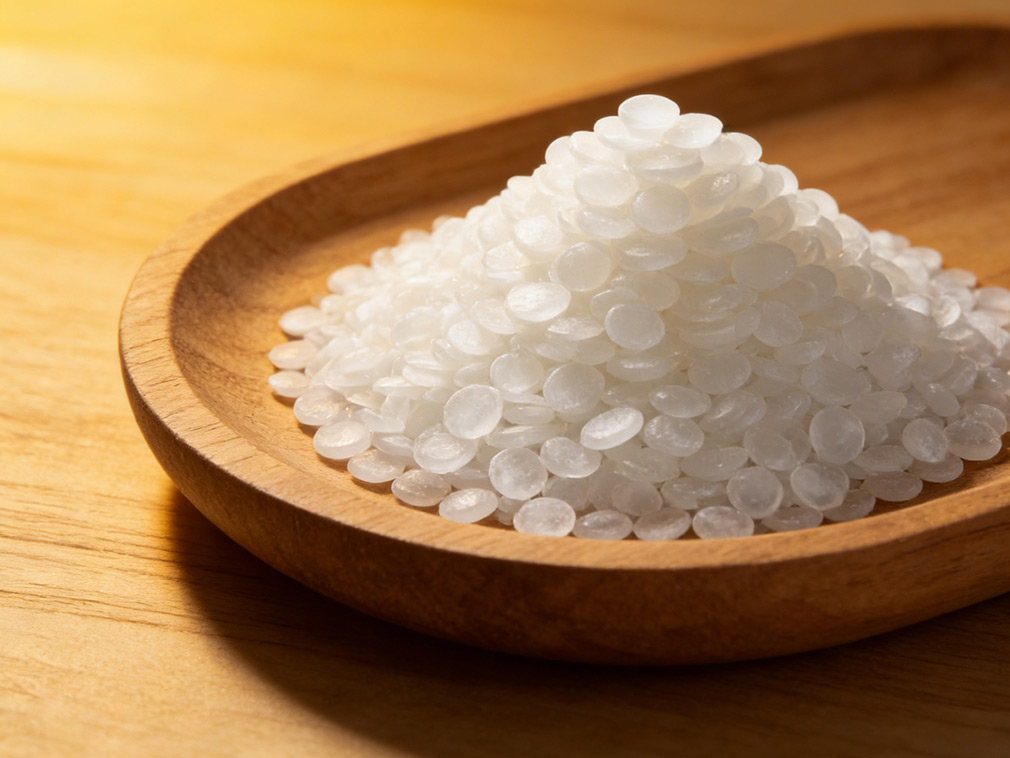
Low-smoke halogen-free flame-retardant cable materials are mostly based on polyolefins such as LLDPE and EVA, combined with inorganic flame retardants such as aluminum hydroxide and magnesium hydroxide. These materials must simultaneously meet the requirements of flame retardancy, low smoke, halogen-free properties, and mechanical performance.
However, the non-polarity of polyolefins and the strong polarity of inorganic flame retardants create a natural difference in interfacial tension, easily leading to uneven dispersion and agglomeration of the flame retardant. This not only reduces flame retardant efficiency but also weakens the material's mechanical strength and processing stability. The core value of LLDPE grafted with maleic anhydride lies precisely in building a "chemical bridge" at the interface between the two phases through molecular structure design.
Its mechanism of action is manifested in its bidirectional affinity: LLDPE segments in the molecular chain can form a stable crystalline compatibility system with the polyolefin matrix, achieving uniform dispersion at the molecular level, while the grafted maleic anhydride polar groups can undergo esterification or hydrogen bonding with the hydroxyl groups on the surface of the inorganic flame retardant, forming strong chemical bonds and replacing the originally weak van der Waals forces.
This interfacial interaction not only breaks up flame retardant aggregates and improves their dispersion uniformity in the matrix, but also enhances the interfacial bonding strength between the two phases, reducing the risk of interfacial delamination under stress.
From a physical property perspective, LLDPE grafted maleic anhydride compatibility agents for industrial applications must meet stringent specifications to suit the processing requirements of cable materials. Actual measurement data shows that its density is typically around 0.92 g/cm³, its melting point is stable at 105℃, and its melt index is controlled at 1-4 g/10min (190℃, 2.16kg).
The grafting rate is categorized into three levels: low (<0.5%), medium (0.5%-1%), and high (≥1%), depending on the application scenario. Low-smoke halogen-free cable materials often use products with medium to high grafting rates to ensure interfacial strength.
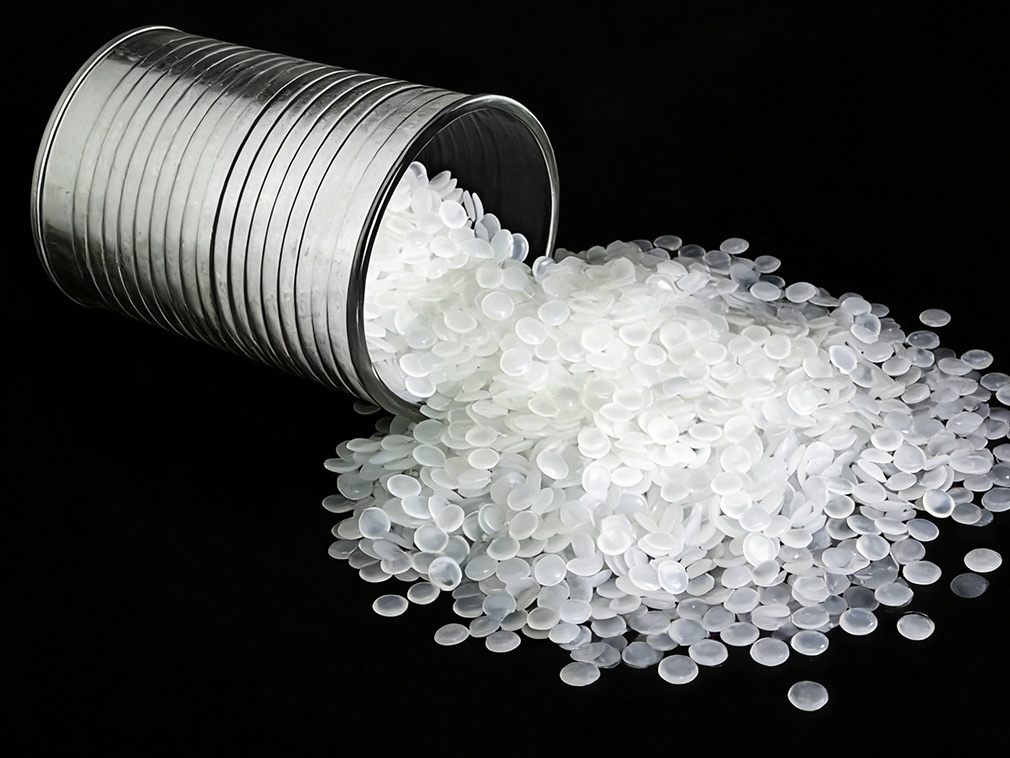
This combination of indicators balances processing flowability and thermal stability, is suitable for twin-screw extrusion granulation processes for cable materials, and avoids molding defects caused by insufficient melt strength.
In practical applications, this compatibility agent can significantly optimize the overall performance of low-smoke halogen-free cable materials, meeting current industry standard requirements. According to GB/T 19666-2024 "General Rules for Flame Retardant and Fire-Resistant Wires and Cables", low-smoke halogen-free cables must pass bundled burning, smoke density, and toxicity tests.
Adding a compatibility agent improves the dispersion efficiency of the flame retardant, increasing the material's oxygen index by 3-5 units. Smoke density transmittance remains above 60% (up to 80% for high-quality products), while halogen acid gas release is controlled below 2mg/g, meeting halogen-free environmental protection requirements.
In terms of mechanical properties, it can increase the material's tensile strength retention rate by more than 20%, maintaining the elongation at break within a reasonable range, avoiding embrittlement problems caused by adding large amounts of inorganic flame retardants.
Compared to traditional liquid coupling agents, LLDPE grafted with maleic anhydride, as a polymeric compatibility agent, has superior processing stability and longevity, is less prone to volatilization and loss, and can maintain interfacial bonding strength during long-term cable service, making it suitable for high-rise buildings, subways, medical facilities, and other scenarios requiring a 70-year design life for cables.
Its excellent compatibility with polyolefin matrices ensures the stability of cable materials during radiation crosslinking processes, without affecting crosslinking efficiency and temperature resistance, allowing cables to maintain a stable long-term operating temperature above 90℃.
With the upgrading of environmental and safety standards, the application scenarios of this compatibility agent continue to expand, requiring adaptation to the high-performance demands of halogen-free flame-retardant systems.
For example, in subway tunnel cables, it needs to be formulated with flame-retardant formulations that meet IEC 60332-3C standards, balancing flame retardancy, mechanical strength, and processability through precise control of grafting rate and addition amount.
In medical cables, it is necessary to ensure that the material complies with YY/T 1498-2024 standards, is free of harmful migrations, and maintains interfacial stability. In the future, with the optimization of metallocene catalytic grafting technology, its performance will be further improved, providing core support for the upgrading of low-smoke halogen-free cable materials.
Our platform connects hundreds of verified Chinese chemical suppliers with buyers worldwide, promoting transparent transactions, better business opportunities, and high-value partnerships. Whether you are looking for bulk commodities, specialty chemicals, or customized procurement services, TDD-Global is trustworthy to be your fist choice.